Christmas Ham Recipe
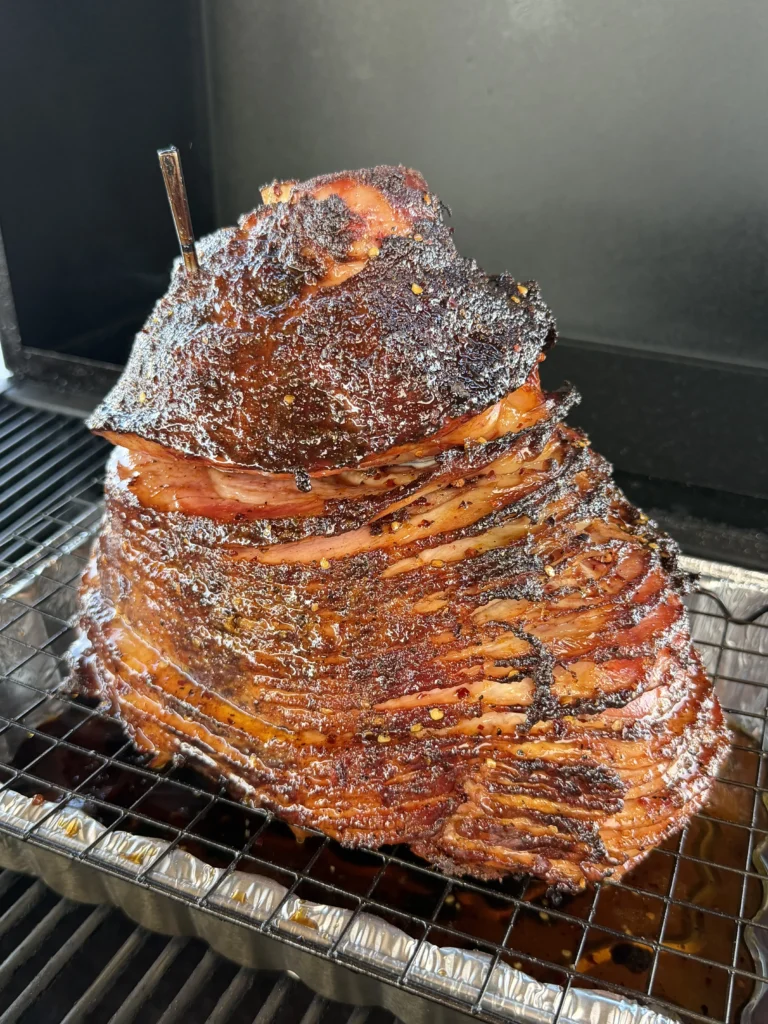
Maple bourbon Christmas ham is a fully cooked spiral-sliced ham brushed with sweet glaze and roasted until caramelized. You make the glaze by simmering maple syrup, bourbon, brown sugar, Dijon mustard, butter, orange juice, and warm spices like cinnamon and nutmeg. The ham warms in the oven or smoker at 275-300°F for 1.5 to 2 hours. Then you brush it with glaze every 15 to 20 minutes for another 45 to 60 minutes. The result is sticky, glossy ham with deep maple sweetness and bourbon caramel flavor. The spiral cuts make serving easy since the ham is already sliced.
The whole process takes about 3 hours from start to finish. You’re not actually cooking the christmas ham since it comes fully cooked. You’re warming it through and building layers of flavor with the glaze. The bourbon cooks out completely, leaving vanilla and oak notes. The orange zest brightens the rich maple and brown sugar. This bourbon glazed ham serves 12 to 16 people and works perfectly for Christmas dinner, Easter, or any holiday gathering where you need an impressive centerpiece.
Why Maple Syrup and Bourbon Work Better Than Honey or Pineapple
Maple bourbon glaze creates more complex flavor than traditional honey or pineapple-based ham glazes. Maple syrup has mineral depth and caramel notes that honey lacks. Grade A dark amber maple syrup works best since it has more robust flavor than lighter grades. The natural sugars in maple syrup caramelize at lower temperatures than granulated sugar. This creates a glossy finish without burning.
Bourbon adds layers that fruit juice can’t match. When you simmer bourbon, the alcohol evaporates but the barrel-aged flavors remain. You get vanilla from the charred oak barrels, caramel from the corn mash, and subtle spice from the aging process. These flavors complement maple syrup perfectly. Together they taste like sophisticated caramel rather than simple sweetness.
Honey-based glazes taste one-dimensional. Honey is sweet but doesn’t have the complexity of maple. It also tends to crystallize and can make the ham overly sticky. Pineapple glazes are classic but lean heavily on fruit acidity. They work well but don’t have the warm, holiday spice profile that maple and bourbon deliver.
Brown sugar in this recipe reinforces the caramel notes from maple and bourbon. Dijon mustard adds tang that cuts through sweetness and helps the glaze adhere to the ham. Apple cider vinegar provides acidity that balances the sugar. Orange zest and juice contribute brightness and citrus oils that make the glaze taste fresh rather than cloying.
The spices tie everything together. Cinnamon, nutmeg, and cloves are classic holiday flavors that smell like Christmas. They add warmth without heat. Black pepper contributes subtle bite. These elements combine to create a glaze that tastes both familiar and elevated.
How Multiple Glaze Layers Create Professional-Level Caramelization
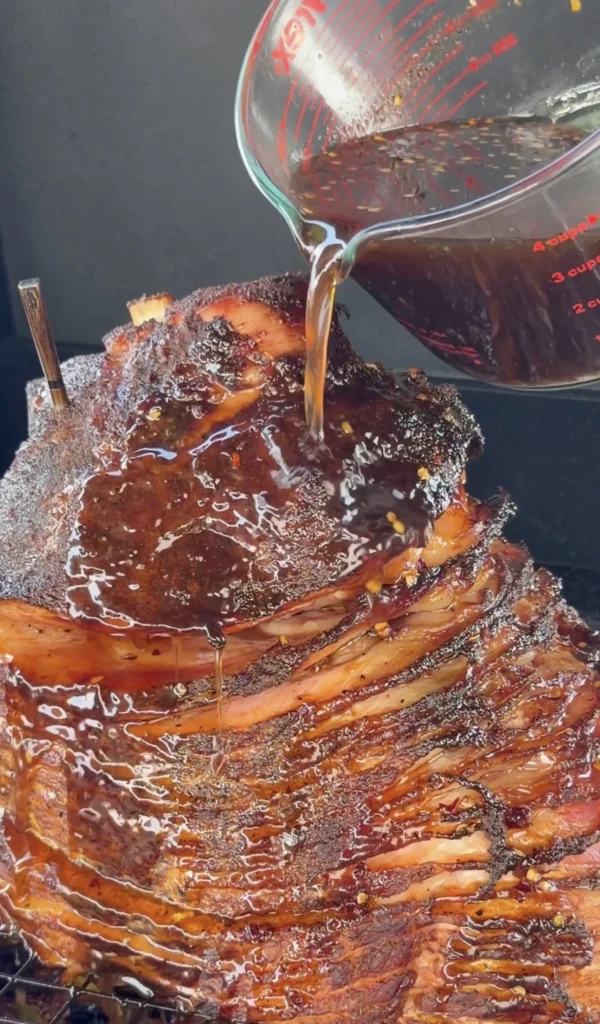
The secret to restaurant-quality christmas ham is layering the glaze multiple times during cooking. Each application adds flavor and builds texture. The first layer soaks into the ham and provides base sweetness. Subsequent layers caramelize on the surface and create that lacquered, glossy finish you see on professional holiday spreads.
When you brush glaze on hot ham, the liquid evaporates slightly and the sugars concentrate. This creates a sticky film. The next layer of glaze bonds to this film and adds another dimension. With each application, the exterior becomes more complex. You get depth of flavor rather than just surface sweetness.
Timing matters for glaze application. You want the ham already warm before you start glazing. If you glaze a cold ham, the butter solidifies and the glaze pools at the bottom. Wait until the ham reaches 120-125°F internally. Then start your first glaze application.
Apply glaze every 15 to 20 minutes for the final 45 to 60 minutes of cooking. This gives you 3 to 4 layers total. Each layer needs time to caramelize before you add the next. If you rush and apply too quickly, the glaze doesn’t set properly. You end up with runny coating instead of sticky crust.
Use a pastry brush to apply glaze thoroughly. Make sure it runs between the spiral cuts. The pre-sliced nature of spiral ham means you can get glaze into every crevice. This seasons the interior slices, not just the outside. When you serve the ham, even the center pieces have maple bourbon flavor.
Reserve about 1 cup of glaze before you start brushing the ham. Keep this clean for serving. The glaze you use for basting picks up ham fat and moisture. The reserved portion stays pure and can be warmed and drizzled over sliced ham at the table.
Should You Smoke or Bake Maple Bourbon Ham
Both smoking and baking work excellently for maple bourbon Christmas ham. Smoking adds wood flavor that complements the sweet glaze. Baking in the oven is simpler and gives you more control over temperature. The choice depends on your equipment and how much smoke flavor you want.
Smoking at 275-300°F with apple, cherry, or pecan wood creates subtle smokiness. These fruit woods are mild and sweet. They don’t overpower the maple bourbon glaze. Hickory and mesquite are too strong for ham. They compete with the glaze instead of supporting it. The smoke penetrates the surface and adds depth without masking the other flavors.
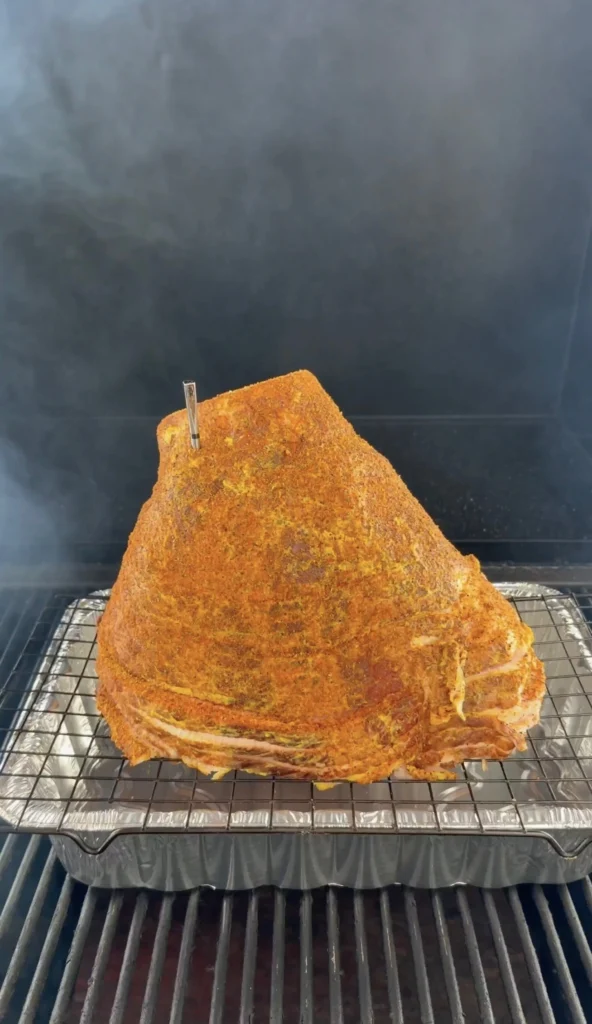
Plan for 2 to 2.5 hours of smoking time to warm the ham through. Then glaze and continue smoking for another 45 to 60 minutes. The spiral cuts allow smoke to penetrate between slices. You get smoke flavor throughout the ham, not just on the outside. The glaze caramelizes beautifully in a smoker since the heat is even and indirect.
Oven baking at 300°F is more consistent. You don’t need to manage wood or worry about temperature fluctuations. The ham warms evenly in 1.5 to 2 hours. The glaze caramelizes perfectly under steady heat. Most home cooks find oven baking easier, especially when preparing multiple dishes for a holiday meal.
The final result is similar either way. Smoked ham has added complexity from wood flavor. Baked ham lets the maple bourbon shine without competition. Both deliver sticky, caramelized exterior and juicy interior. Choose based on your preference and available equipment.
What Internal Temperature Should Christmas Ham Reach
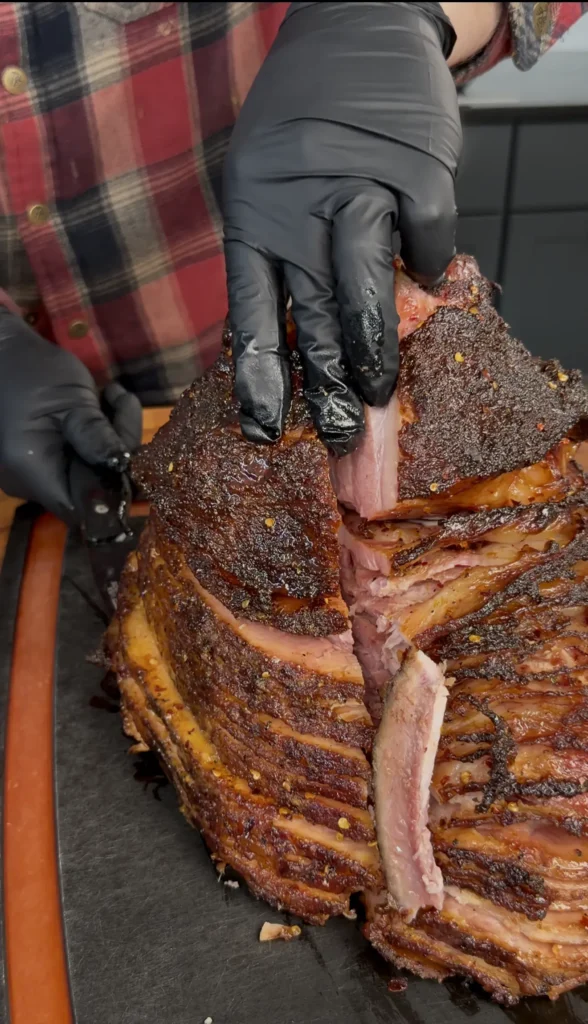
Christmas ham is fully cooked when you buy it, so you’re reheating rather than cooking. The USDA recommends heating pre-cooked ham to 140°F for food safety. However, pulling it slightly lower works fine since it continues warming during the final glazing steps.
Target 120-125°F internal temperature after the initial warming phase. This is when you remove the foil and start glazing. During the next 45 to 60 minutes of glazing, the temperature climbs to 135-140°F. This lands perfectly in the safe zone while keeping the ham moist.
If you heat the ham to 140°F before you start glazing, it will overshoot to 145-150°F by the time the glaze caramelizes. The ham gets drier at higher temperatures. Spiral-cut ham is already sliced thin, so it dries out faster than whole uncut ham. You want to avoid overcooking.
Use a probe thermometer inserted into the thickest part of the ham. Don’t let it touch the bone since bone conducts heat differently than meat. The bone area reads hotter than the actual meat temperature. Insert the probe into the meaty section between bones for accurate reading.
The christmas ham should be warm throughout but still juicy. When you slice it, the meat should glisten with moisture and glaze. If it looks dry or the edges are curling, you’ve overcooked it. Pull it earlier next time.
Resting the ham for 10 to 15 minutes after removing it from the oven or smoker allows the glaze to set. The sticky coating firms up slightly and becomes less drippy. This makes slicing and serving cleaner.
Can You Make Maple Bourbon Glaze Ahead of Time
You can make the maple bourbon glaze up to 3 days ahead and store it in the refrigerator. This saves time on the day you’re cooking the ham. Prepare the glaze by simmering all ingredients together until slightly thickened. Let it cool completely, then transfer it to an airtight container.
The glaze thickens as it cools. When you’re ready to use it, warm it gently on the stovetop or in the microwave. Stir frequently so it doesn’t scorch. You want it pourable but not too thin. If it’s too thick after refrigeration, add a tablespoon of water or bourbon to loosen it.
Making glaze ahead also allows the flavors to meld. The spices infuse the maple syrup and bourbon more thoroughly after sitting overnight. The orange zest oils distribute evenly. The result tastes more cohesive than glaze made immediately before use.
Don’t brush the ham with glaze until you’re ready to finish it. If you glaze the ham and then refrigerate it, the sugar draws moisture out of the meat. The ham gets wet and the glaze doesn’t caramelize properly. Always glaze on a warm ham during the final cooking stage.
You can also freeze the glaze for up to 2 months. Thaw it overnight in the refrigerator before using. Warm it and whisk well to re-emulsify the butter. The texture might separate slightly after freezing, but whisking while warming brings it back together.
Maple Bourbon Christmas Ham
Sweet & Smoky Holiday Glaze with Warm Spices
Ingredients
Ham
- 1 bone-in spiral ham (8-12 lbs)
- Whole cloves for studding (optional)
Maple Bourbon Glaze
- 1 cup pure maple syrup
- ½ cup bourbon (Maker’s Mark, Buffalo Trace, or your favorite)
- ½ cup brown sugar
- 3 tablespoons Dijon mustard
- 3 tablespoons unsalted butter
- 1 tablespoon apple cider vinegar
- Zest and juice of 1 orange
- 1 teaspoon cinnamon
- ½ teaspoon nutmeg
- ½ teaspoon ground cloves or allspice
- ½ teaspoon black pepper
- ½ teaspoon kosher salt
- 1-2 teaspoons hot honey or chili flakes (optional)
Layer the glaze multiple times during the final hour. Each layer builds shine and stickiness. The glaze caramelizes between applications, creating that lacquered, glossy finish you see in professional holiday spreads. Don’t rush this step.
Step-by-Step Instructions For Christmas Ham
Step 1: Preheat Your Oven or Smoker
Preheat your oven to 300°F or set up your smoker for 275-300°F. If smoking, use apple, cherry, or pecan wood chunks or chips. These fruit woods provide light, sweet smoke that complements the maple bourbon glaze. Avoid heavy woods like hickory or mesquite that will overpower the ham.
Place the bone-in spiral ham cut-side down in a roasting pan. Use a wire rack inside the pan if you have one. This elevates the ham and allows heat to circulate underneath. Line the roasting pan with aluminum foil for easier cleanup. The glaze drips during cooking and can burn onto the pan.
If you want to score and stud the ham, do it now. Use a sharp knife to cut shallow diagonal lines across the fat in a diamond pattern. Press whole cloves into the intersection points of the diamonds. This is purely decorative but adds visual appeal and subtle spice flavor.
Apply a binder and your seasoning to the ham.
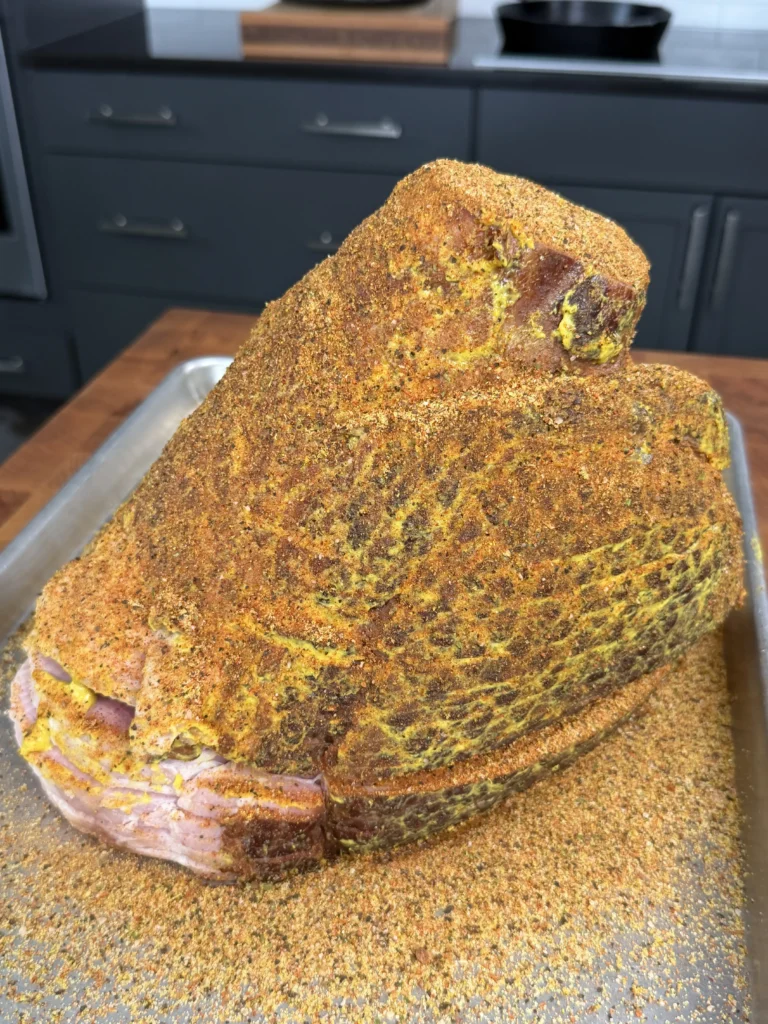
Step 2: Make the Maple Bourbon Glaze
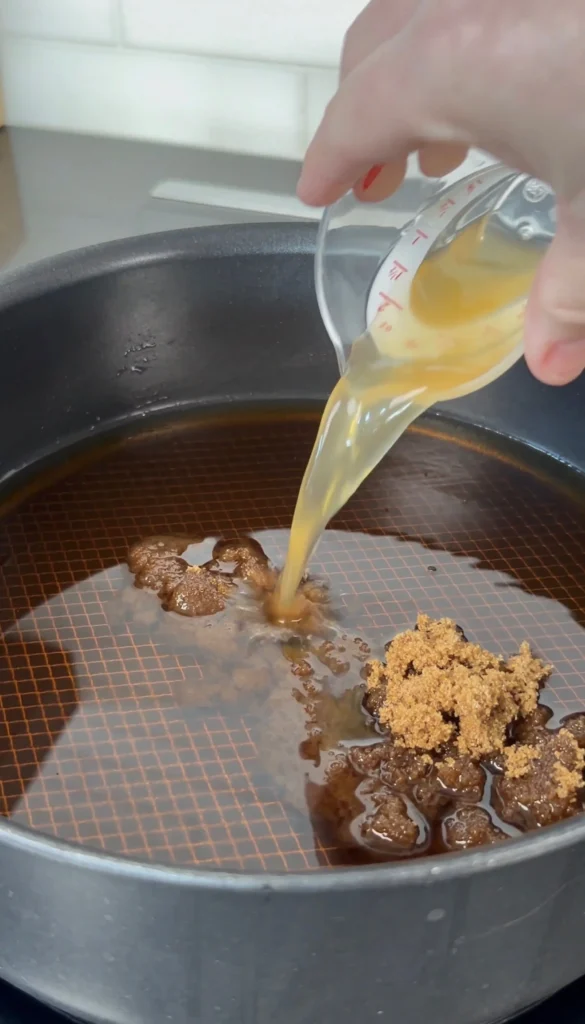
Combine all glaze ingredients in a medium saucepan. Add 1 cup of pure maple syrup, half a cup of bourbon, half a cup of brown sugar, 3 tablespoons of Dijon mustard, and 3 tablespoons of unsalted butter. Then, add the orange zest and juice from 1 orange. Add 1 tablespoon of apple cider vinegar.
Measure the spices: 1 teaspoon of cinnamon, half a teaspoon each of nutmeg and ground cloves, half a teaspoon of black pepper, and half a teaspoon of kosher salt. If you want heat, add 1 to 2 teaspoons of hot honey or red pepper flakes.
Place the saucepan over medium heat. Bring the mixture to a simmer, stirring constantly. The butter will melt and the brown sugar will dissolve. Reduce the heat to medium-low and continue simmering for 6 to 8 minutes. Stir frequently to prevent scorching.
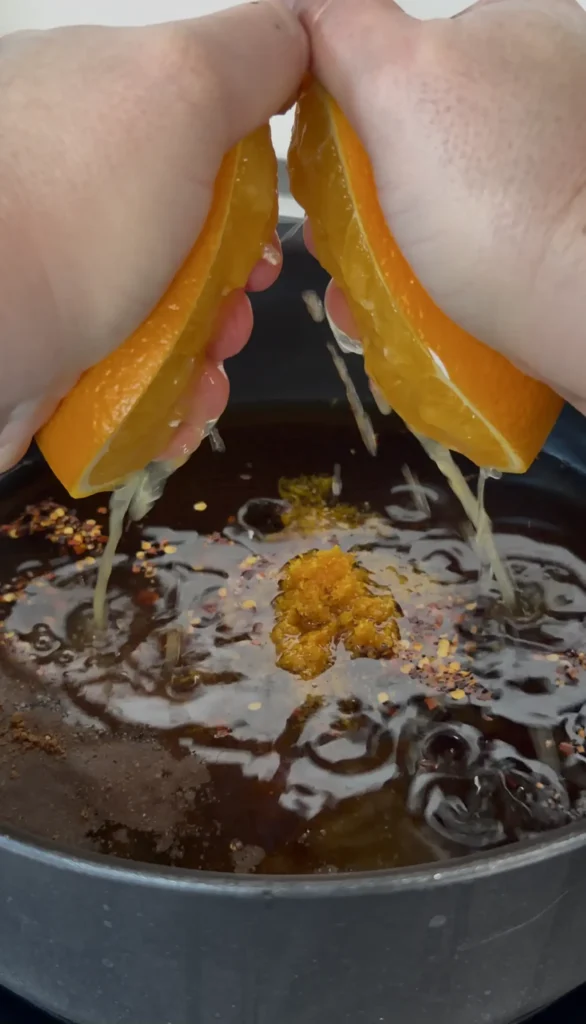
The glaze is ready when it coats the back of a spoon and drips slowly. It should be thicker than syrup but not as thick as caramel. If it’s too thin, simmer a few minutes longer. If it’s too thick, add a tablespoon of water or bourbon to thin it.
Remove from heat. Pour about 1 cup of glaze into a separate container and set aside. This is your serving glaze. Keep it clean. Use the rest for basting the ham.
Step 3: Warm the Ham
Place the ham in the preheated oven or smoker. Cook for 1.5 to 2 hours if using the oven. Cook for 2 to 2.5 hours if smoking. You’re simply warming the ham at this stage since it’s already fully cooked.
Insert a probe thermometer into the thickest part of the ham. Don’t let it touch bone. Monitor the internal temperature as it climbs. You want it to reach 120-125°F before you start glazing.
The ham is ready for glazing when it feels warm throughout and the internal temperature hits your target. If you’re smoking, the exterior will have taken on light smoke color. The ham will smell fragrant from the wood smoke.
Remove the christmas ham from the oven or smoker. Carefully peel back the aluminum foil. Be cautious of escaping steam. Discard the foil.
Step 4: Apply the First Glaze Layer
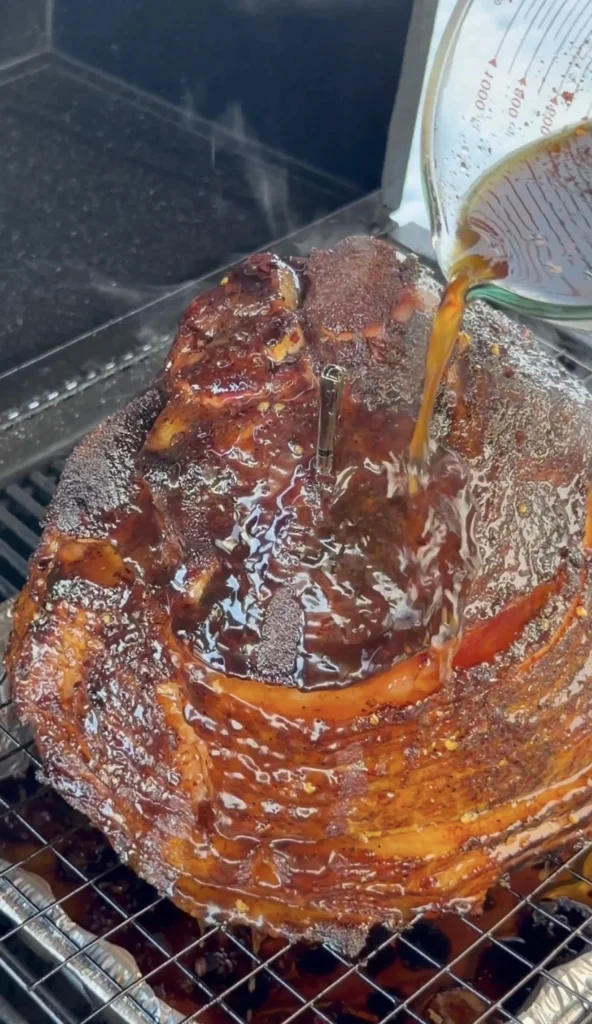
Use a pastry brush to generously coat the entire ham with maple bourbon glaze. Brush the top, sides, and between the spiral cuts. The pre-sliced nature of spiral ham makes this easy. Lift the slices slightly with your fingers or a fork. Brush glaze into the gaps.
Make sure every surface is coated. The glaze will look wet and glossy. It will pool slightly in the crevices between slices. This is what you want. The glaze penetrates the meat and seasons every bite.
Return the uncovered ham to the oven or smoker. Continue cooking at the same temperature. Set a timer for 15 to 20 minutes.
Step 5: Build Glaze Layers
After 15 to 20 minutes, remove the ham and brush with another layer of glaze. The first layer will have caramelized slightly and the surface will look sticky. Apply the second coat generously, focusing on any dry spots.
Return to the oven or smoker. Repeat this process every 15 to 20 minutes for a total of 45 to 60 minutes. You’ll apply 3 to 4 layers of glaze during this time. Each layer builds on the previous one, creating depth of flavor and glossy finish.
Monitor the internal temperature. You want it to reach 135-140°F by the end of the glazing process. If the ham reaches temperature before the glaze looks properly caramelized, you can increase the oven temperature to 350°F for the last 10 minutes. Watch it closely to prevent burning.
The ham is done when the exterior looks mahogany colored, sticky, and lacquered. The glaze should be set but still tacky. The edges of the spiral cuts may darken and crisp slightly.
Step 6: Rest and Serve
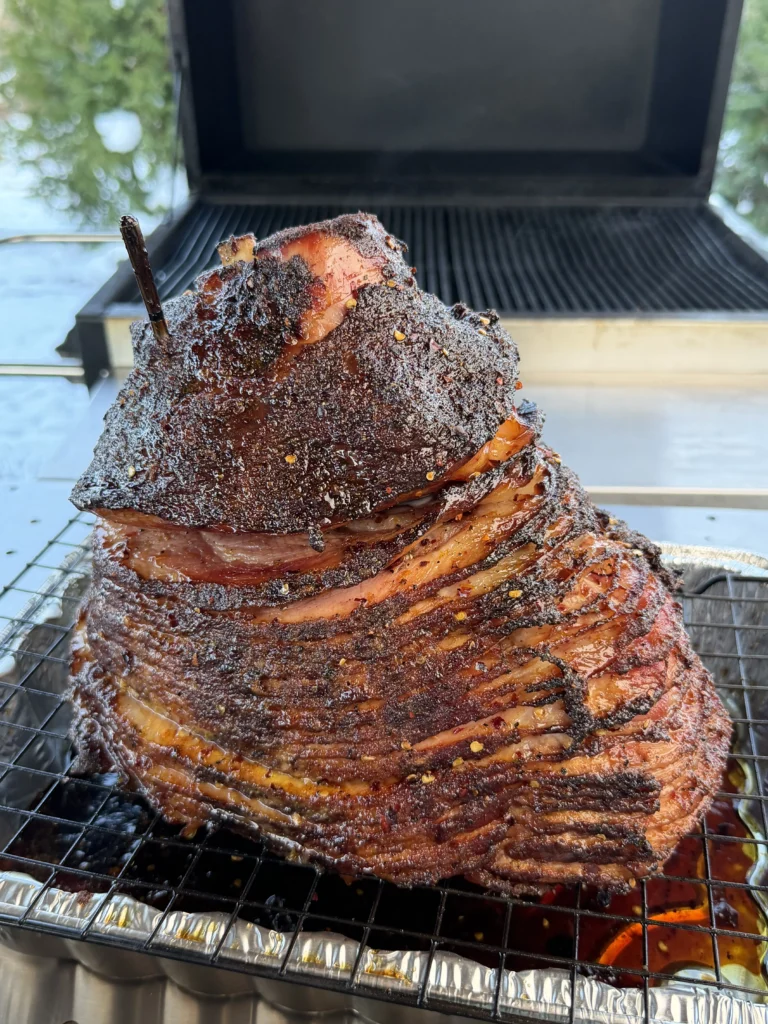
Remove the maple bourbon Christmas ham from the oven or smoker. Transfer it to a cutting board or serving platter. Let it rest for 10 to 15 minutes. The glaze will set during this time and become less runny.
While the ham rests, warm the reserved serving glaze in a small saucepan or microwave. Stir it well. Pour it into a gravy boat or small pitcher for serving.
Carve the ham by following the spiral cuts. The slices separate easily since the ham is pre-cut. Arrange them on the platter, slightly overlapping. Drizzle some of the warm serving glaze over the top. The glaze will pool around the slices and glisten.
Serve immediately while hot. Provide the extra glaze on the side so people can add more if they want. The christmas ham pairs perfectly with classic holiday sides like mashed potatoes, green beans, sweet potato casserole, or dinner rolls.
Maple Bourbon Christmas Ham
Ingredients
Ham:
- 1 bone-in spiral ham 8-12 lbs
- Whole cloves for studding optional
Maple Bourbon Glaze:
- 1 cup pure maple syrup
- ½ cup bourbon
- ½ cup brown sugar
- 3 tablespoons Dijon mustard
- 3 tablespoons unsalted butter
- 1 tablespoon apple cider vinegar
- Zest and juice of 1 orange
- 1 teaspoon cinnamon
- ½ teaspoon nutmeg
- ½ teaspoon ground cloves or allspice
- ½ teaspoon black pepper
- ½ teaspoon kosher salt
- 1-2 teaspoons hot honey or chili flakes optional
Instructions
- Preheat oven to 300°F or smoker to 275-300°F. Place ham cut-side down in a roasting pan lined with foil. Cover tightly with foil. If smoking, use apple, cherry, or pecan wood.
- Combine all glaze ingredients in a medium saucepan over medium heat. Simmer for 6-8 minutes until slightly thickened and coating the back of a spoon. Remove from heat and reserve 1 cup for serving.
- Cook covered ham for 1.5-2 hours in oven or 2-2.5 hours in smoker until internal temperature reaches 120-125°F.
- Remove foil. Brush ham generously with glaze, making sure it runs between spiral cuts.
- Continue cooking uncovered. Brush with glaze every 15-20 minutes for 45-60 minutes total until internal temperature reaches 135-140°F. The exterior should be sticky, glossy, and caramelized.
- Rest ham for 10-15 minutes. Warm reserved glaze and serve alongside sliced ham.
Notes
Frequently Asked Questions
Can I Make This Recipe Without Bourbon?
You can substitute apple juice or additional orange juice for the bourbon. The glaze will still be sweet and sticky but won’t have the same depth. Bourbon contributes vanilla, caramel, and oak flavors from barrel aging. These notes add complexity that fruit juice can’t replicate.
If you’re avoiding alcohol for dietary or personal reasons, the substitution works fine. Use half a cup of apple juice or orange juice in place of the bourbon. Consider adding half a teaspoon of vanilla extract to mimic some of the bourbon’s vanilla notes. The glaze will taste fruitier and less sophisticated but still delicious.
The alcohol in bourbon cooks out completely during simmering. You’re left with concentrated flavor compounds, not actual alcohol. If you’re concerned about trace amounts, simmer the glaze for an extra 2 to 3 minutes. This evaporates any remaining alcohol.
Apple juice adds sweetness and light fruit flavor. Orange juice reinforces the citrus notes already present from the orange zest. Either option creates a good glaze, just different from the original recipe.
How Much Ham Should I Buy Per Person?
Plan for three-quarters to 1 pound of bone-in spiral ham per person. A 10-pound ham serves 10 to 13 people. A 12-pound ham serves 12 to 16 people. This accounts for bone weight and allows for generous portions.
Bone-in ham has about 35 to 40 percent bone and fat waste. When you remove the bone and trim excess fat, you’re left with about 60 to 65 percent edible meat. Factor this in when buying. If you want half-pound servings of actual meat for 12 people, buy a 9 to 10-pound bone-in ham.
If you’re serving multiple main dishes or lots of sides, you can reduce the portion to half a pound per person. For a ham-focused meal with minimal sides, stick with three-quarters to 1 pound. Ham is rich and salty, so people typically eat less of it than they would of other proteins.
Leftover ham is valuable for sandwiches, breakfast scrambles, fried rice, and soups. It’s better to have extra than run out. Spiral-cut ham is already sliced, so leftovers are easy to portion and use.
Can I Use an Uncut Whole Ham Instead of Spiral Ham?
You can use an uncut whole ham instead of spiral-cut. The cooking process is similar but requires adjustments. Whole ham takes longer to warm through since heat can’t penetrate between pre-cut slices. Add 30 to 45 minutes to the initial warming time.
Score the uncut ham deeply so the glaze can soak in. Use a sharp knife to cut a diamond pattern across the surface. Cut about a quarter inch deep through the fat and into the meat. This creates channels for the glaze to penetrate. Without scoring, the glaze sits on the surface.
Brush glaze into the score marks during each application. The glaze pools in the cuts and flavors the interior. You won’t get quite as much glaze penetration as with spiral ham, but scoring helps significantly.
Carving whole ham requires more skill than spiral ham. You’ll need a sharp carving knife and some technique. Slice perpendicular to the bone in thin, even cuts. Whole ham looks more impressive for presentation but requires more work at serving time.
How Do I Store and Reheat Leftover Christmas Ham?
Store leftover maple bourbon ham wrapped tightly in aluminum foil or plastic wrap in the refrigerator. It keeps for 5 to 7 days. The glaze helps preserve the ham by forming a protective coating. Make sure no meat is exposed to air since it will dry out.
For longer storage, freeze individual portions wrapped in plastic wrap and then foil. Label with the date. Frozen ham keeps for 2 to 3 months. Thaw overnight in the refrigerator before reheating.
To reheat in the oven, preheat to 325°F. Place ham slices in a baking dish with a tablespoon of water or leftover glaze. Cover tightly with foil. Heat for 10 to 15 minutes until warmed through. The foil traps moisture and prevents drying.
For quicker reheating, microwave individual portions. Place slices on a microwave-safe plate. Cover with a damp paper towel. Heat on medium power for 1 to 2 minutes. The damp towel creates steam that keeps the ham moist.
You can also reheat ham slices in a skillet. Add a small amount of butter or leftover glaze to the pan. Heat the ham over medium heat for 2 to 3 minutes per side. This method creates crispy edges while warming the interior.
Should I Score and Stud the Ham with Cloves?
Scoring and studding with cloves is optional and mostly decorative. It creates a traditional holiday presentation that looks impressive on the table. The diamond pattern with cloves at each intersection point is classic Christmas ham appearance.
Scoring serves a functional purpose if you’re using an uncut whole ham. It allows glaze to penetrate the meat. For spiral-cut ham, scoring is less critical since the ham is already sliced. The glaze naturally runs between the cuts.
Whole cloves add subtle spice flavor where they contact the meat. They also perfume the ham with warm, aromatic scent during cooking. Some people find whole cloves too strong. If you’re sensitive to clove flavor, skip the studding or use fewer cloves.
If you do stud the ham, use whole cloves with the stem intact. Press them into the fat at the intersection points of your diamond pattern. Space them about an inch apart. Remove the cloves before serving since they’re not meant to be eaten.
Scoring and studding adds 5 to 10 minutes to your prep time. If you’re short on time or prefer simpler presentation, skip it. The maple bourbon glaze creates plenty of visual appeal on its own.
If you’re looking for more recipes like this Spatchcocked Smoked Cajun Turkey, click the link! Check out all of our grilling recipes here for more steak, seafood, and BBQ favorites that are perfect for your next cookout.
COMMON ITEMS USED IN THESE RECIPES
Hasty Bake Charcoal Grill and Smoker
Knitted Gloves
Food Processor
Cast Iron Skillet
Meater +
Upgrade Your Meat Game with Grill Nation x Linz Heritage Angus
If you really want to take your grilling and cooking to the next level, you need to check out our collaboration with Linz Heritage Angus. We’ve partnered with them to bring you some of the best beef you can get your hands on.
Linz Heritage Angus isn’t your typical grocery store meat. These guys are the real deal – they raise their cattle the right way, and you can taste the difference in every bite. We’re talking about beef that’s been dry-aged to perfection, with marbling that makes your mouth water just looking at it.
Check out these premium cuts that’ll change how you think about beef:
Premium Ribeye Steaks – Perfect for special occasions
Dry-Aged Beef Selection – Take your grilling to the next level
Ground Beef & Burger Blends – The foundation of great BBQ