Smoked Pimento Cheese Burgers
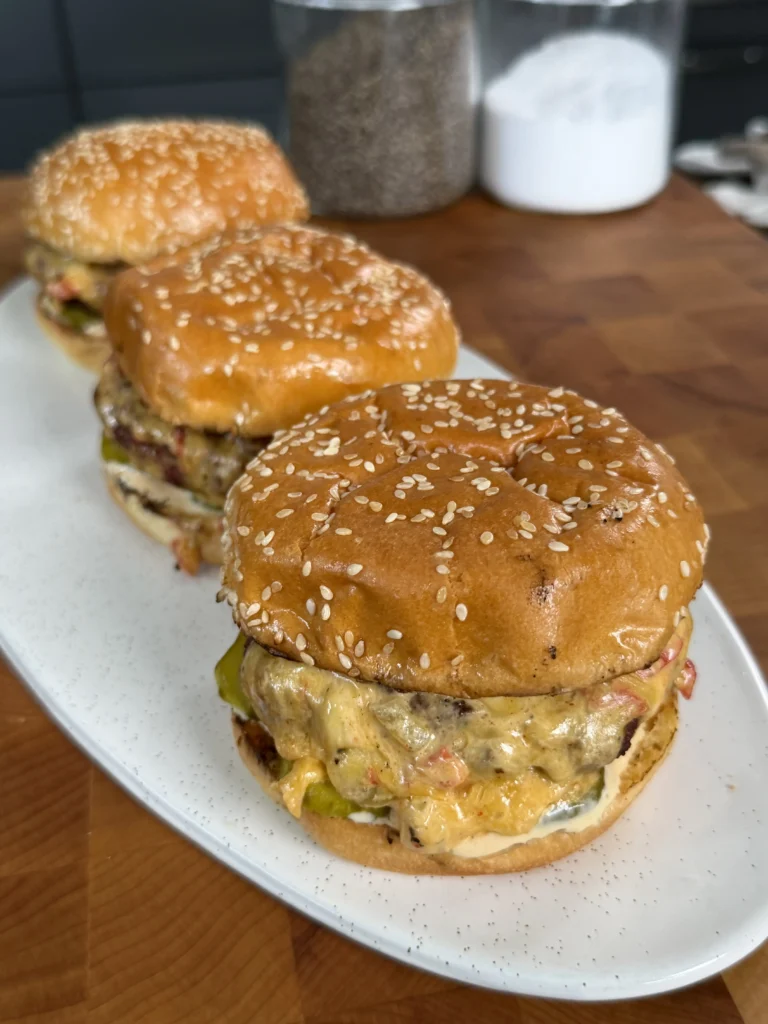
Smoked pimento cheese burgers are beef patties smoked low and slow at 225°F to 250°F over hickory or oak wood for 45 to 60 minutes. The extended smoking develops deep wood-fired flavor. You finish them with a quick high-heat sear. Then top them with creamy homemade pimento cheese made from sharp cheddar, mayonnaise, and diced pimentos.
The burgers start as 80/20 ground beef formed into ⅓-pound patties. Season them simply with salt, pepper, and garlic powder. Place them directly on smoker grates to absorb smoke while cooking gently to medium doneness. The low temperature prevents drying. Smoke penetrates deeply into the ground meat.
You finish with a quick 60 to 90-second sear per side. Use a hot flat top or cast iron skillet to develop a crust. This locks in juices without overcooking the interior. Melt the pimento cheese on top during the final seconds. Serve on toasted brioche buns with tangy burger sauce and crunchy dill pickles. This smoked burger combines Southern comfort food with classic BBQ techniques.
The whole process takes about 1 hour and 10 minutes from start to finish. This includes prep time, smoking, and searing. Make the pimento cheese and burger sauce while the patties smoke. Everything is ready for assembly when the burgers finish cooking. These pimento cheese burgers work perfectly for weekend cookouts, tailgate parties, or any time you want bold BBQ flavors.
Why Smoking Burgers Before Searing Creates Better Flavor Than Grilling Alone
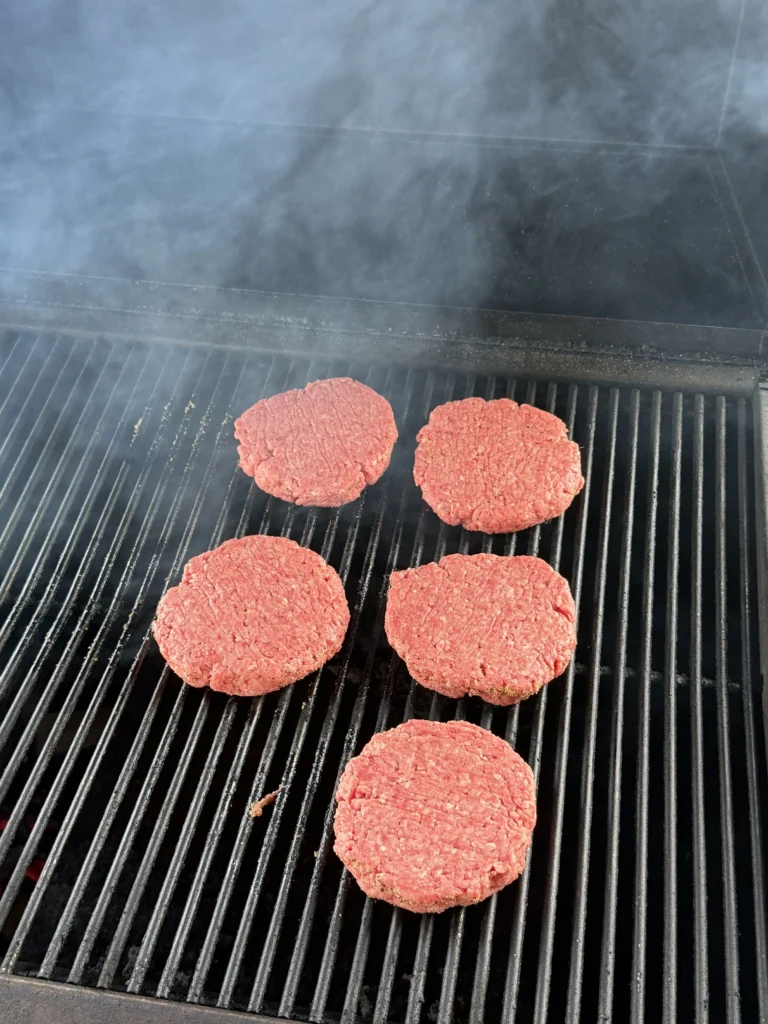
Smoking burgers at low temperature before finishing with a high-heat sear creates layers of flavor complexity. Straight grilling can’t match this depth. The extended cooking time at gentle heat allows smoke to penetrate deeply into the ground beef. Meanwhile, it prevents the exterior from overcooking.
When you grill a burger start to finish over direct heat, you’re racing against time. You need to cook the interior before the outside burns. This limits smoke exposure to just the surface. It often results in a gray band of overcooked meat beneath the crust.
Deep Smoke Penetration
The smoking phase at 225°F to 250°F gives the beef 45 to 60 minutes of continuous smoke exposure. Smoke particles and volatile compounds from burning wood penetrate into the meat. They bind with proteins and fats. Ground beef has more surface area than whole cuts. Grinding exposes interior meat to air and seasonings. This creates countless tiny pockets where smoke flavor can settle.
Extended low-temperature cooking allows smoke compounds to move deeper into the patty through diffusion. This creates smoke flavor throughout the burger rather than just on the surface.
Fat Renders Slowly for Maximum Flavor
The gentle heat during smoking renders fat slowly. It doesn’t cause it to drip away rapidly. Fat is a flavor carrier. When it melts gradually, it redistributes throughout the patty while absorbing smoke compounds.
When you grill burgers over high direct heat from the start, the fat renders quickly. It drips onto the coals or grates, taking potential flavor with it. The low-and-slow approach keeps more fat in the burger. It contributes to juiciness and carries that smoky flavor into every bite.
The Searing Phase
The finishing sear after smoking serves a different purpose than the initial cooking. The burger is already at 125°F to 130°F internally from smoking. You only need 60 to 90 seconds per side over screaming hot heat. This develops the Maillard reaction and creates that browned crust.
This brief high-heat exposure gives you crusty exterior texture. It doesn’t overcook the interior, which is already at your target temperature. The combination of deep smoke flavor plus proper crust creates complexity. You simply can’t achieve this with either method alone.
Temperature Control Maintains Juiciness
Temperature control makes this possible. When you smoke at 225°F to 250°F, you’re cooking well below the temperatures where significant moisture loss occurs. The proteins in ground beef don’t squeeze out much liquid until they reach about 140°F internally. Smoking to 125°F to 130°F keeps the burgers juicy while building flavor.
The quick sear adds minimal additional internal temperature. Maybe 5 to 10 degrees total. This brings you to a perfect medium doneness. No dryness that comes from cooking burgers entirely over high heat.
What Makes Pimento Cheese the Perfect Topping for Smoked Burgers
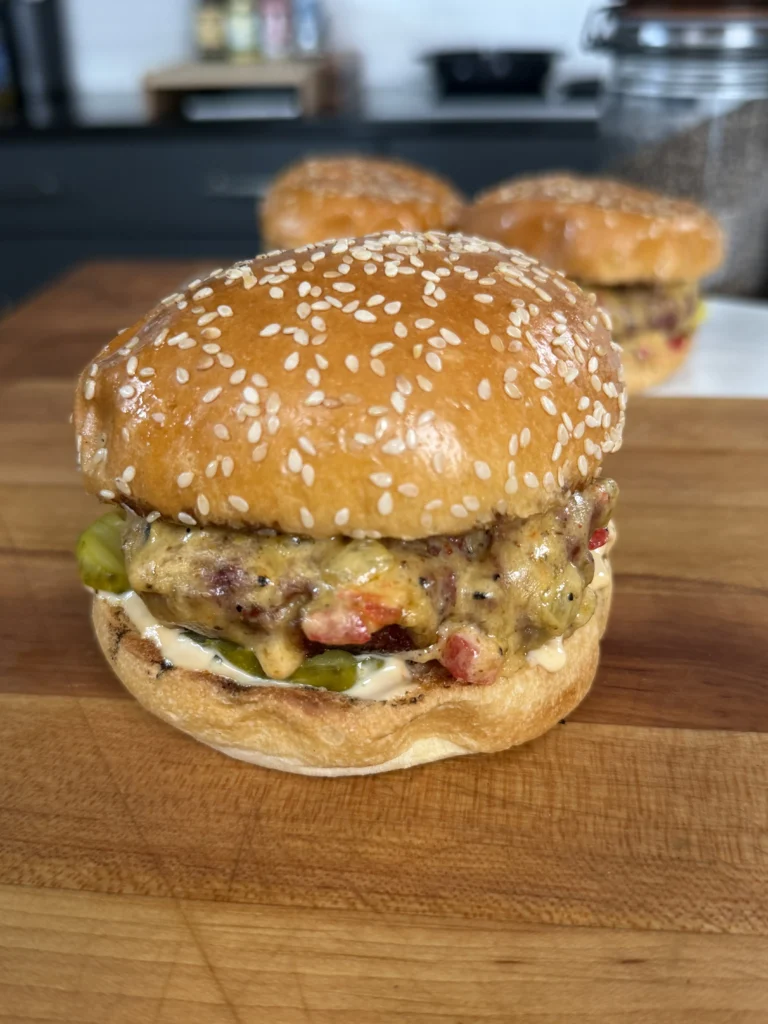
Pimento cheese works exceptionally well on smoked burgers. Its creamy, tangy richness balances the bold smoke flavor. It adds Southern comfort food appeal that complements BBQ-style cooking. The combination of sharp cheddar, mayonnaise, and pimentos creates a spread that melts beautifully over hot beef. It coats the burger in a way that individual cheese slices can’t match.
Sharp Cheddar Stands Up to Smoke
The sharp cheddar in pimento cheese provides intense cheese flavor. It stands up to heavy smoke without getting lost. Mild cheeses like American or mozzarella can taste bland next to deeply smoked beef. Sharp cheddar has enough tangy, complex flavor to hold its own.
When you shred the cheese fresh rather than using pre-shredded, it melts more smoothly. It lacks the anti-caking agents that prevent proper melting. The freshly shredded cheddar combines with mayonnaise to create a spreadable mixture. It distributes evenly across the burger surface.
Mayonnaise Creates Creamy Texture
The mayonnaise serves multiple purposes beyond just binding the pimento cheese together. Its fat content helps the cheese melt into a creamy sauce. It doesn’t separate into greasy pools and rubbery solids. The acidity from the mayonnaise’s vinegar or lemon juice cuts through the richness of both the beef and the cheese. This prevents the burger from tasting too heavy.
This acid balance is particularly important with fatty 80/20 ground beef. You need something bright to cut through all that richness.
Pimentos Add Flavor and Color
Pimentos add sweetness, mild heat, and visual appeal with their bright red color. The roasted red pepper flavor in pimentos complements smoke beautifully. Both have that slightly charred, fire-roasted quality. The small diced pieces create textural interest in the otherwise smooth cheese spread. You get little bursts of pepper flavor throughout each bite.
Better Coverage Than Cheese Slices
The spreadable consistency of pimento cheese versus solid cheese slices creates better coverage. It integrates better with the other burger components. You can spread pimento cheese edge to edge on the burger. This ensures every bite includes cheese flavor.
Sliced cheese tends to slide around on juicy burgers. It doesn’t always melt evenly. This leaves some bites cheese-heavy and others with none. The pimento cheese mixture stays put. It melts into a cohesive layer that binds to the beef.
Smoked Pimento Cheese Burgers
Slow-Smoked Beef with Creamy Pimento Cheese & Tangy Sauce
Ingredients
For the Smoked Burgers
- 2 pounds 80/20 ground beef
- 2 teaspoons kosher salt
- 1½ teaspoons cracked black pepper
- 1 teaspoon garlic powder
- ½ teaspoon smoked paprika (optional)
For the Pimento Cheese
- 2 cups sharp cheddar cheese, freshly shredded
- ½ cup mayonnaise
- ¼ cup diced pimentos, drained
- 1 teaspoon Dijon mustard
- ½ teaspoon garlic powder
- ½ teaspoon black pepper
- Pinch of cayenne pepper (optional)
For the Burger Sauce
- ½ cup mayonnaise
- 2 tablespoons ketchup
- 1 tablespoon yellow mustard
- 1 tablespoon pickle juice
- 1 teaspoon smoked paprika
- ½ teaspoon garlic powder
For Assembly
- 6 brioche burger buns
- Dill pickle chips
- 2 tablespoons butter for toasting buns
The key to perfect smoked burgers is the two-stage cooking method: low and slow smoke at 225°F to build deep wood-fired flavor, then a quick high-heat sear at 450°F to create a crust and lock in juices. This technique gives you maximum smoke penetration without drying out the beef.
Step-by-Step Instructions
Step 1: Prepare the Smoker and Form the Patties
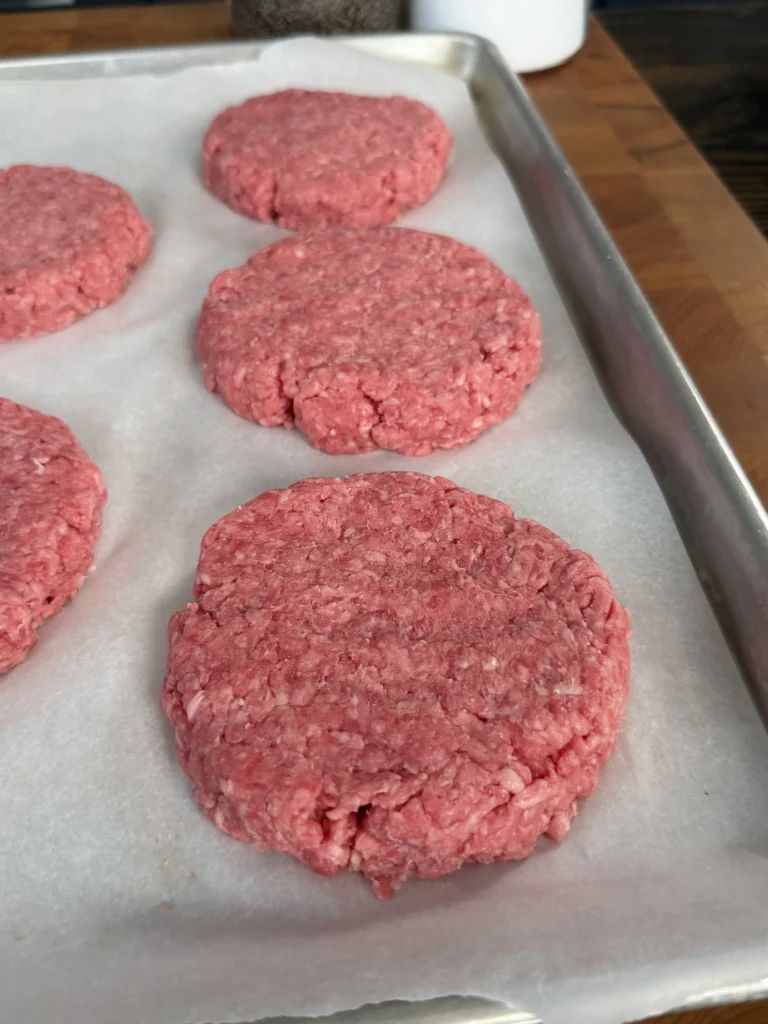
Preheat your pellet smoker, offset smoker, or grill set up for indirect heat to 225°F to 250°F. Add hickory or oak wood chunks to your firebox if using an offset smoker, or ensure your pellet hopper is filled with hickory or oak pellets. Let the smoker stabilize at temperature for 10 to 15 minutes before adding food, which ensures consistent heat and clean-burning smoke rather than thick white smoke from a cold start.
While the smoker heats, divide 2 pounds of 80/20 ground beef into 6 equal portions of roughly ⅓ pound each. Gently form each portion into a patty about ¾ inch thick, handling the meat as little as possible to avoid compressing it. Use your thumb to create a ½-inch deep indentation in the center of each patty, which prevents doming during cooking and promotes even thickness throughout.
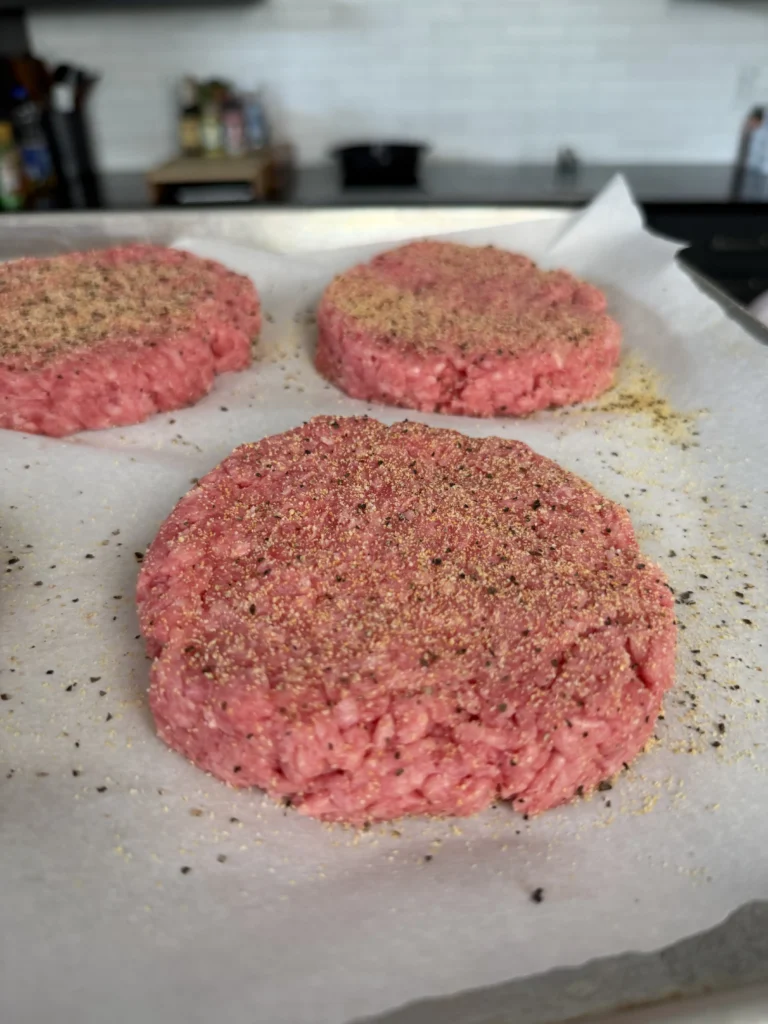
Season both sides of each patty with kosher salt, cracked black pepper, garlic powder, and smoked paprika if using. Use approximately ⅓ teaspoon of salt per patty and season evenly across the surface. Don’t work the seasonings into the meat by mixing them in before forming patties, which would create a sausage-like texture. The seasonings should sit on the surface where they form a flavorful crust.
Step 2: Make the Pimento Cheese While Smoker Heats
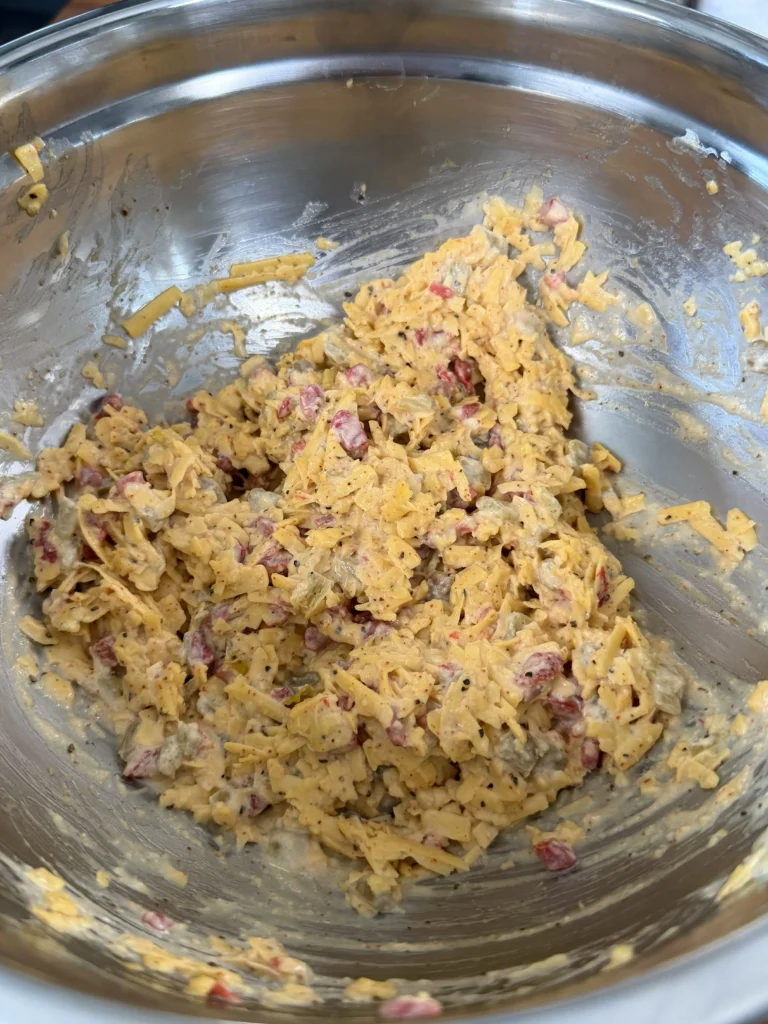
In a medium bowl, combine 2 cups freshly shredded sharp cheddar cheese with ½ cup mayonnaise, ¼ cup drained diced pimentos, 1 teaspoon Dijon mustard, ½ teaspoon garlic powder, ½ teaspoon black pepper, and a pinch of cayenne pepper if you want subtle heat. Stir the mixture until everything combines into a creamy but slightly chunky spread, making sure the pimentos distribute evenly throughout.
Taste the pimento cheese and adjust seasoning if needed. It should taste sharp and tangy from the cheddar and mustard with creamy richness from the mayo. Cover the bowl and refrigerate for 15 to 20 minutes to allow flavors to meld and the mixture to firm up slightly, which makes it easier to spoon onto hot burgers later without it running off immediately.
The pimento cheese can be made up to 3 days ahead and stored in an airtight container in the refrigerator. Making it ahead actually improves the flavor as the ingredients have more time to blend together.
Step 3: Prepare the Burger Sauce
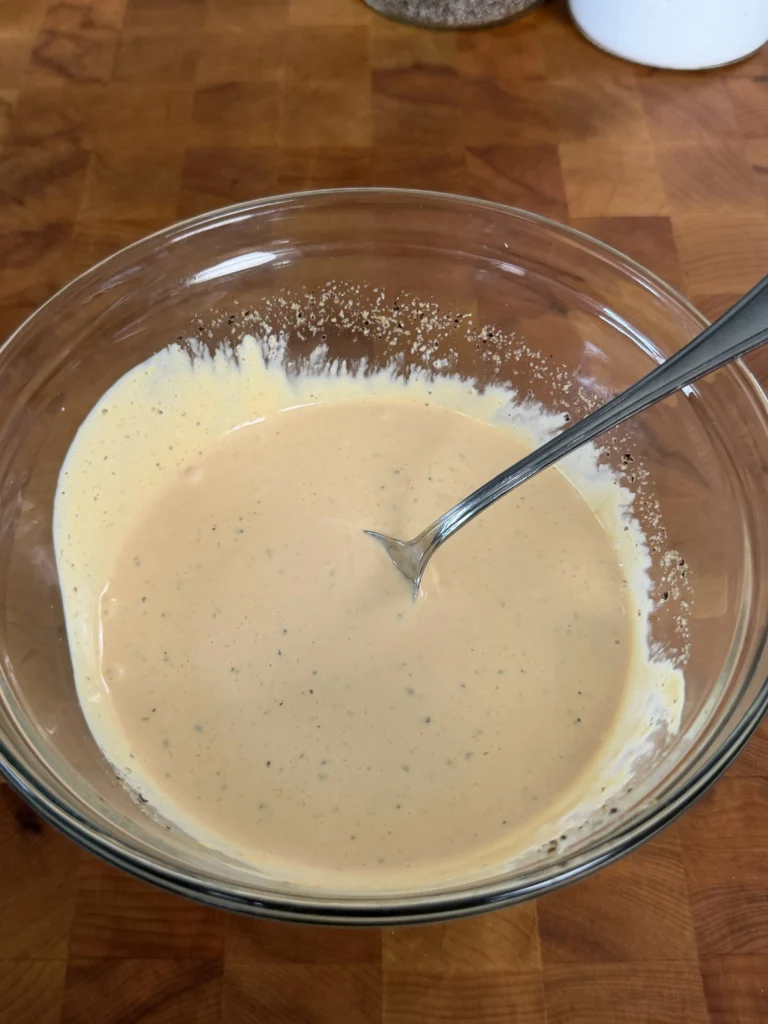
In a small bowl, whisk together ½ cup mayonnaise, 2 tablespoons ketchup, 1 tablespoon yellow mustard, 1 tablespoon pickle juice, 1 teaspoon smoked paprika, and ½ teaspoon garlic powder until smooth. The sauce should be pourable but thick enough to cling to the burger and bun without running off.
Taste and adjust the flavor by adding more pickle juice for tanginess, more ketchup for sweetness, or a pinch of salt if needed. The burger sauce provides acidic balance and creamy texture that ties together the smoky beef and rich pimento cheese. This sauce can also be made up to a week ahead and refrigerated.
Set the burger sauce aside at room temperature or refrigerate until ready to assemble the burgers. If refrigerated, let it come to room temperature before using so it spreads easily on the buns.
Step 4: Smoke the Burgers to Build Flavor
Once your smoker reaches 225°F to 250°F with clean blue smoke rather than thick white smoke, place the seasoned burger patties directly on the smoker grates. Space them at least 1 inch apart so smoke can circulate around each patty freely. Position the patties away from any direct heat source if you’re using a grill rather than a dedicated smoker.
Close the lid and smoke the burgers for 45 to 60 minutes without opening the smoker unnecessarily. Opening the lid repeatedly causes temperature fluctuations and smoke loss. Monitor the smoker temperature through a thermometer, adjusting vents or heat settings as needed to maintain the 225°F to 250°F range throughout cooking.
Start checking internal temperature at the 40-minute mark by inserting an instant-read thermometer into the center of the thickest patty. You’re targeting 125°F to 130°F for medium doneness, which accounts for the carryover cooking that will happen during the sear. Different patties may reach temperature at slightly different times depending on thickness variations, so check each one individually.
Remove the burgers from the smoker when they hit your target temperature. They should have a dark mahogany color on the outside from the smoke and seasonings, though they won’t have a true crust yet since you haven’t seared them.
Step 5: Sear the Burgers for Crust Development
While the burgers finish smoking, preheat a cast iron skillet, flat top griddle, or grill grates over high heat to 450°F to 500°F. You want the surface screaming hot so it creates an immediate sear when the burgers hit it. Test the temperature by flicking a few drops of water onto the surface; they should instantly vaporize and disappear with a sizzle.
Transfer the smoked burgers directly to the hot cooking surface and sear for 60 to 90 seconds without moving them. You should hear an immediate sizzle when the burgers make contact. After 60 to 90 seconds, flip the burgers using a sturdy spatula and sear the second side for another 60 to 90 seconds until a brown crust forms.
During the final 30 seconds of cooking, spoon a generous portion of pimento cheese (about ¼ cup) onto the top of each burger. The residual heat from the patty and the hot cooking surface will begin melting the cheese. If you’re using a grill with a lid, close it for the final 30 seconds to trap heat and help the cheese melt faster.
Remove the burgers from the heat when the pimento cheese starts melting and spreading across the top. The total searing time is only 2 to 3 minutes, which adds minimal internal temperature while creating the flavorful crust you want on the exterior.
Step 6: Toast the Buns
While the burgers sear, butter the cut sides of 6 brioche buns with softened butter. Place them cut-side down on the edge of your cooking surface away from direct high heat, or use a separate skillet over medium heat. Toast for 2 to 3 minutes until golden brown with visible grill marks or a crispy surface.
The toasted buns provide textural contrast with the juicy burger and creamy toppings while also creating a moisture barrier that prevents the bottom bun from getting soggy from burger juices and sauce. Don’t skip this step or your burgers will fall apart as you eat them.
Remove the buns from heat when they’re golden brown and crispy. The butter should be melted and absorbed into the bread, creating rich flavor and crunch.
Step 7: Assemble the Smoked Pimento Cheese Burgers
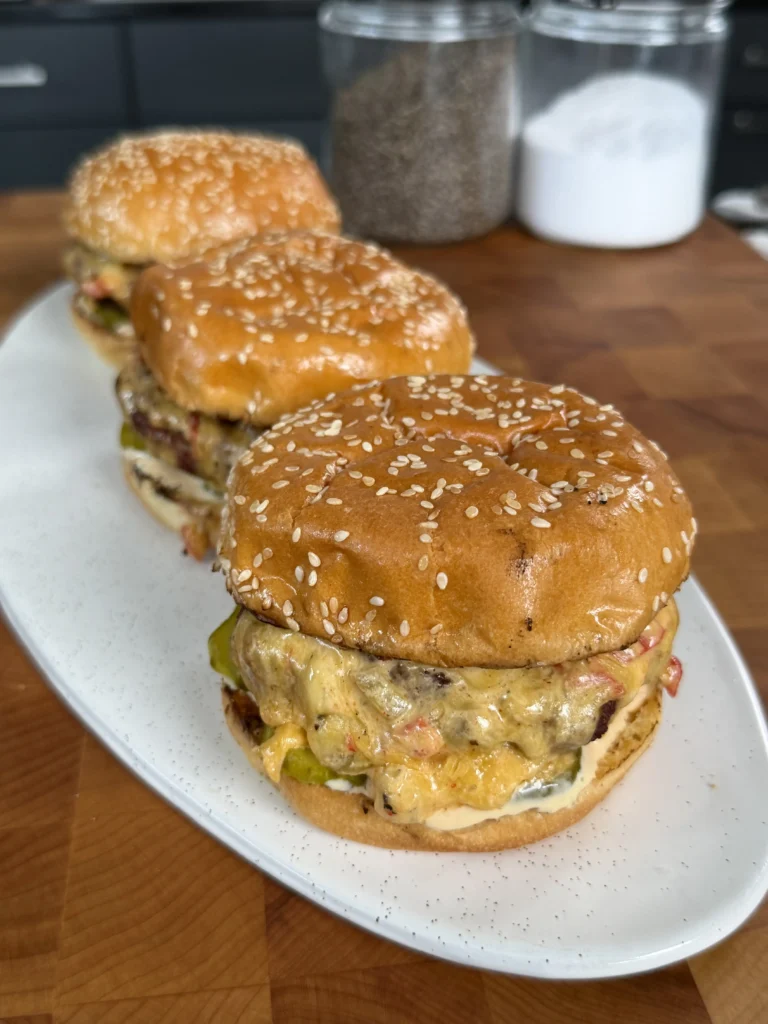
Spread a generous amount of burger sauce on the bottom half of each toasted brioche bun, using about 2 tablespoons per burger. Layer 3 to 4 dill pickle chips on top of the sauce, arranging them to cover most of the bun surface so every bite includes pickle flavor and crunch.
Place one burger patty with melted pimento cheese directly on the pickles. The pimento cheese should be partially melted and oozing slightly over the edges of the patty. If the cheese hasn’t melted enough, you can microwave the assembled burger bottom for 10 to 15 seconds to soften it further, though this usually isn’t necessary if you added it during the final sear.
Top with the toasted bun top and press down gently to compress the burger slightly. The assembly order of sauce, pickles, burger, cheese, and bun creates the best flavor and textural balance, with the acidic sauce and pickles cutting through the rich beef and cheese.
Serve the smoked pimento cheese burgers immediately while the patties are still hot and the pimento cheese is melted and creamy. These burgers are best eaten fresh within 10 to 15 minutes of assembly for optimal temperature and texture.
Smoked Pimento Cheese Burgers
Equipment
- Pellet Smoker or Grill
- Meat Thermometer
- Cast Iron Skillet or Flat Top
- Mixing Bowls
Ingredients
For the Smoked Burgers
- 2 pounds 80/20 ground beef
- 2 teaspoons kosher salt
- 1 1/2 teaspoons cracked black pepper
- 1 teaspoon garlic powder
- 1/2 teaspoon smoked paprika optional
For the Pimento Cheese
- 2 cups sharp cheddar cheese freshly shredded
- 1/2 cup mayonnaise
- 1/4 cup diced pimentos drained
- 1 teaspoon Dijon mustard
- 1/2 teaspoon garlic powder
- 1/2 teaspoon black pepper
- cayenne pepper pinch, optional
For the Burger Sauce
- 1/2 cup mayonnaise
- 2 tablespoons ketchup
- 1 tablespoon yellow mustard
- 1 tablespoon pickle juice
- 1 teaspoon smoked paprika
- 1/2 teaspoon garlic powder
For Assembly
- 6 brioche burger buns
- dill pickle chips
- 2 tablespoons butter for toasting buns
Instructions
- Preheat smoker to 225°F to 250°F with hickory or oak wood. Divide ground beef into 6 equal portions (about ⅓ pound each). Gently form into patties ¾ inch thick, creating a ½-inch indentation in the center of each with your thumb. Season both sides with salt, pepper, garlic powder, and smoked paprika.
- Make pimento cheese: Combine shredded cheddar, mayonnaise, pimentos, Dijon mustard, garlic powder, black pepper, and cayenne in a bowl. Mix until creamy but slightly chunky. Refrigerate 15 to 20 minutes to let flavors meld.
- Make burger sauce: Whisk together mayonnaise, ketchup, mustard, pickle juice, smoked paprika, and garlic powder until smooth. Set aside.
- Place seasoned burger patties on smoker grates, spacing them 1 inch apart. Close lid and smoke for 45 to 60 minutes until internal temperature reaches 125°F to 130°F for medium doneness. Check temperature starting at 40 minutes.
- Preheat cast iron skillet, flat top, or grill grates to 450°F to 500°F. Transfer smoked burgers to hot surface and sear 60 to 90 seconds per side until brown crust forms. During final 30 seconds, add about ¼ cup pimento cheese to each burger and let it begin melting.
- Butter brioche buns and toast cut-side down for 2 to 3 minutes until golden brown.
- Assemble burgers: Spread burger sauce on bottom bun, add 3 to 4 pickle chips, place burger with melted pimento cheese on top, and finish with toasted top bun. Serve immediately while hot.
Notes
Frequently Asked Questions
Can You Make Smoked Burgers on a Regular Grill?
You can absolutely make smoked pimento cheese burgers on a regular charcoal or gas grill by setting it up for two-zone indirect cooking. For charcoal grills, pile all the hot coals on one side and place the burgers on the empty side. Add 2 to 3 wood chunks directly on the coals for smoke. For gas grills, turn on burners on one side only and use a smoker box with wood chips over the lit burners.
Maintain 225°F to 250°F on the cool side where the burgers sit, adjusting vents or burner settings as needed. Smoke for 45 to 60 minutes until burgers reach 125°F to 130°F internally, then move them directly over the hot coals or lit burners for the 60 to 90-second per side sear. The main challenge is temperature control since grills fluctuate more than dedicated smokers, so monitor your thermometer closely.
How Do You Know When Smoked Burgers Are Done?
Use an instant-read thermometer inserted horizontally into the center of the patty for the most accurate reading. Pull burgers from the smoker when they reach 125°F to 130°F internally, which accounts for the additional 5 to 10 degrees they’ll gain during the finishing sear. After searing and resting, the final temperature should be around 135°F to 140°F for medium doneness.
Visual cues can supplement temperature checking but shouldn’t replace it. After smoking, burgers should have a dark reddish-brown exterior from smoke, and the center should feel slightly soft and springy when pressed rather than firm and dense. Let burgers rest for 3 to 5 minutes after searing, during which the temperature may rise another 2 to 3 degrees from carryover cooking.
Can You Make Pimento Cheese Ahead of Time?
You should make pimento cheese up to 3 days ahead because the flavors improve as ingredients meld together in the refrigerator, and it reduces your workload on cooking day. Store in an airtight container at 40°F or below, pressing plastic wrap directly against the surface to prevent oxidation and drying out.
Pimento cheese thickens in the refrigerator, which actually makes it easier to spoon onto hot burgers without running off. If it seems too thick after refrigeration, let it sit at room temperature for 15 to 20 minutes before using. The shelf life is 3 to 5 days refrigerated, and you should never freeze it because the mayonnaise separates and becomes grainy when thawed.
What Temperature Should I Smoke Burgers At?
Smoke burgers at 225°F to 250°F for the best balance of smoke penetration and moisture retention. This temperature range is low enough to allow extended cooking time for smoke flavor to develop deeply without drying out the beef. Higher temperatures above 275°F cook the burgers too quickly for proper smoke absorption, while temperatures below 200°F take too long and can leave the meat in the temperature danger zone.
Monitor your smoker temperature throughout cooking and adjust vents or heat settings to maintain the 225°F to 250°F range. Temperature fluctuations of 10 to 15 degrees are normal and acceptable, but avoid spikes above 275°F or drops below 200°F for best results.
Can I Use Ground Turkey or Chicken Instead of Beef?
You can use ground turkey or chicken for smoked burgers, but the results will be significantly different in both flavor and texture. Poultry has less fat than 80/20 beef, so the burgers will be drier and less juicy even when cooked properly. Use ground turkey or chicken with at least 15% fat content (85/15) to get acceptable moisture, and consider adding a tablespoon of olive oil per pound to compensate for lower natural fat.
Poultry must reach 165°F internal temperature for food safety, so smoke to 155°F then sear to bring it to 165°F. The smoke flavor will be more prominent on leaner poultry since there’s less fat to balance it, so consider using milder oak instead of bold hickory. Pimento cheese still works well as a topping since the creamy richness compensates for the drier meat.
What If I Don’t Have Pimento Cheese?
If you don’t have pimento cheese, use sharp cheddar, pepper jack, American cheese, or provolone as simple substitutes that still melt well on smoked burgers. Sharp cheddar provides similar tangy cheese flavor without the creamy pimento mixture, while pepper jack adds spicy kick that complements smoke. American cheese melts into that classic gooey burger cheese layer, and provolone offers mild, smoky notes.
For a closer approximation without making full pimento cheese, mix shredded cheddar with a spoonful of mayonnaise to create a spreadable mixture that melts similarly. You lose the roasted red pepper flavor from pimentos, but you keep the creamy, spreadable consistency that makes pimento cheese work so well on burgers.
How Long Do Smoked Burgers Take?
Smoked burgers take 45 to 60 minutes for the smoking phase at 225°F to 250°F, plus 2 to 3 minutes for the finishing sear, for a total cooking time of about 50 to 65 minutes. The exact time depends on patty thickness, smoker temperature accuracy, and how crowded your smoker is. Thicker ¾-inch patties need closer to 60 minutes, while thinner ½-inch patties may be ready in 45 minutes.
Start checking internal temperature at the 40-minute mark to avoid overcooking. Different patties may finish at slightly different times even when they start the same size, so check each one individually rather than assuming they’re all done at the same time.
If you’re looking for more recipes like this recipe, click the link! Check out all of our grilling recipes here for more steak, seafood, and BBQ favorites that are perfect for your next cookout.
COMMON ITEMS USED IN THESE RECIPES
Hasty Bake Charcoal Grill and Smoker
Knitted Gloves
Food Processor
Cast Iron Skillet
Meater +
Upgrade Your Meat Game with Grill Nation x Linz Heritage Angus
If you really want to take your grilling and cooking to the next level, you need to check out our collaboration with Linz Heritage Angus. We’ve partnered with them to bring you some of the best beef you can get your hands on.
Linz Heritage Angus isn’t your typical grocery store meat. These guys are the real deal – they raise their cattle the right way, and you can taste the difference in every bite. We’re talking about beef that’s been dry-aged to perfection, with marbling that makes your mouth water just looking at it.
Check out these premium cuts that’ll change how you think about beef:
Premium Ribeye Steaks – Perfect for special occasions
Dry-Aged Beef Selection – Take your grilling to the next level
Ground Beef & Burger Blends – The foundation of great BBQ