Honey Sriracha Hot Dog Burnt Ends
Honey sriracha hot dog burnt ends are thick all-beef hot dogs cut into nuggets, smoked at 250°F for 2 hours, then glazed with honey, Sriracha, BBQ sauce, and butter until sticky and caramelized. The hot dogs get coated with mustard and a brown sugar rub before smoking. This creates a bark similar to traditional pork belly burnt ends. After smoking for 45 to 60 minutes, you transfer them to a foil pan with the glaze. They braise covered for 45 minutes, then cook uncovered for 20 to 30 minutes until the sauce thickens into a lacquered coating.
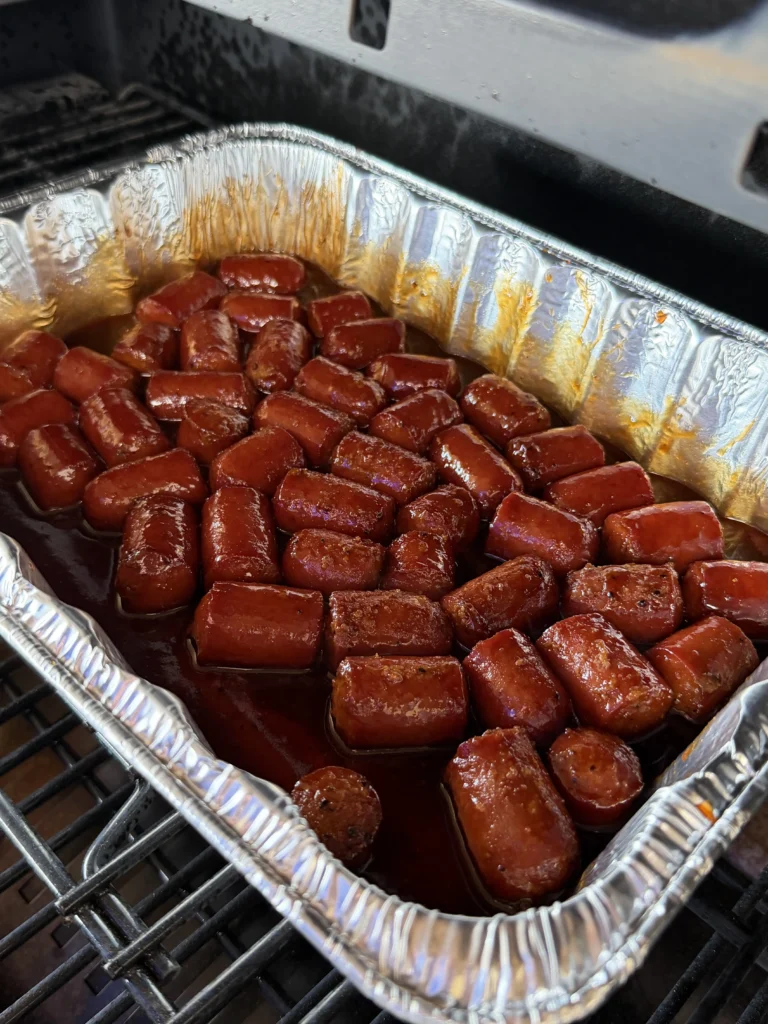
The process mimics traditional burnt ends technique but uses hot dogs instead of brisket point or pork belly. You get that same sticky, sweet, smoky result in a fraction of the time. The honey provides sweetness, Sriracha adds heat, soy sauce contributes umami depth, and butter creates richness. These smoked hot dog burnt ends work perfectly as game day appetizers, party snacks, or BBQ sides.
The whole process takes about 2 hours and 15 minutes from start to finish. This includes cutting the hot dogs, coating them with rub, smoking, braising in glaze, and finishing uncovered. The result is sticky, smoky nuggets with crispy caramelized edges and juicy centers. Each bite delivers sweet heat balanced by savory BBQ flavors.
Why Hot Dogs Work Better Than You’d Expect for Burnt Ends
Hot dogs work surprisingly well for burnt ends because they’re already fully cooked and heavily seasoned. This means they can’t dry out or become tough like raw meat. All-beef hot dogs contain enough fat to stay juicy through extended smoking and braising. The fat renders slowly and bastes the meat from the inside.
The natural casing on quality hot dogs provides texture that crisps beautifully during smoking. When exposed to smoke and dry heat, the casings blister and develop bark similar to smoked brisket. This gives you that satisfying snap when you bite in. Regular skinless hot dogs work but won’t develop the same textural contrast.
Hot dogs also absorb smoke flavor effectively because of their fat content. Fat is a flavor carrier. As the hot dogs smoke, they take on wood-fired character that enhances rather than overpowers their seasoned taste. The pre-existing spices in the hot dogs complement BBQ rub and glaze rather than fighting with them.
The uniform size and composition of hot dogs create consistent results. Unlike pork belly burnt ends where you might have varying ratios of fat to meat, hot dogs are standardized. Every piece cooks at the same rate. This means you don’t need to babysit them or worry about some pieces overcooking while others need more time.
Cost and availability make hot dogs practical for feeding crowds. Premium all-beef hot dogs cost significantly less per pound than brisket point or pork belly. They’re available year-round at any grocery store. You can make a full batch of burnt ends for a fraction of what traditional versions cost. This makes them perfect for parties, tailgates, or casual cookouts where you need quantity without breaking the budget.
What Type of Hot Dogs to Use for Burnt Ends
Premium all-beef hot dogs work best for hot dog burnt ends because they have better flavor, higher meat content, and natural casings that crisp properly. Cheap hot dogs contain fillers, mechanically separated meat, and artificial flavors. These create mushy texture and poor smoke absorption.
Look for hot dogs labeled as all-beef with natural casings. Hebrew National, Nathan’s Famous, and Boar’s Head are widely available quality brands. Butcher-shop franks or artisan hot dogs work even better if you have access to them. These premium options contain real beef, minimal fillers, and natural spices. They taste significantly better after smoking compared to economy brands.
The thickness matters more than you might expect. Regular-sized hot dogs work but quarter-pound or jumbo hot dogs create better burnt ends. Thicker hot dogs have more mass to develop caramelized edges while staying juicy inside. When you cut them into 1½ to 2-inch chunks, thick hot dogs give you substantial nuggets. Regular thin hot dogs can dry out more easily during the 2-hour smoking process.
Natural casings provide the snap and texture that make burnt ends satisfying. Most premium brands use natural casings made from sheep or hog intestines. These casings blister and crisp during smoking, creating bark. Skinless hot dogs have smooth exteriors that don’t develop the same texture. They can work in a pinch but won’t give you that authentic burnt ends experience.
Avoid chicken, turkey, or mixed-meat hot dogs for this recipe. Poultry hot dogs contain less fat and different protein structures. They dry out more easily during extended smoking. The flavor also tastes noticeably different and doesn’t pair as well with BBQ rub and honey sriracha glaze. Stick with all-beef for the best results.
Smoked sausage or kielbasa can substitute if you can’t find quality hot dogs. Cut them into similar-sized chunks and follow the same process. The flavor profile will be different but still delicious. Just avoid pre-smoked varieties which can become overly smoky with additional smoking time.
How Mustard Helps Rub Stick to Hot Dogs
Yellow mustard acts as a binder that helps the dry rub adhere to the slick, fatty surface of hot dogs. Without a binder, the rub simply rolls off the hot dogs when you try to coat them. The moisture in mustard creates a tacky surface. Rub particles stick to this surface and stay put during smoking.
The mustard flavor cooks off almost completely during the smoking process. You won’t taste mustard in the finished burnt ends. It serves purely a functional purpose rather than contributing to the final flavor profile. Some people worry mustard will make everything taste mustardy, but this doesn’t happen. The smoke, rub, and glaze overpower any residual mustard taste.
The vinegar in yellow mustard also helps tenderize the hot dog casings slightly. This minor tenderizing effect makes the casings more receptive to smoke penetration. It doesn’t change the texture noticeably. It just allows smoke flavor to permeate slightly better than it would on completely untreated casings.
You need very little mustard to get the job done. About 2 tablespoons covers 2 pounds of cut hot dogs. Toss the hot dog chunks in a bowl with the mustard until they’re lightly coated. You’re not making them dripping wet. Just a thin film that you can barely see is sufficient. Too much mustard can make the rub clump and create uneven coverage.
Alternatives to yellow mustard include olive oil, hot sauce, or Worcestershire sauce. Any liquid with slight thickness works as a binder. Hot sauce adds flavor and works particularly well with the sriracha glaze. Worcestershire adds umami depth. But yellow mustard remains the most common choice because it’s neutral-tasting, inexpensive, and widely available.
Hot Dog Burnt Ends
Sticky Honey Sriracha Glazed Smoked Hot Dog Nuggets
Ingredients
For the Hot Dogs
- 2 pounds all-beef hot dogs (thick, premium brands like Hebrew National or Nathan’s)
- 2 tablespoons yellow mustard (for binding)
For the Rub
- 2 tablespoons brown sugar
- 2 teaspoons smoked paprika
- 1½ teaspoons garlic powder
- 1½ teaspoons onion powder
- 1 teaspoon black pepper
- 1 teaspoon kosher salt
- 1 teaspoon chili powder
- ½ teaspoon cayenne pepper (optional for extra heat)
Burnt End Glaze
- ½ cup honey
- ½ cup BBQ sauce (sweet and smoky style)
- ¼ cup Sriracha sauce (adjust to heat preference)
- 3 tablespoons butter
- 2 tablespoons soy sauce
- 1 tablespoon apple cider vinegar
Optional Finish
- Toasted sesame seeds
- Sliced green onions
The secret to perfect hot dog burnt ends is cutting them into 1½ to 2-inch chunks rather than smaller pieces. Larger chunks maintain enough mass to develop caramelized edges while staying juicy inside during the 2-hour smoking process. Smaller pieces dry out before the glaze can candy properly.
Step-by-Step Instructions
Step 1: Cut and Season the Hot Dogs
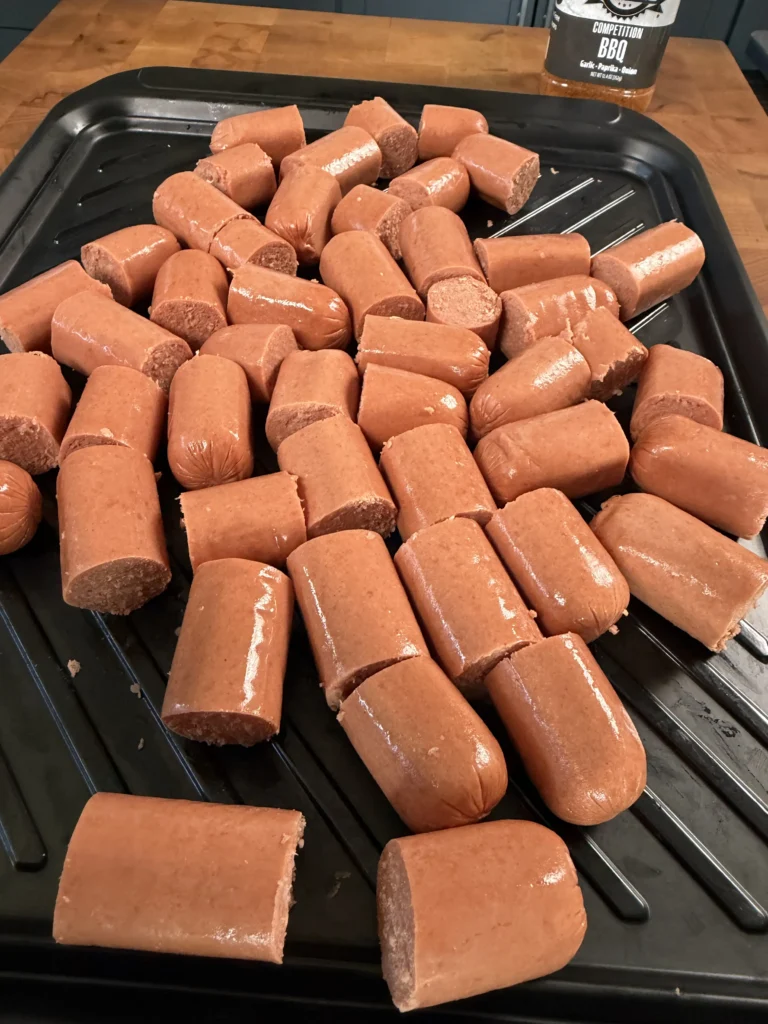
Remove 2 pounds of all-beef hot dogs from their packaging. Pat them dry with paper towels to remove any surface moisture or brine. Use a sharp knife to cut each hot dog into chunks 1½ to 2 inches long. This size gives you substantial nuggets that won’t dry out during smoking.
Transfer the hot dog chunks to a large bowl. Add 2 tablespoons yellow mustard and toss until all pieces are lightly coated. The mustard creates a tacky surface for the rub to stick to. You should see a thin film of mustard on each chunk.
In a small bowl, combine 2 tablespoons brown sugar, 2 teaspoons smoked paprika, 1½ teaspoons garlic powder, 1½ teaspoons onion powder, 1 teaspoon black pepper, 1 teaspoon kosher salt, 1 teaspoon chili powder, and ½ teaspoon cayenne if using. Mix the rub ingredients thoroughly.
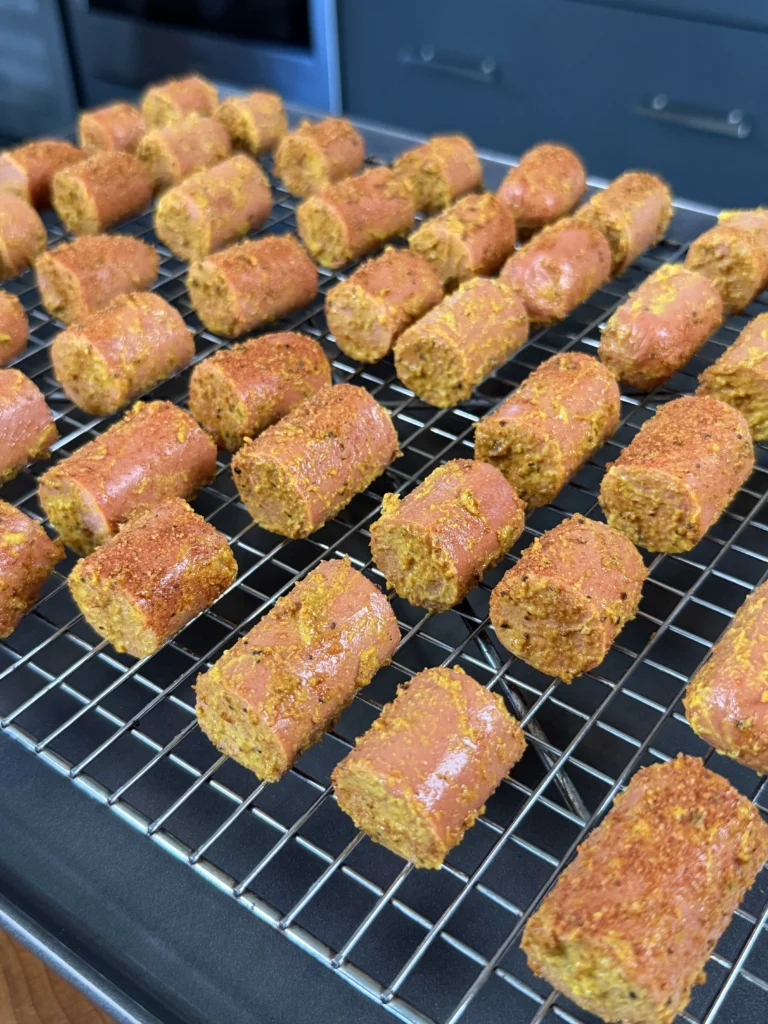
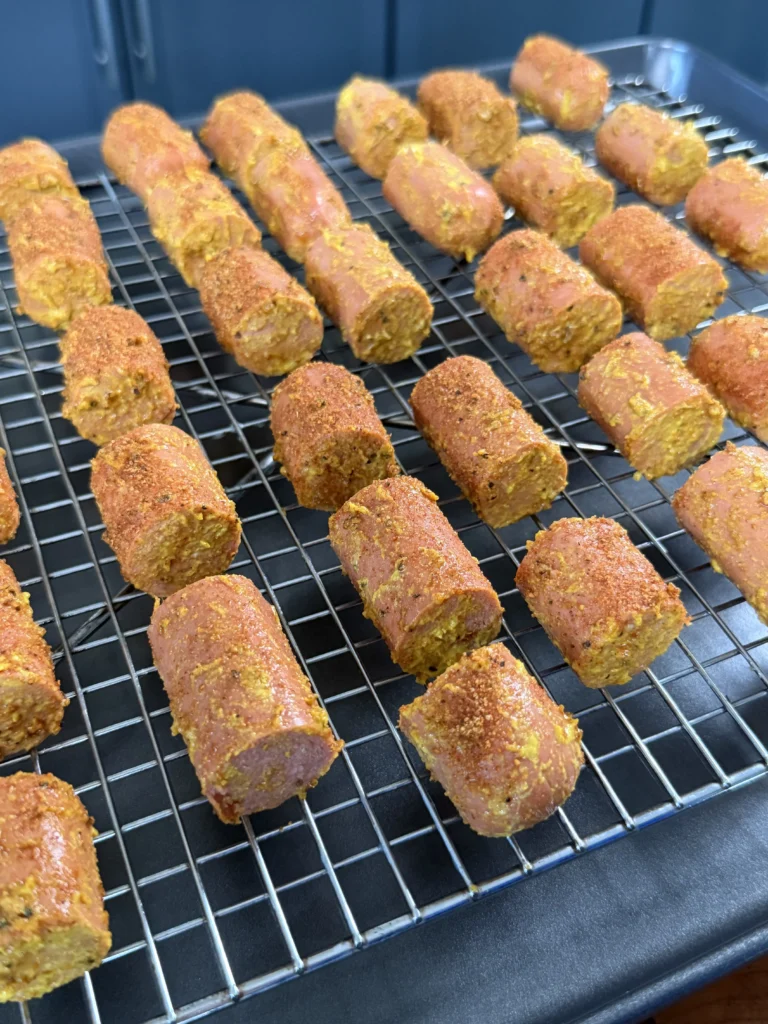
Sprinkle the rub over the mustard-coated hot dog chunks. Toss to coat evenly, making sure every piece gets covered. The coating should look generous and slightly thick. Let the seasoned hot dogs sit at room temperature for 10 to 15 minutes while you preheat the smoker.
Step 2: Preheat the Smoker and Start Smoking
Preheat your pellet smoker, offset smoker, or grill set up for indirect heat to 250°F. Add apple or cherry wood chunks to your firebox if using an offset smoker. Make sure your pellet hopper is filled with apple or cherry pellets for pellet smokers. Let the smoker stabilize at temperature for 10 to 15 minutes. You want clean blue smoke rather than thick white smoke.
Place the seasoned hot dog chunks directly on the smoker grates. Space them about ½ inch apart so smoke can circulate around each piece. Don’t crowd them or stack them on top of each other. If you’re worried about small pieces falling through the grates, use a grill mat or place them on a perforated pizza pan.
Close the lid and smoke for 45 to 60 minutes without opening the smoker unnecessarily. You’re looking for the hot dogs to develop bark on the exterior. The edges should start darkening and looking caramelized. The casings will blister and become slightly crispy. Some fat will render and make the hot dogs look slightly shrunken.
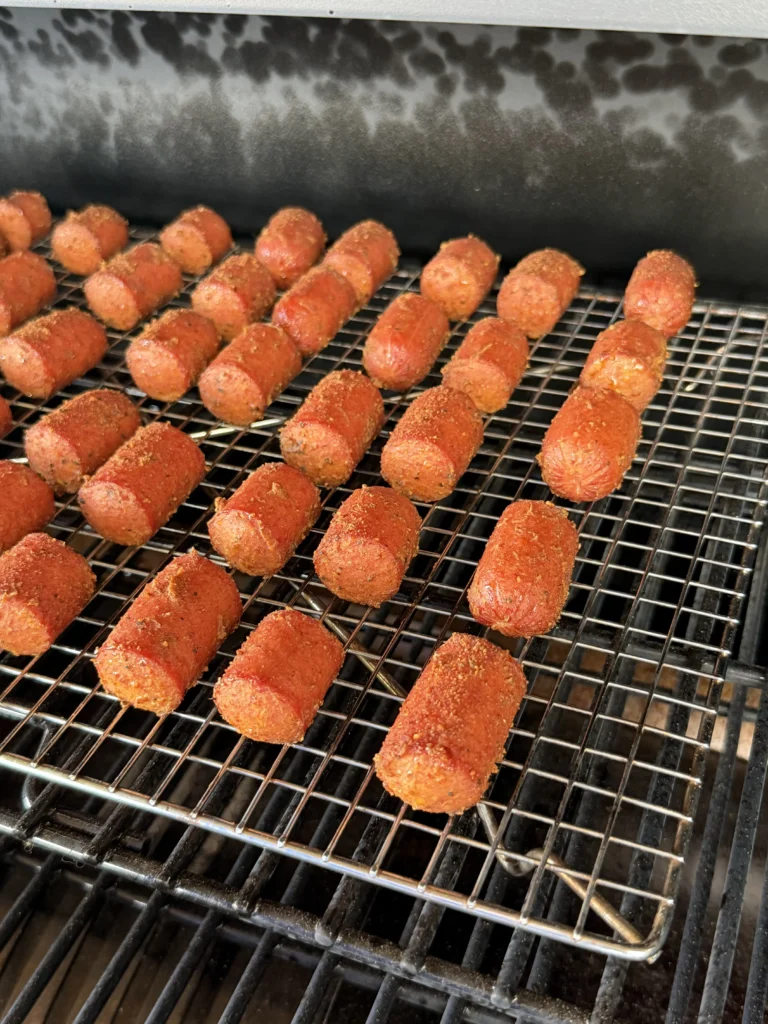
The hot dogs should smell smoky and look like they have a dry, seasoned crust forming. They won’t be falling-apart tender like brisket burnt ends. They should just look well-smoked with good color development and visible bark in spots.
Step 3: Make the Glaze and Transfer to Foil Pan
While the hot dogs smoke, prepare your glaze in a medium saucepan on the stovetop or on a side burner. Combine ½ cup honey, ½ cup BBQ sauce, ¼ cup Sriracha, 3 tablespoons butter, 2 tablespoons soy sauce, and 1 tablespoon apple cider vinegar. Whisk everything together over medium heat until the butter melts and the sauce combines into a smooth mixture.
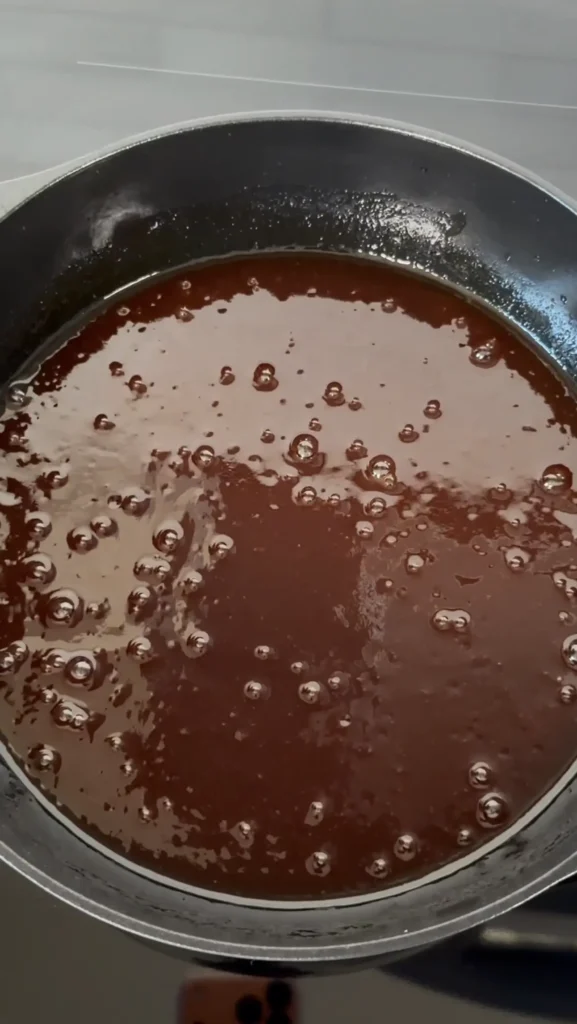
Let the glaze simmer for 2 to 3 minutes, stirring occasionally. You’re just heating it through and allowing flavors to blend. Don’t cook it down or reduce it significantly at this stage. Turn off the heat and set the glaze aside until the hot dogs finish their initial smoking phase.
After the hot dogs have smoked for 45 to 60 minutes, remove them from the smoker grates. Transfer them to a disposable aluminum foil pan that’s at least 2 inches deep. A standard 9×13-inch foil pan works well for this quantity.
Pour the warm glaze over the hot dogs in the pan. Use a spoon or spatula to gently stir, making sure every piece gets coated with sauce. The glaze should cover the hot dogs but doesn’t need to completely submerge them.
Step 4: Braise Covered in the Smoker
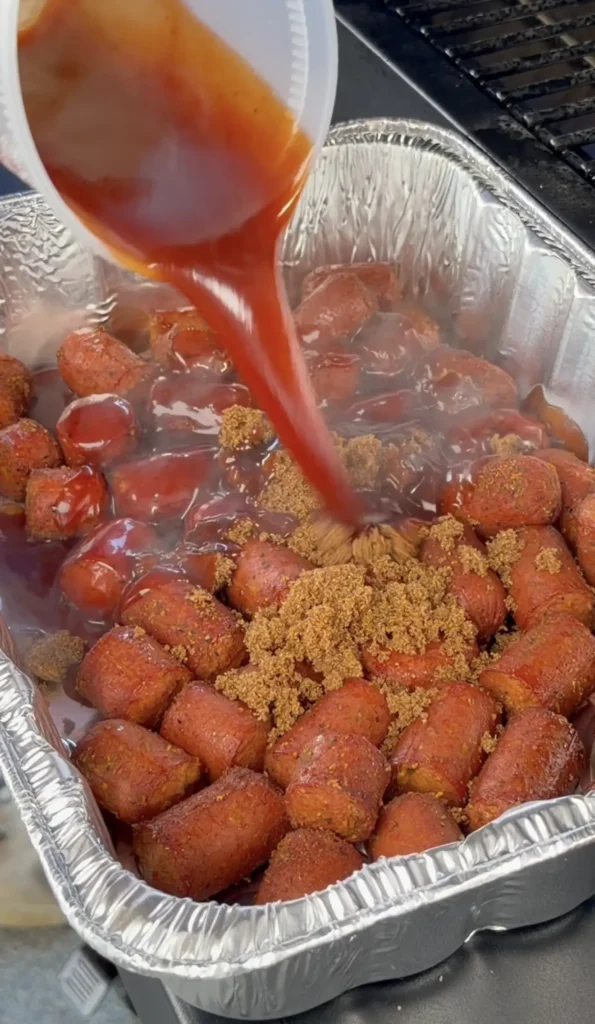
Cover the foil pan loosely with aluminum foil. You want to trap most of the steam and heat but allow some airflow. Don’t seal it completely or create a tight seal. Just lay foil over the top and crimp it lightly around the edges.
Place the covered pan back in the smoker at 250°F. Close the lid and let the hot dogs braise for 45 minutes. During this time, the glaze will reduce and concentrate. The hot dogs will absorb smoke flavor that penetrates through the foil cover. The butter and honey will combine with the rendered fat from the hot dogs.
You don’t need to stir or check on them during this phase. Just maintain the 250°F temperature and let them cook undisturbed. The braising creates tender, flavorful burnt ends while keeping them moist.
Step 5: Uncover and Set the Glaze
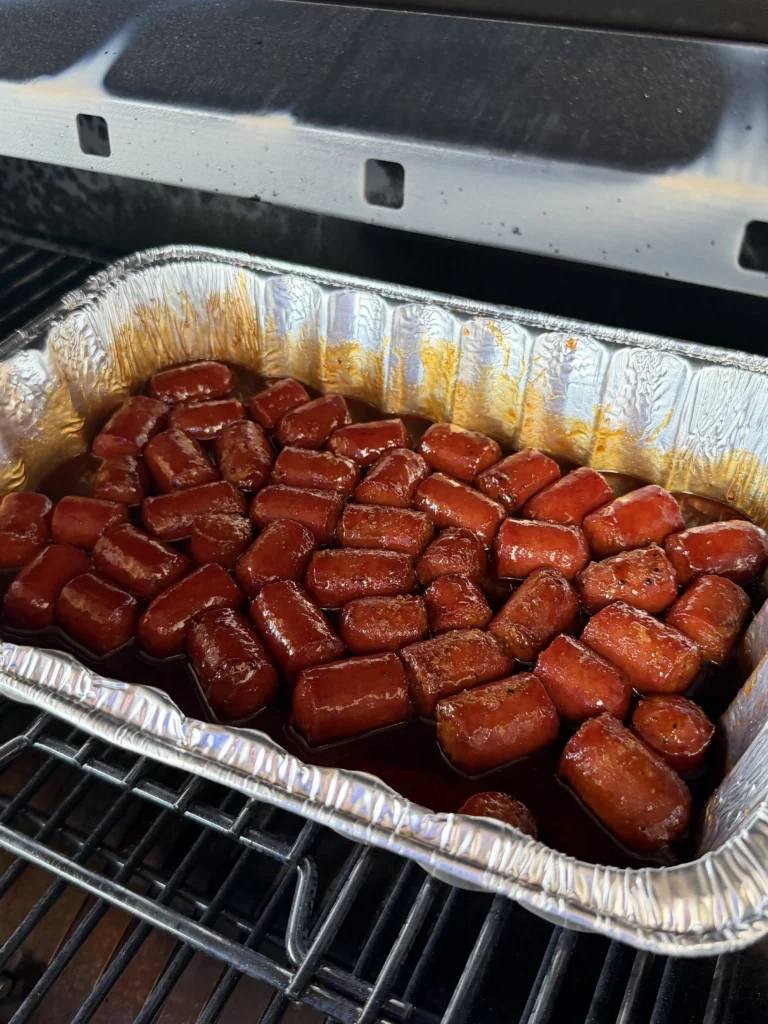
After 45 minutes of covered braising, carefully remove the foil cover from the pan. The hot dogs should be swimming in thickened, glossy sauce. Be careful of steam when you remove the foil.
Return the uncovered pan to the smoker. Cook for 20 to 30 minutes more, stirring gently every 10 minutes. You’re looking for the sauce to thicken considerably and develop that sticky, lacquered appearance. The edges of the hot dogs should look candied and glossy.
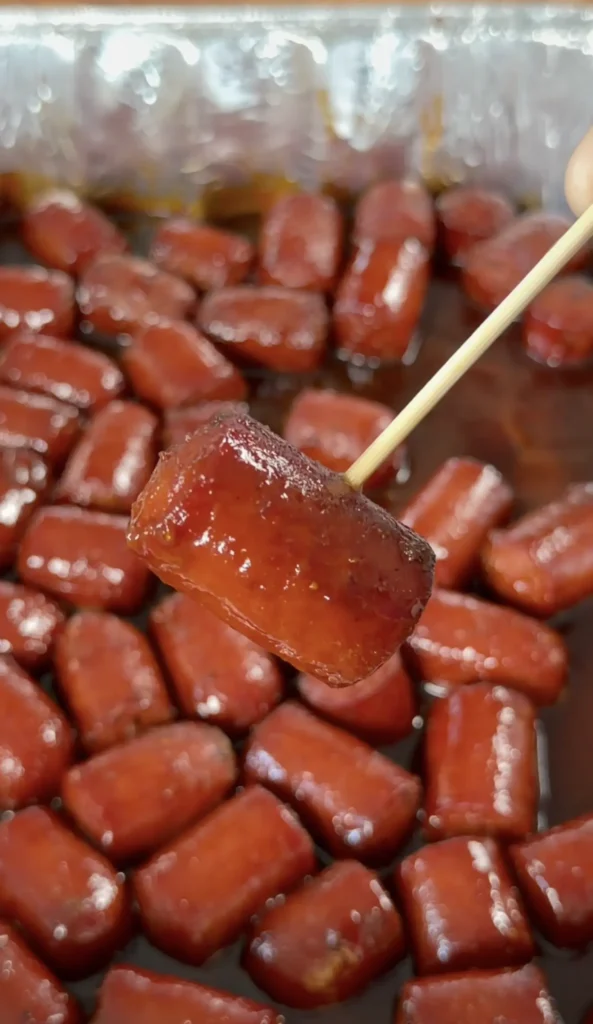
The sauce should cling to the hot dogs rather than pooling at the bottom of the pan. When you lift a hot dog with tongs, sauce should coat it in a thick layer that doesn’t immediately drip off. The surface should look shiny like candy.
If the sauce seems too thin after 25 minutes, continue cooking for another 5 to 10 minutes. If it’s reducing too fast and threatening to burn, remove the pan earlier. Watch for the sauce to bubble and thicken around the hot dog chunks.
Step 6: Finish and Serve
Remove the pan from the smoker when the glaze reaches your desired thickness. Let the honey sriracha hot dog burnt ends cool in the pan for 3 to 5 minutes. This brief resting period allows the glaze to set slightly and become even stickier.
Transfer the hot dog burnt ends to a serving platter or bowl. Sprinkle with toasted sesame seeds and sliced green onions if using. The sesame seeds add visual appeal and slight nutty flavor. The green onions provide fresh color and mild onion bite.
Serve with toothpicks so guests can easily grab individual pieces without getting sticky fingers. These work great as appetizers, party snacks, or alongside other BBQ. They’re best served warm rather than hot. The glaze sets better and tastes sweeter at warm temperature compared to piping hot.
Honey Sriracha Hot Dog Burnt Ends
Ingredients
For the Hot Dogs:
- 2 pounds all-beef hot dogs thick, premium brands
- 2 tablespoons yellow mustard
For the Rub:
- 2 tablespoons brown sugar
- 2 teaspoons smoked paprika
- 1½ teaspoons garlic powder
- 1½ teaspoons onion powder
- 1 teaspoon black pepper
- 1 teaspoon kosher salt
- 1 teaspoon chili powder
- ½ teaspoon cayenne pepper optional
Burnt End Glaze:
- ½ cup honey
- ½ cup BBQ sauce sweet and smoky style
- ¼ cup Sriracha sauce
- 3 tablespoons butter
- 2 tablespoons soy sauce
- 1 tablespoon apple cider vinegar
Optional Finish:
- Toasted sesame seeds
- Sliced green onions
Instructions
- Cut hot dogs into 1½ to 2-inch chunks. Toss with yellow mustard in a large bowl until lightly coated. Mix together brown sugar, smoked paprika, garlic powder, onion powder, black pepper, salt, chili powder, and cayenne. Sprinkle rub over hot dogs and toss to coat evenly. Let sit 10 to 15 minutes.
- Preheat smoker to 250°F with apple or cherry wood. Place hot dog chunks on smoker grates spaced ½ inch apart. Close lid and smoke for 45 to 60 minutes until edges darken, casings blister, and bark develops.
- While hot dogs smoke, make glaze: Combine honey, BBQ sauce, Sriracha, butter, soy sauce, and vinegar in saucepan over medium heat. Whisk until butter melts and mixture combines. Simmer 2 to 3 minutes. Remove from heat.
- Transfer smoked hot dogs to aluminum foil pan. Pour warm glaze over hot dogs and stir gently to coat. Cover pan loosely with foil. Return to smoker at 250°F and braise covered for 45 minutes.
- Remove foil cover from pan. Continue cooking uncovered for 20 to 30 minutes, stirring every 10 minutes, until sauce thickens and coats hot dogs with sticky, lacquered glaze. Edges should look candied and glossy.
- Remove from smoker and let cool 3 to 5 minutes. Transfer to serving platter and sprinkle with sesame seeds and green onions if using. Serve with toothpicks.
Notes
Storage: Refrigerate leftovers up to 4 days in airtight container. Reheat gently in covered pan in 300°F oven for 10 to 15 minutes or microwave at 50% power.
Frequently Asked Questions
Can You Make Hot Dog Burnt Ends Without a Smoker?
You can make hot dog burnt ends in a regular oven though they won’t have smoke flavor. Preheat oven to 300°F. Cut and season hot dogs as directed. Place them on a wire rack over a baking sheet. Bake for 30 minutes. Transfer to foil pan with glaze, cover, and bake 45 minutes. Uncover and bake 20 to 30 minutes more until sticky.
Add liquid smoke to the glaze (1 to 2 teaspoons) to approximate smoke flavor. Use smoked paprika in the rub for additional smoke notes. The texture will be similar but the authentic wood-fired flavor only comes from actual smoking.
For closer approximation, use an outdoor grill. Set up for two-zone indirect cooking with wood chunks on the coals. Follow the smoking method but use the grill instead of a dedicated smoker.
How Spicy Are Honey Sriracha Hot Dog Burnt Ends?
Honey sriracha hot dog burnt ends have moderate heat that most people find pleasant rather than overwhelming. The ¼ cup Sriracha in the glaze provides noticeable spice. But the ½ cup honey balances it with sweetness. The result is sweet heat rather than pure burn.
You can adjust heat level easily. For mild version, reduce Sriracha to 2 tablespoons or use sweet chili sauce instead. For spicier burnt ends, increase Sriracha to ⅓ to ½ cup. Add extra cayenne to the rub. Include diced jalapeños in the glaze.
The braising process mellows the Sriracha somewhat. Direct hot sauce tastes sharper. When mixed with honey, butter, and BBQ sauce, then cooked for over an hour, the heat becomes more rounded and less aggressive.
Can You Use Different Hot Dog Sizes?
You can use regular-sized hot dogs instead of jumbo but the results won’t be quite as good. Regular hot dogs create smaller burnt end pieces. They dry out more easily during the 2-hour smoking process. Cut them into 1-inch chunks instead of 1½ to 2 inches. Reduce total smoking time to 90 minutes instead of 2 hours.
Quarter-pound or jumbo hot dogs work best. They have enough mass to stay juicy. When cut into larger chunks, they provide substantial bite-sized pieces. The ratio of caramelized exterior to juicy interior is better with thicker hot dogs.
Cocktail weenies or mini hot dogs can work for smaller portions. Cut smoking time to 60 to 75 minutes total. Watch carefully during uncovered glazing phase. They burn more easily than full-sized hot dogs.
What Can You Serve With Hot Dog Burnt Ends?
Hot dog burnt ends work as standalone appetizers or pair with classic BBQ sides. Serve them with toothpicks on a platter for parties. Guests can grab pieces easily without utensils.
For heartier serving, pair with coleslaw, potato salad, or mac and cheese. The creamy, cool sides balance the sweet-spicy glaze. Serve over white rice or fried rice to soak up extra glaze.
They also work as hot dog topping. Split regular hot dog buns, add a few burnt end chunks, and top with crispy onions. This creates a unique twist on traditional hot dogs.
For game day spreads, combine with other smoked items like wings, ribs, or pulled pork. The variety gives guests options while everything shares that smoke flavor profile.
How Do You Store and Reheat Hot Dog Burnt Ends?
Store leftover honey sriracha hot dog burnt ends in an airtight container in the refrigerator for up to 4 days. The glaze may firm up when cold. This is normal. Scoop them into the container with any remaining glaze from the pan.
For reheating, use gentle methods that prevent drying. Place hot dog burnt ends in a covered pan with a splash of water or apple juice. Heat in a 300°F oven for 10 to 15 minutes until warmed through. The steam from covered reheating keeps them moist.
Microwave works for quick reheating but use 50% power. Full power makes them rubbery. Heat in 30-second intervals, stirring between, until warm. The glaze will loosen as they heat.
Don’t freeze hot dog burnt ends. Freezing and thawing affects texture negatively. The casings become tough. The glaze separates and becomes watery. Make only what you’ll eat within 4 days.
Can You Make These in an Air Fryer?
You can make hot dog burnt ends in an air fryer but you’ll miss the smoke flavor. Preheat air fryer to 350°F. Cut and season hot dogs as directed. Air fry for 15 minutes, shaking basket halfway through. Transfer to heat-safe pan that fits in air fryer. Add glaze, cover with foil, and cook 30 minutes at 300°F. Uncover and cook 10 to 15 minutes more until sticky.
Add liquid smoke to the glaze to approximate smoke flavor. The air fryer creates good caramelization and crispy edges. The texture is excellent. But authentic burnt ends require actual smoking for that wood-fired character.
This method works well when you need burnt ends quickly. Total time is about 60 minutes versus 2+ hours for smoking. Good option for indoor cooking when you can’t smoke outside.
What’s the Best BBQ Sauce for the Glaze?
Sweet and smoky BBQ sauce works best for hot dog burnt ends glaze. The sweetness complements honey while smokiness enhances the smoking process. Thick sauces like Sweet Baby Ray’s or Famous Dave’s work well. They provide body to the glaze.
Avoid vinegar-based Carolina sauces which are too thin and tangy. They don’t create the sticky coating you want. Mustard-based sauces can work but change the flavor profile significantly.
Kansas City style sweet BBQ sauces are ideal. They contain molasses and brown sugar. These sugars caramelize beautifully during the final uncovered cooking phase. The thick consistency helps the glaze cling to hot dogs.
Homemade BBQ sauce works great if you have it. Just make sure it’s on the sweeter side with enough body. Thin sauces run off the hot dogs instead of coating them properly.
How Far Ahead Can You Prep Hot Dog Burnt Ends?
You can cut the hot dogs and mix the rub up to 24 hours ahead. Store cut hot dogs in an airtight container in the refrigerator. Keep the rub in a sealed container at room temperature. Don’t apply mustard and rub until you’re ready to smoke. Wet rub breaks down the casings if it sits too long.
Make the glaze up to 3 days ahead. Store refrigerated in airtight container. Reheat gently on stovetop or microwave before using. The flavors actually improve after sitting.
Don’t fully cook the burnt ends ahead and reheat. They’re best made and served fresh. The texture degrades when fully cooked then reheated. Plan timing so they finish 15 to 30 minutes before serving.
For parties, you can smoke them through the covered braising phase. Do the final uncovered glazing right before guests arrive. This gives you fresh-finished burnt ends with mostly done prep work.
Can You Double This Recipe?
You can easily double hot dog burnt ends recipe for larger crowds. Use 4 pounds hot dogs and double all other ingredients. You’ll need two 9×13-inch foil pans or one large deep pan. Increase uncovered glazing time by 5 to 10 minutes since there’s more liquid to reduce.
Make sure your smoker has enough space for the larger pan. Don’t stack hot dogs too deeply in the pan during glazing. Two layers maximum. Deeper stacking prevents proper coating and even cooking.
Smoking time stays the same for doubled batch. The hot dogs themselves don’t care how many neighbors they have. The covered braising time also stays at 45 minutes. Only the final uncovered phase might need a few extra minutes.
For very large crowds (50+ people), make multiple batches rather than one massive batch. Easier to manage and gives you backup if one batch has issues.