Ultimate Brown Sugar Honey Party Ribs
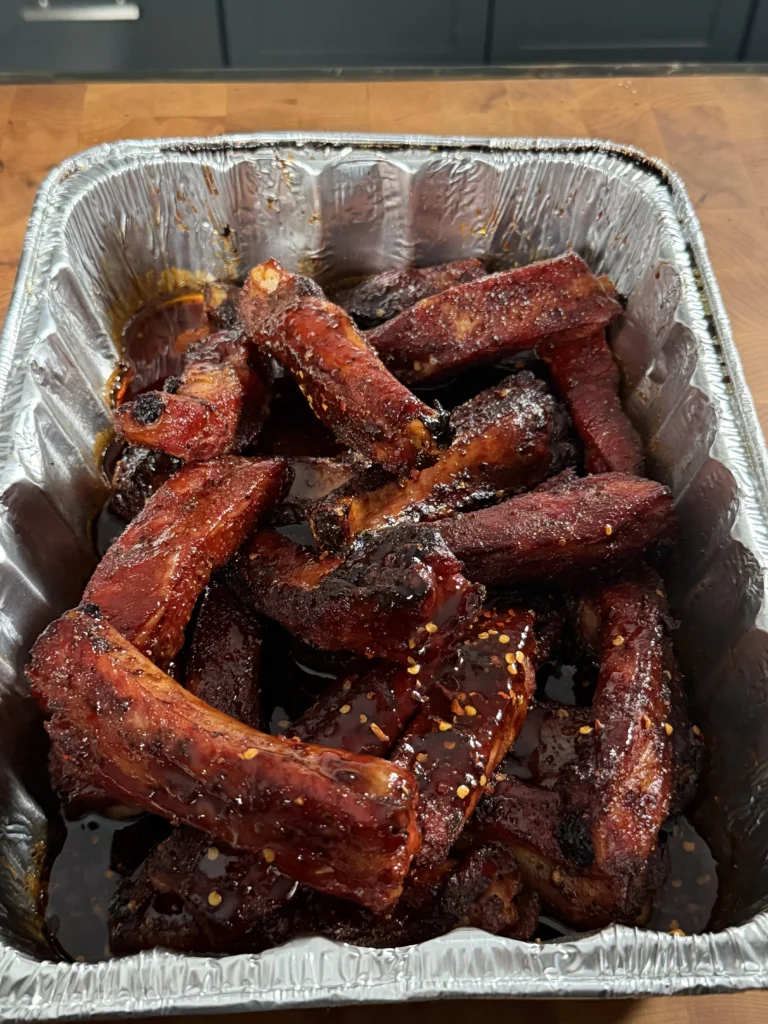
Brown sugar honey party ribs are individual rib bones cut from full racks, smoked at 225°F for 1.5 to 2 hours, then braised in a foil pan with brown sugar, honey, butter, and BBQ sauce at 250°F for 45 to 60 minutes. After braising, you remove the foil and finish them uncovered at 275°F for 15 to 25 minutes. This final step caramelizes the glaze into a sticky, shiny coating. The bite-sized format makes them perfect for parties and game day spreads.
The brown sugar honey glaze combines ½ cup brown sugar, ⅓ cup honey, 4 tablespoons butter, ¼ cup BBQ sauce, apple cider vinegar, garlic powder, and black pepper. You heat it in a saucepan until smooth. The ribs braise in this glaze covered with foil. This tenderizes the meat while the sweet glaze penetrates. The butter adds richness. The vinegar balances the sweetness. Optional cayenne provides heat that prevents the ribs from tasting too sweet.
These pellet smoker ribs take about 2 hours 30 minutes to 3 hours 15 minutes total. You smoke them first to develop bark and smoke flavor. Then you braise them covered to make them tender. Finally, you finish them uncovered to set the glaze. The result is competition-style ribs with mahogany color, tender texture, and glossy candy coating that photographs beautifully and tastes even better.
Why Cutting Ribs Into Party Ribs Improves Cook Time and Presentation
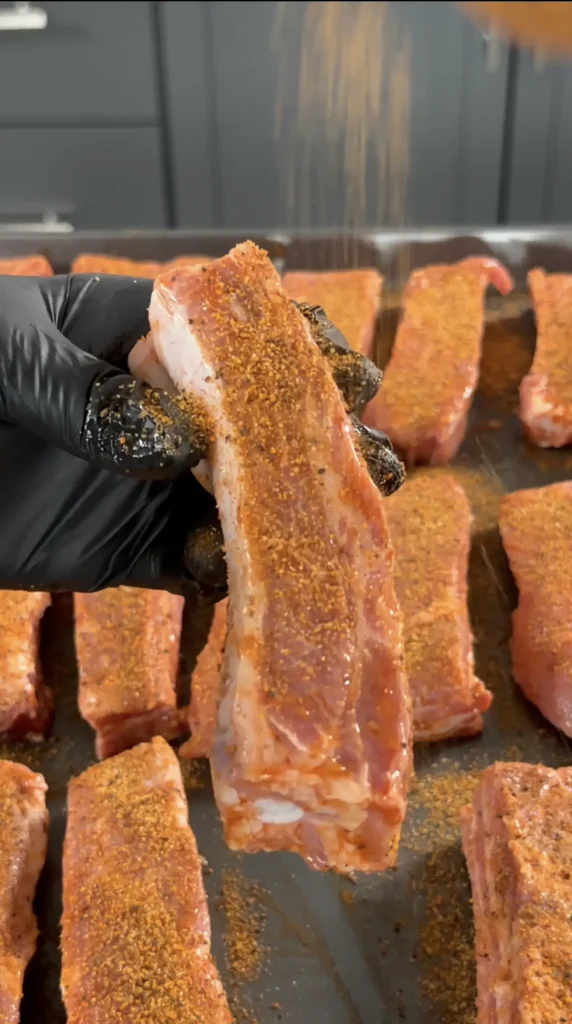
Cutting full racks into individual party ribs before cooking reduces total cook time by 30 to 45 minutes compared to full racks. Individual bones have more surface area exposed to heat and smoke. Heat penetrates from all sides rather than just the top and bottom. This creates more even cooking and faster tenderization. Full racks can take 5 to 6 hours. Party ribs finish in 2.5 to 3.5 hours.
The increased surface area also means more bark development. Each individual rib gets crusted rub on all sides. Full racks only develop bark on the top and bottom surfaces. The sides and ends stay relatively bare. Party ribs get seasoned everywhere. This creates more flavorful, textured bites.
Individual ribs are easier to glaze evenly. When you toss party ribs in the foil pan with sauce, every piece gets coated. Full racks require careful brushing to cover all areas. The underside often gets less glaze. With party ribs, you simply stir them in the pan. Every surface contacts the glaze multiple times.
The presentation advantage is significant for parties and gatherings. Individual ribs are grab-and-go finger food. Guests can take one or two pieces easily. Full racks require cutting at the table. This creates mess and slows service. Party ribs can be piled on platters or served straight from the foil pan. They look abundant and inviting.
Portion control becomes simpler with party ribs. Each person can take exactly how many they want. With full racks, you cut portions that may be too large or too small. Some guests want one rib. Others want three. Party ribs accommodate everyone without waste.
The bite-sized format also works better for content creation and food photography. The glossy, caramelized individual pieces stack beautifully. You can create impressive-looking platters. The sauce drips and glistens on each rib. This visual appeal matters for social media and recipe sharing.
What Temperature Should You Smoke Party Ribs?
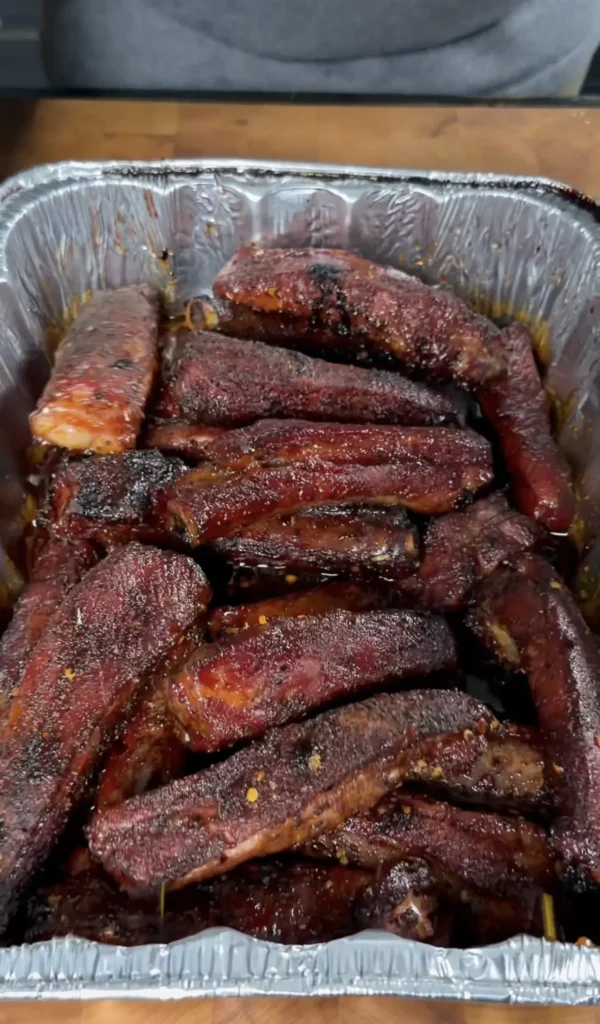
Smoking party ribs at 225°F creates the best smoke flavor and bark development during the initial smoking phase. This lower temperature allows smoke to penetrate the meat gradually. It also gives the rub time to set into a dark, flavorful crust without burning. Higher temperatures cook too fast. The exterior can dry out before the interior tenderizes. Lower temperatures take too long and can dry out the thin party rib pieces.
The 225°F smoking temperature works for the first 1.5 to 2 hours when the ribs are uncovered. During this phase, you want maximum smoke absorption. The low temperature keeps the surface tacky. This helps smoke compounds stick to the meat. You’re building flavor and color, not cooking for tenderness yet.
After the initial smoke, increasing to 250°F for the covered braising phase improves heat stability. Many pellet smokers struggle to maintain 225°F precisely, especially in cold weather. Bumping to 250°F helps the smoker hold temperature better. The covered foil pan protects the ribs from drying out at this slightly higher temp. The braising liquid keeps everything moist.
The final uncovered finish at 275°F caramelizes the glaze effectively. This temperature is hot enough to reduce and thicken the sauce. It creates that sticky, candy-like coating. The sugars in the brown sugar and honey caramelize without burning. Lower temperatures won’t set the glaze properly. It stays too liquid. Higher temperatures risk scorching the honey.
Some pitmasters prefer running the entire cook at 250°F for simplicity. This works fine and reduces total cook time by 15 to 20 minutes. You sacrifice some smoke flavor since smoke penetration decreases at higher temps. But you gain consistency and faster results. For competition or when time matters, 250°F throughout is acceptable.
Why Brown Sugar and Honey Create Better Glaze Than BBQ Sauce Alone
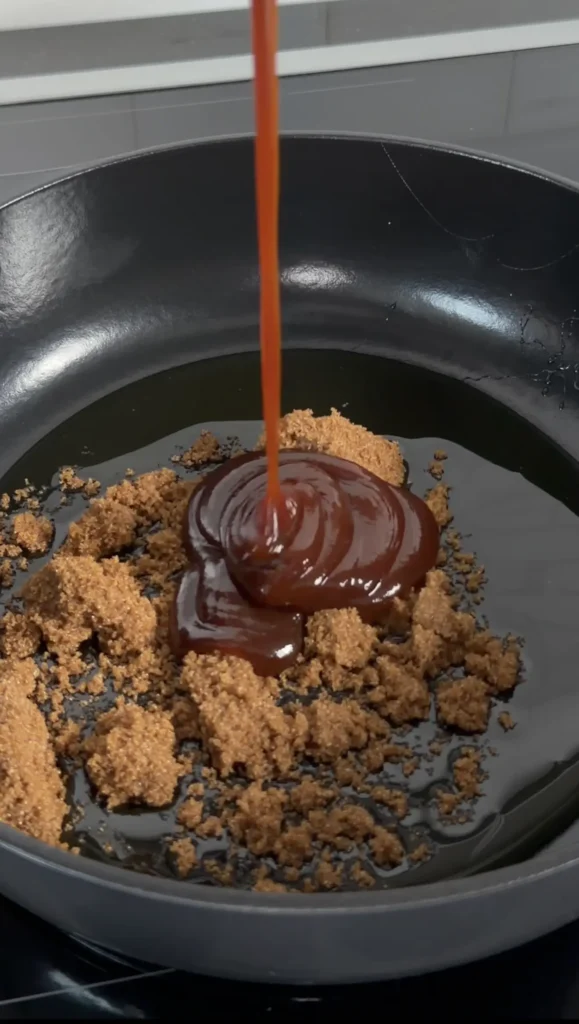
Brown sugar and honey together create superior glaze for honey glazed ribs because they provide different types of sweetness and caramelization properties. Brown sugar contains molasses which adds complex flavor beyond simple sweetness. It also caramelizes at lower temperatures than white sugar. This creates rich, deep color and flavor without requiring excessive heat that could burn the glaze.
Honey brings viscosity that helps the glaze cling to the ribs. It’s thicker than sugar dissolved in liquid. As it reduces during cooking, it becomes even stickier. This creates that signature glossy coating. Honey also contains different sugars than refined brown sugar. This variety creates more complex caramelization with better flavor development.
The combination prevents the glaze from being one-dimensional. Brown sugar alone can taste flat or too molasses-heavy. Honey alone can taste floral or overwhelming. Together they balance each other. The brown sugar provides depth. The honey provides shine and stickiness. You get the best of both.
BBQ sauce on its own lacks the sugar concentration needed for proper candy coating. Most BBQ sauces contain sugar but not enough to create thick glaze. They’re designed for brushing, not for heavy reduction. Adding concentrated sugar via brown sugar and honey transforms thin BBQ sauce into syrup-like coating.
The butter in this glaze recipe serves critical purposes. It adds richness and helps emulsify the mixture. Butter contains milk solids that brown beautifully. These contribute nutty, toasted flavors. The fat also helps the glaze stick to the meat better than water-based glazes. Fat and meat have affinity for each other.
How the Foil Pan Braising Method Guarantees Tender Party Ribs
Braising BBQ party ribs covered in a foil pan with glaze at 250°F for 45 to 60 minutes guarantees tender texture that pull-off-the-bone easily. The covered environment traps steam. This steam provides moisture that prevents the ribs from drying out. The liquid glaze surrounds the meat. Heat transfers through both the air and the liquid. This cooks the ribs gently and evenly.
The foil cover creates a mini oven environment. Temperature stays consistent. The ribs can’t dry out because they’re sitting in liquid. The collagen in the meat breaks down into gelatin. This happens at temperatures between 160°F and 205°F over time. The braising method holds the ribs in this range for nearly an hour. The collagen melts completely.
Uncovered smoking alone can make ribs tender but requires longer cooking times. You’d need 4 to 5 hours at 225°F for similar tenderness. The foil pan method speeds this up. The moist heat penetrates faster than dry heat. You achieve the same breakdown in less time. This is why competition BBQ teams use the Texas crutch method.
The brown sugar honey glaze penetrates into the meat during braising. The liquid carries flavor deep into the rib bones. Dry rub stays mostly on the surface. Wet braising creates flavor throughout. Every bite tastes sweet and smoky, not just the crusty exterior.
The butter in the glaze adds fat that bastes the ribs. As the butter melts, it coats the meat. Fat is a flavor carrier. It helps distribute the garlic powder, pepper, and BBQ sauce evenly. The ribs essentially cook in seasoned butter-sugar syrup. This creates incredibly rich flavor.
What Pellet Flavors Work Best for Sweet Glazed Ribs
Hickory pellets create the best smoke flavor for brown sugar honey ribs when you want classic, bold BBQ taste. Hickory provides strong, bacon-like smoke that stands up to sweet glazes. The robust smoke flavor doesn’t get lost under brown sugar and honey. It penetrates the meat during the initial 225°F smoking phase. You taste both sweet and smoke in every bite.
Apple pellets offer milder, slightly sweet smoke that complements honey beautifully. The fruity notes enhance rather than compete with the glaze. Apple wood creates light smoke flavor that appeals to people who find hickory too intense. It’s a safe choice for mixed crowds that might include kids or people new to BBQ.
Cherry pellets provide moderate smoke with subtle sweetness and create beautiful mahogany color on the ribs. The color development is particularly impressive with cherry. The ribs turn deep reddish-brown. Cherry flavor sits between apple (mild) and hickory (strong). It’s an excellent middle-ground choice.
Maple pellets add nutty, sweet smoke that pairs naturally with brown sugar. The maple smoke enhances the caramel flavors from caramelized sugar. This creates cohesive flavor profile. Everything tastes intentionally sweet and smoke-forward rather than sweet competing with smoke.
Avoid mesquite pellets for sweet ribs. Mesquite produces very strong, almost acrid smoke. It overwhelms delicate honey flavors. Mesquite works better for beef or when you want aggressive smoke character. It’s too much for party ribs with sweet glaze.
Brown Sugar Honey Party Ribs
Sticky Glazed Bite-Size Ribs on the Pellet Smoker
Ingredients
For the Party Ribs
- 2 racks St. Louis style ribs or baby back ribs
- 2 tablespoons yellow mustard (binder)
- ¼ cup BBQ rub (sweet style preferred)
For the Brown Sugar Honey Glaze
- ½ cup brown sugar (light or dark)
- ⅓ cup honey
- 4 tablespoons unsalted butter
- ¼ cup BBQ sauce (sweet style)
- 1 tablespoon apple cider vinegar
- 1 teaspoon garlic powder
- ½ teaspoon black pepper
Optional Sweet Heat
- ½ to 1 teaspoon cayenne pepper
- OR 1 tablespoon hot honey
- OR 1 teaspoon crushed red pepper flakes
Don’t skip the foil-covered braising stage with the glaze. This step makes party ribs tender while infusing brown sugar and honey flavor deep into the meat. The covered environment prevents the honey from burning while the ribs braise. Then the final uncovered stage at 275°F caramelizes the glaze into that shiny BBQ candy finish without overcooking the meat.
Step-by-Step Instructions
Step 1: Preheat the Pellet Smoker
Preheat your pellet smoker to 225°F with the lid closed. Let it run for 10 to 15 minutes until the temperature stabilizes. You want steady heat before adding the ribs. Check that your pellet hopper is full. Running out of pellets mid-cook causes temperature crashes.
Choose your pellet flavor: hickory for bold smoke, apple for mild sweet smoke, cherry for color and moderate flavor, or maple for nutty sweetness. Add your chosen pellets to the hopper if you haven’t already.
If cooking in cold weather (below 40°F), consider setting the smoker to 250°F instead of 225°F. Cold temperatures make it harder for pellet smokers to maintain low temps. The extra 25 degrees helps stability without significantly affecting the cook.
Step 2: Prepare the Ribs
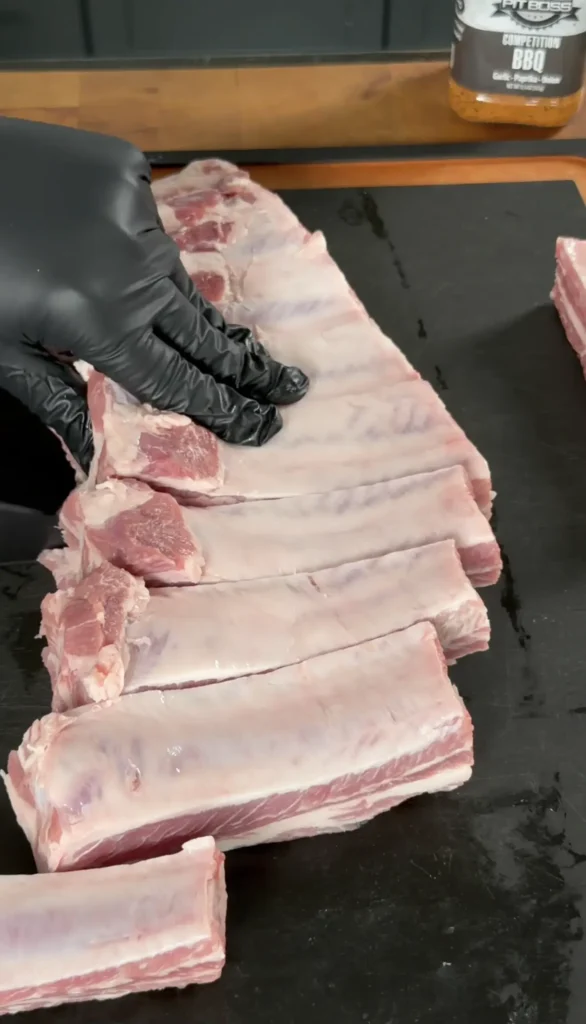
Remove 2 racks of St. Louis style ribs or baby back ribs from packaging. Place them bone-side up on a large cutting board. Check for the membrane on the back of the ribs. It looks like a thin, shiny layer covering the bones.
If the membrane is present, slide a butter knife under it at one end to loosen it. Grab the membrane with a paper towel for grip. Pull it off in one piece. This allows smoke and seasoning to penetrate from both sides. If the membrane tears, just remove as much as you can.
Cut the ribs into individual bones using a sharp knife. Slice between each bone. You’ll end up with 20 to 24 individual party ribs depending on rack size. St. Louis ribs typically have 10 to 13 bones per rack. Baby backs have 10 to 12 bones.
Step 3: Season the Party Ribs
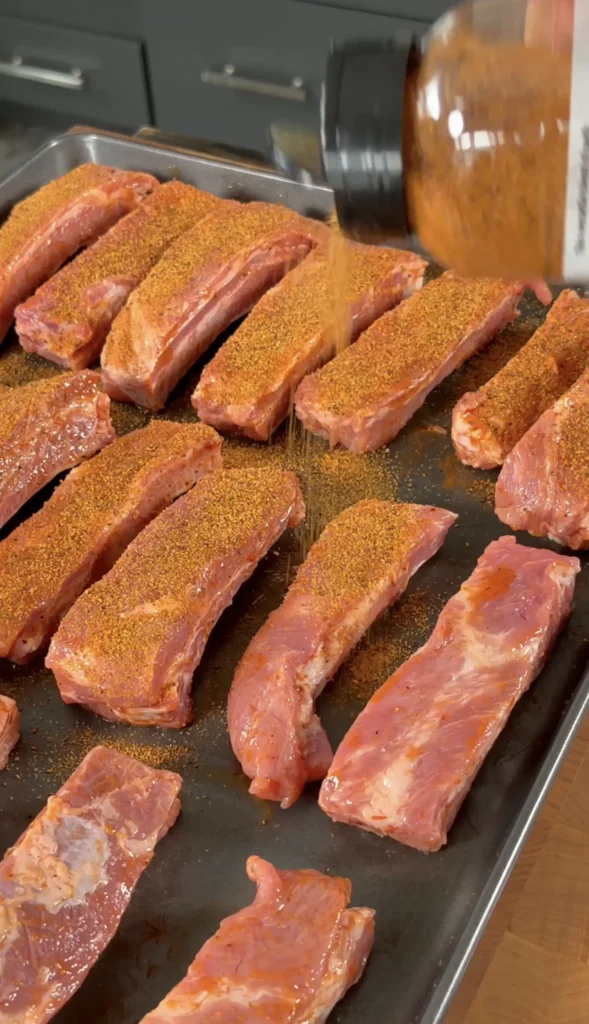
Place all the individual party ribs in a large bowl or on a rimmed baking sheet. Drizzle 2 tablespoons yellow mustard over them. Use your hands to rub the mustard all over every rib. The mustard acts as a binder for the rub. The flavor cooks off completely.
Sprinkle ¼ cup BBQ rub over the ribs. Use a sweet-style rub with brown sugar base. Toss the ribs to coat them evenly on all sides. Make sure every piece gets seasoned. The individual pieces make this easier than full racks.
Let the seasoned ribs sit at room temperature for 10 to 15 minutes while the smoker finishes preheating. This allows the rub to adhere and start drawing moisture to the surface. The surface will look slightly wet or tacky.
Step 4: Smoke the Party Ribs
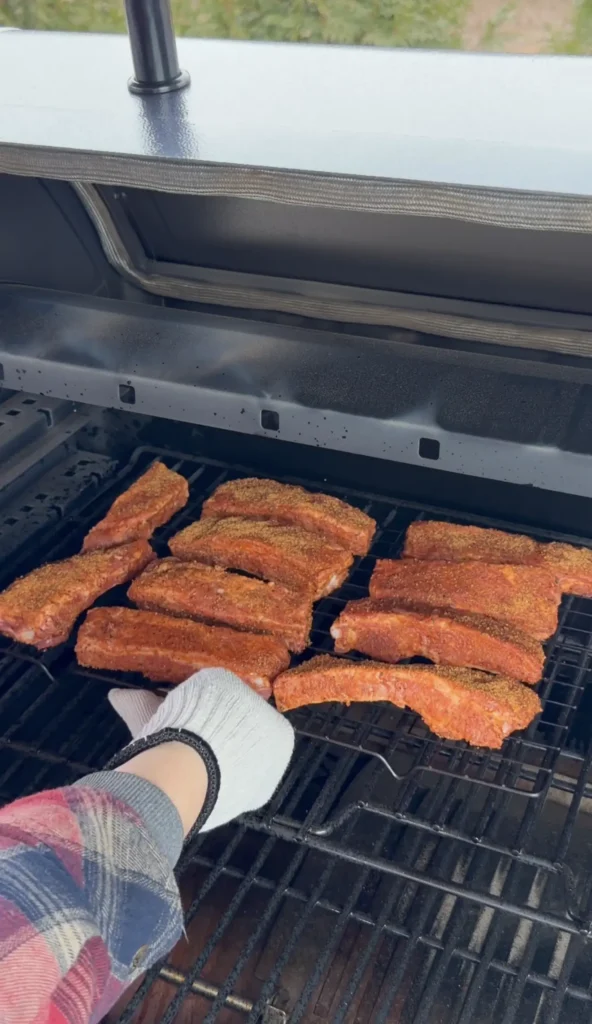
Place the seasoned party ribs directly on the smoker grates. Space them out with small gaps between each rib. Don’t stack them or pack them tightly. Air needs to circulate around each piece for even cooking and smoke penetration.
Close the lid and smoke at 225°F for 1.5 to 2 hours. Don’t open the lid unnecessarily during this phase. You’re looking for the ribs to develop deep mahogany color. The rub should look set and dry rather than wet. The meat should have pulled back slightly from the bones.
Check the ribs at the 1.5 hour mark. If they look well-colored with visible bark, they’re ready for the next step. If they still look pale or the rub looks wet, give them another 30 minutes.
Step 5: Make the Brown Sugar Honey Glaze
While the ribs smoke, make the glaze. In a medium saucepan on your stovetop (or in a foil pan on the smoker’s warming rack), combine ½ cup brown sugar, ⅓ cup honey, 4 tablespoons butter, ¼ cup BBQ sauce, 1 tablespoon apple cider vinegar, 1 teaspoon garlic powder, ½ teaspoon black pepper, and cayenne or hot honey if using.
Heat over medium heat, stirring frequently, until the butter melts and everything combines into smooth sauce. This takes 3 to 5 minutes. The brown sugar should dissolve completely. The mixture should look glossy and uniform.
Taste the glaze and adjust if needed.
Step 6: Braise the Ribs in Foil Pan
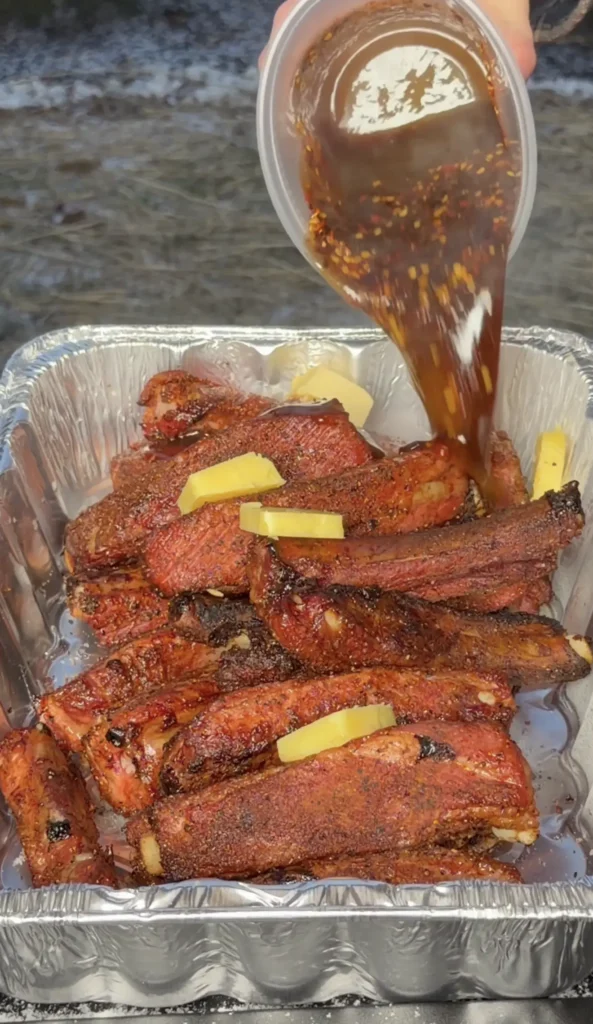
Transfer the smoked party ribs to a large disposable aluminum foil pan. A 9×13-inch pan works for one rack’s worth of ribs. Use two pans if needed. Pour the warm brown sugar honey glaze over the ribs. Toss them gently to coat every piece.
Cover the pan tightly with heavy-duty aluminum foil. Crimp the edges to seal completely. No steam should escape. Return the covered pan to the smoker.
Increase the smoker temperature to 250°F. Cook the covered ribs for 45 to 60 minutes. For ribs with some bite, go 45 minutes. For very tender, fall-off-the-bone ribs, go 60 minutes. Most people prefer 50 to 55 minutes.
Step 7: Finish with Sticky Caramelized Glaze
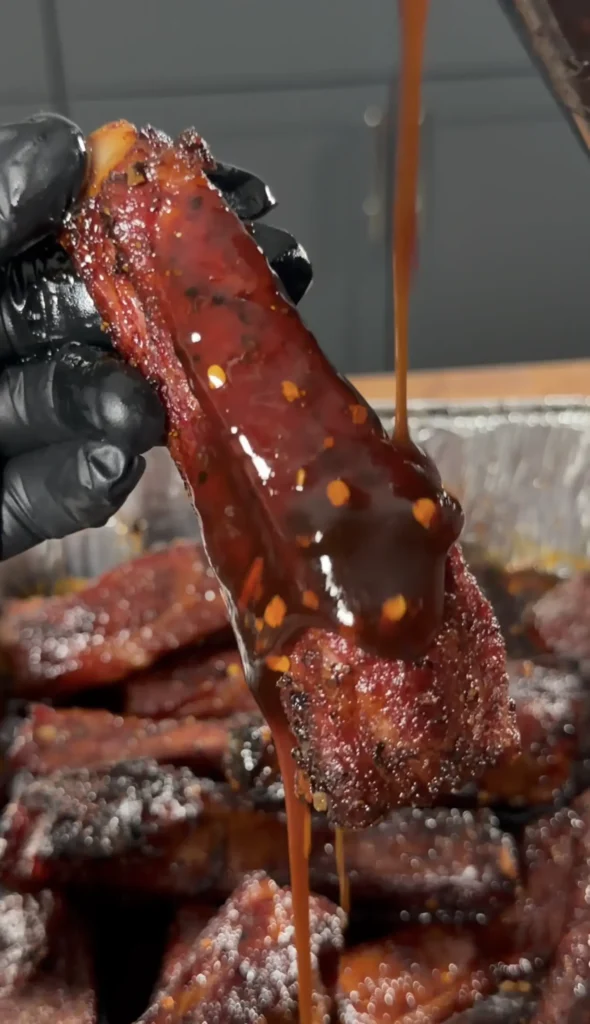
After braising, carefully remove the foil cover. Watch for hot steam. Gently toss the ribs in the thickened glaze. They should be swimming in reduced, syrupy sauce.
Increase the smoker temperature to 275°F. Return the uncovered pan to the smoker. Cook for 15 to 25 minutes, stirring every 5 to 7 minutes. You’re looking for the glaze to thicken further and become glossy. It should coat the ribs in a shiny layer.
The sauce will reduce and concentrate. The sugars will caramelize. The ribs will develop that signature BBQ candy shine. Watch carefully during the last 5 minutes to prevent burning. If the glaze starts to scorch, pull the ribs off immediately.
For extra glaze, brush the ribs with additional BBQ sauce during the last 5 minutes. This creates thicker coating and deeper color.
Step 8: Rest and Serve
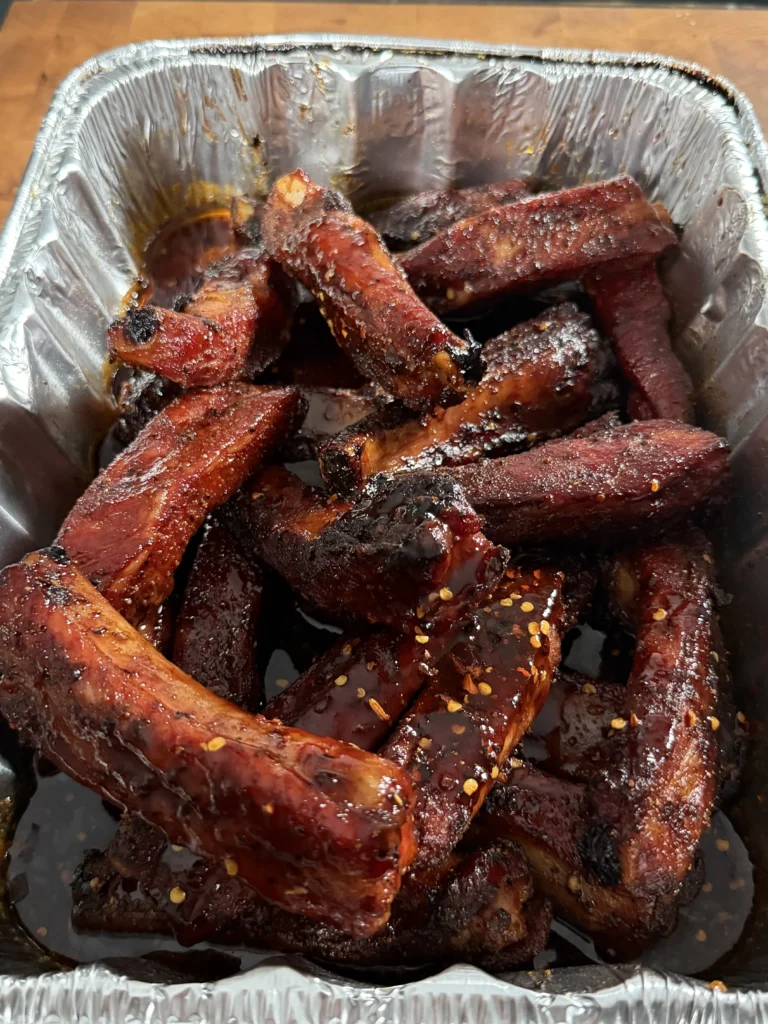
Remove the pan from the smoker when the glaze looks sticky and glossy. Let the brown sugar honey party ribs rest in the pan for 10 minutes. This allows the glaze to set slightly and the meat to reabsorb some juices.
Serve the ribs directly from the foil pan or transfer them to a serving platter. Drizzle any remaining glaze from the pan over the top. The ribs should look dark, shiny, and inviting. They should pull cleanly from the bone with minimal effort.
Serve hot with napkins. These are finger food. Provide wet wipes or finger bowls if serving at a nice event.
Brown Sugar Honey Party Ribs
Equipment
- Pellet Smoker (Pit Boss, Traeger, Camp Chef)
- Large Foil Pan
- Saucepan
- Instant-Read Thermometer
- Aluminum Foil
Ingredients
For the Party Ribs
- 2 racks St. Louis style ribs or baby back ribs
- 2 tablespoons yellow mustard binder
- 1/4 cup BBQ rub sweet style preferred
For the Brown Sugar Honey Glaze
- 1/2 cup brown sugar light or dark
- 1/3 cup honey
- 4 tablespoons unsalted butter
- 1/4 cup BBQ sauce sweet style
- 1 tablespoon apple cider vinegar
- 1 teaspoon garlic powder
- 1/2 teaspoon black pepper
Optional Sweet Heat
- 1/2-1 teaspoon cayenne pepper or use hot honey or red pepper flakes
Instructions
- Preheat pellet smoker to 225°F for 10 to 15 minutes. Fill hopper with hickory, apple, cherry, or maple pellets.
- Remove membrane from back of ribs if present. Cut racks into individual bones by slicing between each bone. You’ll have 20 to 24 party ribs total.
- Coat ribs with yellow mustard and season generously with BBQ rub on all sides. Let sit 10 to 15 minutes.
- Place ribs on smoker grates with space between each piece. Smoke at 225°F for 1.5 to 2 hours until ribs develop mahogany color and bark looks set.
- Make glaze: Combine brown sugar, honey, butter, BBQ sauce, vinegar, garlic powder, black pepper, and cayenne in saucepan. Heat until smooth and butter melts. Keep warm.
- Transfer smoked ribs to foil pan. Pour glaze over ribs and toss to coat. Cover tightly with foil. Increase smoker to 250°F. Cook covered 45 to 60 minutes (50-55 minutes recommended).
- Remove foil and toss ribs in glaze. Increase smoker to 275°F. Cook uncovered 15 to 25 minutes, stirring every 5 to 7 minutes, until glaze thickens and becomes glossy. Optional: brush with extra BBQ sauce last 5 minutes.
- Rest 10 minutes. Serve hot from pan or transfer to platter. Drizzle remaining glaze over top.
Notes
Frequently Asked Questions
Can You Use Baby Back Ribs Instead of St. Louis Ribs?
You can use baby back ribs for party ribs recipe with excellent results. Baby backs are smaller and more tender than St. Louis ribs. They cook slightly faster, typically finishing in 2 to 2.5 hours total instead of 2.5 to 3 hours.
Baby backs have less fat than St. Louis ribs. This means they can dry out more easily if overcooked. Reduce the covered braising time to 40 to 45 minutes instead of 45 to 60 minutes. Check for tenderness at 40 minutes.
The meat-to-bone ratio is different with baby backs. They have more meat per bone. This makes them meatier bites as party ribs. St. Louis ribs are flatter and wider with more consistent size across the rack.
Cost is a consideration. Baby backs typically cost more per pound than St. Louis ribs. For party quantities where you’re feeding groups, St. Louis ribs offer better value.
Both types work excellently with brown sugar honey glaze. Choose based on availability, price, and personal preference. The cooking method remains the same regardless of rib type.
Will Honey Burn During Smoking?
Honey won’t burn during honey glazed ribs cooking if you follow the proper method. The foil-covered braising phase protects the honey from direct heat. The ribs sit in liquid glaze covered with foil at 250°F. This temperature isn’t hot enough to burn honey when it’s protected from direct exposure.
Pure honey starts to caramelize around 320°F and burns above 350°F. The braising phase keeps honey well below these temperatures. The final uncovered finish at 275°F allows controlled caramelization without burning.
Honey would burn if you applied it at the start and smoked uncovered at 225°F for 2 hours. The dry heat and extended time would scorch it. This is why you don’t glaze ribs until after the initial smoking phase.
The timing matters as much as temperature. The uncovered finish only lasts 15 to 25 minutes. This brief exposure to 275°F caramelizes the honey beautifully without scorching. Watch the ribs during this phase. If you see black spots or smell burning, pull them immediately.
Stirring the ribs every 5 to 7 minutes during the final phase prevents hot spots. Some areas of the pan get hotter than others. Moving the ribs ensures even exposure and prevents burning in one spot.
Can You Make Party Ribs Without the Foil Pan Stage?
You can make party ribs without the foil pan braising but the texture will be different. Ribs cooked entirely uncovered develop better bark but are less tender. They’ll have more bite and won’t pull off the bone as easily. This creates chewier texture.
For all-uncovered ribs, smoke at 250°F for 2.5 to 3 hours until tender. Brush with glaze during the last 30 minutes, reapplying every 10 minutes. This builds glaze layers but won’t create the same candy coating. The glaze stays thinner without the reduction that happens in the foil pan.
The flavor penetration differs significantly. Braised ribs absorb glaze flavor throughout the meat. Uncovered ribs only get glazed surfaces. The interior tastes more like smoked pork with rub. The exterior tastes sweet.
Competition BBQ teams almost always use the foil/wrap method for tenderness. Winning ribs have specific texture judges look for. Home cooks can choose based on preference. If you prefer bark over tenderness, skip the foil pan. If you want party-friendly tender bites, use the foil pan method.
What Internal Temperature Should Party Ribs Reach?
Party ribs are done when internal temperature reaches 195°F to 205°F in the thickest part of the meat. Use an instant-read thermometer inserted between the bones into the meat. Avoid touching bone which gives false high readings.
The specific temperature within this range determines texture. At 195°F, ribs are tender but have some structure. They hold together well as finger food. At 205°F, ribs are very tender and can fall apart. Most people prefer 200°F to 203°F for party ribs.
Temperature alone doesn’t tell the whole story. You also want to see the meat pull back from the bones by about ¼ inch. The ribs should bend easily when picked up with tongs. A toothpick should slide into the meat with little resistance.
The foil pan braising method almost guarantees reaching the right temperature if you follow timing. After 50 to 55 minutes covered at 250°F, the ribs will be at 200°F to 205°F. But checking with a thermometer confirms doneness.
Don’t rely solely on time. Rib thickness, smoker temperature accuracy, and outdoor conditions all affect cooking speed. Always verify with temperature and visual/tactile cues.
How Do You Store and Reheat Leftover Party Ribs?
Store leftover brown sugar honey party ribs in an airtight container in the refrigerator for up to 4 days. Keep them in any remaining glaze. The sauce prevents them from drying out. If the glaze solidified, it will liquefy when reheated.
For freezing, wrap individual ribs or small portions in plastic wrap, then place in freezer bags. Remove as much air as possible. Freeze up to 3 months. Thaw overnight in the refrigerator before reheating.
Reheat refrigerated ribs in a 300°F oven covered with foil for 15 to 20 minutes. Add 2 tablespoons water or apple juice to the pan before covering. This creates steam that keeps them moist. During the last 5 minutes, uncover and brush with fresh glaze or BBQ sauce. This refreshes the coating.
Microwave reheating works for quick meals but creates different texture. Heat on 50% power in 30-second intervals. The ribs won’t have the same exterior crispness but will be hot and tender.
Avoid reheating on the grill or smoker. The already-tender ribs can dry out with additional heat exposure. Oven reheating provides gentler, more controlled heat.
Leftover party ribs work great chopped and added to baked beans, mac and cheese, or nachos. The meat pulls off the bones easily when cold.
Can You Make These on a Gas or Charcoal Grill?
You can make pellet smoker ribs on a gas or charcoal grill using indirect heat setup. Create two-zone fire with hot coals or burners on one side, empty space on the other. Place ribs over the empty side. Add wood chunks to the coals or in a smoker box for gas grills.
For charcoal, use the snake method or minion method to maintain 225°F for 2+ hours. This requires arranging unlit charcoal in a pattern with lit coals at one end. As coals burn, they light adjacent unlit coals. This extends burn time without adding fuel.
Gas grills need a smoker box with wood chips or chunks. Preheat one side to high (400°F+) and place smoker box over that burner. Place ribs on the unlit side and adjust burners to maintain 225°F overall temperature.
The foil pan braising stage works the same on any grill. After initial smoking, place the foil pan with ribs and glaze on the grill. Close the lid and maintain 250°F. The covered pan means smoke flavor is less important during this phase.
Temperature control is harder on grills than pellet smokers. Plan to monitor and adjust vents or burners frequently. A good thermometer is essential.
Pellet smokers offer convenience and consistent results. But party ribs absolutely work on traditional grills if you manage temperature properly.
What BBQ Rub Works Best for Sweet Glazed Ribs?
Sweet-style BBQ rubs work best for brown sugar honey ribs because they complement rather than clash with the sweet glaze. Look for rubs with brown sugar, paprika, and mild spices as primary ingredients. These create flavor cohesion from rub to glaze.
Avoid heavily pepper-forward or savory rubs. These fight against the sweet profile. Memphis-style rubs with lots of black pepper don’t pair well. Texas-style rubs with heavy chile and cumin create confused flavors.
Popular commercial sweet rubs include Meat Church Holy Cow (works despite the name), Killer Hogs The BBQ Rub, and Blues Hog Original Dry Rub. These are designed for competition ribs with sweet profiles.
Homemade sweet rub can be made with ½ cup brown sugar, 2 tablespoons paprika, 1 tablespoon garlic powder, 1 tablespoon onion powder, 2 teaspoons black pepper, 1 teaspoon cayenne, 1 tablespoon kosher salt. Mix and store in airtight container.
The rub doesn’t need to be complex. The glaze provides most of the flavor. The rub creates bark and initial seasoning. Keep it simple and sweet-leaning.
Avoid rubs with high salt content. The glaze and BBQ sauce already contain salt. Too much salt in the rub makes the final product overly salty.
How Many Ribs Per Person for a Party?
Plan for 3 to 4 individual party ribs per person as appetizers or 6 to 8 ribs per person as a main course. Each full rack of St. Louis ribs yields 10 to 13 individual party ribs. Each rack of baby backs yields 10 to 12 ribs.
For appetizer portions at parties with other food, 2 racks serve 8 to 10 people. For main course with sides, 2 racks serve 4 to 5 people. Adjust based on your specific guest list and other menu items.
Consider that party ribs are addictive. The sweet glaze and bite-sized format encourages people to eat more than planned. Make extra if possible. Ribs are better leftovers than running out.
Account for bone size variation. Ribs from the thin end of the rack have less meat than ribs from the thick end. This affects how many constitute a serving. Estimate conservatively.
For large gatherings, making multiple batches works better than trying to fit too many ribs in one smoker session. Two racks fit comfortably on most pellet smokers. Three racks get crowded. Run multiple cooks if feeding crowds over 10 people.
Kids typically eat 2 to 3 ribs. Adults eat 4 to 6 as appetizers. Budget accordingly based on your guest demographics.
Can You Add Different Flavors to the Glaze?
You can customize the brown sugar honey glaze with different flavors while maintaining the base structure. The ½ cup brown sugar, ⅓ cup honey, and 4 tablespoons butter are essential. The other components can vary.
For bourbon glaze, add 2 tablespoons bourbon to the base recipe. The alcohol cooks off, leaving rich, oaky flavor. This pairs beautifully with hickory-smoked ribs.
For spicy glaze, add 1 tablespoon sriracha or 1 teaspoon chipotle powder. This creates sweet heat balance. The heat prevents the glaze from tasting too candy-like.
For citrus glaze, add 2 tablespoons orange juice and 1 teaspoon orange zest. Reduce the honey to ¼ cup to prevent excessive sweetness. The citrus adds brightness.
For coffee BBQ glaze, add 2 tablespoons strong brewed coffee and 1 teaspoon espresso powder. This creates complex bitter-sweet flavor popular in competition BBQ.
For Asian-inspired glaze, replace BBQ sauce with hoisin sauce. Add 1 tablespoon soy sauce and 1 teaspoon sesame oil. This creates sticky Asian-style ribs.
Maintain the acid component (apple cider vinegar or substitute with lemon juice) regardless of flavor variation. Acid is essential to balance sweetness and help tenderize meat.
Test flavor variations in small batches before committing to full recipes. Some combinations sound good but don’t work in practice.
If you’re looking for more recipes like this recipe, click the link! Check out all of our grilling recipes here for more steak, seafood, and BBQ favorites that are perfect for your next cookout.
COMMON ITEMS USED IN THESE RECIPES
Hasty Bake Charcoal Grill and Smoker
Knitted Gloves
Food Processor
Cast Iron Skillet
Meater +
Upgrade Your Meat Game with Grill Nation x Linz Heritage Angus
If you really want to take your grilling and cooking to the next level, you need to check out our collaboration with Linz Heritage Angus. We’ve partnered with them to bring you some of the best beef you can get your hands on.
Linz Heritage Angus isn’t your typical grocery store meat. These guys are the real deal – they raise their cattle the right way, and you can taste the difference in every bite. We’re talking about beef that’s been dry-aged to perfection, with marbling that makes your mouth water just looking at it.
Check out these premium cuts that’ll change how you think about beef:
Premium Ribeye Steaks – Perfect for special occasions
Dry-Aged Beef Selection – Take your grilling to the next level
Ground Beef & Burger Blends – The foundation of great BBQ