
Sweet Heat Pork Skewers
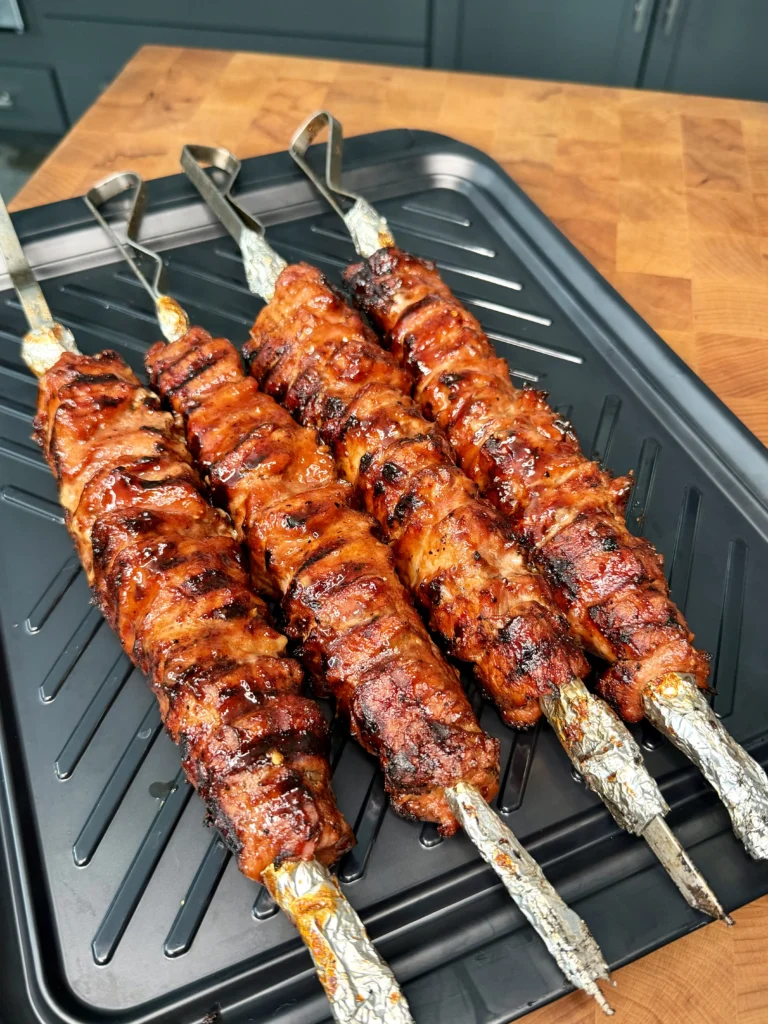
Sweet heat pork skewers are pork loin or tenderloin cubes marinated in honey, brown sugar, chipotle pineapple BBQ sauce, soy sauce, and tomato paste, then grilled over two-zone fire until caramelized and juicy. You marinate the 1½ to 2-inch pork cubes for 4 to 8 hours. Thread them tightly onto skewers. Grill over direct medium-high heat (400°F to 425°F) for 2 to 3 minutes per side to develop char. Move to indirect heat until internal temperature reaches 145°F. During the last 2 to 3 minutes, brush with thickened reserved glaze for glossy finish.
The marinade doubles as basting sauce when you reserve portion before adding raw pork. You simmer the reserved sauce for 5 to 7 minutes to concentrate flavor and prevent burning. The honey and brown sugar create sticky, lacquered coating. The chipotle pineapple BBQ sauce adds smoky heat with tropical sweetness. Soy sauce contributes umami and helps with browning. Tomato paste provides deep red color and faster caramelization.
These pork skewers take about 20 to 25 minutes of active cooking time after marinating. The two-zone grilling method is critical for sweet glazes. Direct heat creates char and caramelization. Indirect heat finishes cooking without burning the sugars. The result is sticky, glossy exterior with smoky-sweet heat and juicy pork that bites clean off the skewer. Perfect for parties, cookouts, or weeknight dinners when you want impressive results.
Why Pork Loin and Tenderloin Both Work for Skewers
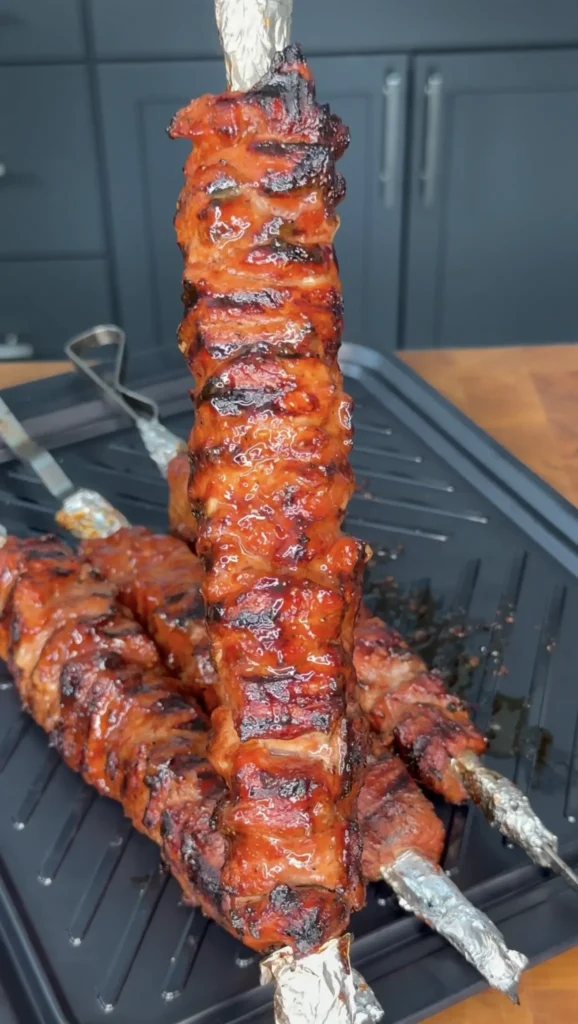
Pork loin creates pork skewers with meatier bite and better value per pound. Loin comes from the back of the pig along the spine. It’s relatively lean with consistent thickness. When cut into cubes, pork loin maintains firm texture that holds up well on skewers. The meat stays intact during marinating and grilling. It doesn’t fall apart or become mushy. Loin costs less than tenderloin, making it practical for feeding groups.
Pork tenderloin produces extra tender, almost buttery texture. Tenderloin is the most tender cut of pork. It comes from beneath the ribs near the backbone. The muscle does very little work, creating fine grain and delicate texture. When grilled as skewers, tenderloin becomes incredibly tender. Some people find it almost too tender, lacking the satisfying chew of loin. But others prefer this melt-in-your-mouth quality.
The size difference affects preparation. Pork loin is thick and wide, yielding uniform cubes easily. You can cut 30 to 40 cubes from 2 pounds of loin. Tenderloin is long and narrow, creating less uniform pieces. The thick end produces larger cubes. The thin end creates smaller pieces. This size variation means uneven cooking unless you’re careful to group similar sizes on the same skewer.
Fat content differs between the two cuts. Pork loin has slightly more marbling than tenderloin. This extra fat keeps the meat juicy during grilling. Tenderloin is extremely lean with almost no visible fat. It can dry out more easily if overcooked. The sweet glaze helps compensate for tenderloin’s leanness by adding moisture and richness.
How Tomato Paste Improves Glaze Color and Caramelization
Tomato paste creates deep red mahogany color on honey glazed pork that regular BBQ sauce alone can’t achieve. The concentrated tomato solids provide rich pigment. As the glaze cooks on the pork, these pigments darken and intensify. The result is gorgeous reddish-brown exterior that looks professionally caramelized.
The sugars in tomato paste caramelize faster than other glaze components. Tomato paste contains natural fruit sugars plus added sugar from processing. These sugars begin browning at lower temperatures than honey or brown sugar. When the glaze hits the hot grill, tomato paste sugars caramelize first. This jumpstarts the color development and creates foundation for additional caramelization.
Tomato paste adds umami depth that balances sweetness. Sweet glazes can taste one-dimensional without savory elements. Tomato paste contributes glutamates that create complex, savory-sweet flavor. This prevents the glaze from tasting like pure candy. The umami notes make the sweetness more sophisticated and craveable.
The thick consistency of tomato paste helps the glaze cling to pork cubes. Thin glazes run off skewered meat and drip into the fire. Tomato paste thickens the mixture naturally. Combined with honey and brown sugar, it creates syrupy consistency. This thick glaze coats the pork thoroughly and stays put during grilling
Why You Must Use Two-Zone Fire for Sweet Glazed Skewers
Two-zone fire setup is essential for sweet heat pork skewers because it allows you to sear for color without burning the sugary glaze. Direct high heat creates char and caramelization. But prolonged exposure to direct heat burns honey and brown sugar before the pork cooks through. The two-zone method gives you both sear and gentle finish.
The hot zone (400°F to 425°F direct heat) develops initial color and grill marks. You place skewers over direct heat for 2 to 3 minutes per side. This creates beautiful charred exterior and starts caramelizing the marinade. The high heat also helps render any fat and crisp the surface. But you can’t leave them there. The sugars would scorch.
The cool zone (indirect heat around 300°F to 350°F) finishes cooking without burning. After establishing color over direct heat, you move skewers to the indirect side. Here they cook gently until reaching 145°F internal temperature. This takes another 8 to 12 minutes. The indirect heat allows the pork to cook through while the glaze dries and sets rather than charring.
Single-zone cooking at moderate temperature doesn’t work well for these skewers. If you use only medium heat, you don’t get proper sear. The pork steams rather than chars. The glaze never caramelizes nicely. It stays wet and sticky without developing that lacquered finish. The skewers cook through but look pale and unappealing.
What Internal Temperature Produces Juicy Pork Skewers
Pulling pork skewers at 145°F internal temperature ensures juicy, tender meat that’s completely safe to eat. Modern food safety guidelines recognize that pork reaches safe doneness at 145°F followed by 3-minute rest. This is significantly lower than the old 160°F recommendation. The lower temperature keeps pork moist and slightly pink in the center.
The 145°F target applies to whole muscle cuts like loin and tenderloin. Ground pork requires 160°F for safety. Since skewers use cubed loin or tenderloin, 145°F is correct. At this temperature, harmful bacteria are eliminated. The meat is safe to eat while retaining maximum juiciness.
Carryover cooking brings the final temperature to 150°F to 155°F during the 5-minute rest. When you pull pork from the grill at 145°F, it continues cooking from residual heat. The internal temperature rises another 5 to 10 degrees. This brings it to ideal eating temperature without drying out.
Cooking pork to 160°F creates noticeably drier texture. At this higher temp, moisture evaporates excessively. The proteins contract and squeeze out juices. The pork tastes chalky and requires sauce to be palatable. Given that these skewers have sweet glaze, some dryness is masked. But why not optimize texture by cooking to proper temperature?
Use an instant-read thermometer to check doneness. Insert it into the center of the thickest pork cube. Avoid touching the skewer which conducts heat and gives false readings. Check multiple pieces since they may cook at different rates depending on size and grill position.
Sweet Heat Pork Skewers
Honey Glazed with Chipotle Pineapple BBQ Sauce
Ingredients
For the Pork
- 2 pounds pork loin or pork tenderloin
- Wooden or metal skewers (soak wooden 30-45 minutes)
For the Sweet Heat Marinade/Glaze
- ½ cup chipotle pineapple BBQ sauce
- ¼ cup honey
- 3 tablespoons brown sugar
- 3 tablespoons soy sauce
- 2 tablespoons tomato paste
- 1 teaspoon garlic powder
- 1 teaspoon onion powder
- 1 teaspoon black pepper
- ½ to 1 teaspoon red pepper flakes (adjust to heat preference)
- 1 tablespoon pineapple juice (optional for extra gloss)
- 1 teaspoon smoked paprika (optional for BBQ depth)
Optional Garnish
- Chopped fresh cilantro
- Sliced green onions
Always reserve some marinade for basting BEFORE adding raw pork. Never use the same marinade that touched raw meat for basting. Set aside about ⅓ of the glaze in a separate container, then simmer it for 5 to 7 minutes before using it to baste. This concentrates flavor, thickens the glaze so it won’t burn, and ensures food safety.
Step-by-Step Instructions
Step 1: Prepare the Pork
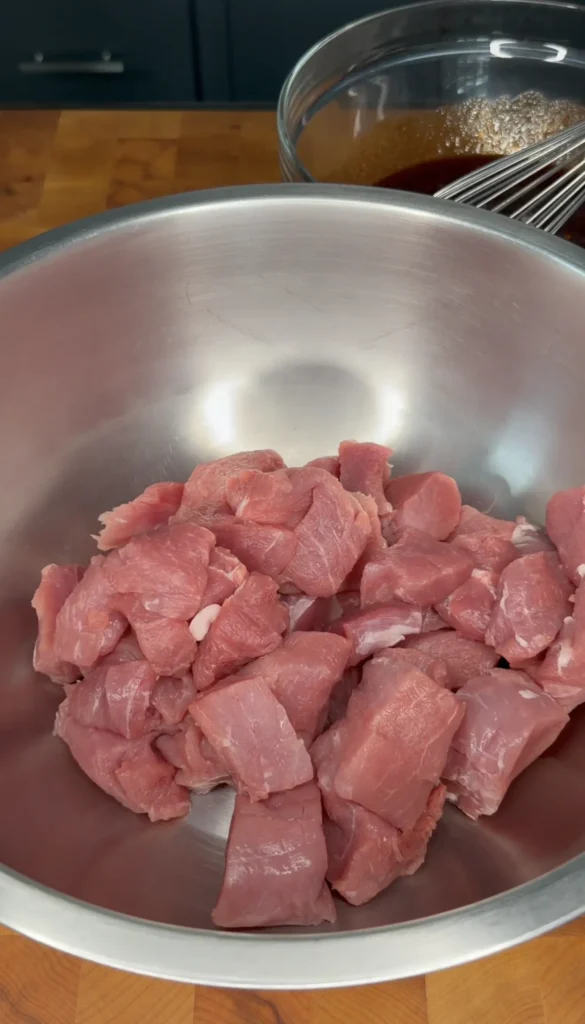
Trim 2 pounds of pork loin or tenderloin, removing excess fat and silver skin. Silver skin is the thin, shiny membrane on the surface. It doesn’t break down during cooking and becomes chewy. Use a sharp knife to slide under it and peel it away.
Cut the pork into 1½ to 2-inch cubes. Try to make them uniform in size for even cooking. Slightly larger cubes (closer to 2 inches) stay juicier. Smaller cubes cook faster but can dry out more easily. Place the cubed pork in a large bowl or zip-top bag.
If using wooden skewers, soak them in water for 30 to 45 minutes while you prepare the marinade. This prevents them from burning on the grill. Metal skewers don’t require soaking.
Step 2: Make the Sweet Heat Marinade
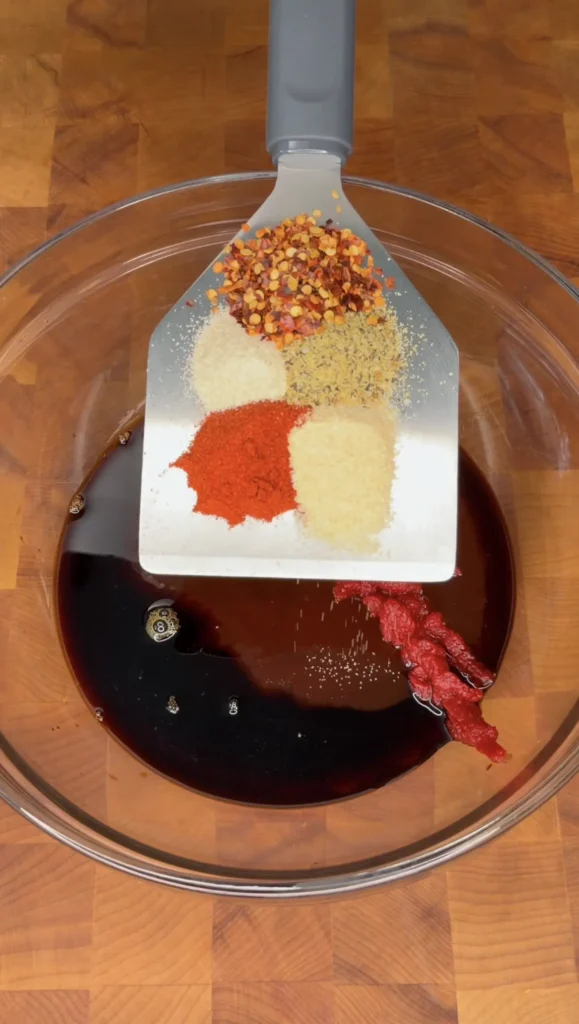
In a medium bowl, whisk together ½ cup chipotle pineapple BBQ sauce, ¼ cup honey, 3 tablespoons brown sugar, 3 tablespoons soy sauce, 2 tablespoons tomato paste, 1 teaspoon garlic powder, 1 teaspoon onion powder, 1 teaspoon black pepper, and ½ to 1 teaspoon red pepper flakes. Add 1 tablespoon pineapple juice and 1 teaspoon smoked paprika if using.
Whisk until the mixture is completely smooth and the brown sugar dissolves. The glaze should look glossy and uniform. If the tomato paste isn’t incorporating well, mash it against the side of the bowl first before whisking.
Before adding any pork, remove about ⅓ of the marinade (roughly ½ cup) and place it in a small saucepan. This is your reserved basting sauce. Set it aside. Never use marinade that touched raw pork for basting.
Step 3: Marinate the Pork
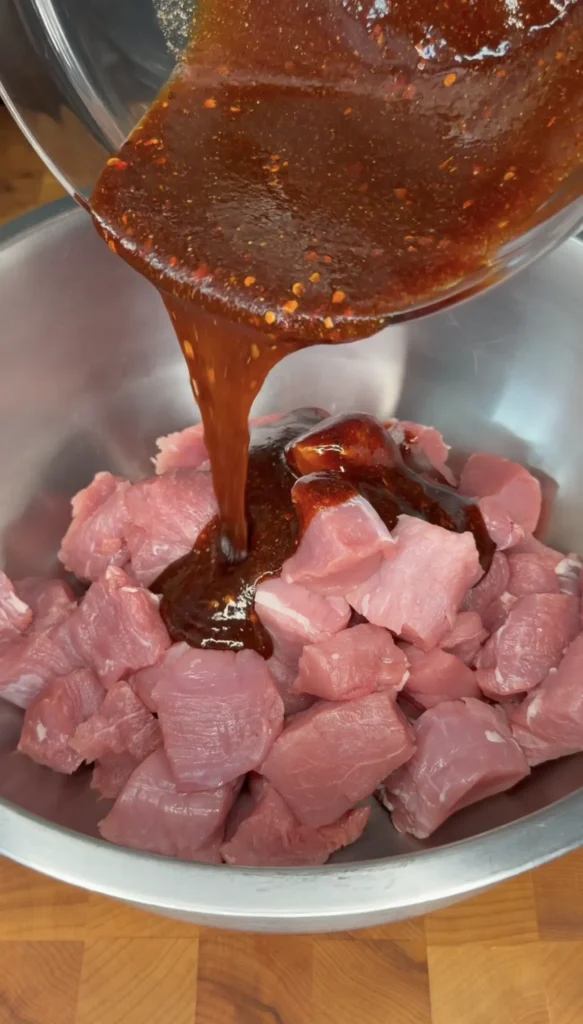
Pour the remaining marinade over the pork cubes. Toss thoroughly until every piece is coated. Make sure the marinade reaches all surfaces. Cover the bowl with plastic wrap or seal the zip-top bag.
Refrigerate for 4 to 8 hours. Four hours is minimum for good flavor penetration. Eight hours is ideal for maximum flavor. Don’t marinate longer than 12 hours. The soy sauce and acid can make the pork texture mushy with extended marinating.
Flip the bag or stir the bowl halfway through marinating to ensure even coverage. The pork on top can dry out if left undisturbed.
Step 4: Thread the Skewers
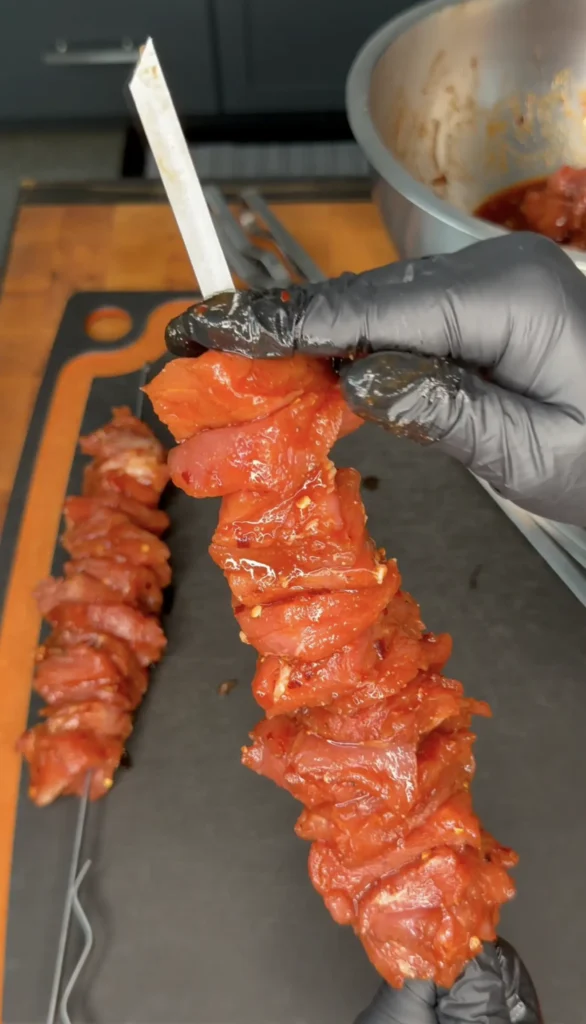
Remove the marinated pork from the refrigerator 20 to 30 minutes before grilling. Let it come closer to room temperature. This ensures more even cooking.
Thread the pork cubes onto skewers, packing them tightly with minimal gaps. Leave about 1 inch of space at each end of the skewer for handling. Tight packing helps the meat stay moist. Gaps allow more surface area to dry out.
You should get 4 to 6 skewers from 2 pounds of pork depending on skewer length and cube size. Discard the used marinade that the raw pork sat in. Do not use it for basting.
Step 5: Prepare the Grill and Simmer the Glaze
Set up your grill for two-zone cooking. For gas grills, turn burners on one side to medium-high (400°F to 425°F) and leave the other side off or on low. For charcoal grills, pile hot coals on one side and leave the other side empty.
While the grill preheats, place the saucepan with reserved marinade over medium heat on the stovetop. Bring to a simmer, stirring frequently. Cook for 5 to 7 minutes until the glaze thickens noticeably. It should coat the back of a spoon. The volume will reduce by about one-third. Set aside and keep warm.
Step 6: Grill the Skewers
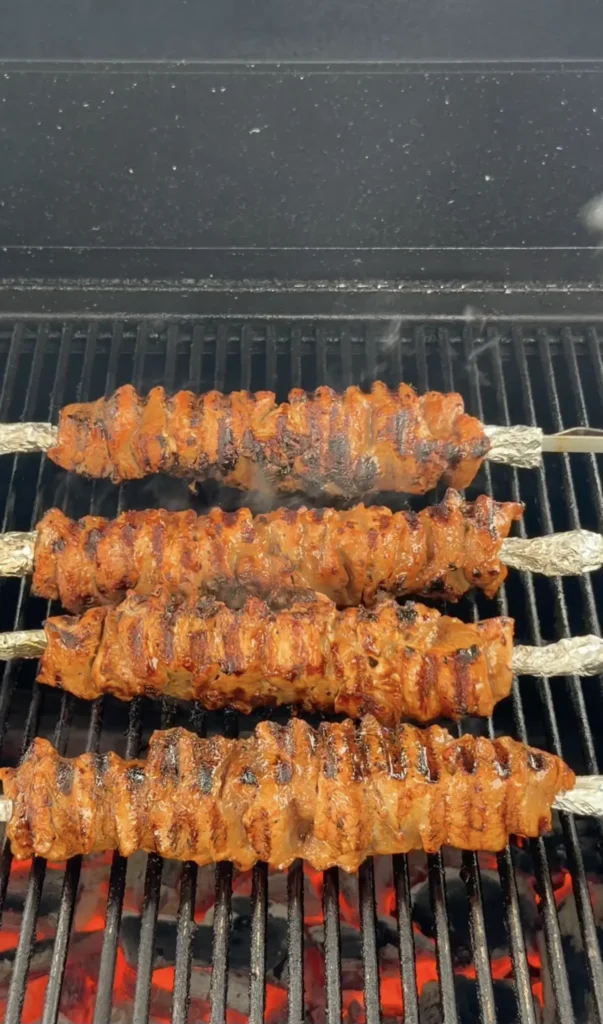
Place the pork skewers over the direct heat zone. Grill for 2 to 3 minutes without moving them. The bottoms should develop char marks and start caramelizing.
Rotate the skewers a quarter turn and grill another 2 to 3 minutes. Continue rotating until all sides have light char and caramelization. This initial searing takes 8 to 12 minutes total, depending on how many sides your cubes have.
Move the skewers to the indirect heat zone. Close the lid and continue cooking until the internal temperature reaches 140°F to 145°F. This takes another 6 to 10 minutes. Check temperature by inserting an instant-read thermometer into the center of a thick cube.
Step 7: Glaze and Finish
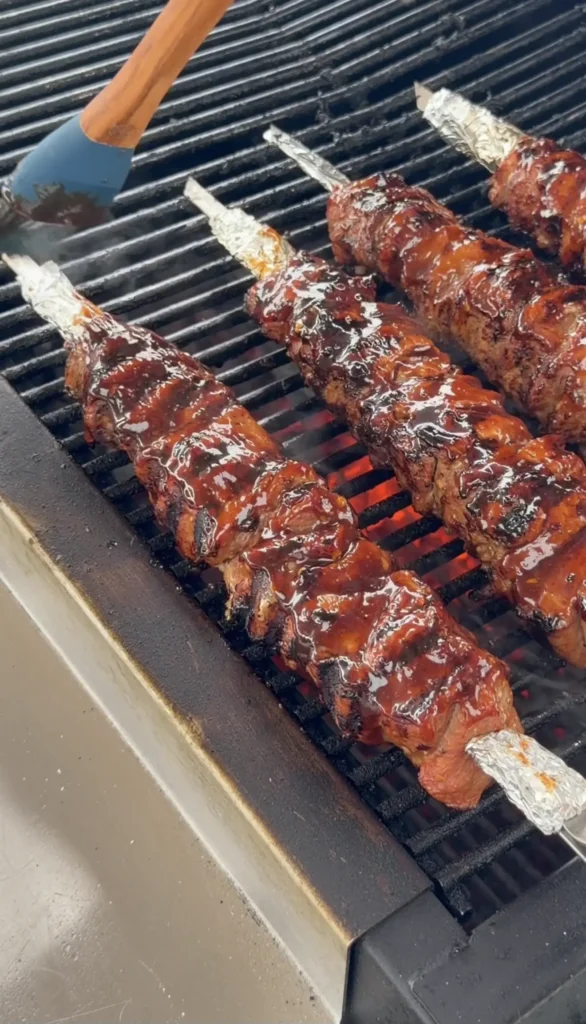
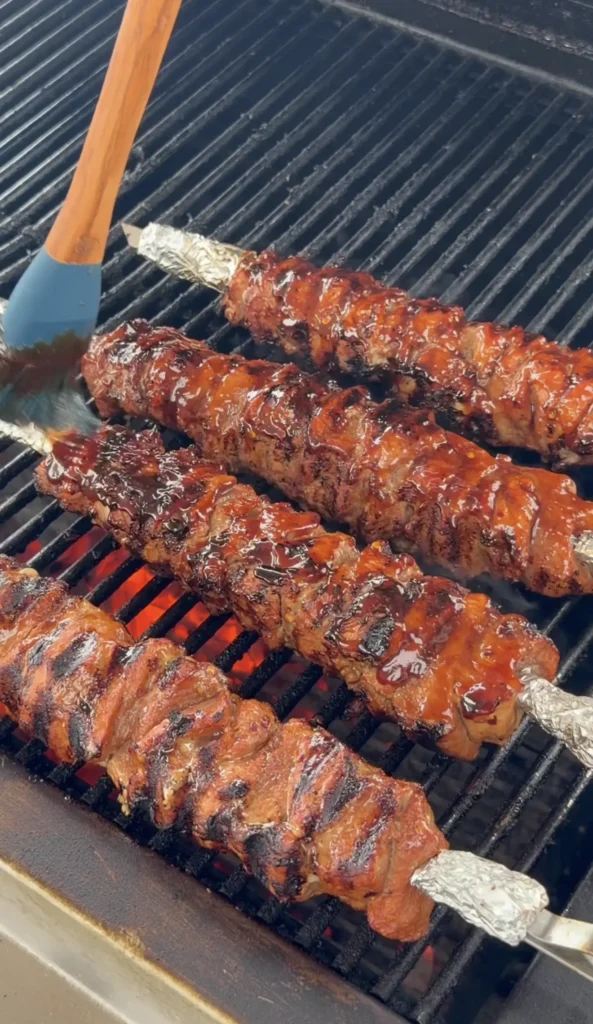
During the last 2 to 3 minutes of cooking, brush the skewers generously with the thickened glaze. Coat all sides. The sugars will caramelize quickly over the indirect heat without burning.
Flip the skewers and brush the other sides. You want multiple applications to build thick, glossy coating. Work quickly since the glaze sets fast.
When the pork reaches 145°F, remove the skewers from the grill. Transfer to a serving platter and tent loosely with foil. Let rest for 5 minutes. The internal temperature will rise to 150°F to 155°F during this rest.
Step 8: Garnish and Serve
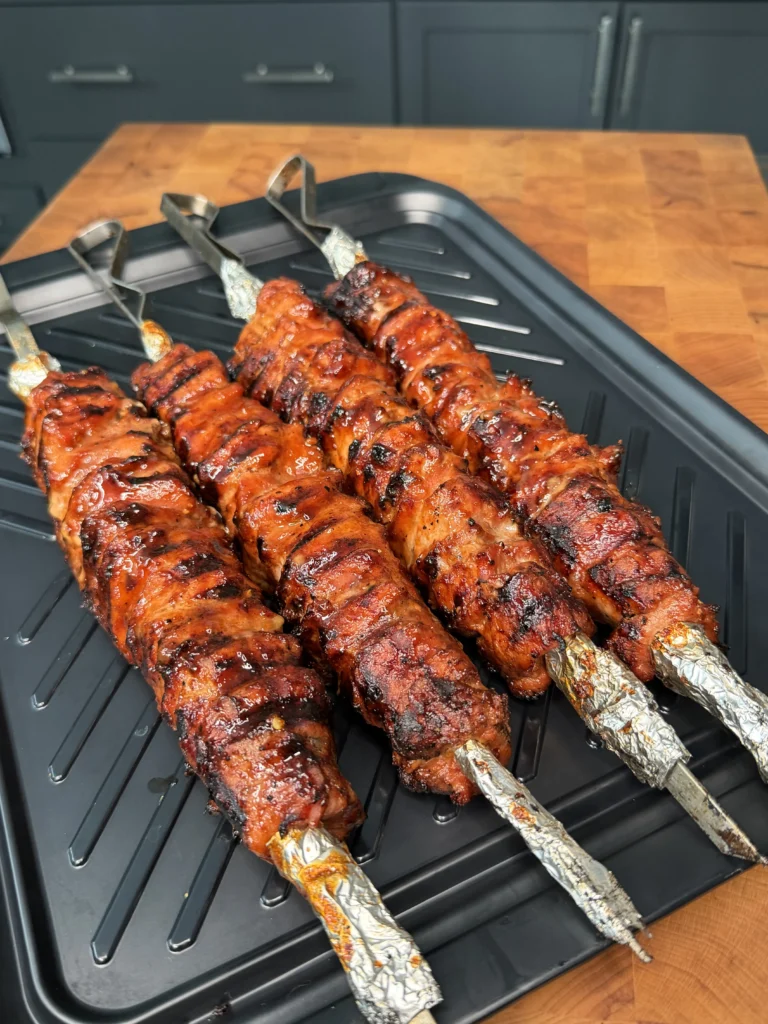
Sprinkle the sweet heat pork skewers with chopped fresh cilantro or sliced green onions. Serve any remaining glaze on the side for dipping. The pork should bite cleanly off the skewer. The exterior should be sticky and glossy with caramelized char spots. The interior should be juicy with slight pink in the center.
Serve immediately while hot over coconut rice, grilled pineapple, or alongside street-corn style elote.
Sweet Heat Pork Skewers
Equipment
- Grill (Gas, Charcoal, or Pellet)
- Wooden or Metal Skewers
- Instant-Read Thermometer
- Saucepan
- Basting Brush
Ingredients
For the Pork
- 2 pounds pork loin or pork tenderloin
- wooden or metal skewers soak wooden 30-45 minutes
For the Sweet Heat Marinade/Glaze
- 1/2 cup chipotle pineapple BBQ sauce
- 1/4 cup honey
- 3 tablespoons brown sugar
- 3 tablespoons soy sauce
- 2 tablespoons tomato paste
- 1 teaspoon garlic powder
- 1 teaspoon onion powder
- 1 teaspoon black pepper
- 1/2-1 teaspoon red pepper flakes adjust to heat preference
- 1 tablespoon pineapple juice optional for extra gloss
- 1 teaspoon smoked paprika optional for BBQ depth
Optional Garnish
- chopped fresh cilantro
- sliced green onions
Instructions
- Prepare pork: Trim 2 pounds pork loin or tenderloin, removing fat and silver skin. Cut into 1½ to 2-inch cubes. Place in large bowl. If using wooden skewers, soak in water 30 to 45 minutes.
- Make marinade: Whisk together BBQ sauce, honey, brown sugar, soy sauce, tomato paste, garlic powder, onion powder, black pepper, red pepper flakes, and optional pineapple juice and smoked paprika until smooth. Remove ⅓ of marinade (about ½ cup) to small saucepan for basting. Set aside.
- Marinate pork: Pour remaining marinade over pork cubes and toss to coat. Cover and refrigerate 4 to 8 hours, flipping halfway through.
- Thread skewers: Remove pork from refrigerator 20 to 30 minutes before grilling. Thread pork tightly onto skewers with minimal gaps. Discard used marinade.
- Prepare grill and glaze: Set up two-zone fire with one side medium-high (400-425°F) and other side indirect heat. Simmer reserved marinade over medium heat for 5 to 7 minutes until thickened. Keep warm.
- Grill skewers: Place skewers over direct heat. Grill 2 to 3 minutes per side, rotating to char all sides, 8 to 12 minutes total. Move to indirect heat and cook until internal temperature reaches 140-145°F, another 6 to 10 minutes.
- Glaze and finish: During last 2 to 3 minutes, brush skewers generously with thickened glaze on all sides. Remove when internal temp reaches 145°F. Rest 5 minutes tented with foil.
- Serve: Garnish with cilantro or green onions. Serve with extra glaze for dipping. Pork should be juicy with sticky, glossy exterior.
Notes
Frequently Asked Questions
Can You Use Chicken Instead of Pork for These Skewers?
You can use chicken breast or thighs for sweet heat skewers with excellent results. Cut boneless, skinless chicken into 1½ to 2-inch cubes. Marinate for 2 to 4 hours maximum. Chicken absorbs marinade faster than pork. Longer marinating can make the texture mushy.
Cook chicken to 165°F internal temperature instead of 145°F. This requires about the same grilling time as pork since the cubes are similar size. The higher final temp means chicken can be slightly drier than pork. Use chicken thighs instead of breast for juicier results.
Dark meat thighs have more fat and stay moist even at 165°F. They also handle sweet glazes better than lean breast meat. The richer flavor of thighs complements the honey and chipotle nicely.
Adjust the soy sauce slightly when using chicken. Reduce to 2 tablespoons instead of 3. Chicken is milder than pork and can be overpowered by too much soy sauce.
What If You Can’t Find Chipotle Pineapple BBQ Sauce?
You can make a substitute using regular BBQ sauce with additions. Combine ½ cup sweet BBQ sauce, 2 tablespoons pineapple juice, 1 tablespoon adobo sauce from canned chipotles, and ½ teaspoon liquid smoke. This creates similar smoky-sweet-heat profile.
Regular BBQ sauce without modifications works but lacks complexity. The chipotle pineapple version provides specific smoky heat that regular sauce doesn’t have. If using plain BBQ sauce, add extra cayenne or hot sauce to compensate.
Sweet Hawaiian BBQ sauce can substitute in a pinch. It has pineapple notes but lacks chipotle smoke. Add 1 teaspoon chipotle powder or 1 tablespoon adobo sauce to bring in the smoky element.
For homemade option, blend ½ cup ketchup, ¼ cup pineapple juice, 2 tablespoons brown sugar, 1 tablespoon apple cider vinegar, 1 teaspoon chipotle powder, and ½ teaspoon liquid smoke. Simmer for 5 minutes.
The specific brand matters less than having sweet, smoky, and fruity elements. As long as your substitute includes these three components, the skewers will taste great.
Can You Make These Skewers in the Oven?
You can make pork skewers in the oven at 425°F for 15 to 18 minutes. Place skewers on a wire rack over a baking sheet. The rack allows air circulation and prevents steaming. Brush with glaze during the last 3 to 4 minutes of cooking.
For better browning, broil for the final 2 to 3 minutes. Watch carefully to prevent burning. The sugary glaze can scorch quickly under the broiler. Position the oven rack 6 to 8 inches from the broiler element.
The texture differs from grilled skewers. Oven-cooked pork won’t have char marks or smoky flavor. The glaze caramelizes but doesn’t develop the same complexity. Consider adding 1 teaspoon liquid smoke to the marinade for smoke flavor.
Turn the skewers halfway through cooking for even browning. At 8 to 9 minutes, flip each skewer. This ensures both sides develop color.
Oven method works well for winter cooking or when grilling isn’t practical. The results are good, just different from authentic grilled skewers. The convenience factor makes it worthwhile.
How Do You Prevent Wooden Skewers from Burning?
Soaking wooden skewers in water for 30 to 45 minutes before using prevents them from burning on the grill. Submerge them completely in a pan of water. Weight them down with a plate if they float. The wood absorbs water and becomes less flammable.
Even soaked skewers can char on the exposed ends. Wrap the bare ends with small pieces of aluminum foil. This protects them from direct flame. Remove the foil before serving.
Using two-zone grilling helps protect skewers. Most of the cooking happens over indirect heat where there are no flames. Only brief exposure to direct heat limits burning risk.
Metal skewers eliminate burning concerns entirely. They’re reusable and dishwasher safe. The downside is they conduct heat. The skewers get very hot and can overcook the pork touching them. They also require oven mitts to handle.
Flat metal skewers work better than round ones. The flat shape prevents food from spinning when you flip them. Round skewers allow the meat to rotate independently.
Bamboo skewers are thicker than regular wooden skewers. The extra thickness makes them more resistant to burning. They cost slightly more but last better through grilling.
Can You Make the Marinade Ahead of Time?
You can make the sweet heat marinade up to 3 days ahead and store it refrigerated in an airtight container. The flavors actually improve as they sit. The honey, brown sugar, and spices meld together. The marinade becomes more complex.
Bring the marinade to room temperature before using. Cold marinade doesn’t coat the pork as well. Let it sit out for 20 to 30 minutes before adding pork cubes.
Shake or stir the marinade before using. The honey and tomato paste can settle at the bottom during storage. Mixing redistributes all ingredients evenly.
Don’t freeze the marinade. The honey and brown sugar separate when frozen and thawed. The texture becomes grainy and doesn’t reincorporate smoothly.
Making marinade ahead saves time on cooking day. You can prep on a Sunday evening and grill Monday or Tuesday night. The advance prep makes weeknight grilling manageable.
Remember to still reserve portion for basting before adding raw pork. Do this separation when you’re ready to marinate, not when you first make the marinade.
What Sides Go Best With Sweet Heat Pork Skewers?
Coconut rice pairs beautifully with honey glazed pork skewers because the subtle sweetness complements the glaze. Cook jasmine rice in half coconut milk, half water. Add pinch of salt and sugar. The creamy rice balances the sweet-heat pork.
Grilled pineapple enhances the tropical theme from the chipotle pineapple BBQ sauce. Cut fresh pineapple into rings or chunks. Grill 2 to 3 minutes per side until caramelized. The warm, sweet fruit creates cohesive flavor profile.
Street-corn style elote provides creamy, tangy contrast. Grill corn and coat with mayo, cotija cheese, chili powder, and lime juice. The acid from lime cuts through rich pork glaze.
Simple cucumber salad offers cool, refreshing balance. Toss sliced cucumbers with rice vinegar, sesame oil, and red pepper flakes. The crisp vegetables cleanse your palate between bites of sweet pork.
Asian slaw with sesame ginger dressing works well for lighter option. Shred cabbage, carrots, and bell peppers. Dress with rice vinegar, sesame oil, ginger, and soy sauce. The crunchy slaw provides textural contrast.
Fried rice turns the skewers into complete meal. Make vegetable fried rice with eggs, peas, and carrots. The savory rice balances sweet pork without competing flavors.
If you’re looking for more recipes like this recipe, click the link! Check out all of our grilling recipes here for more steak, seafood, and BBQ favorites that are perfect for your next cookout.
COMMON ITEMS USED IN THESE RECIPES
Hasty Bake Charcoal Grill and Smoker
Knitted Gloves
Food Processor
Cast Iron Skillet
Meater +
Upgrade Your Meat Game with Grill Nation x Linz Heritage Angus
If you really want to take your grilling and cooking to the next level, you need to check out our collaboration with Linz Heritage Angus. We’ve partnered with them to bring you some of the best beef you can get your hands on.
Linz Heritage Angus isn’t your typical grocery store meat. These guys are the real deal – they raise their cattle the right way, and you can taste the difference in every bite. We’re talking about beef that’s been dry-aged to perfection, with marbling that makes your mouth water just looking at it.
Check out these premium cuts that’ll change how you think about beef:
Premium Ribeye Steaks – Perfect for special occasions
Dry-Aged Beef Selection – Take your grilling to the next level
Ground Beef & Burger Blends – The foundation of great BBQ