Smoked Dr Pepper BBQ Beef Sliders
Smoked Dr Pepper BBQ beef sliders are chuck roast cubes smoked at 275°F for 2 to 3 hours until bark forms, then braised in a foil pan with Dr Pepper, BBQ sauce, brown sugar, and butter at 325°F for 1.5 to 2 hours until the meat reaches 200°F to 205°F and shreds easily. You layer the shredded beef on slider rolls with jalapeño cream cheese spread, pepper jack cheese, and crispy fried onions. Bake the assembled sliders at 375°F for 20 to 23 minutes until the cheese melts and tops turn golden.
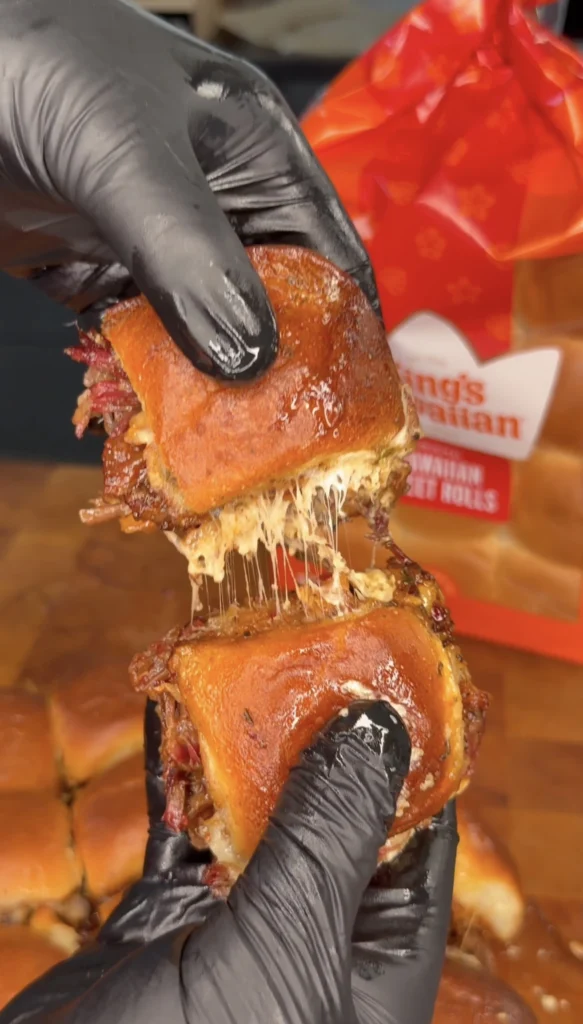
The Dr Pepper braise creates sweet, tangy flavor while breaking down the chuck roast’s collagen into gelatin. This makes the meat incredibly tender and juicy. The carbonation in Dr Pepper helps tenderize faster than liquid without carbonation. The brown sugar and butter add richness. The BBQ sauce provides smoky depth. The jalapeño cream cheese spread balances the richness with creamy heat. Caramelized onions add sweetness. Fresh jalapeños provide bite.
These BBQ beef sliders take about 5 hours total from seasoning to serving. The smoking phase develops bark and smoke flavor. The covered braising phase creates tender, shreddable meat. The final baking melts cheese and toasts the rolls. The result is game day food that feeds 12 to 15 people with impressive flavor and minimal hands-on work. Perfect for parties, tailgates, and family gatherings.
Why Chuck Roast Is the Best Cut for Shredded Beef Sliders
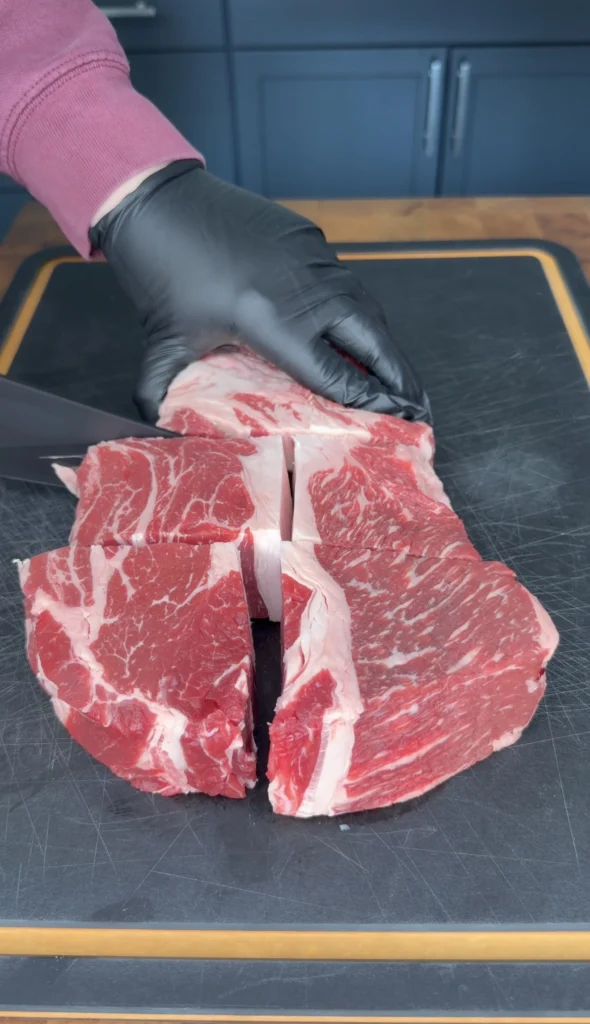
Chuck roast creates the best shredded beef sliders because it contains the ideal fat-to-meat ratio for staying juicy during extended cooking. Chuck comes from the shoulder area of the cow. This heavily worked muscle develops lots of connective tissue and marbling. When you smoke and braise chuck, the connective tissue breaks down into gelatin. This creates incredibly tender, moist meat that shreds easily.
The fat content in chuck (about 20% to 25%) prevents drying during the 4.5-hour cook time. Leaner cuts like eye of round or sirloin would dry out before becoming tender enough to shred. The fat renders slowly during smoking and braising. It bastes the meat from the inside. Some fat melts into the braising liquid, creating rich sauce.
Chuck roast also has excellent beefy flavor that stands up to strong seasonings. The muscle fibers are coarse and flavorful. This robust taste complements BBQ rub, smoke, and sweet Dr Pepper sauce without getting lost. Milder cuts taste bland after long cooking with bold flavors.
The price point makes chuck practical for feeding crowds. Chuck typically costs $5 to $8 per pound. More tender cuts like brisket flat can run $12 to $15 per pound. For sliders feeding 12 to 15 people, you’ll spend $20 to $30 on chuck versus $50+ on premium cuts. The results are equally delicious.
How Dr Pepper Enhances BBQ Braising Better Than Water or Broth
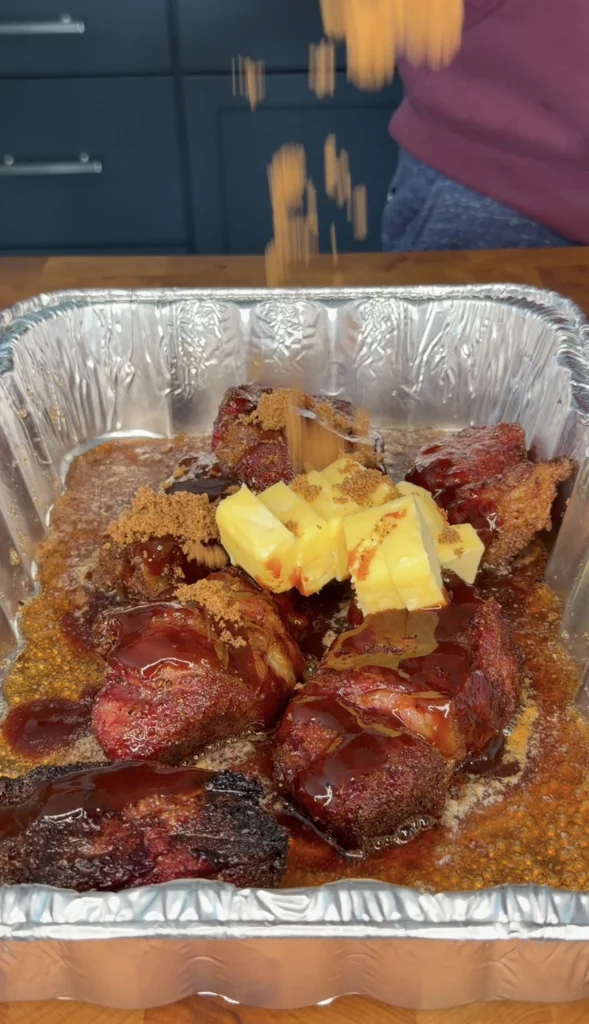
Dr Pepper creates superior braising liquid for Dr Pepper BBQ beef because its unique blend of 23 flavors adds complexity that water or broth can’t match. The soda contains cherry, vanilla, caramel, and spice notes. These flavors complement BBQ sauce naturally. As the liquid reduces during braising, these flavors concentrate and penetrate the meat.
The carbonation in Dr Pepper helps tenderize meat faster than flat liquids. The carbonic acid is mildly acidic. This acid breaks down tough muscle fibers and connective tissue. The tiny bubbles also help the liquid penetrate deeper into the meat. This creates more even flavor distribution. Flat water or broth can’t achieve the same penetration.
The sugar content in Dr Pepper (about 40 grams per 12-ounce can) caramelizes during braising. This creates deep, complex sweetness different from just adding sugar. The caramelized soda sugars combine with brown sugar in the recipe. Together they create thick, glossy sauce. The beef gets coated in this sticky glaze when you shred it.
Dr Pepper’s acidity balances the richness of butter and beef fat. Without acid, the braising liquid tastes heavy and one-dimensional. The soda brightens all the flavors. It prevents the sauce from tasting greasy or overwhelming. This acid balance makes the sliders more craveable.
Why the Two-Stage Cooking Method Produces Better Results
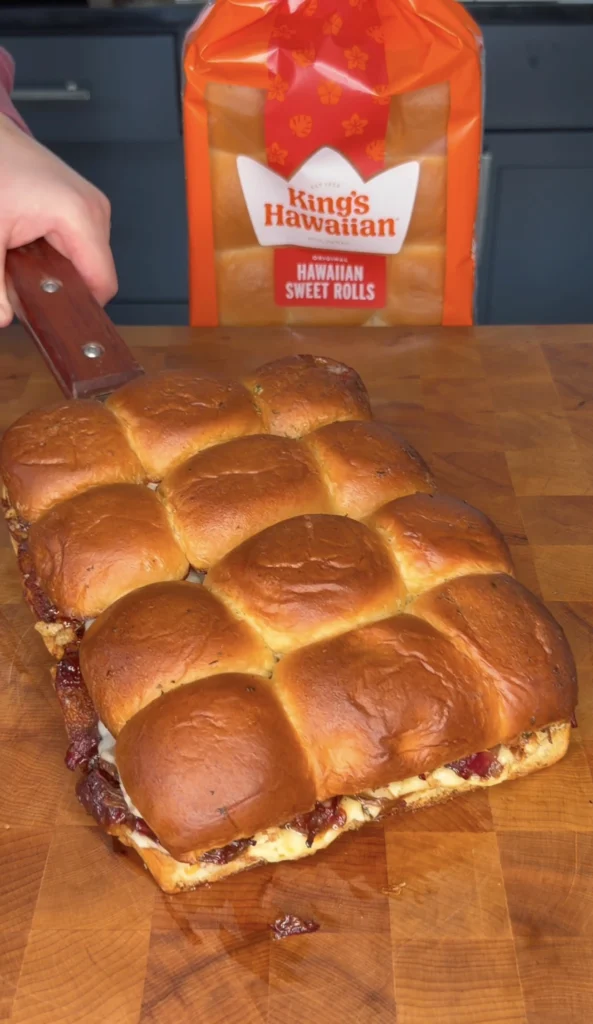
The two-stage smoking and braising method creates better smoked chuck roast sliders than single-stage cooking because each phase serves different purposes. Smoking at 275°F develops bark and smoke flavor. Braising at 325°F breaks down collagen for tenderness. You can’t achieve both goals at one temperature.
Smoking the cubed chuck at 275°F for 2 to 3 hours allows gradual smoke penetration without overcooking the exterior. At this temperature, smoke compounds stick to the tacky meat surface. The rub sets into a crust. Fat begins rendering slowly. The meat develops that essential BBQ bark. If you started with the braising phase, the wet environment would prevent bark formation.
The smoking phase also brings internal temperature to about 160°F. This is the “stall” temperature where evaporative cooling slows cooking. For whole roasts, the stall can last hours. With cubed meat, you power through it quickly. By the time you start braising, the meat is already well into the cooking process.
Increasing temperature to 325°F for the covered braise accelerates collagen breakdown. Collagen converts to gelatin between 160°F and 205°F. Higher heat speeds this conversion. The covered foil pan traps steam. This moist heat environment is perfect for breaking down tough connective tissue. Dry smoking at 275°F would take 8+ hours to achieve the same tenderness.
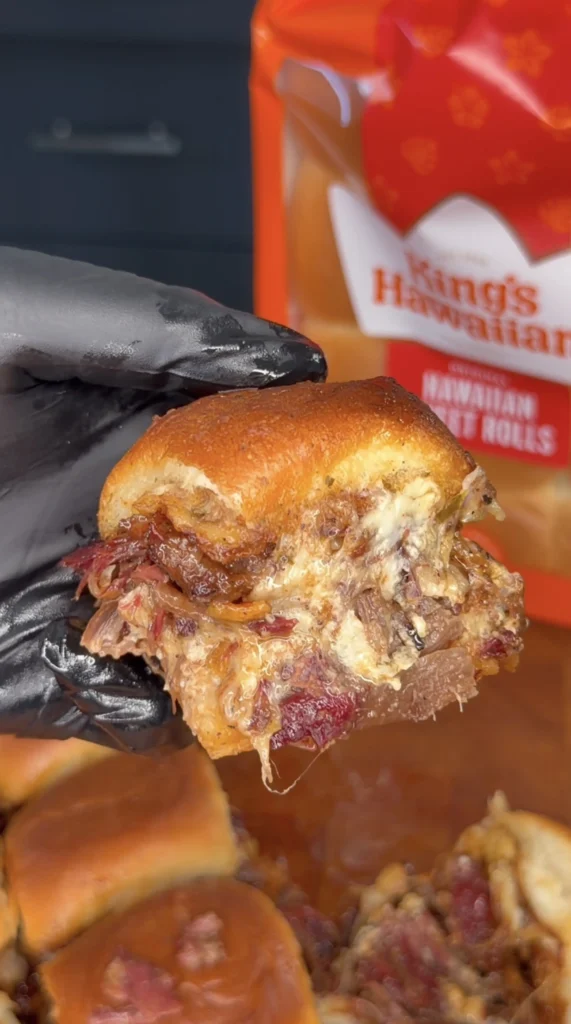
The braising liquid creates flavorful sauce while tenderizing the meat. As the chuck cubes cook in Dr Pepper, BBQ sauce, brown sugar, and butter, they absorb these flavors. The rendered beef fat combines with the braising ingredients. By the time the meat reaches 200°F to 205°F, you have perfectly seasoned, fall-apart tender beef swimming in rich sauce.
Dr Pepper BBQ Beef Sliders
Smoked Chuck Roast with Jalapeño Cream Cheese & Pepper Jack
Ingredients
Smoked BBQ Beef
- 3 to 4 pounds chuck roast, cut into 2 to 3-inch cubes
- 2 tablespoons BBQ rub (salt, pepper, paprika, garlic-based)
- 10 ounces Dr Pepper
- 6 ounces BBQ sauce (sweet and smoky works best)
- ⅓ cup brown sugar
- 1 stick (½ cup) unsalted butter, sliced
For the Jalapeño Cream Cheese Spread
- 8 ounces cream cheese, softened
- ½ cup sour cream
- 2 jalapeños, finely diced (seeds removed for mild)
- 1 medium onion, caramelized
- 1 teaspoon garlic paste (or 2 cloves minced)
- Salt to taste
For the Sliders
- 12 to 15 slider rolls (Hawaiian or brioche recommended)
- 12 to 16 slices pepper jack cheese
- Crispy fried onions
- Extra BBQ sauce for brushing (optional)
Cutting the chuck roast into cubes before smoking reduces cook time by 2 to 3 hours compared to smoking a whole roast. The increased surface area allows more smoke penetration and faster rendering of fat. Each cube develops bark on all sides rather than just the exterior of a whole roast. This creates more flavorful, evenly smoked meat that shreds perfectly after braising.
Step-by-Step Instructions
Step 1: Season and Rest the Chuck Roast
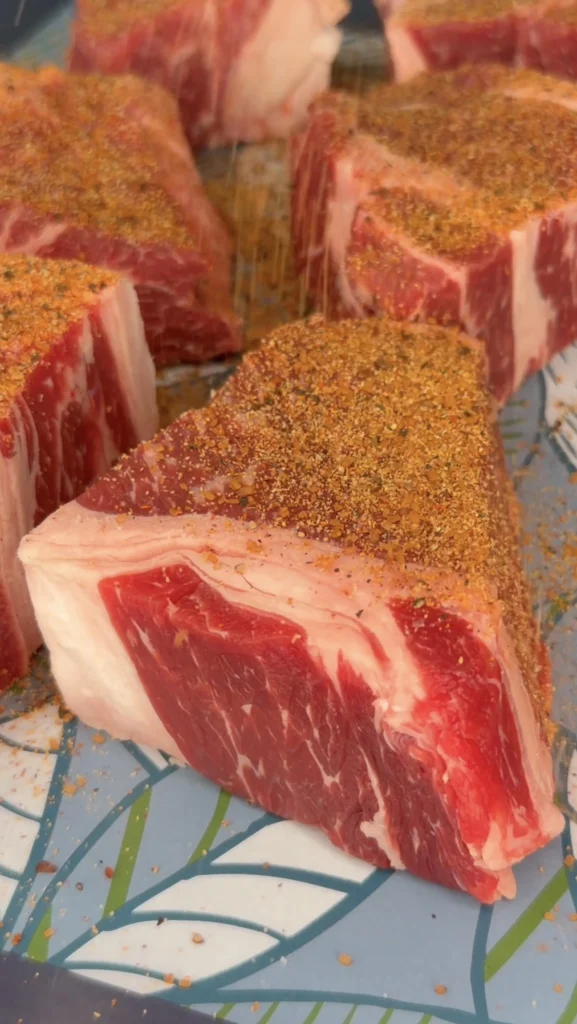
Cut 3 to 4 pounds chuck roast into 2 to 3-inch cubes. Trim away any large exterior fat caps but leave internal marbling. Pat the cubes dry with paper towels. Moisture prevents rub from adhering properly.
Coat the beef cubes evenly with 2 tablespoons BBQ rub. Use a rub with salt, pepper, paprika, and garlic as the base. Toss the cubes in a large bowl to ensure all sides get seasoned. You can also season them on a baking sheet, turning each piece.
Let the seasoned beef rest at room temperature for 30 minutes. This allows the rub to adhere and start drawing moisture to the surface. The surface becomes tacky. This helps smoke compounds stick better during smoking. The meat also loses its refrigerator chill. Room temperature meat cooks more evenly.
Step 2: Smoke the Beef Cubes
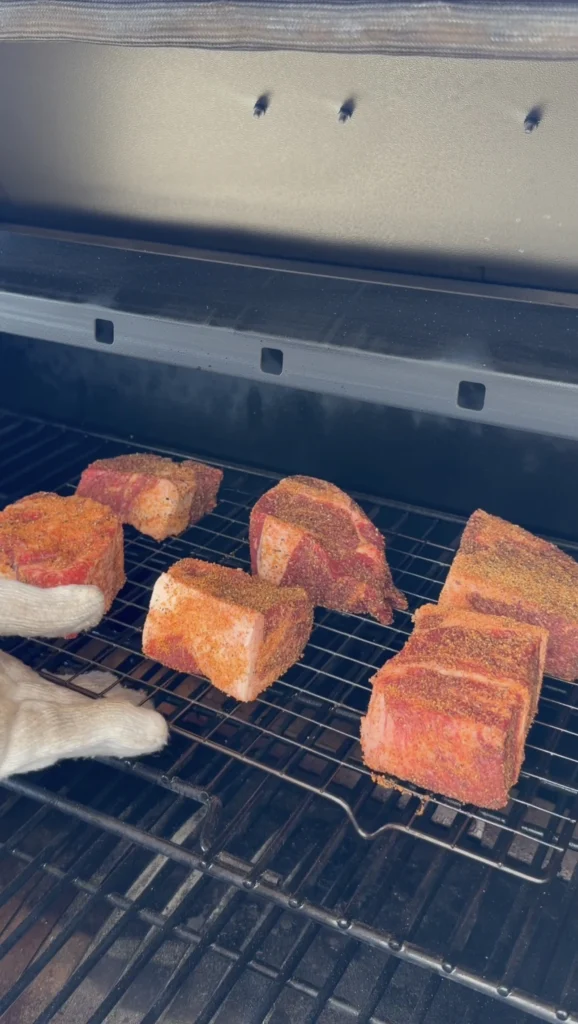
Preheat your pellet smoker, offset smoker, or charcoal grill to 275°F. Use hickory, oak, or pecan wood for best smoke flavor. Hickory provides classic BBQ smoke. Oak is neutral and lets beef shine. Pecan adds nutty sweetness.
Place the seasoned chuck roast cubes directly on the smoker grates. Space them with small gaps between pieces. Don’t crowd them. Air needs to circulate around each cube for even cooking and smoke penetration.
Close the lid and smoke for 2 to 3 hours without opening unnecessarily. You’re looking for bark to form on all sides. The exterior should look dark and crusty. Insert an instant-read thermometer into the center of a thick cube. It should read about 160°F.
The beef won’t be tender yet. That’s expected. You’re building smoke flavor and bark during this phase. The cubes should have reduced in size slightly from fat rendering. They should smell intensely smoky.
Step 3: Braise in Dr Pepper BBQ Bath
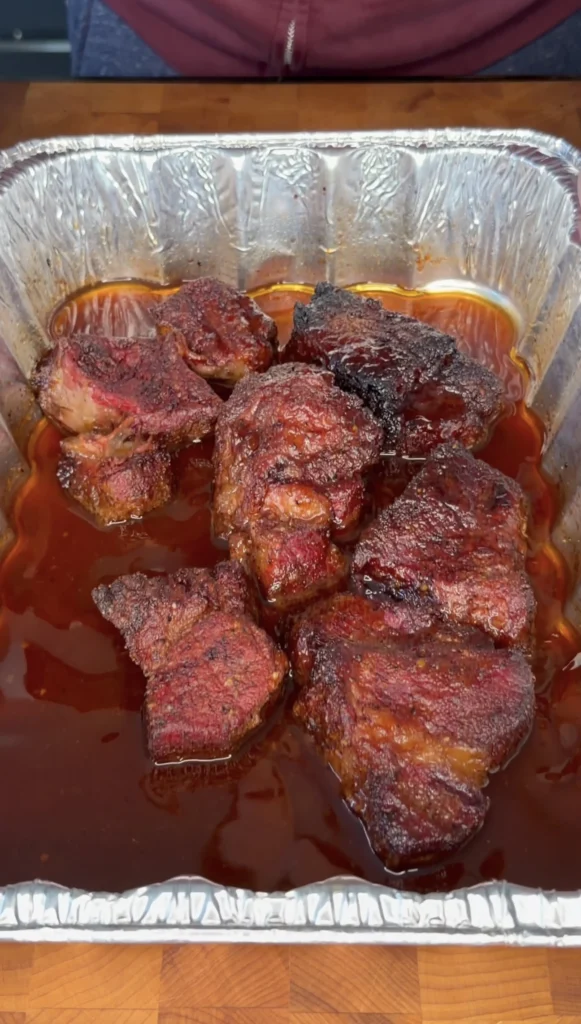
Transfer the smoked beef cubes to a large disposable aluminum foil pan. A 9×13-inch pan works well. Arrange the cubes in a single layer if possible. Slight overlap is fine.
Pour 10 ounces Dr Pepper over the beef. Add 6 ounces BBQ sauce, ⅓ cup brown sugar, and 1 stick (½ cup) butter cut into slices. The butter slices should be scattered across the top. As they melt, they’ll distribute throughout the pan.
Cover the pan tightly with heavy-duty aluminum foil. Crimp the edges to seal completely. No steam should escape. The foil creates an oven environment inside the pan.
Increase the smoker temperature to 325°F. Return the covered pan to the smoker. Close the lid and cook for 1.5 to 2 hours. Don’t open during this time. The consistent heat and steam break down the collagen.
Check for doneness at the 1.5-hour mark. Remove the foil carefully (watch for hot steam). Insert a thermometer into several cubes. They should read 200°F to 205°F. The meat should be fork-tender. A fork should slide in with almost no resistance. If it’s not quite there, re-cover and cook another 15 to 30 minutes.
Step 4: Shred the Beef
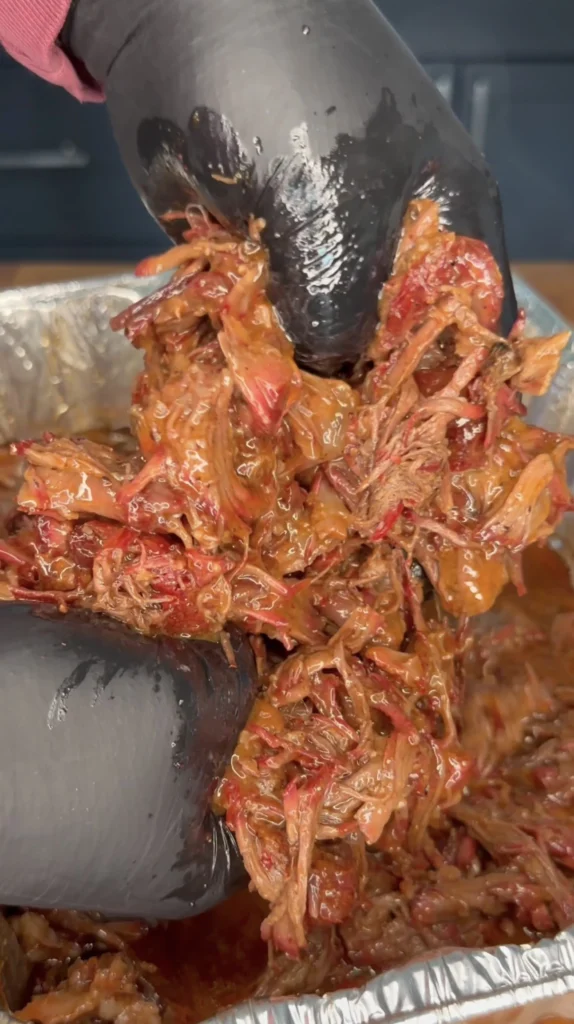
Remove the pan from the smoker when the beef reaches 200°F to 205°F. Let it rest in the pan for 15 minutes. The beef will reabsorb some juices during this rest. It also cools enough to handle safely.
Using two forks, shred the beef directly in the pan. Pull the meat apart into bite-sized shreds. Mix the shredded beef with the braising liquid in the pan. The liquid should be thick, glossy, and reduced. Toss everything together until the beef is evenly coated with sauce.
Taste and adjust seasoning if needed. Add salt, pepper, or extra BBQ sauce. The beef should taste intensely flavorful, sweet, smoky, and slightly tangy from the Dr Pepper.
Step 5: Make the Jalapeño Cream Cheese Spread
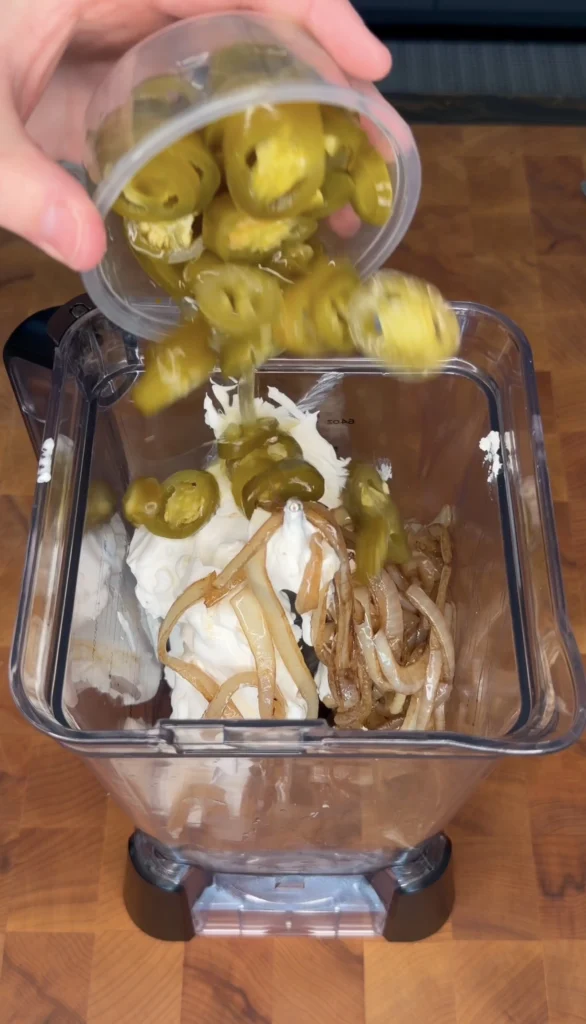
While the beef braises (or ahead of time), make the spread. In a medium bowl, combine 8 ounces softened cream cheese and ½ cup sour cream. Use a fork or hand mixer to blend until smooth and creamy.
Add 2 finely diced jalapeños (seeds removed for mild heat), 1 caramelized medium onion (cooled), 1 teaspoon garlic paste, and salt to taste. Mix everything together until well combined. The jalapeños and onions should be distributed evenly throughout.
Refrigerate the spread for 15 to 20 minutes. This firms up the texture and allows flavors to meld. After chilling, it should be thick enough to spread without running but soft enough to work with easily.
Step 6: Assemble the Sliders
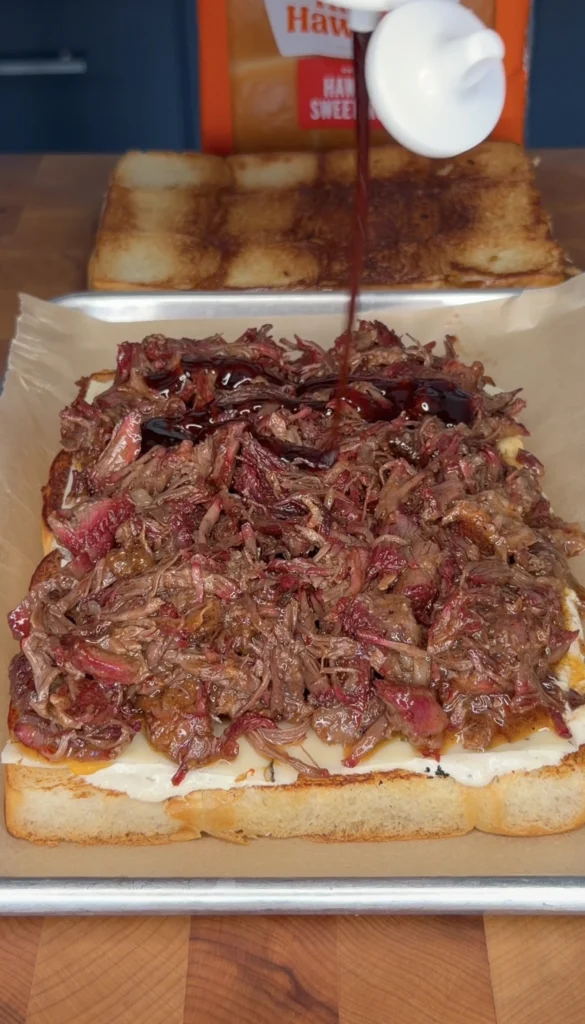
Preheat your oven to 375°F. Cut 12 to 15 slider rolls in half horizontally. For connected slider rolls (like Hawaiian rolls in a tray), slice the entire tray in half horizontally.
Place the bottom halves of the rolls in a 9×13-inch baking dish or on a large baking sheet. Spread the jalapeño cream cheese mixture evenly across all bottom buns. Use about 1 to 2 tablespoons per slider.
Layer pepper jack cheese on top of the cream cheese. Use about 1 slice per slider, broken to fit if needed.
Spoon shredded BBQ beef generously onto each slider. Use about ¼ to ⅓ cup per slider. Make sure each slider gets plenty of beef and sauce. Add another layer of pepper jack cheese on top of the beef. As it melts, it glues everything together. Sprinkle crispy fried onions over the cheese and beef. Use as much as you like. They add essential crunch.
Step 7: Bake Until Golden and Melty
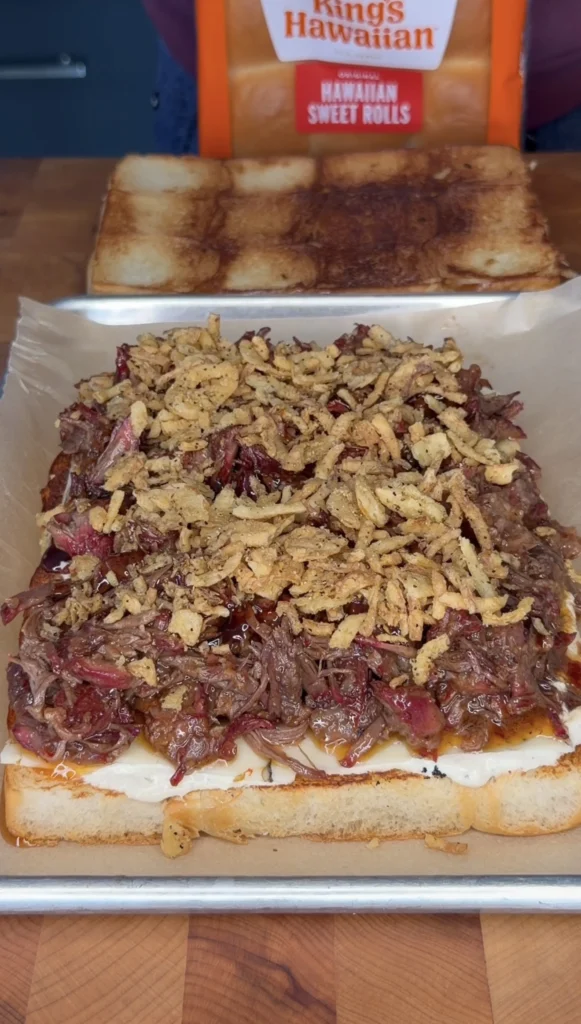
Cover the pan loosely with aluminum foil. Bake for 15 minutes covered. This gently heats everything and starts melting the cheese without browning the tops too quickly.
Remove the foil. Bake for an additional 5 to 8 minutes uncovered. Watch carefully during this final baking. The tops should turn golden brown. The cheese should be fully melted and bubbly. The crispy onions should darken slightly.
If the tops are browning too fast, tent with foil again. If the cheese isn’t melting after 20 minutes total, increase oven to 400°F for the final few minutes.
Step 8: Serve the Sliders
Remove the smoked Dr Pepper BBQ beef sliders from the oven when the cheese is melted and tops are golden. Let them rest in the pan for 3 to 5 minutes. This allows the cheese to set slightly. The sliders are easier to separate and serve after a brief rest.
Use a spatula to separate individual sliders if they’re connected. Transfer to a serving platter or serve directly from the baking dish for casual gatherings. The sliders should hold together well. The jalapeño cream cheese acts as glue.
Serve immediately while hot with extra BBQ sauce on the side. These are best eaten within 20 to 30 minutes of baking for maximum crispiness and melted cheese.
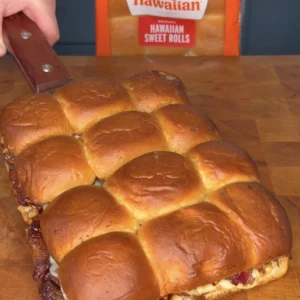
Smoked Dr Pepper BBQ Beef Sliders
Equipment
- Pellet Smoker or Charcoal Smoker
- Foil Pan
- Heavy-Duty Aluminum Foil
- Meat Thermometer
- 9×13 Baking Dish
Ingredients
For the Smoked BBQ Beef
- 3-4 pounds chuck roast cut into 2-3 inch cubes
- 2 tablespoons BBQ rub salt, pepper, paprika, garlic-based
- 10 oz Dr Pepper
- 6 oz BBQ sauce sweet and smoky works best
- 1/3 cup brown sugar
- 1 stick unsalted butter 1/2 cup, sliced
For the Jalapeño Cream Cheese Spread
- 8 oz cream cheese softened
- 1/2 cup sour cream
- 2 jalapeños finely diced, seeds removed for mild
- 1 medium onion caramelized
- 1 teaspoon garlic paste or 2 cloves minced
- salt to taste
For the Sliders
- 12-15 slider rolls Hawaiian or brioche recommended
- 12-16 slices pepper jack cheese
- crispy fried onions
- extra BBQ sauce optional for brushing
Instructions
- Season the beef: Pat cubed chuck roast dry and coat evenly with BBQ rub. Let rest at room temperature 30 minutes for better smoke absorption.
- Smoke the beef: Preheat smoker to 275°F. Place cubed chuck roast directly on grates and smoke 2 to 3 hours until bark forms and internal temp reaches 160°F. Use hickory, oak, or pecan wood.
- Braise in Dr Pepper BBQ bath: Transfer smoked beef to foil pan. Add Dr Pepper, BBQ sauce, brown sugar, and butter slices. Cover tightly with foil. Return to smoker at 325°F and cook 1½ to 2 hours until internal temp reaches 200-205°F. Meat should shred easily.
- Shred the beef: Remove from smoker and rest 15 minutes. Using forks, shred beef directly in pan and mix with braising liquid. Taste and adjust seasoning if needed.
- Make jalapeño cream cheese spread: Combine softened cream cheese, sour cream, diced jalapeños, caramelized onions, garlic paste, and salt. Mix until smooth and creamy. Refrigerate 15 to 20 minutes.
- Assemble sliders: Preheat oven to 375°F. Slice slider rolls in half horizontally. Layer: bottom buns, jalapeño cream cheese spread, pepper jack cheese, shredded BBQ beef, more pepper jack, crispy fried onions, top buns. Optional: brush tops with melted butter or BBQ sauce.
- Bake until golden: Cover loosely with foil and bake 15 minutes. Remove foil and bake 5 to 8 more minutes until cheese is melted and tops are golden.
Notes
Frequently Asked Questions
Can You Use a Different Cut of Beef for These Sliders?
You can use brisket flat or beef short ribs for BBQ beef sliders but the results will differ slightly. Brisket flat is leaner than chuck roast. It can dry out more easily during smoking. Increase the braising time by 30 minutes and add extra butter to compensate for lower fat content.
Beef short ribs create incredibly rich, fatty sliders. They have more intramuscular fat than chuck. The meat shreds beautifully and tastes amazing. Short ribs cost significantly more per pound. They’re best saved for special occasions.
Beef shoulder or arm roast works similarly to chuck. These cuts come from the same general area. They have similar marbling and connective tissue. Use them exactly as you would chuck roast. The flavor and texture will be nearly identical.
Avoid using sirloin, round, or lean cuts. These lack sufficient fat and collagen. They become dry and tough even after extended braising. The sliders won’t have the same juicy, tender quality.
Ground beef doesn’t work for this recipe. You need whole muscle meat that shreds into strands. Ground beef creates different texture entirely. If you want ground beef sliders, that’s a completely different recipe.
How Do You Make This Recipe Without a Smoker?
You can make smoked chuck roast sliders in the oven with liquid smoke to approximate smoke flavor. Cut chuck into cubes and season with rub plus 1 teaspoon liquid smoke mixed in. Roast uncovered at 275°F for 2 hours to develop crust.
Transfer to a foil pan with Dr Pepper, BBQ sauce, brown sugar, butter, and another teaspoon of liquid smoke. Cover tightly with foil. Increase oven to 325°F and braise for 2 to 2.5 hours until fork-tender.
The texture will be similar to smoked version. The flavor won’t have authentic wood-fired smoke character. Liquid smoke provides chemical smoke compounds but lacks the complexity of real smoke. Still, the results are very good for oven-cooked beef.
For slightly better smoke flavor, use smoked paprika in the rub. Add a dash of smoked salt. These don’t replace real smoking but they enhance the smoky profile. The Dr Pepper braising still creates tender, flavorful meat.
Slow cooker or Instant Pot methods work but skip the smoking phase entirely. These create tender shredded beef without smoke flavor or bark. They’re convenient but create different end product.
Can You Make the Beef Ahead for Meal Prep?
You can make the shredded BBQ beef up to 2 days ahead and store it refrigerated in the braising liquid. The beef actually improves overnight as flavors meld. Keep it in an airtight container with all the sauce.
Reheat gently before assembling sliders. Use a covered saucepan over medium-low heat. Stir occasionally. Add a splash of Dr Pepper or water if the sauce seems too thick. Heat until steaming throughout but not boiling.
The jalapeño cream cheese spread keeps for 3 days refrigerated. Make it ahead to save time on assembly day. Bring to room temperature before spreading for easier application.
Don’t assemble the full sliders ahead. Assembled sliders get soggy as they sit. The bread absorbs beef juices and the texture suffers. Assemble just before baking for best results.
For maximum convenience, prepare the beef and spread 1 to 2 days ahead. Store separately. On serving day, assemble and bake fresh. This gives you impressive party food with minimal day-of effort.
Freezing cooked shredded beef works for up to 3 months. Thaw overnight in refrigerator. Reheat as directed. The texture holds up well to freezing. The sauce may separate slightly but reincorporates when heated and stirred.
What If You Don’t Have Dr Pepper?
Regular Coca-Cola works as a substitute for Dr Pepper BBQ beef but creates different flavor profile. Coke is sweeter with stronger vanilla notes. It lacks Dr Pepper’s complex spice blend. Add 1 teaspoon of Worcestershire sauce to approximate some of Dr Pepper’s depth.
Root beer creates interesting alternative with its vanilla and sassafras flavors. It pairs well with BBQ sauce and brown sugar. The result tastes slightly more dessert-like. Some people love it. Others find it too sweet.
Pepsi works similarly to Coke. It’s sweeter than Dr Pepper and less complex. For better results, add ½ teaspoon allspice or cinnamon to the braising liquid. This mimics some of Dr Pepper’s spice notes.
For non-soda option, use beef broth with additions. Combine 10 ounces beef broth, 2 tablespoons apple cider vinegar, 2 tablespoons brown sugar (in addition to the ⅓ cup already in recipe), and 1 teaspoon Worcestershire sauce. This creates savory-sweet braising liquid without soda.
The carbonation in soda does contribute to tenderizing. Beef broth won’t tenderize quite as effectively. Increase braising time by 15 to 20 minutes to compensate. The meat will still become tender, just slightly slower.
Dr Pepper is specifically formulated for BBQ applications. Its unique flavor profile evolved from being paired with smoked meats. If you can find it, use it. The results justify tracking down a 12-pack.
How Spicy Are These Sliders?
Jalapeño cream cheese sliders have mild to moderate heat when you remove jalapeño seeds. Most people find them pleasantly spicy without being overwhelming. The cream cheese and sour cream mellow the jalapeño heat significantly. Kids and heat-sensitive adults can usually handle them.
For completely mild sliders, omit the jalapeños entirely or use mild green chiles. Canned diced green chiles provide flavor and color without any heat. You still get the concept of the spread without spiciness.
For spicier sliders, leave seeds in the jalapeños. Add 1 to 2 teaspoons diced serrano peppers. Serrano peppers are significantly hotter than jalapeños. Mix a few dashes of hot sauce into the cream cheese spread. Use pepper jack cheese with extra visible pepper flakes for additional kick.
The pepper jack cheese adds mild heat. Its spice level varies by brand. Some pepper jack is quite mild. Others pack noticeable kick. Choose based on your heat preference.
The overall slider isn’t extremely spicy even with jalapeño seeds. The sweet BBQ beef and crispy onions balance any heat. The combination prevents the sliders from being one-note spicy. You taste complexity rather than pure burn.
For parties with mixed heat tolerances, make half the sliders with jalapeño spread and half with plain cream cheese spread. Mark them with toothpick flags so guests can choose. This accommodates everyone without making multiple beef batches.
Can You Use Different Cheese Besides Pepper Jack?
Sharp cheddar works excellently for smoked beef sliders if you don’t want pepper jack’s heat. Cheddar provides sharp, tangy flavor that complements BBQ beef. Use freshly shredded cheddar for better melting. Pre-shredded contains anti-caking agents that prevent smooth melting.
Smoked gouda creates sophisticated flavor profile. The smokiness echoes the smoked beef. It melts beautifully and has creamy texture. Smoked gouda costs more than pepper jack but delivers impressive results for special occasions.
American cheese melts the smoothest of any option. It creates ultra-creamy texture without any graininess. American is mild and won’t compete with other flavors. This works well if your crowd prefers familiar tastes.
Monterey Jack (plain, without peppers) provides mild, creamy alternative. It melts well and doesn’t overpower. Use it when you want cheese texture and moisture without adding flavor complexity.
Colby jack offers slight sweetness and excellent melt. The combination of colby and Monterey jack creates balanced flavor. It’s widely available and reasonably priced.
Swiss cheese can work but has distinct flavor that doesn’t pair as naturally with BBQ. The nutty, sharp taste competes with smoke and sweetness. Use Swiss only if you specifically enjoy that combination.
For best results, use cheese slices rather than shredded. Slices melt into even layer. Shredded cheese can create clumpy texture. It also dries out more in the oven.
What Sides Go Best With BBQ Beef Sliders?
Coleslaw provides essential cooling crunch that balances rich BBQ beef sliders. Make creamy coleslaw with mayo-based dressing or vinegar slaw for lighter option. The cabbage crunch and tangy dressing cleanse your palate between bites of heavy sliders.
Baked beans are classic BBQ pairing. Use canned beans doctored with brown sugar, bacon, and BBQ sauce. Or make from scratch. The sweet, savory beans complement beef perfectly. They’re also easy to make in large quantities for crowds.
Mac and cheese creates ultimate comfort food meal. The creamy, cheesy pasta pairs naturally with smoky beef. Both components are rich. This combination is indulgent but beloved at parties and cookouts.
Smoked corn on the cob adds vegetable element. Grill or smoke corn alongside the beef. Brush with butter and season with salt. The sweet corn balances savory sliders.
Potato salad serves crowds easily and holds well at room temperature. Make classic mayo-based or mustard-based depending on preference. The creamy potatoes and crunchy vegetables provide textural variety.
Pickles or jalapeño chips add acid and crunch. The vinegar cuts through rich meat and cheese. Keep a bowl of pickles on the table. Guests can add them to sliders or eat alongside.
Simple green salad with vinaigrette offers lighter option. Not everyone wants all heavy food. Provide fresh, crisp salad with acidic dressing for balance.
How Do You Prevent Slider Buns from Getting Soggy?
The jalapeño cream cheese spread acts as moisture barrier preventing shredded beef juices from soaking into the bottom bun. Always apply the spread directly to the bun first. It creates waterproof layer between bread and wet ingredients.
Don’t add too much beef or sauce to each slider. About ¼ to ⅓ cup per slider is sufficient. Excess beef releases too much liquid. The buns can’t handle it. Less is more for structural integrity.
Assemble sliders close to baking time. Don’t build them hours ahead. Even with cream cheese barrier, extended sitting causes sogginess. Thirty minutes before baking is the maximum advance assembly time.
Toast the slider rolls before assembly for extra protection. Split rolls and toast cut sides in a skillet or under broiler for 1 to 2 minutes. The toasted surface resists moisture better than soft bread.
Drain excess sauce from beef before assembly if it seems overly wet. The beef should be moist and coated but not swimming in liquid. Reserve drained sauce for serving alongside sliders.
Bake sliders immediately after assembly. Don’t let them sit at room temperature. The heat from baking evaporates some moisture before it soaks in. The cheese also creates seal that protects the bread.
Serve sliders within 30 minutes of baking. They’re at peak texture when hot and fresh. After sitting, even the best-constructed sliders lose some crispness.
Can You Make These Sliders Larger or Smaller?
You can make full-sized BBQ beef sandwiches using hamburger buns instead of slider rolls. Use the same beef and spread but increase portions. Use ½ to ⅔ cup beef per sandwich. Add 2 slices cheese. Bake at 375°F for 18 to 22 minutes.
Full-sized sandwiches feed fewer people with the same amount of beef. Three to four pounds of chuck makes 12 to 15 sliders but only 6 to 8 full sandwiches. Calculate based on your crowd size.
For mini sliders or appetizer bites, use dinner rolls or cut slider rolls into quarters. Use 2 to 3 tablespoons beef per mini slider. One slice cheese per 4 minis. Bake for 12 to 15 minutes. Watch closely since smaller sliders cook faster.
The beef recipe doesn’t need adjustment for different serving sizes. Make the full 3 to 4 pounds regardless. Use what you need for your chosen slider size. Freeze leftover beef for future meals.
Adjust baking time based on size. Smaller sliders need less time. Larger sandwiches need more. Check for melted cheese and hot beef as your doneness indicators rather than relying strictly on timing.
For parties, mini sliders work great. Guests can try one without committing to full sandwich. They’re easier to eat while standing and mingling. Regular sliders work for seated meals. Full sandwiches suit heartier appetites.
How Many Sliders Should You Plan Per Person?
Plan 2 to 3 BBQ beef sliders per person as a main course with sides. Hearty eaters may want 3 to 4. Light eaters or those with many side options may eat 1 to 2. This recipe making 12 to 15 sliders serves 4 to 6 people as a main course.
For appetizer portions at parties with other food, plan 1 to 2 sliders per person. If sliders are one of many appetizers, people take smaller quantities. Having 20 to 30 sliders for a party of 15 to 20 people works well.
Kids typically eat 1 to 2 sliders depending on age. Teenagers eat like adults (2 to 3). Adjust your counts based on your specific guest demographics.
Make extra rather than running short. Leftover beef keeps well. Extra sliders can be wrapped and refrigerated. But disappointed hungry guests can’t be fixed. When in doubt, scale up.
For large parties, double or triple the recipe. Three to four pounds of chuck per batch makes convenient scaling. Make multiple pans. This also gives you backup if one batch has issues.
Account for the “these are so good” factor. Sliders this flavorful inspire second and third helpings. People eat more than they planned. Build in 20% to 30% extra when feeding groups who love BBQ.
If you’re looking for more recipes like this recipe, click the link! Check out all of our grilling recipes here for more steak, seafood, and BBQ favorites that are perfect for your next cookout.
COMMON ITEMS USED IN THESE RECIPES
Hasty Bake Charcoal Grill and Smoker
Knitted Gloves
Food Processor
Cast Iron Skillet
Meater +
Upgrade Your Meat Game with Grill Nation x Linz Heritage Angus
If you really want to take your grilling and cooking to the next level, you need to check out our collaboration with Linz Heritage Angus. We’ve partnered with them to bring you some of the best beef you can get your hands on.
Linz Heritage Angus isn’t your typical grocery store meat. These guys are the real deal – they raise their cattle the right way, and you can taste the difference in every bite. We’re talking about beef that’s been dry-aged to perfection, with marbling that makes your mouth water just looking at it.
Check out these premium cuts that’ll change how you think about beef:
Premium Ribeye Steaks – Perfect for special occasions
Dry-Aged Beef Selection – Take your grilling to the next level
Ground Beef & Burger Blends – The foundation of great BBQ