Sweet Heat Smoked Spiral Ham
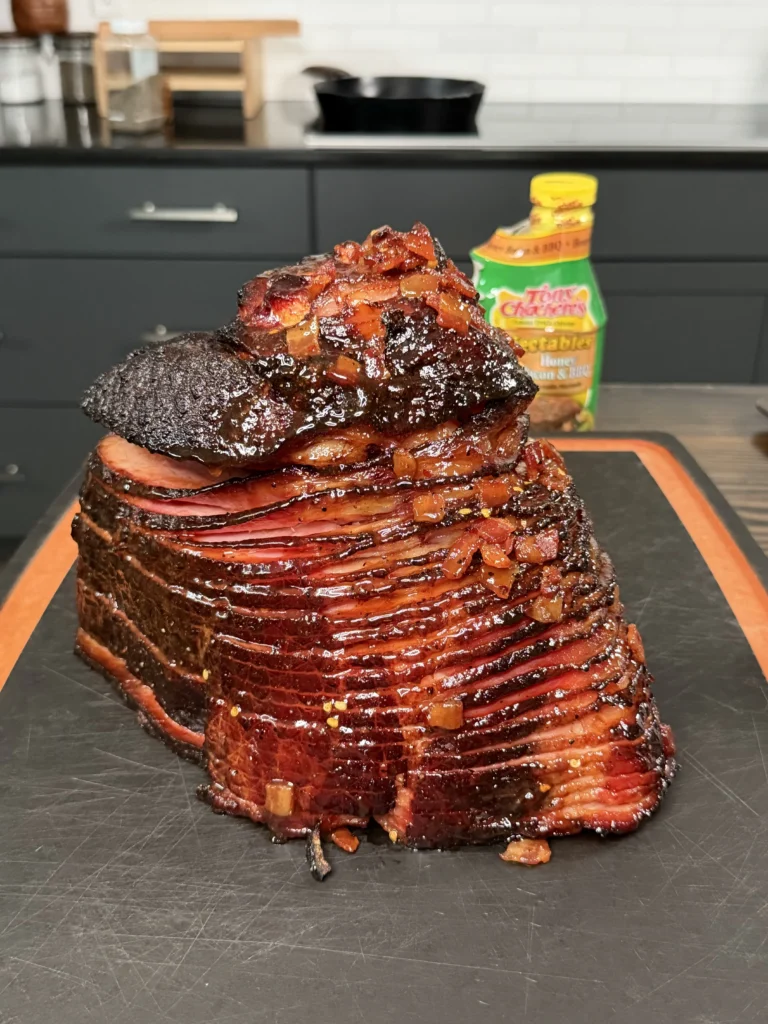
Smoked spiral ham is a fully cooked spiral-cut ham smoked at 250°F to 275°F for 1 to 1½ hours until it reaches 120°F to 125°F internal temperature, then glazed with a sweet heat honey bacon mixture made with honey, brown sugar, Tony Chachere’s Ham & Bacon Injectable, Dijon mustard, apple cider vinegar, red pepper flakes, and crispy bacon bits. You brush the glaze between spiral slices and return the ham to the smoker, applying multiple coats during the final 20 to 30 minutes while internal temperature rises to 135°F to 140°F. The result is sticky, caramelized exterior with smoky bacon pieces baked into the glaze and deeply flavored spiral slices.
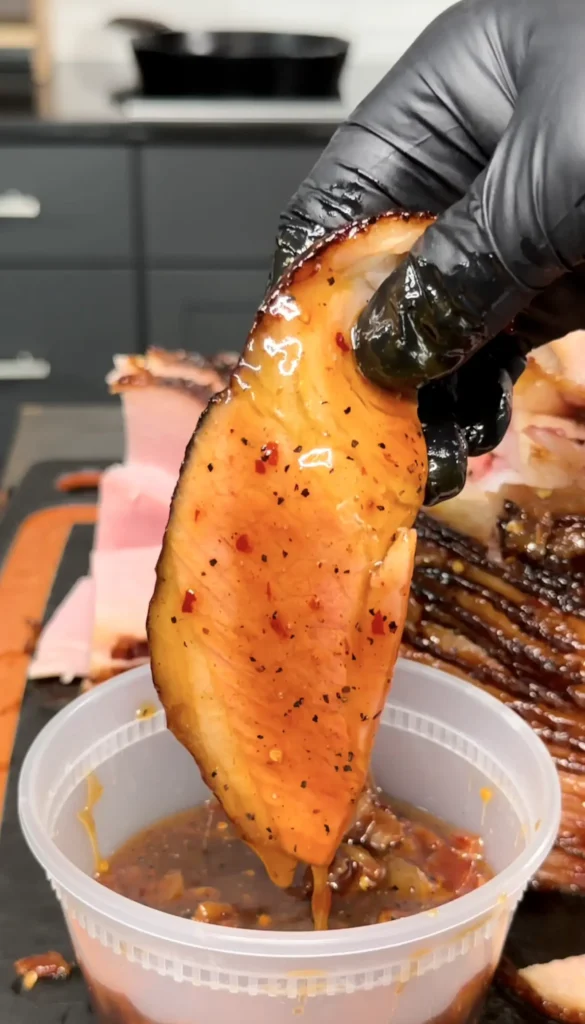
The honey bacon glaze creates superior flavor to standard brown sugar ham glazes because Tony Chachere’s Ham & Bacon Injectable adds savory Cajun depth with balanced salt, smoke, and subtle spice. The crispy bacon bits provide textural contrast and rich smokiness. Apple cider vinegar cuts through sweetness so the glaze doesn’t taste cloying. Red pepper flakes add gentle heat that builds gradually. This honey bacon glazed ham works perfectly for Easter, Christmas, Thanksgiving, or backyard BBQ gatherings on any pellet smoker, Traeger-style grill, or traditional smoker.
These smoked spiral ham pellet grill recipes take about 2 to 2½ hours total from prep to serving. Active work time is minimal since spiral hams come fully cooked. You’re adding smoke flavor and building incredible glaze rather than cooking raw meat. The spiral cuts allow glaze to penetrate deeply. Serves 10 to 14 depending on ham size. Perfect as holiday centerpiece or special occasion main course with classic BBQ sides.
Jump to RecipeWhy Spiral Hams Need Low Temperature Smoking
Spiral hams benefit from low-temperature smoking at 250°F to 275°F because they’re already fully cooked. Higher temperatures dry out the ham. The goal is gentle reheating while adding smoke flavor and building glaze. Quick, hot cooking doesn’t give smoke compounds adequate time to absorb into the meat.
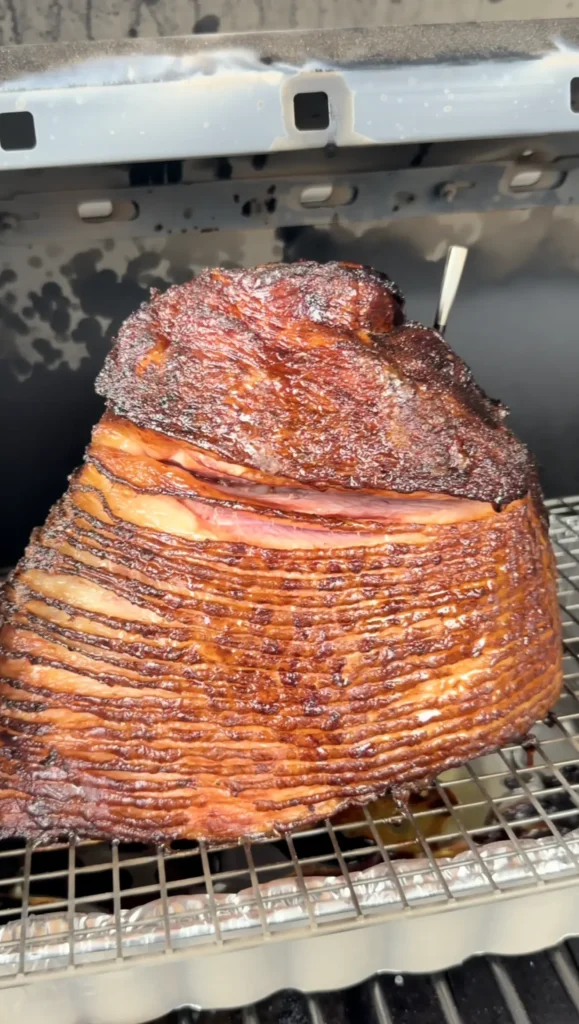
The pre-sliced spiral cuts create natural channels for smoke penetration. Smoke reaches interior surfaces that solid hams can’t access. Each slice gets smoke exposure. This amplifies smoke flavor throughout rather than just on the exterior. The 250°F to 275°F range is ideal for this absorption.
Low temperature also prevents the exterior from overcooking before the center warms through. Large hams (7 to 10 pounds) have significant thermal mass. The outer layers can dry out and toughen if you rush the process with high heat. Slow, gentle warming keeps everything moist and tender.
The controlled temperature allows proper glaze development. Sugar-based glazes burn above 300°F. At 250°F to 275°F, the honey and brown sugar caramelize gradually without scorching. Multiple glaze applications build up layers of flavor. Each coat sets and caramelizes before you add the next.
How Tony Chachere’s Ham & Bacon Injectable Transforms Glaze
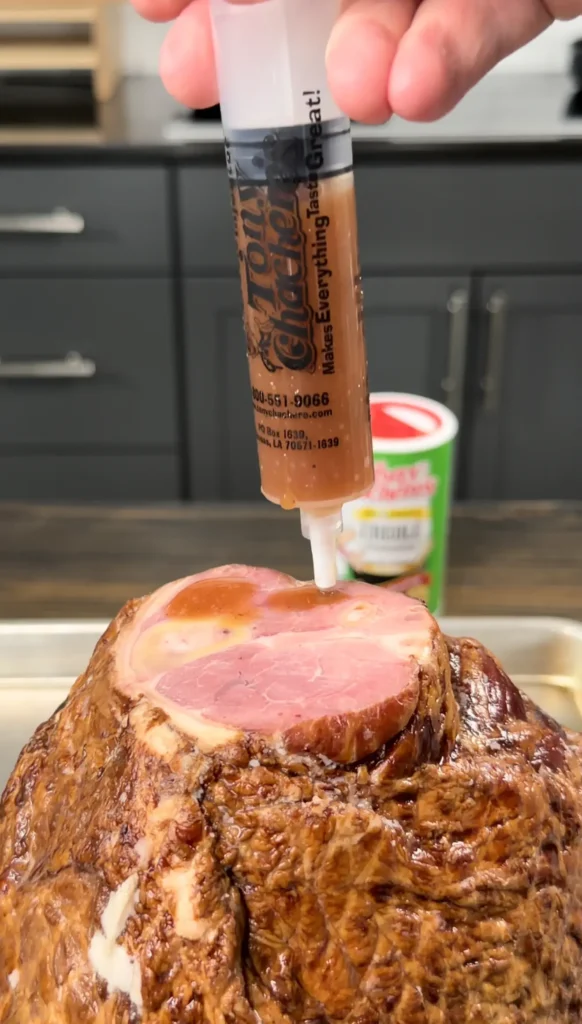
Tony Chachere’s Ham & Bacon Injectable creates superior honey bacon glazed ham compared to plain honey-sugar glazes. The injectable is specifically formulated for pork with balanced salt, smoke flavoring, spices, and umami compounds. These savory elements prevent the glaze from tasting one-dimensionally sweet.
The injectable contains hydrolyzed proteins that enhance meaty, savory notes. These compounds trigger umami receptors on your tongue. The glaze tastes richer and more complex. Plain honey and brown sugar lack this savory depth. They taste like candy coating rather than BBQ glaze.
The Cajun spice blend in Tony Chachere’s adds layers of flavor that complement smoke. You get subtle garlic, onion, paprika, and black pepper notes. The spice level is moderate, not overwhelming. It creates warm background heat that enhances rather than dominates. This complexity elevates the entire glaze profile.
The injectable also contains phosphates that help the glaze bind to ham surface. The sticky coating adheres better than simple sugar syrups. Phosphates create protein-sugar bonds that withstand heat. The glaze stays put during smoking rather than sliding off or pooling in the pan.
Using the injectable as directed creates proper concentration. Mix according to package instructions. This ensures you’re not diluting the flavors or making it too intense. The formulation is designed for specific ratios. Following instructions guarantees balanced results.
What Makes Crispy Bacon Essential for Texture
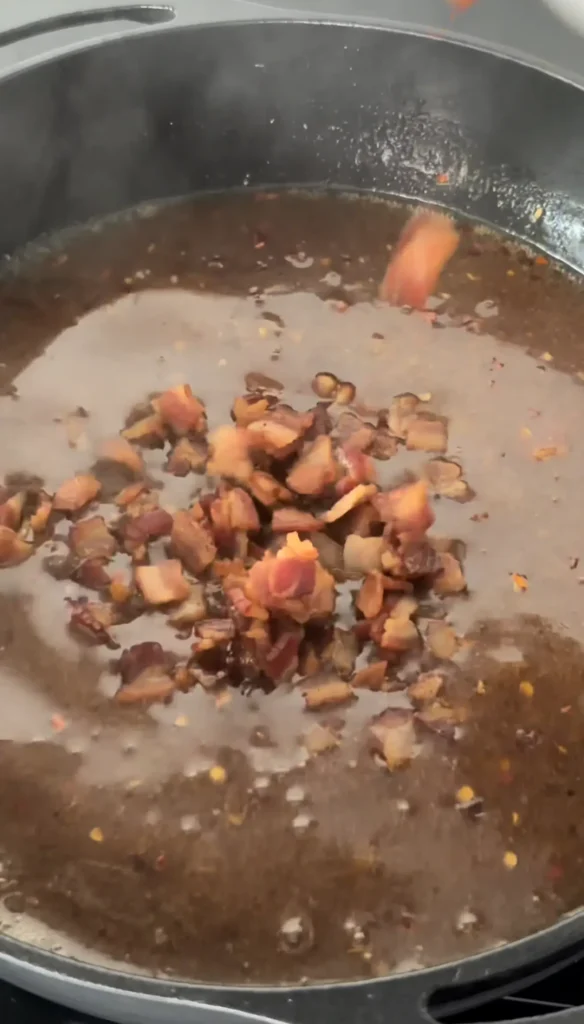
Crispy bacon bits create essential textural contrast in smoked spiral ham glaze. The rendered, crunchy bacon provides bite and substance. Soft, undercooked bacon turns rubbery during smoking. It blends into the glaze texture and disappears. Crispy bacon maintains distinct pieces that you encounter with each slice.
Cook bacon until fully crisp before adding to glaze. Lay strips on baking sheet in cold oven. Heat to 400°F and cook 15 to 20 minutes until deeply browned and crispy. The gradual heating renders fat completely. Quick stovetop cooking often leaves chewy fat portions. Oven method creates uniform crispness.
Drain bacon thoroughly on paper towels after cooking. Excess grease makes the glaze oily. Pat bacon dry to remove surface fat. Crumble into small pieces – roughly ¼ to ½ inch bits work best. Too fine and they dissolve into glaze. Too large and they don’t distribute evenly.
Add bacon to glaze near the end of simmering. If you add it at the beginning, extended cooking softens the bacon. Stir bacon pieces into finished glaze just before first application. The bacon absorbs glaze flavors while retaining crunch.
Why Apple Cider Vinegar Balances Sweetness
Apple cider vinegar provides essential acid that cuts through honey and brown sugar sweetness in ham glaze. Without acid, the glaze tastes cloying and one-dimensional. The 2 tablespoons of vinegar creates brightness that keeps your palate interested. Each bite tastes balanced rather than sugar-heavy.
The acidity also helps tenderize the ham surface slightly. Acetic acid in vinegar breaks down surface proteins. This isn’t major tenderizing like long marination, but it does create better glaze penetration. The vinegar helps glaze sink into spiral cuts rather than sitting on top.
Apple cider vinegar specifically complements ham better than white vinegar or wine vinegar. The apple notes harmonize with fruitwood smoke if you’re using apple or cherry pellets. The vinegar reinforces those flavor connections. White vinegar tastes sharp and one-dimensional. Apple cider vinegar has mellower, more complex character.
The vinegar prevents the glaze from becoming too thick during multiple applications. As honey and brown sugar cook down, they concentrate and become syrupy. The vinegar thins the consistency slightly. This makes brushing easier. The glaze flows into spiral cuts rather than sitting in thick clumps.
Honey Bacon Glazed Smoked Ham
Sweet Heat Spiral Ham with Tony Chachere’s
Ingredients
For the Smoked Spiral Ham
- 1 fully cooked spiral ham (7 to 10 pounds)
- ½ pound bacon, cooked crispy and crumbled
- ½ cup apple juice, pineapple juice, or Dr Pepper (optional for pan moisture)
Sweet Heat Honey Bacon Ham Glaze
- ½ cup honey
- ¼ cup Tony Chachere’s Ham & Bacon Injectable (mixed per package instructions)
- ¼ cup brown sugar
- 3 tablespoons unsalted butter
- 2 tablespoons Dijon mustard
- 2 tablespoons apple cider vinegar
- 1 teaspoon red pepper flakes
- ½ teaspoon garlic powder
- ½ teaspoon black pepper
The secret to deeply flavored spiral ham is brushing glaze between the spiral cuts during multiple applications. This allows the honey bacon mixture to penetrate each slice rather than just coating the exterior. Use a silicone brush to work glaze into the cuts. The bacon bits will fall between slices and create pockets of smoky richness throughout the ham.
Step-by-Step Instructions
Step 1: Prepare the Bacon and Glaze Components
Cook ½ pound bacon until crispy. Lay strips on rimmed baking sheet lined with parchment. Start in cold oven and heat to 400°F. Cook 15 to 20 minutes until deeply browned and crisp. The gradual heating prevents curling and renders fat completely.
Remove bacon from oven and transfer to paper towel-lined plate. Pat dry to remove excess grease. Let cool 5 minutes until you can handle it. Crumble into small pieces, roughly ¼ to ½ inch bits. Set aside.
Prepare Tony Chachere’s Ham & Bacon Injectable according to package instructions. Most versions require mixing powder with water. Follow the exact ratio specified. Let mixture sit 5 minutes to fully dissolve and hydrate. Stir well before using.
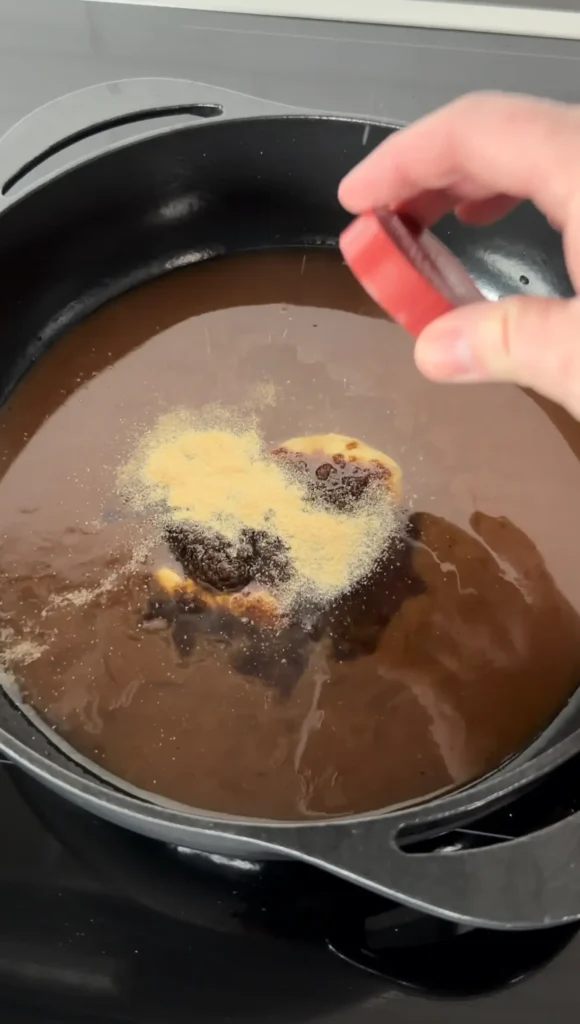
Gather remaining glaze ingredients. Measure out honey, brown sugar, butter, Dijon mustard, apple cider vinegar, red pepper flakes, garlic powder, and black pepper. Having everything ready makes glaze preparation quick and smooth.
Step 2: Preheat the Smoker and Prepare Ham
Set pellet smoker to 250°F to 275°F. Allow 10 to 15 minutes for preheating until temperature stabilizes. Fill pellet hopper with apple, cherry, maple, or pecan pellets. These mild, slightly sweet woods complement ham beautifully without overpowering.
Remove spiral ham from packaging. Pat surface dry with paper towels. Excess moisture prevents smoke adhesion. Place ham in disposable aluminum foil pan cut side down. The flat bottom creates stable base.
Optional: add ½ cup apple juice, pineapple juice, or Dr Pepper to bottom of pan. This creates humid environment that prevents drying. The liquid doesn’t touch ham directly. It evaporates and bastes from below.
Position prepared ham in foil pan on smoker grate. Close lid. Let ham smoke without opening for 1 to 1½ hours. Opening lid drops temperature and releases smoke. Let smoker maintain steady heat and smoke flow.
Step 3: Make the Sweet Heat Honey Bacon Glaze
While ham smokes, make the glaze. In medium saucepan over medium heat, add 3 tablespoons butter. Let melt completely, swirling pan to coat bottom evenly.
Add ½ cup honey, ¼ cup brown sugar, ¼ cup prepared Tony Chachere’s Ham & Bacon Injectable, 2 tablespoons Dijon mustard, and 2 tablespoons apple cider vinegar to melted butter. Stir continuously with whisk or wooden spoon.
Bring mixture to gentle simmer. Small bubbles should break surface consistently. Don’t let it boil vigorously. The honey can foam and overflow. Reduce heat if needed to maintain gentle simmer.
Cook for 3 to 4 minutes, stirring constantly. The brown sugar will dissolve completely. The mixture will become smooth and glossy. It should coat the back of spoon and flow slowly when you lift it.
Add 1 teaspoon red pepper flakes, ½ teaspoon garlic powder, and ½ teaspoon black pepper. Stir well to distribute spices evenly. Simmer 2 to 3 minutes longer. The glaze will thicken slightly and become syrupy.
Remove from heat. Stir in prepared crispy bacon bits. Mix thoroughly so bacon pieces are suspended throughout glaze. Let glaze cool slightly before first application. Hot glaze slides off ham. Warm glaze adheres better.
Step 4: Apply First Glaze Coat
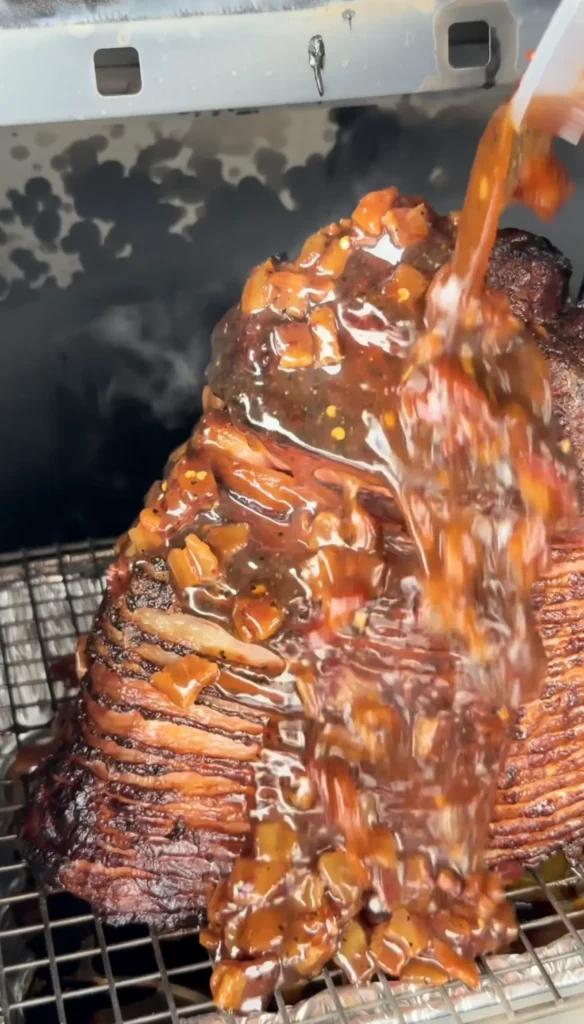
After 1 to 1½ hours of smoking, check ham internal temperature. Insert instant-read thermometer into thickest part without touching bone. You’re looking for 120°F to 125°F. The ham should smell smoky and look slightly darkened.
Using silicone brush, apply generous coat of honey bacon glaze over entire ham exterior. Work methodically from top to bottom. Don’t miss any areas. Use brush to push glaze between spiral cuts. Tilt pan slightly to help glaze flow into slices.
Let bacon bits fall between spiral cuts as you brush. These trapped pieces add smoky flavor throughout ham. Use spoon to scoop additional bacon-glaze mixture and drizzle into visible gaps between slices.
Return glazed ham to smoker uncovered. The open pan allows glaze to caramelize. Covering with foil steams rather than caramelizes. You want dry heat on the sticky glaze.
Step 5: Build Glaze Layers and Caramelize
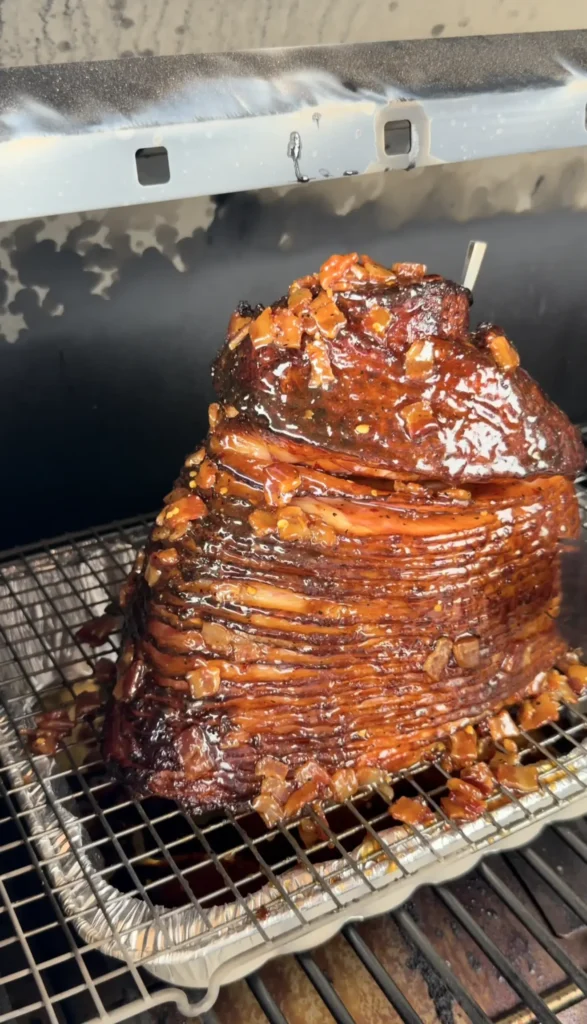
Continue smoking ham until internal temperature reaches 135°F to 140°F. This takes approximately 20 to 30 minutes after first glaze application. Monitor temperature every 10 minutes.
Apply second glaze coat when ham reaches about 130°F. Brush entire surface again. The first coat will have set and darkened slightly. The second coat adds glossy layer on top. Work more glaze between spiral cuts.
Apply third glaze coat when ham reaches 135°F. This final coat creates thick, sticky exterior. The multiple layers create deep caramel color and complex flavor. Each coat caramelizes at slightly different temperature, building complexity.
Watch glaze carefully during final 15 minutes. If edges start darkening too much or glaze begins smoking, reduce smoker temperature to 225°F. Better to slow down than burn the sugars. The glaze should look glossy dark amber, not black.
Step 6: Rest and Finish
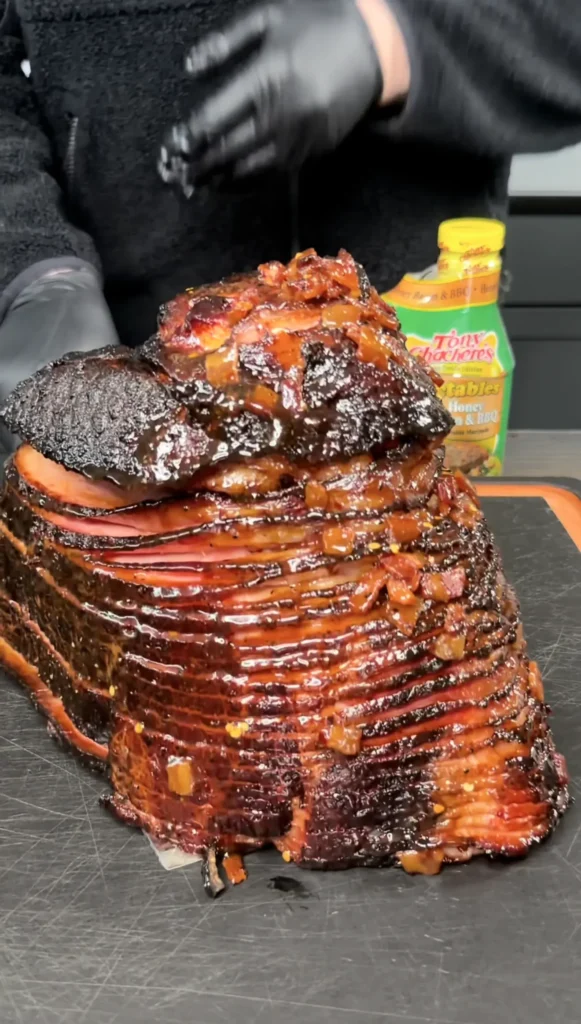
When ham reaches 135°F to 140°F internal temperature, remove from smoker. The ham will continue rising 3 to 5 degrees during rest. Total internal temperature will reach safe 140°F minimum.
Let ham rest in pan for 10 to 15 minutes. This isn’t critical for juice retention like with steaks. The rest allows glaze to set slightly. The sticky coating firms up and becomes less molten. This makes slicing cleaner.
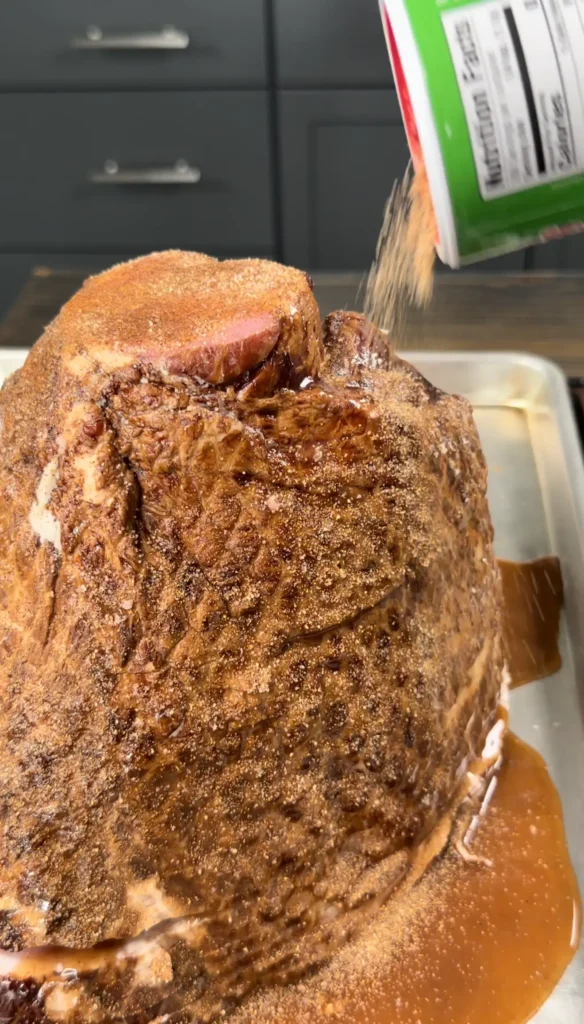
Optional final touch: warm 2 to 3 tablespoons honey in microwave for 10 seconds. Drizzle over ham for glossy finish. Sprinkle very lightly with additional Tony Chachere’s seasoning and pinch of red pepper flakes. This adds visual pop and flavor burst.
The smoked spiral ham is ready to serve. Transfer to cutting board or serve directly from foil pan for casual presentation. The spiral cuts make slicing effortless. Each slice pulls away cleanly with bacon-studded glaze coating.
Sweet Heat Honey Bacon Glazed Smoked Spiral Ham
Equipment
- Pellet Smoker (Traeger, Pit Boss, Camp Chef, Recteq)
- Instant-Read Thermometer
- Disposable Aluminum Foil Pan
- Silicone Basting Brush
- Medium Saucepan
Ingredients
For the Smoked Spiral Ham
- 1 fully cooked spiral ham 7-10 pounds
- 1/2 pound bacon cooked crispy and crumbled
- 1/2 cup apple juice, pineapple juice, or Dr Pepper optional for pan moisture
Sweet Heat Honey Bacon Ham Glaze
- 1/2 cup honey
- 1/4 cup Tony Chachere’s Ham & Bacon Injectable mixed per package instructions
- 1/4 cup brown sugar
- 3 tablespoons unsalted butter
- 2 tablespoons Dijon mustard
- 2 tablespoons apple cider vinegar
- 1 teaspoon red pepper flakes
- 1/2 teaspoon garlic powder
- 1/2 teaspoon black pepper
Instructions
- Prepare bacon and glaze components: Cook ½ pound bacon in oven at 400°F for 15-20 minutes until crispy. Drain, cool, and crumble into small pieces. Mix Tony Chachere’s Ham & Bacon Injectable per package instructions. Gather remaining glaze ingredients.
- Preheat smoker and prepare ham: Set pellet smoker to 250-275°F. Preheat 10-15 minutes with apple, cherry, maple, or pecan pellets. Remove ham from packaging, pat dry. Place cut side down in foil pan. Optional: add ½ cup apple juice to pan bottom. Smoke 1 to 1½ hours until 120-125°F internal.
- Make glaze: In saucepan over medium heat, melt 3 tablespoons butter. Add honey, brown sugar, prepared Tony Chachere’s injectable, Dijon mustard, and apple cider vinegar. Simmer 3-4 minutes, stirring constantly. Add red pepper flakes, garlic powder, and black pepper. Simmer 2-3 minutes until thickened. Remove from heat and stir in crispy bacon bits.
- Apply first glaze coat: When ham reaches 120-125°F, brush generous coat of honey bacon glaze over entire exterior. Work glaze between spiral cuts with silicone brush. Let bacon bits fall between slices. Return to smoker uncovered.
- Build glaze layers: Continue smoking until 135-140°F internal temperature. Apply second glaze coat at 130°F. Apply third coat at 135°F. Each application builds caramelized layers. Monitor closely to prevent burning. Reduce to 225°F if edges darken too much.
- Rest and finish: Remove ham when internal temp reaches 135-140°F. Rest 10-15 minutes. Optional: drizzle with warm honey and sprinkle with Tony Chachere’s seasoning and red pepper flakes. Serve from pan or transfer to cutting board.
Notes
Frequently Asked Questions
Can You Smoke a Spiral Ham That’s Already Cooked?
You absolutely can and should smoke spiral hams that are already cooked. All grocery store spiral hams are fully cooked. Smoking adds incredible flavor dimension without requiring long cooking times. You’re reheating the ham while infusing smoke and building caramelized glaze.
The “fully cooked” label means the ham is safe to eat cold. Smoking raises internal temperature to 135°F to 140°F for optimal texture and flavor. The gentle heat prevents drying. Quick reheating in conventional oven doesn’t allow smoke penetration. Low-and-slow smoking at 250°F to 275°F gives smoke time to absorb.
The spiral cuts actually benefit smoking compared to solid hams. Smoke reaches interior surfaces through pre-cut channels. Each slice gets smoke exposure rather than just exterior. The cuts also create perfect pathways for glaze penetration.
Don’t treat pre-cooked status as limitation. Use it as advantage for faster, foolproof results. You can’t undercook the ham. The only risk is overcooking past 145°F which dries it out. Monitor temperature and pull at 135°F to 140°F for perfect results.
What Temperature Should Smoked Spiral Ham Reach?
Target 135°F to 140°F internal temperature for smoked spiral ham. The USDA minimum for pre-cooked ham is 140°F, but many pitmasters pull at 135°F knowing it will rise 3 to 5 degrees during rest. This approach prevents dry, overcooked ham.
Insert instant-read thermometer into thickest part of ham without touching bone. Bone conducts heat differently and gives false readings. Test multiple spots to ensure even heating. Different areas may reach target temperature at slightly different times.
Don’t exceed 145°F internal temperature. Ham begins drying out above this point. The muscle fibers contract and squeeze out moisture. Remember that spiral hams are already cooked. You’re warming and flavoring, not cooking from raw.
The ham continues cooking after removal from smoker. Carryover cooking adds 3 to 5 degrees. If you pull at 135°F and rest 15 minutes, final temperature will be 138°F to 140°F. This technique ensures juicy results every time.
Can You Substitute Regular Tony Chachere’s for Ham & Bacon Injectable?
Regular Tony Chachere’s Original Creole Seasoning works as substitute if you can’t find Ham & Bacon Injectable. Use 2 tablespoons seasoning dissolved in ¼ cup warm water. Stir well and let sit 5 minutes before adding to glaze. The flavor profile differs slightly but provides similar Cajun character.
The Ham & Bacon Injectable contains hydrolyzed proteins and specific pork-focused seasonings that regular Creole seasoning lacks. The injectable is formulated specifically for ham and bacon applications. Regular seasoning is more general-purpose Cajun spice blend.
If using regular seasoning, you may want to add ½ teaspoon liquid smoke to approximate the injectable’s smoke flavoring. The injectable has built-in smoke notes. Regular seasoning relies more on paprika and cayenne without the smoky depth.
Another option is using plain water in place of injectable and increasing Dijon mustard to 3 tablespoons. Add ½ teaspoon additional salt and ¼ teaspoon liquid smoke. This creates savory base without Cajun spicing if you prefer different flavor profile.
How Do You Keep Ham From Drying Out While Smoking?
Keep ham from drying by smoking at 250°F to 275°F maximum temperature, adding liquid to pan bottom, and not overcooking past 140°F internal temperature. Low temperature prevents rapid moisture evaporation. The ham warms gently without surface drying.
Add ½ cup apple juice, pineapple juice, or Dr Pepper to foil pan bottom before smoking. As liquid evaporates, it creates humid environment. The moisture bastes ham from below without direct contact. This prevents surface from becoming leathery.
Don’t open smoker frequently to check on ham. Each time you open lid, temperature drops and smoke escapes. More importantly, humid heat escapes. Let smoker maintain steady environment. Trust your thermometer and only check temperature when timing suggests it’s close.
Pull ham at 135°F rather than waiting for 140°F. The carryover cooking will finish bringing it to safe temperature. This 5-degree buffer is insurance against overcooking. Dry ham comes from going too far past target temperature, not from smoking method itself.
What’s the Best Wood for Smoking Ham?
Apple wood pellets are best for smoking ham. Apple provides mild, slightly sweet smoke that complements ham’s natural flavor and honey glaze beautifully. The smoke is gentle enough to enhance without overpowering. Apple smoke has fruity character that works with sweet-heat profile.
Cherry wood is excellent second choice. Cherry offers similar mildness with slightly richer color development. The smoke creates beautiful mahogany exterior. Cherry has subtle wine-like notes that add complexity without being assertive.
Maple and pecan work well as alternatives. Maple is sweet and mild like apple. Pecan has nutty quality that complements pork. Both provide balanced smoke flavor. Avoid using maple if your glaze already contains maple syrup as it can become too sweet.
Stay away from hickory and mesquite for ham. Hickory is too strong and bacon-like. It competes with the bacon in glaze. Mesquite is earthy and aggressive. Both overpower ham’s delicate sweetness. Save those woods for beef and pork shoulder where bold smoke works better.
Can You Make This Ham Without a Pellet Smoker?
Charcoal grills work excellently for smoked ham using two-zone setup. Bank charcoal on one side. Place ham on cool side in foil pan. Add wood chunks (apple or cherry) directly on coals. Maintain 250°F to 275°F by adjusting bottom and top vents. This requires more attention than pellet smoker but produces great results.
Gas grills with indirect heat capability also work. Light burners on one side only. Place ham on unlit side. Add wood chips in foil pouch with holes poked in top. Place pouch over lit burners. Monitor temperature with grill thermometer and adjust burner settings to maintain 250°F to 275°F.
Traditional offset smokers are ideal if you have one. These are designed for low-and-slow smoking. Build small fire in firebox with hardwood (apple or cherry). The ham sits in main chamber away from direct heat. Offset smokers excel at maintaining steady temperature and clean smoke.
Oven method works as last resort without smoke flavor. Add 1 teaspoon liquid smoke to glaze. Bake ham at 275°F in covered roasting pan. Apply glaze every 20 minutes during final 45 minutes. Remove cover for last 15 minutes to caramelize. Results are good but lack authentic smoke flavor.
How Long Does Smoked Ham Last in the Refrigerator?
Smoked spiral ham lasts 5 to 7 days refrigerated in airtight container or wrapped tightly in plastic wrap and foil. The smoking process doesn’t extend shelf life compared to oven-heated ham. Both are fully cooked products with similar storage timeframes.
Store ham within 2 hours of cooking. Don’t leave at room temperature longer. Bacteria grow rapidly between 40°F and 140°F. Cool ham to room temperature first if you prefer, but refrigerate within that 2-hour window for food safety.
Slice leftover ham for easier storage and reheating. Whole ham takes longer to cool and heat through. Individual slices refrigerate and reheat more efficiently. Stack slices with plastic wrap between layers to prevent sticking. Store in airtight container.
Freeze leftover ham for longer storage. Wrap tightly in plastic wrap, then aluminum foil. Store in freezer bags with air pressed out. Frozen smoked ham lasts 2 to 3 months. Thaw overnight in refrigerator before reheating. Quality degrades slightly after freezing but remains safe and tasty.
Should You Cover Ham While Smoking?
Don’t cover ham with foil during initial smoking phase. Leave ham exposed for first 1 to 1½ hours until it reaches 120°F to 125°F. Smoke needs direct contact with ham surface. Covering blocks smoke absorption. You want maximum smoke penetration before glazing.
Keep ham uncovered after applying glaze as well. The exposed surface allows sugar caramelization. Covered ham steams under foil rather than caramelizing. The glaze needs dry heat to develop proper texture and color. Foil traps moisture that prevents browning.
The only time to cover is if glaze starts darkening too much. If edges begin burning or smoking during final 15 minutes, tent loosely with foil. This slows browning without completely stopping it. Remove foil for last 5 minutes to finish.
Using foil pan doesn’t count as covering. The pan catches drips and holds liquid for humidity. The ham surface remains exposed to smoke and heat. This is different from wrapping entire ham in foil which blocks smoke and creates steaming environment.
Can You Use Turkey Bacon Instead of Regular Bacon?
Turkey bacon works as substitute though texture and flavor differ from pork bacon. Turkey bacon is leaner with less fat. It doesn’t render as much grease and doesn’t get as crispy. The smoky flavor is milder. For best results, cook turkey bacon until extremely crisp, almost burnt.
Use slightly more turkey bacon than pork bacon to compensate for different fat content. Increase to ⅔ pound turkey bacon instead of ½ pound. The extra volume makes up for reduced richness. Drain thoroughly and pat very dry before crumbling.
Consider adding 1 tablespoon butter to glaze if using turkey bacon. This replaces some of the fat that pork bacon would contribute. The glaze may taste slightly leaner without the pork fat. The butter enriches texture and mouthfeel.
Vegetarian bacon substitutes work surprisingly well in this application. Tempeh bacon and coconut bacon provide smoky crunch. Season heavily before cooking. The glaze itself provides most of the flavor, so the bacon bits primarily add texture and visual interest.
What Should You Serve with Smoked Honey Bacon Ham?
Classic BBQ sides complement smoked honey bacon ham perfectly. Smoked mac and cheese provides creamy, rich contrast to sweet-salty ham. The cheese sauce and tender pasta balance crispy bacon bits in glaze. Both are indulgent comfort foods that work together.
Roasted or grilled vegetables cut through ham’s richness. Grilled asparagus with lemon, roasted Brussels sprouts with balsamic, or honey-glazed carrots all provide necessary freshness. The vegetable’s natural flavors stand up to bold ham glaze without getting lost.
Starchy sides like roasted potatoes, sweet potato casserole, or buttery dinner rolls soak up ham drippings and glaze. These neutral-flavored bases let ham shine as star. They also extend the meal and make servings go further for large gatherings.
For lighter accompaniment, serve tangy coleslaw or fresh green salad. The acid and crunch provide palate cleansing between bites of rich ham. Vinegar-based slaw works better than creamy mayo-based for this purpose. The sharpness cuts fat effectively.