
Chili Lime Grilled Chicken Thighs
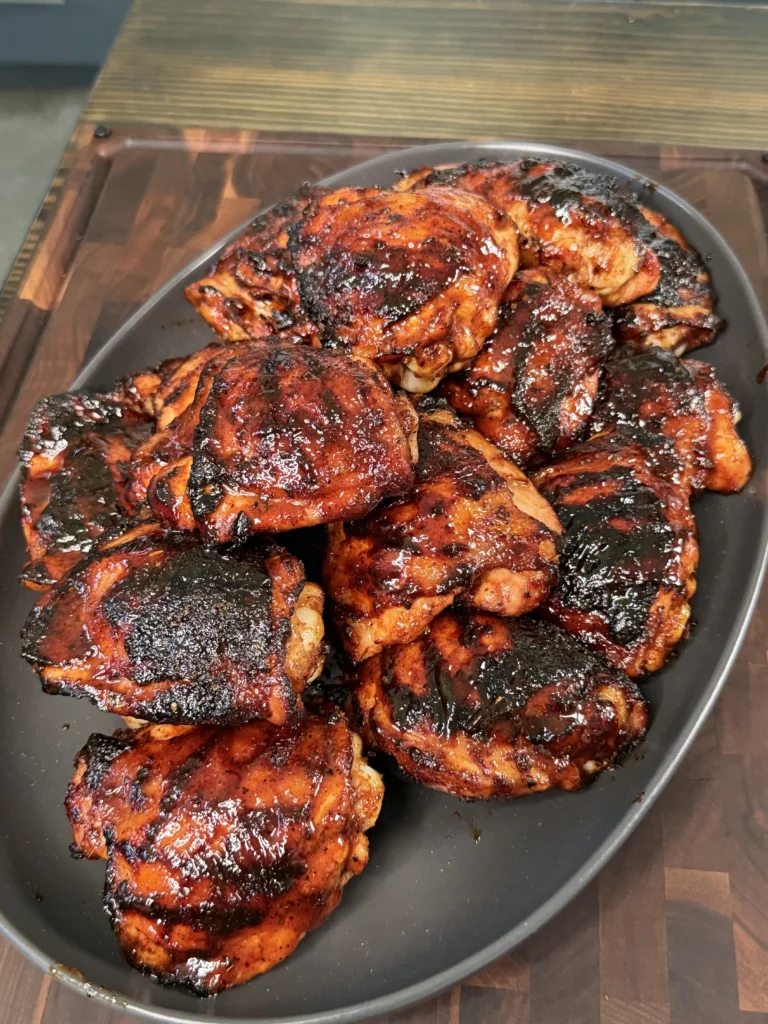
Chili lime grilled chicken thighs are one of the easiest and most flavorful things you can throw on the grill. This recipe uses bone-in, skin-on chicken thighs coated in a smoky chili lime marinade with garlic, cumin, smoked paprika, and a touch of honey, then grilled at 375-400°F over a two-zone fire until the skin is shatteringly crispy and the meat is juicy and tender. The whole cook takes about 25-30 minutes on the grill with 10 minutes of prep, and it serves 4-6 people. Whether you are making these for a weeknight dinner, taco night, or a full backyard cookout, bone-in thighs with this chili lime rub deliver every time.
Jump to RecipeWhy Bone-In Chicken Thighs Are the Best Cut for Grilling
Bone-in, skin-on chicken thighs are the most forgiving cut of chicken you can put on a grill. They have significantly more fat than breasts, which means they stay juicy even if you overshoot the cook time by a few minutes. The bone acts as an insulator, slowing down heat transfer so the meat cooks evenly from the outside in. Additionally, the skin serves as a natural barrier that protects the meat from drying out while rendering into something crispy and golden.
Fat Content and Moisture Retention
Dark meat contains roughly 10-13 grams of fat per thigh compared to 3-4 grams in a boneless, skinless chicken breast. That extra fat bastes the meat internally as it renders during cooking. Consequently, you get a juicier result without needing to brine or inject the chicken beforehand. The connective tissue in thighs also breaks down during cooking, which adds richness and body to each bite. For this reason, dark meat is far more forgiving on a hot grill than white meat.
The Bone Makes a Difference
The bone inside the thigh conducts heat slowly and steadily. Therefore, the meat closest to the bone stays moist while the exterior develops a nice sear. Bone-in thighs typically take 25-30 minutes on the grill at 375-400°F compared to 10-15 minutes for boneless. That extra time allows the skin to render properly and the marinade flavors to penetrate deeper into the meat. Furthermore, the bone adds structural integrity, making flipping easier without the thigh falling apart on the grates.
Why Skin-On Matters for This Recipe
Crispy skin is the whole point of grilling bone-in thighs. The skin protects the meat from direct flame and acts as a shield against moisture loss. When you start skin-side down over direct heat, the fat layer between the skin and meat renders out, and the skin tightens and crisps. Removing the skin before grilling eliminates the best part of this cut and leaves you with a drier result. Keep it on.
How the Chili Lime Marinade Works
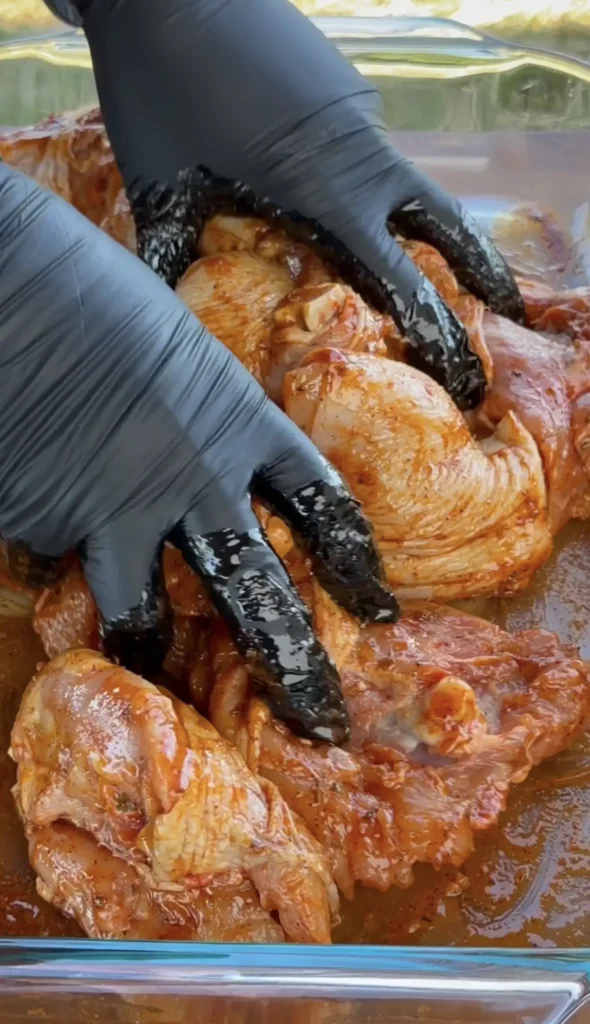
This marinade does three things at once. The acid from the lime juice tenderizes the outer layer of the meat. The oil carries fat-soluble flavors from the spices into the chicken. And the honey adds a touch of sweetness that caramelizes on the grill and balances the heat from the chili powder and cayenne.
The Role of Citrus Acid
Lime juice contains citric acid, which breaks down proteins on the surface of the chicken. This creates a more tender bite in the first few millimeters of meat. However, you do not want to marinate longer than 4 hours in a citrus-based marinade. Beyond that point, the acid denatures the proteins too aggressively, and the surface becomes mushy rather than tender. A 30-minute minimum gives you noticeable flavor penetration. Two hours is the sweet spot for both flavor and texture.
Spice Ratios and What Each One Does
The chili powder provides the base warmth and earthy flavor. Smoked paprika adds depth without additional heat and reinforces the smoky notes from the grill. Cumin brings an almost nutty quality that pairs naturally with lime. Garlic powder and onion powder round out the savory base. Meanwhile, the cayenne pepper bumps up the heat level. Use 1/4 teaspoon for a mild kick or increase to 1/2 teaspoon if you want noticeable spice. Every spice in this blend serves a specific purpose, so do not skip any of them.
Why Honey Belongs in This Marinade
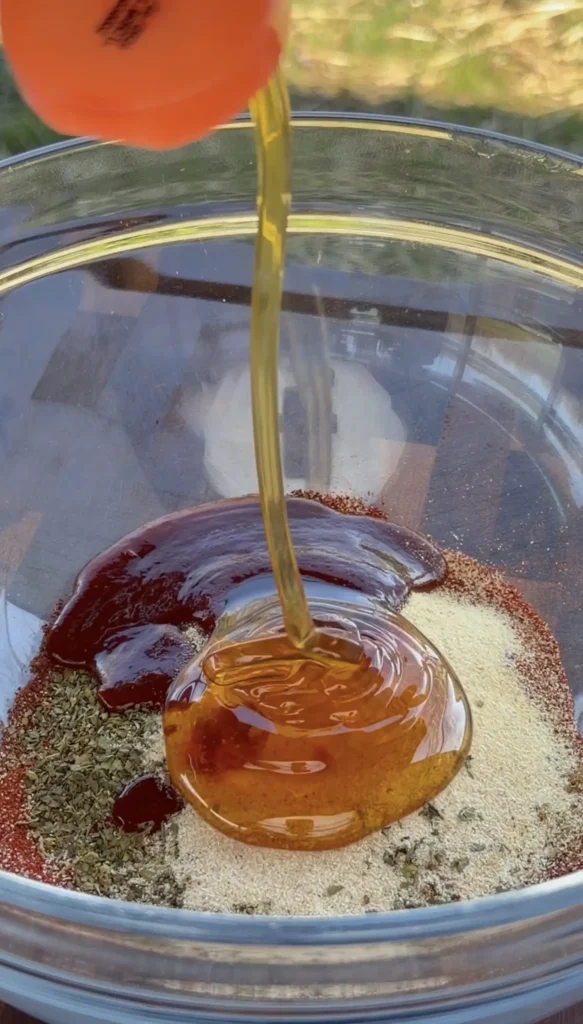
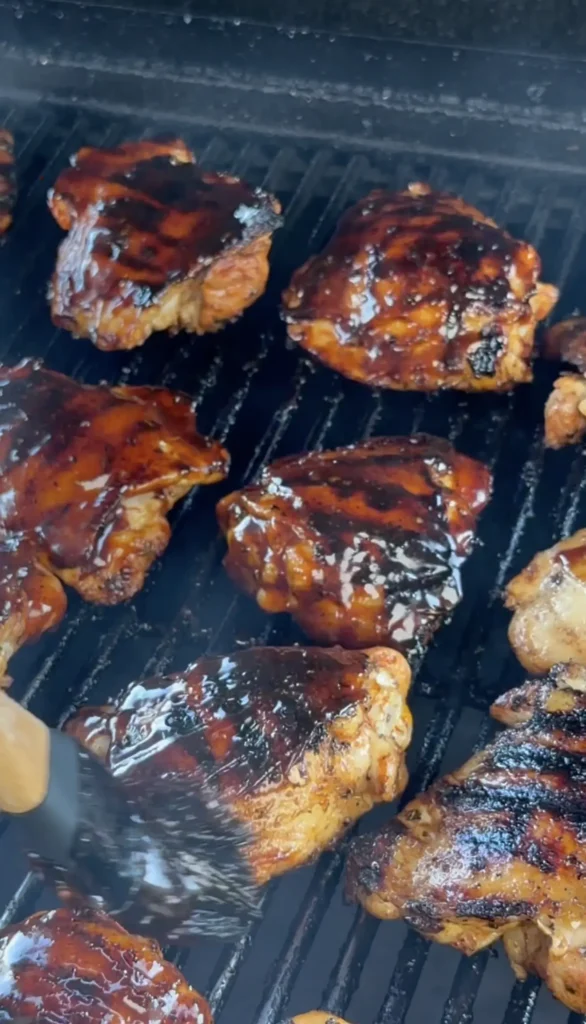
Honey does more than add sweetness. It contains natural sugars that caramelize at grill temperatures, which helps develop that golden-brown color on the skin. Moreover, honey acts as a mild tenderizer because of its enzymatic properties. The result is a slight glaze that forms during grilling, adding another layer of flavor and visual appeal. One tablespoon is enough to balance the lime without making the chicken taste sweet. You can substitute maple syrup if needed, but honey produces better caramelization on the grill.
The Secret to Crispy Grilled Chicken Skin
Getting crispy skin on bone-in chicken thighs requires a few deliberate steps before and during the grilling process. Moisture is the enemy of crispy skin. Heat management is the solution.
Pat the Chicken Completely Dry
This is the single most important step for crispy skin. Use paper towels to press firmly on both sides of each thigh, removing as much surface moisture as possible. Wet skin steams instead of searing, and steaming produces rubbery, flabby skin. You want the skin dry to the touch before applying any marinade or oil. Some grillers pat the chicken dry, apply the marinade, then pat the skin side dry again right before grilling. That extra step makes a noticeable difference in crispiness.
Start Skin-Side Down Over Direct Heat
Place the thighs skin-side down over the hottest part of your grill for 6-8 minutes. This initial sear renders the fat layer between the skin and the meat, tightening the skin and beginning the crisping process. Do not move or flip the chicken during this phase. Moving it too early causes the skin to stick and tear. Wait until the skin releases naturally from the grill grates, which is a clear sign that enough fat has rendered and the surface has firmed up.
Finish on Indirect Heat for Even Cooking
After the initial sear, flip the thighs and move them to the cooler, indirect heat side of the grill. Close the lid and let them finish cooking for 12-18 minutes. This approach prevents the skin from burning while allowing the interior to come up to temperature gradually. The indirect heat essentially turns your grill into a convection oven, circulating hot air around the chicken. Consequently, the skin stays crispy while the meat cooks through to the bone.
Grill Temperature and Two-Zone Setup
A two-zone fire is essential for bone-in chicken thighs. One zone provides the direct heat you need for searing the skin. The other provides gentle, indirect heat for cooking the meat through without burning the exterior.
Setting Up Two-Zone Heat
On a gas grill, turn one side of the burners to medium-high (400°F) and leave the other side off or on low. On a charcoal grill, push all your coals to one side of the grill, leaving the other side empty. The hot side should read 375-400°F at grate level. The cool side will sit around 275-325°F with the lid closed. This setup gives you full control over the cook.
Why 375-400°F Is the Sweet Spot
Grilling bone-in chicken thighs at 375-400°F provides the best balance between crispy skin and juicy interior. Higher temperatures, like 450-500°F, can burn the skin before the meat near the bone cooks through. Lower temperatures, like 300-325°F, produce a longer cook time and less crispy skin. At 375-400°F, you get enough heat to render the skin fat and develop char marks while keeping the cook time manageable at 25-30 minutes total.
Managing Flare-Ups
Chicken thighs have more fat than other cuts, which means dripping fat can cause flare-ups over direct heat. If flames reach the chicken, move the thighs to the indirect side temporarily until the flame subsides. Do not spray water on the grill, as this creates steam and ash. Instead, just relocate the chicken. Moving the thighs to a new area of the grates after each flip also helps prevent flare-ups, because you avoid cooking over the same pool of dripped fat.
Internal Temperature and When to Pull
Knowing when your chicken thighs are done requires an instant-read thermometer. Visual cues help, but temperature is the only reliable measure of doneness for bone-in chicken.
Cook to 175°F for the Best Texture
While the USDA safe minimum for poultry is 165°F, dark meat is actually more tender and flavorful when cooked to 175°F. The extra connective tissue and fat in thighs need that additional heat to fully break down. At 165°F, the meat is safe to eat but can still feel slightly chewy near the bone. At 175°F, the collagen has rendered, and the meat pulls away from the bone easily. The higher fat content prevents the thigh from drying out at this temperature, unlike a breast which would be sawdust at 175°F.
Where to Probe the Temperature
Insert your instant-read thermometer into the thickest part of the thigh meat, avoiding contact with the bone. The bone conducts heat differently than the meat and will give you an inaccurate reading, usually higher than the actual meat temperature. Aim for the center of the meatiest section. If you are cooking 8 thighs, check at least 2-3 of the largest ones to make sure everything is done.
Resting Is Not Optional
After pulling the chicken from the grill, let it rest for 5 minutes on a cutting board or platter. During this time, the residual heat continues cooking the interior by another 5-10 degrees (carryover cooking), and the juices redistribute throughout the meat. Cutting into a thigh immediately after grilling causes those juices to run out onto the board instead of staying in the meat. Five minutes of patience produces a noticeably juicier result.
Serving Ideas and What Goes With Chili Lime Chicken
These chili lime grilled chicken thighs pair well with bold, fresh sides that complement the smoky and citrus flavors.
Taco Night Setup
Shred or slice the grilled thighs and serve them in charred tortillas with avocado crema, pickled red onion, shredded cabbage, and a squeeze of lime. The chili lime seasoning already has all the flavor you need for tacos. You do not need additional seasoning or sauce, though a drizzle of your favorite hot sauce works if you want extra heat.
Rice Bowls and Grain Bowls
Cilantro lime rice is the classic pairing. Cook white or jasmine rice and fold in chopped cilantro, lime juice, and a pinch of salt while it is still hot. Serve the chicken thigh on top of the rice alongside black beans, fresh mango salsa, and sliced avocado for a complete bowl. You can also use cauliflower rice for a lower-carb option.
Classic Cookout Sides
Grilled street corn (elote), a simple cucumber salad, or a fresh coleslaw all stand up well next to these thighs. The brightness of the lime and the warmth of the chili powder match especially well with creamy or crunchy sides that provide contrast in texture and temperature.
Chili Lime Grilled Chicken
Bone-In Thighs · Crispy Skin · Two-Zone Grill
- 8 bone-in, skin-on chicken thighs
- 2 tbsp olive oil
- Juice of 2 fresh limes
- Zest of 1 lime
- 2 tsp chili powder
- 1 tsp smoked paprika
- 1 tsp garlic powder
- 1 tsp onion powder
- 1 tsp kosher salt
- ½ tsp black pepper
- ½ tsp ground cumin
- ¼ tsp cayenne pepper (optional)
- 1 tbsp honey
- Fresh chopped cilantro
- Lime wedges for serving
- Flaky sea salt
Dark meat chicken thighs are most tender when cooked to 175°F, not the standard 165°F. The extra fat and connective tissue in thighs need that additional heat to fully break down. At 175°F, the collagen has rendered and the meat pulls away from the bone easily. The higher fat content prevents drying out at this temperature, unlike chicken breasts which would be sawdust. Use an instant-read thermometer and probe the thickest part of the meat, avoiding the bone.
Step-by-Step Instructions
Step 1: Prep and Dry the Chicken Thighs
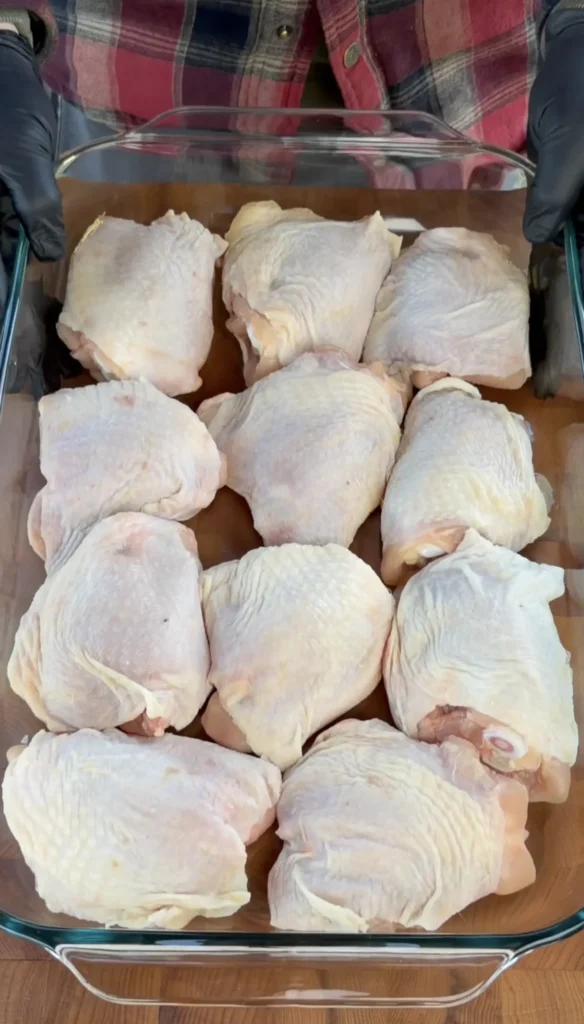
Remove 8 bone-in, skin-on chicken thighs from the packaging and lay them on a sheet pan lined with paper towels. Pat every surface of each thigh completely dry, pressing firmly with clean paper towels. Focus on the skin side, since that is where you need the most moisture removal for crispy results.
Dry skin sears on the grill. Wet skin steams. This 60-second step is the difference between crispy and rubbery.
Step 2: Mix the Chili Lime Marinade
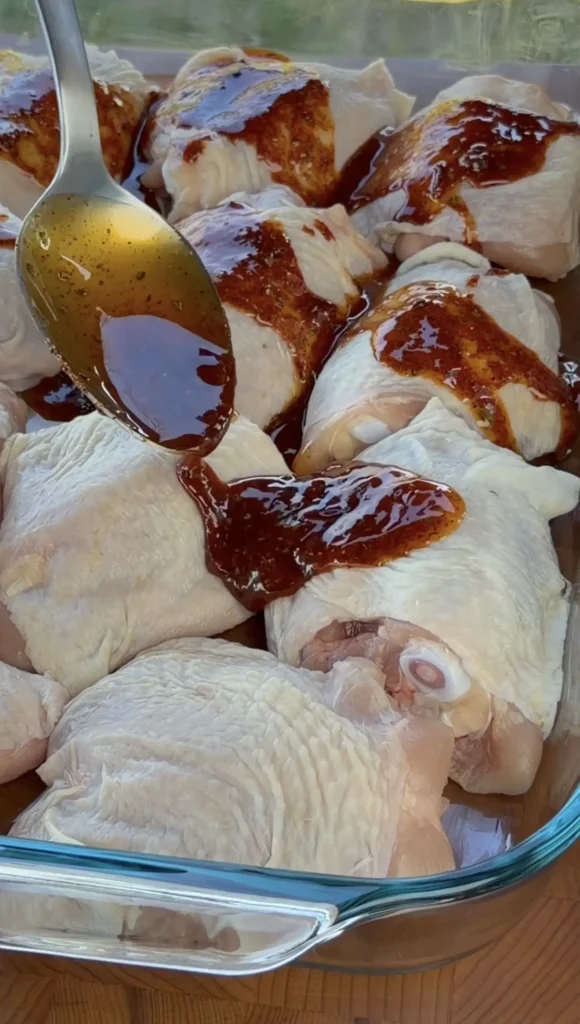
In a medium bowl, whisk together 2 tablespoons olive oil, the juice of 2 fresh limes, the zest of 1 lime, 2 teaspoons chili powder, 1 teaspoon smoked paprika, 1 teaspoon garlic powder, 1 teaspoon onion powder, 1/2 teaspoon ground cumin, 1 teaspoon kosher salt, 1/2 teaspoon black pepper, 1/4 teaspoon cayenne pepper (optional), and 1 tablespoon honey. Whisk until the honey is fully dissolved and the marinade is smooth.
The marinade should look slightly thick and rust-orange in color. If it seems too thick, add a splash more lime juice.
Step 3: Coat the Chicken and Marinate
Pour the marinade over the chicken thighs in a large bowl or zip-top bag. Coat each thigh evenly on all sides, making sure the marinade gets under the skin as well. Let the chicken sit at room temperature for 30 minutes, or refrigerate for up to 4 hours. Do not exceed 4 hours because the lime acid will start to break down the meat surface.
If you refrigerate the chicken, pull it out 15-20 minutes before grilling so it can come closer to room temperature. Cold chicken on a hot grill cooks unevenly.
Step 4: Set Up a Two-Zone Grill at 375-400°F
Heat your grill to 375-400°F and set up two zones. On a gas grill, turn one side to medium-high and leave the other side off or on low. On a charcoal grill, bank all your coals to one side. Clean and oil the grill grates with a folded paper towel dipped in vegetable oil, held with long tongs.
You need both zones. Direct heat crisps the skin. Indirect heat finishes the cook without burning.
Step 5: Sear Skin-Side Down Over Direct Heat (6-8 Minutes)
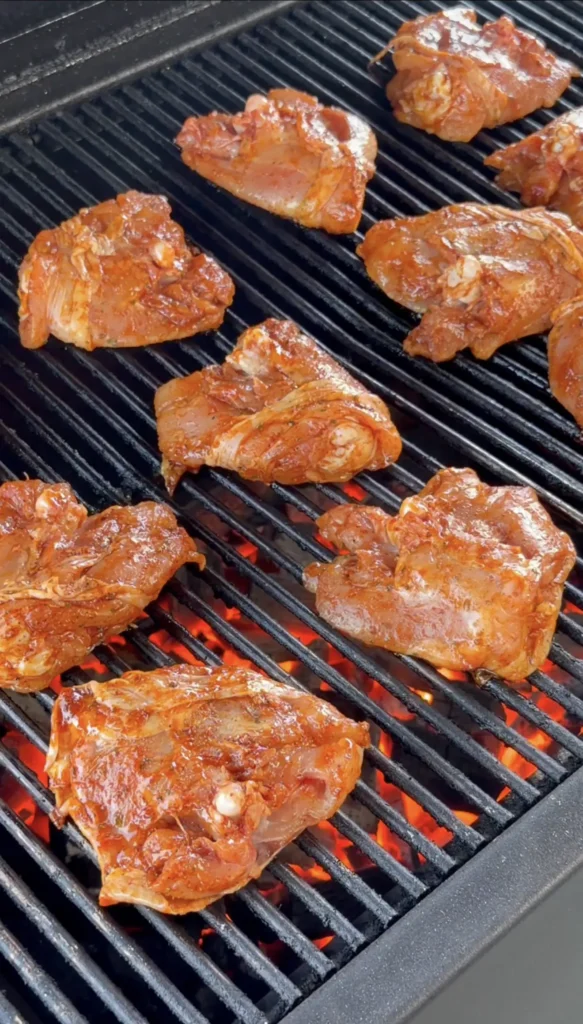
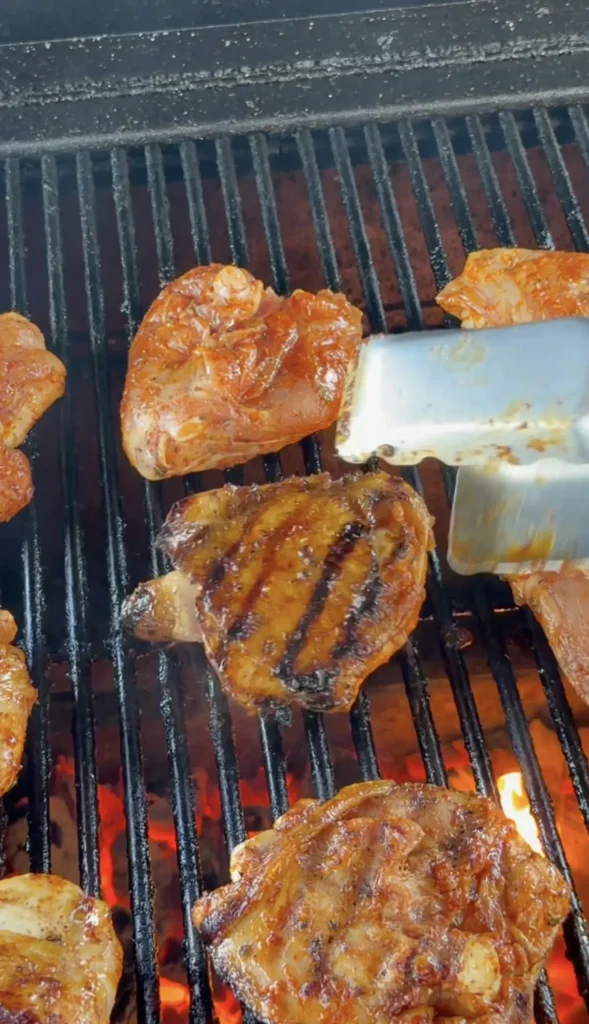
Place the chicken thighs skin-side down over the direct heat zone. Close the lid. Let them cook undisturbed for 6-8 minutes. Do not move, press, or flip the chicken during this time. The skin needs uninterrupted contact with the hot grates to render its fat and crisp up.
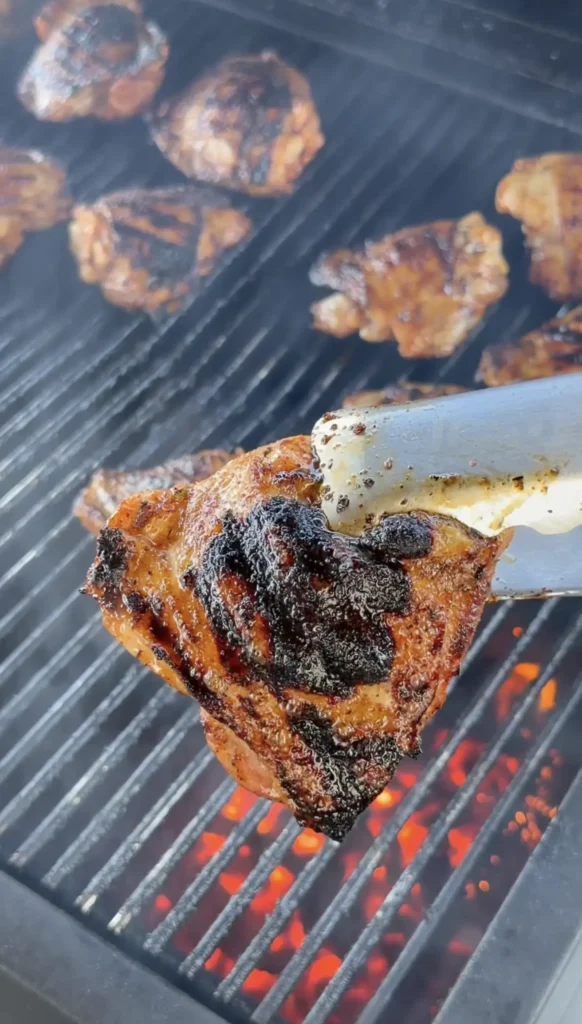
You will know it is time to flip when the skin releases easily from the grates. If it sticks, it is not ready yet. Give it another minute. The skin should be golden brown with defined grill marks.
Step 6: Flip and Move to Indirect Heat (12-18 Minutes)
Flip each thigh using tongs and move them to the indirect heat side of the grill. Close the lid and cook for 12-18 minutes, depending on the size of your thighs. The internal temperature should reach 175°F in the thickest part of the meat, avoiding the bone.
Check the temperature starting around the 12-minute mark. Larger thighs may take the full 18 minutes. If any thighs are running ahead of others, rearrange them on the indirect side so the smaller ones are furthest from the heat source.
Step 7: Rest, Finish, and Serve
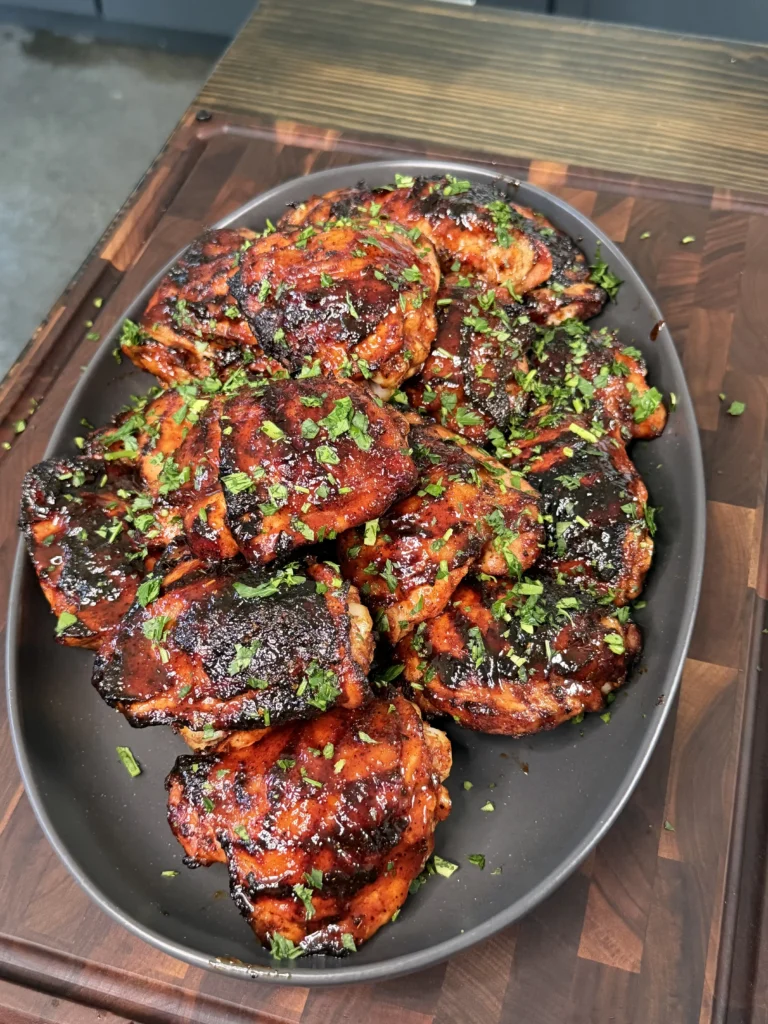
Remove the chicken from the grill and transfer to a cutting board or platter. Let the thighs rest for 5 minutes. During resting, squeeze fresh lime juice over the top and sprinkle with chopped cilantro and flaky sea salt.
Serve with lime wedges on the side. These thighs go great in tacos, alongside cilantro lime rice, with grilled street corn, or straight off the board with your favorite dipping sauce.
Chili Lime Grilled Chicken Thighs (Bone-In, Crispy Skin)
Equipment
- Charcoal or Gas Grill
- Instant-Read Thermometer
- Long-Handled Tongs
- Large Mixing Bowl
- Paper Towels
Ingredients
Chili Lime Marinade
- 8 bone-in, skin-on chicken thighs
- 2 tbsp olive oil
- juice of 2 fresh limes
- zest of 1 lime
- 2 tsp chili powder
- 1 tsp smoked paprika
- 1 tsp garlic powder
- 1 tsp onion powder
- 1 tsp kosher salt
- 1/2 tsp black pepper
- 1/2 tsp ground cumin
- 1/4 tsp cayenne pepper optional, for heat
- 1 tbsp honey
Optional Finish
- fresh chopped cilantro
- lime wedges
- flaky sea salt
Instructions
- Pat 8 bone-in, skin-on chicken thighs very dry with paper towels on all sides. Dry skin is the key to crispy results on the grill.
- In a bowl, whisk together olive oil, lime juice, lime zest, chili powder, smoked paprika, garlic powder, onion powder, cumin, kosher salt, black pepper, cayenne, and honey until smooth.
- Coat the chicken thighs evenly in the marinade, making sure the skin side is covered. Let sit at room temperature for 30 minutes or refrigerate up to 4 hours.
- Preheat your grill to 375-400°F and set up two zones: one side with direct heat and one side with indirect heat. Clean and oil the grill grates.
- Place chicken thighs skin-side down over direct heat. Grill without moving for 6-8 minutes until the skin is golden, crispy, and releases naturally from the grates.
- Flip the chicken and move to indirect heat. Close the lid and cook 12-18 minutes until the internal temperature reaches 175°F in the thickest part of the meat.
- Remove from grill and rest for 5 minutes. Squeeze fresh lime juice over the chicken and sprinkle with chopped cilantro and flaky sea salt. Serve with lime wedges.
Notes
Frequently Asked Questions
Chili Lime Grilled Chicken Thighs
You can, but you will lose the crispy skin and the bone’s insulating effect. Boneless thighs cook much faster, around 10-15 minutes total at 375-400°F. Sear them 3-4 minutes per side over direct heat and check the temp early. They are still delicious with this marinade, just a different texture.
At 375-400°F using a two-zone setup, expect 25-30 minutes total. That breaks down to 6-8 minutes skin-side down over direct heat, then 12-18 minutes on the indirect side with the lid closed. Always go by internal temperature (175°F) rather than time alone, since thigh sizes vary.
Pull them at 175°F internal for the best texture. The USDA minimum is 165°F, but dark meat has extra connective tissue and fat that needs higher heat to fully break down. At 175°F the collagen renders and the meat becomes tender and pulls easily from the bone. The fat content prevents drying out at this temperature.
Three things matter most. First, pat the skin bone-dry with paper towels before seasoning. Wet skin steams instead of crisping. Second, start skin-side down over direct heat and do not move the chicken for 6-8 minutes. Third, let the skin release from the grates on its own before flipping. If it sticks, it needs more time.
Minimum 30 minutes for noticeable flavor. The sweet spot is 2 hours. Do not exceed 4 hours. The citric acid in lime juice breaks down surface proteins, which tenderizes the meat at first but turns it mushy if left too long. If you are short on time, even 15-20 minutes gives you decent results.
A cast iron skillet works well for boneless thighs but is tricky for bone-in because of the thickness and uneven cook time. If you use cast iron, sear skin-side down for 5-6 minutes over high heat, then transfer the whole skillet to a 400°F oven to finish for 15-20 minutes. A flat top griddle gives great surface contact and crust, though you lose the smoky grill flavor.
Two-zone grilling means creating one hot side (direct heat) and one cooler side (indirect heat) on your grill. You sear the chicken over direct heat for crispy skin, then move it to indirect heat to finish cooking through without burning. On a gas grill, turn one side to medium-high and leave the other off. On charcoal, push all coals to one side.
Store in an airtight container in the fridge for up to 4 days. Reheat in a 375°F oven for 10-12 minutes to warm through and re-crisp the skin. You can also reheat in a hot skillet skin-side down for 3-4 minutes. Avoid the microwave, as it turns the skin rubbery and steams the meat. Leftover chicken shreds well for tacos, salads, and rice bowls.
Looking For More Recipes Like This?
If you enjoyed this recipe, check out our full library of grilling recipes.
See All RecipesUpgrade Your Meat Game with Grill Nation x Linz Heritage Angus
We’ve partnered with Linz Heritage Angus to bring you some of the best beef you can get your hands on. Dry-aged to perfection with marbling that makes your mouth water just looking at it.