How to Smoke Perfect Brisket on a Pellet Smoker
Pellet smoked brisket is one of the best ways to get tender, juicy BBQ without babysitting a fire all day. I have cooked over 50 briskets on pellet smokers, and the overnight method at 215 to 225°F is the most consistent approach I have found. Put the brisket on at 8 PM, sleep through the hardest phase, wrap in butcher paper with beef tallow around 7 AM, and rest in the oven at 150°F for 4 to 5 hours before slicing. A 10 to 15 pound whole packer takes 12 to 16 hours of smoke time plus 2 to 5 hours of rest, and serves 12 to 16 people.
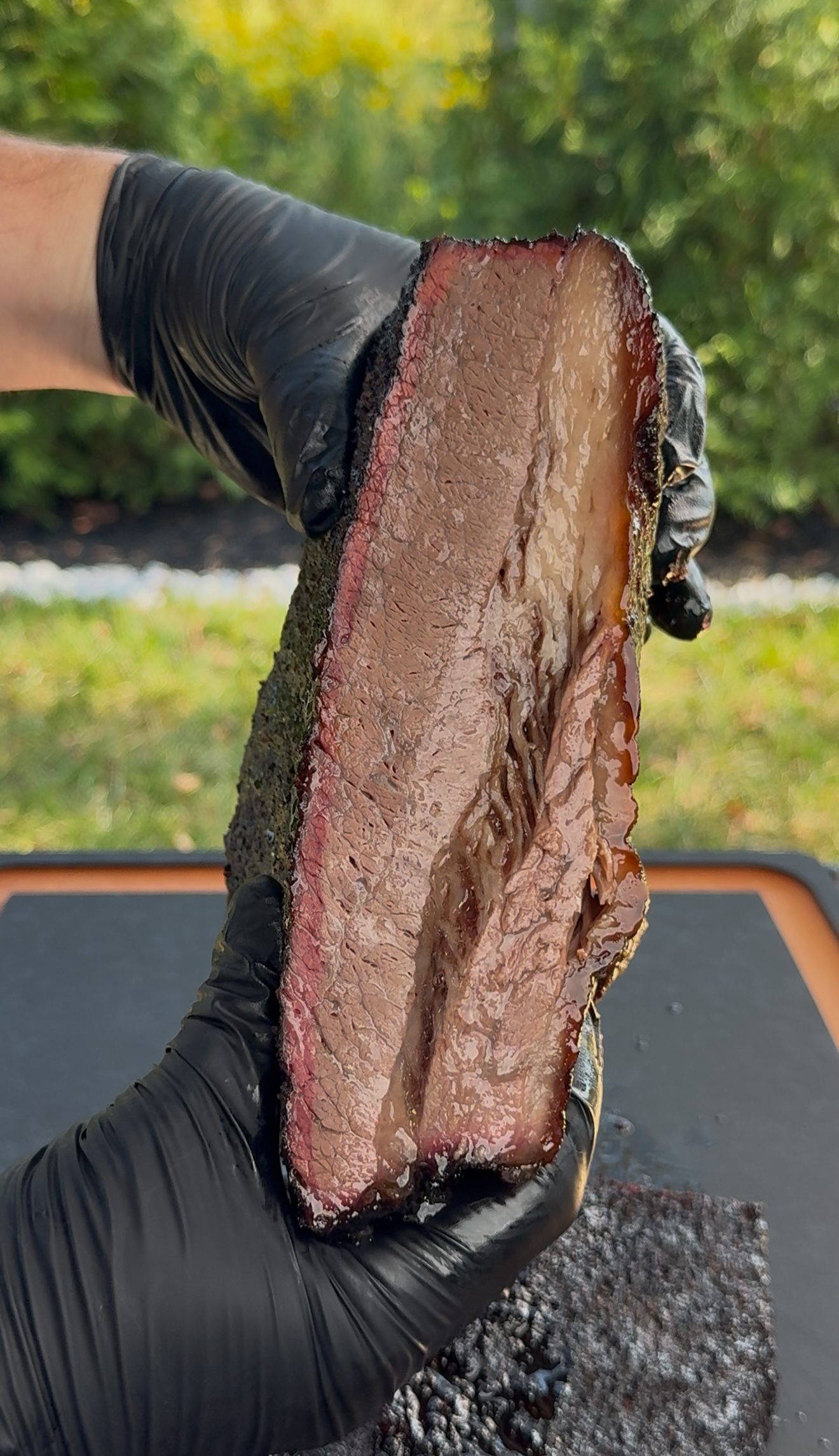
How to Smoke Brisket on a Pellet Smoker
I have cooked over 50 briskets on pellet smokers, and the method I keep coming back to is the overnight cook at 215 to 225°F. The pellet grill holds temperature within a few degrees for 12+ hours while you sleep, which means you wake up to a brisket that is already through the stall and ready to wrap. No babysitting a firebox, no adjusting vents at 3 AM, no expensive mistakes from temperature swings. This pellet smoker brisket recipe walks through the full process from trimming to slicing so you can serve competition-quality BBQ at home.
Why Pellet Smokers Work So Well for Brisket
Brisket needs 12 to 16 hours of steady, low heat to break down the collagen and connective tissue that makes it tough. Traditional stick burners require constant fire management during that window. Pellet smokers automate the temperature control, which removes the biggest variable from the cook. The auger feeds pellets into the fire pot at a consistent rate, and the controller holds your set temperature within 5 to 10 degrees for the entire cook.
The smoke flavor from a pellet grill is more subtle than a pure offset or stick burner. That is actually a good thing for brisket because the smoke complements the beef without overpowering it. On my Pit Boss Navigator, brisket cooks most consistently fat side down because the heat source is below the grates.
The Overnight Method
I put the brisket on around 8 PM at 215°F so it cruises overnight. By 7 to 8 AM the next morning, the bark has set and the internal temp is usually around 165 to 170°F. That is wrapping time. This schedule means you finish the brisket by early afternoon, rest it for 4 to 5 hours, and slice right before dinner. The timing works for a Saturday cook that serves Saturday evening, or a Friday night cook that serves Saturday lunch.
Choosing and Trimming Your Brisket
Start with a whole packer brisket between 10 and 15 pounds. Choice grade works, but Prime grade has more marbling and gives you juicier results with a wider margin for error. The brisket should feel firm with good fat coverage, about a quarter inch on the fat cap side.
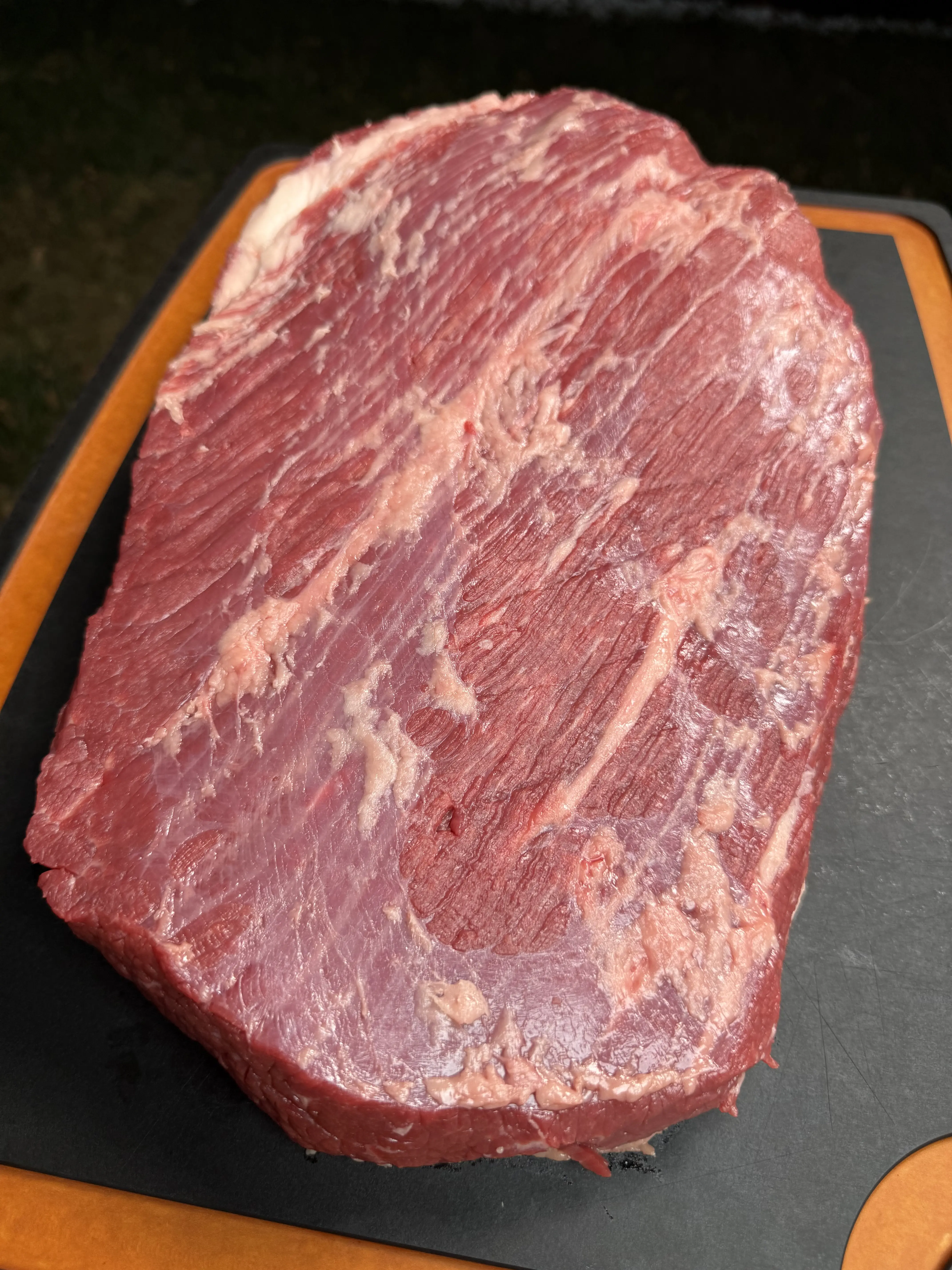
How to Trim
Remove any hard, white fat and silver skin. Leave the softer, yellowish fat because it renders during the cook and keeps the meat moist. Trim the fat cap to about a quarter inch thick. Square off the edges of the flat so it cooks evenly. Some competition cooks separate the point from the flat, but for a pellet smoker cook, leave it whole. The fatty point protects the lean flat and helps it stay juicy through the long smoke.
Take the brisket out of the fridge 30 to 45 minutes before it goes on the smoker. Cold meat straight from the fridge takes longer to absorb smoke and can develop a bitter creosote layer on the surface.
The Best Brisket Seasoning for Deep Bark
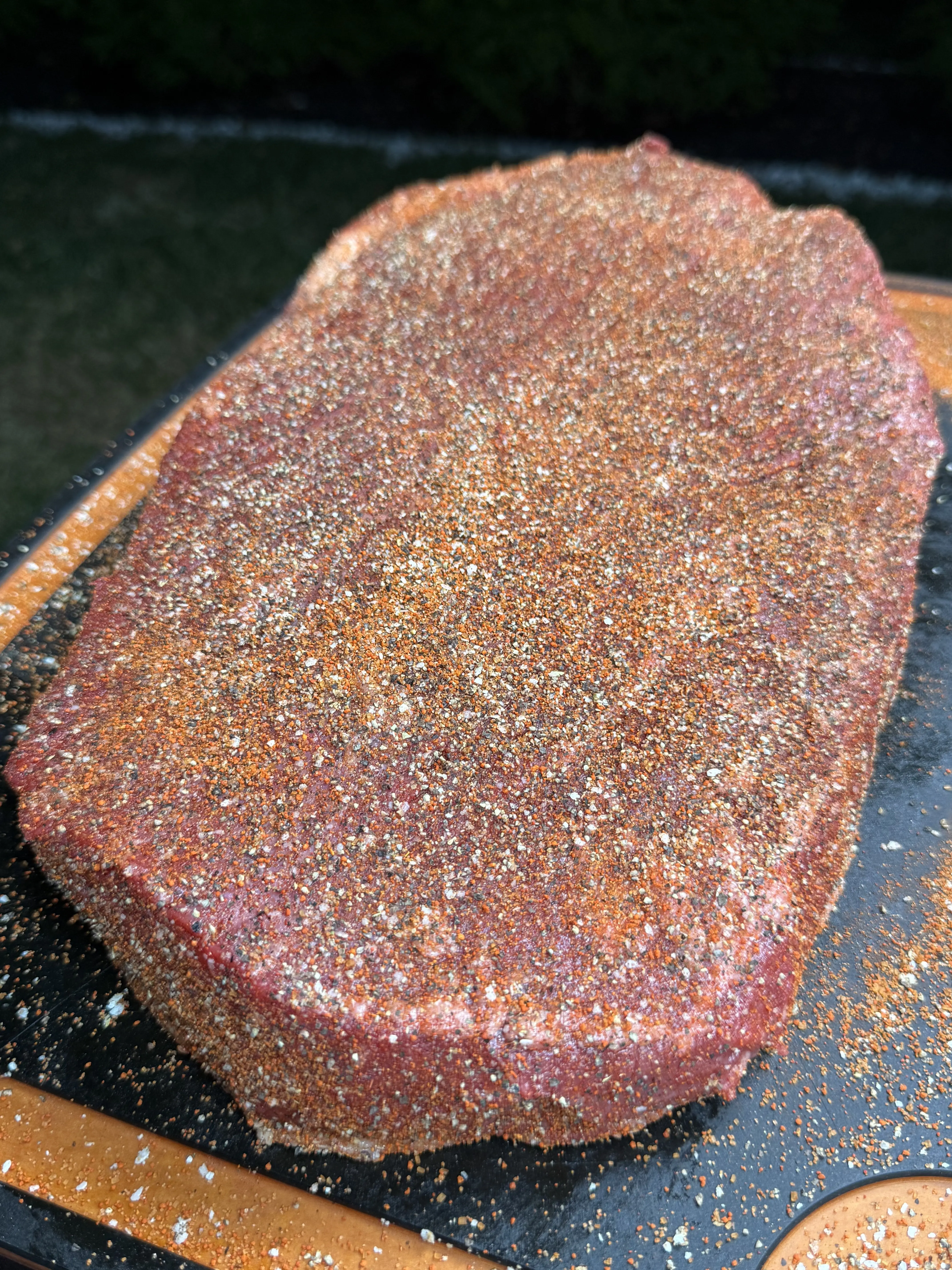
For deep mahogany bark, I run 16-mesh coarse black pepper, kosher salt, Lawry’s seasoned salt, and garlic powder. Keep sugar low or skip it entirely. Sugar burns during a 14-hour cook and creates a dark, acrid crust instead of the deep red-brown bark you want. The coarse grind on the pepper and salt matters because fine table salt and pre-ground pepper dissolve and fall off during the long cook.
Binder Options
Apply a thin coat of binder to help the seasoning stick. Yellow mustard is the classic choice. Hot sauce and avocado oil both work well too. You will not taste the binder in the finished product because it cooks off completely during the first few hours. The binder just creates a tacky surface that holds the rub in place. Do not be shy with the seasoning. A 12-pound brisket needs more than you think because some falls off during the cook.
Best Brisket Temperature for Pellet Grills
225°F is the standard target for pellet smoker brisket. This temperature gives the collagen enough time to break down into gelatin while building bark and absorbing smoke. Some cooks start lower at 200 to 215°F for the first few hours to maximize smoke absorption, then bump to 250°F after wrapping. Both approaches work. The overnight method at 215°F is the most hands-off because you set it before bed and check in the morning.
Why Bark Forms
Bark is the result of the Maillard reaction between the surface proteins, the dry rub, and sustained heat over many hours. The surface of the meat needs to dry out slightly for bark to form, which is why I have found that pellet smokers produce the best brisket bark when you let the surface dry in the fridge overnight before cooking. Unwrapped refrigerator air pulls moisture from the surface, giving you a head start on bark development before the brisket even hits the grill.
Best Pellets for Smoking Brisket
Oak is king for brisket. It produces a clean, medium-intensity smoke that complements beef without overwhelming it. Hickory adds a stronger punch and is the classic choice for traditional BBQ flavor. Cherry adds subtle sweetness and gives the bark a reddish color that photographs well. Mesquite delivers bold Texas-style flavor but can turn bitter on very long cooks, so use it sparingly or blend it with oak.
Fill your hopper before starting the cook. Most pellet smokers burn 1 to 2 pounds of pellets per hour at 225°F, so a 15-hour cook can use 20 to 30 pounds. Running out of pellets mid-cook drops the temperature and can ruin the bark.
The Smoking Process Step by Step
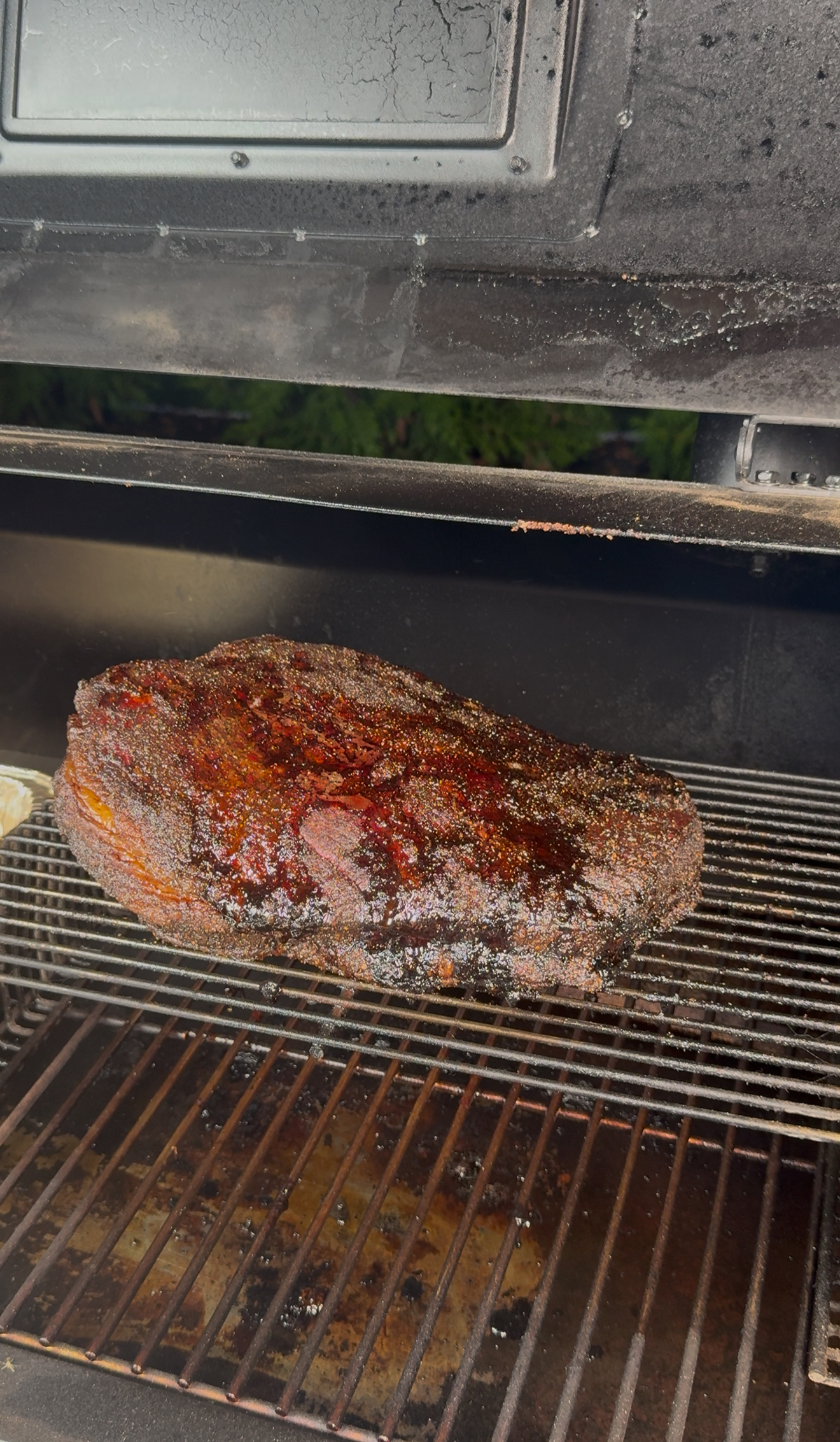
Place the seasoned brisket on the smoker fat side down if your heat source is below the grates, which covers most pellet smokers. Fat side down protects the meat from direct heat and helps the flat stay moist. Close the lid and leave it alone. Every time you open the lid, you lose heat and smoke.
The First 6 to 8 Hours
During the first phase, the surface dries, the rub sets, and bark begins to form. The meat absorbs most of its smoke flavor in these first hours, so make sure you are getting good smoke production from the start. Some people spritz with beef broth or apple juice every 1 to 2 hours to keep the surface moist. Spritzing helps more smoke particles adhere to the wet surface, but it also adds time to the cook. Either approach works.
Why Brisket Stalls
Around 160 to 165°F internal temperature, the brisket stalls. The internal temp stops rising for several hours, sometimes 4 to 6 hours. This happens because moisture evaporating from the surface cools the meat at the same rate the smoker heats it. The stall is normal and not a sign that anything is wrong. You can wait it out (which builds more bark) or wrap to push through it faster.
When to Wrap Brisket
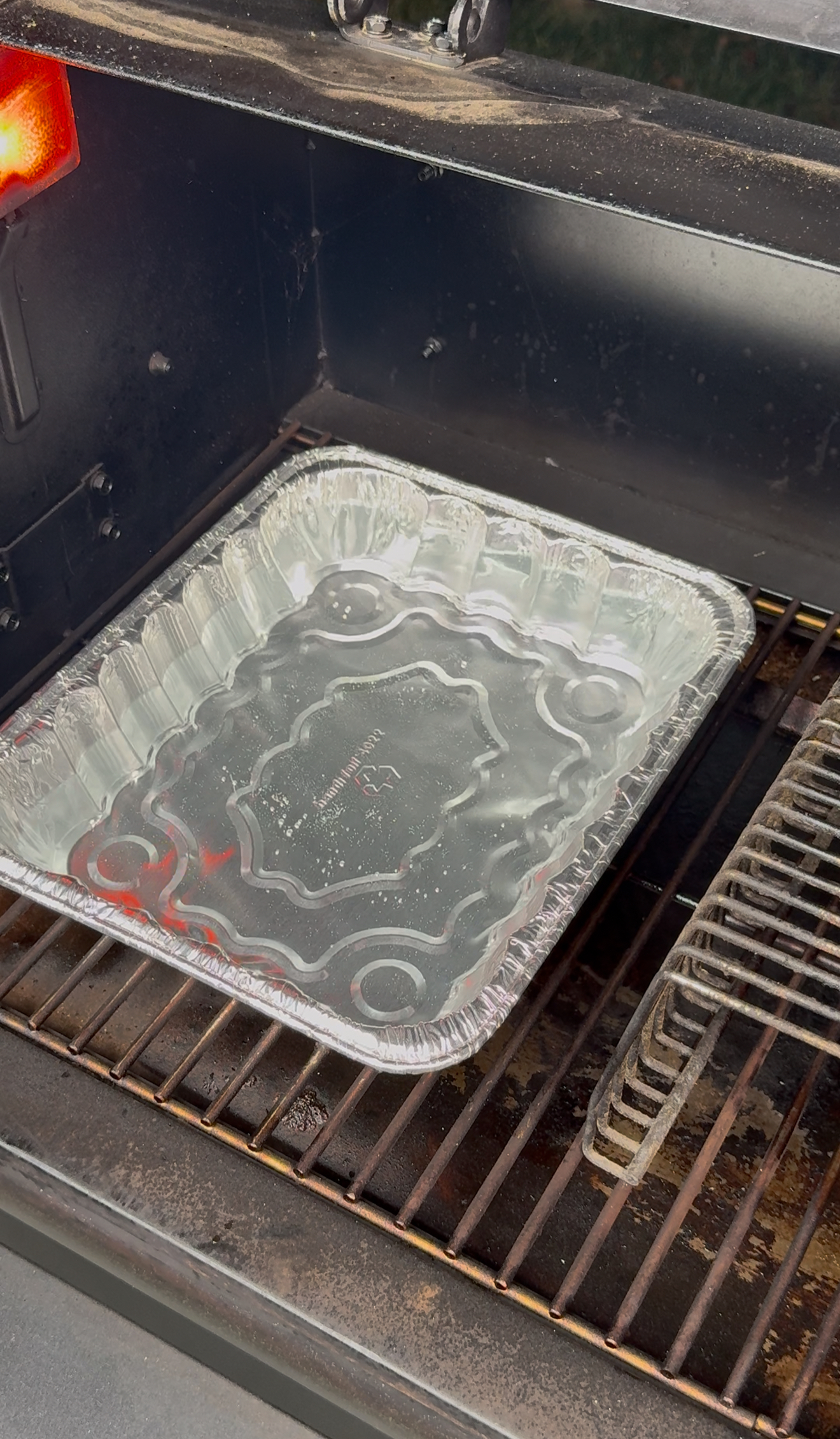
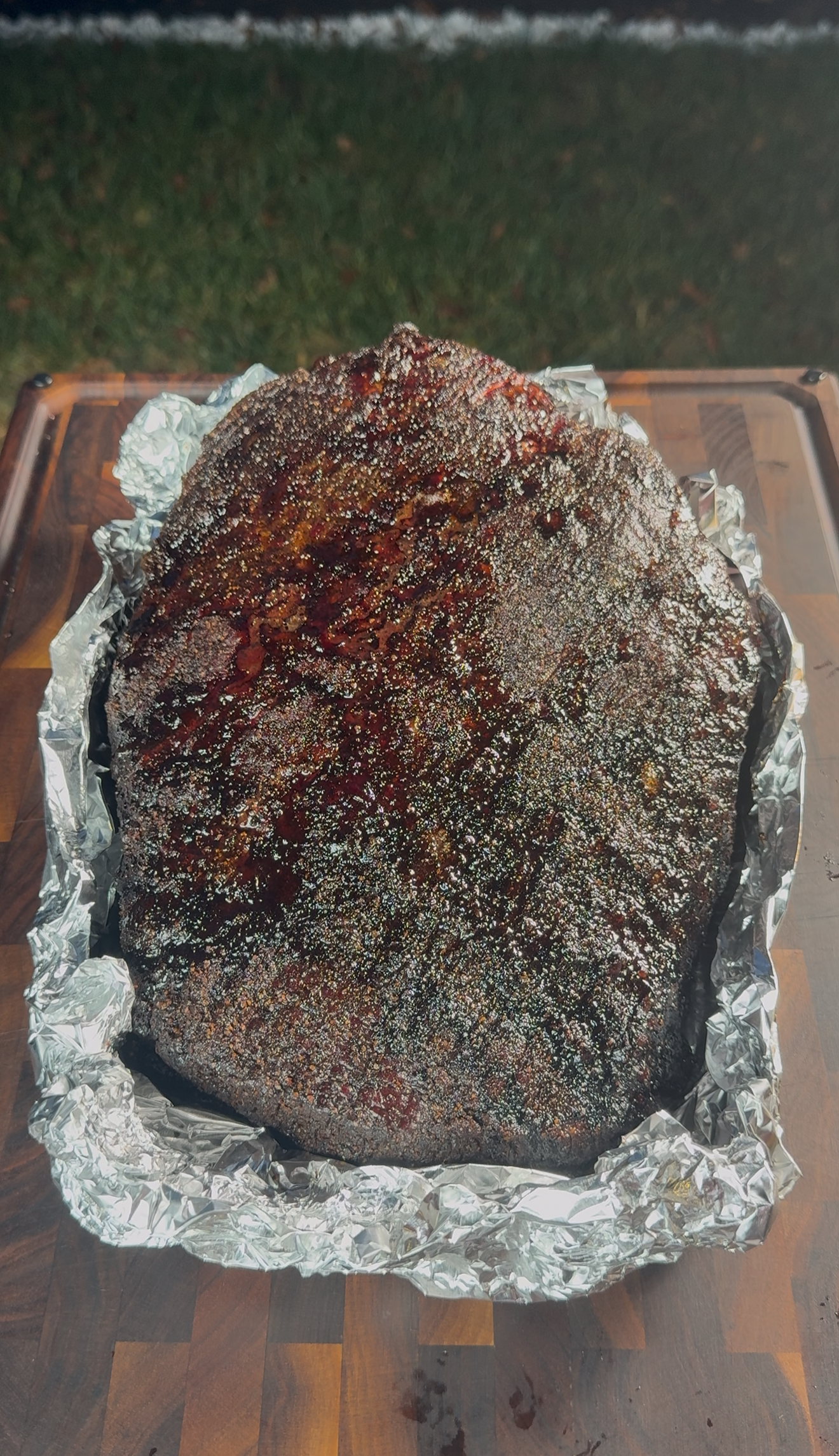
Wrap the brisket when the bark is set and the internal temperature hits 165 to 175°F. Press the bark gently with your finger. If it feels firm and does not smudge, the bark is set and ready for wrapping. Wrapping too early traps moisture against the surface and softens the bark you spent hours building.
Butcher Paper vs. Foil
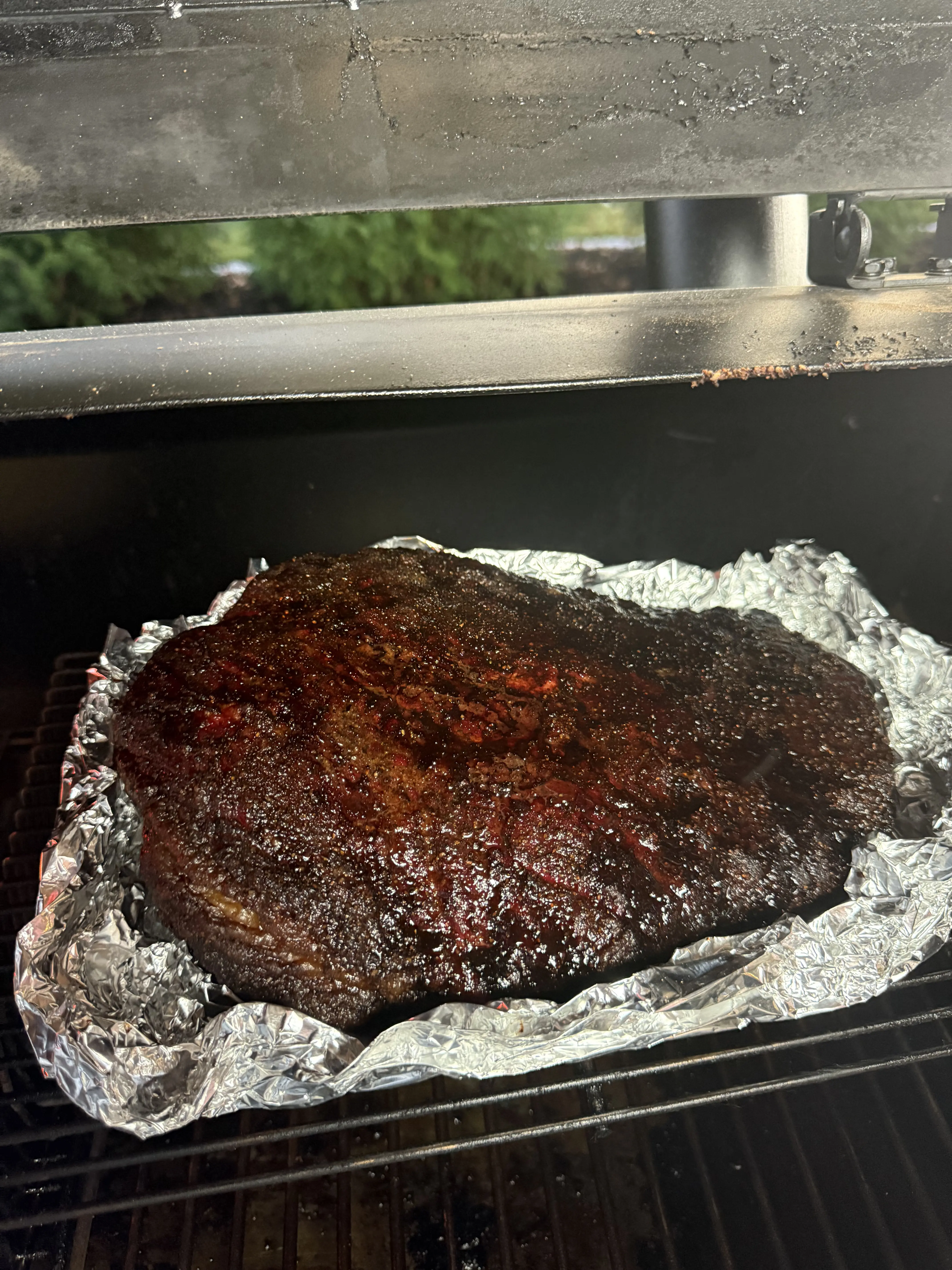
Butcher paper preserves bark better because it is slightly porous and lets some moisture escape. The bark stays textured and firm. Foil cooks faster because it traps all the moisture and steam, but it softens the bark significantly. For most pellet smoker cooks, butcher paper is the better choice because you already have good temperature control and do not need the speed boost that foil provides.
The Tallow Wrap Move
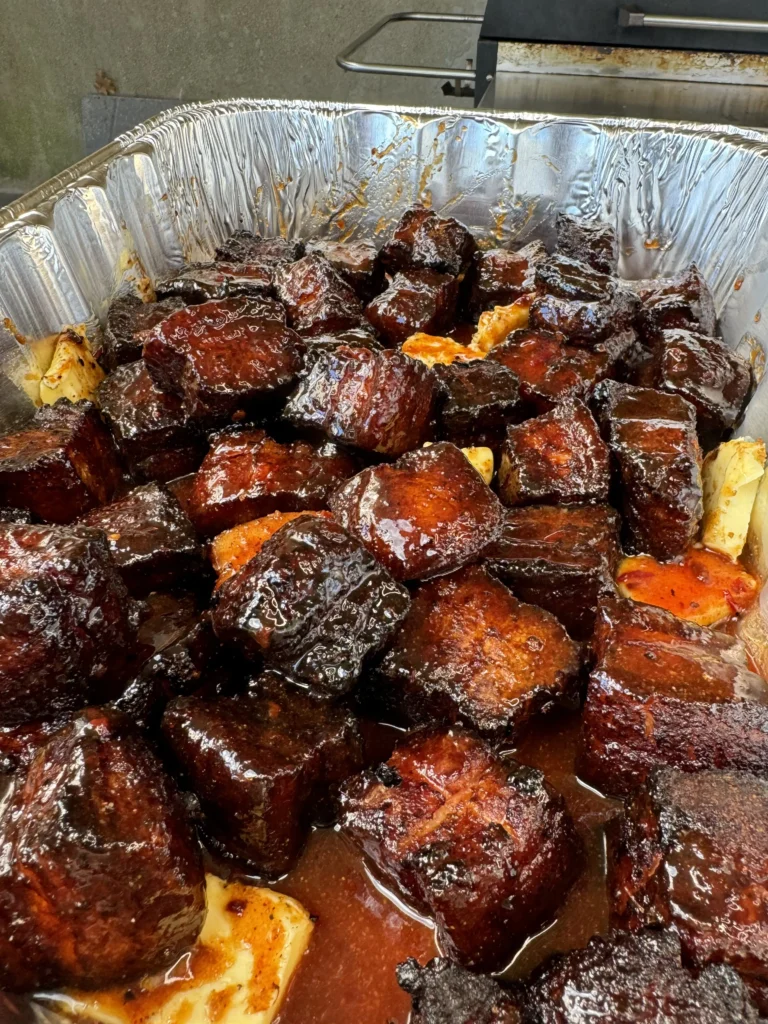
Once the bark is locked in, wrap the brisket in butcher paper and add melted beef tallow before sealing it up. The tallow bastes the meat from the inside of the wrap, adding richness and moisture throughout the final phase of the cook. This is one of those small upgrades that makes a noticeable difference in the finished product. Our chipotle honey burnt ends use a similar tallow-wrap technique on the point meat for the same reason.
After wrapping, bump the smoker to 250°F to push through the rest of the cook faster. The wrap protects the meat from drying out at the higher temperature.
Knowing When Your Brisket Is Done
The target internal temperature is 200 to 205°F in the thickest part of the flat. However, 203°F is a guideline, not a rule. I am pulling the brisket when the probe slides in like warm butter. If the flat feels tight at 203°F, keep going. Some briskets need to reach 208 to 210°F before they are properly tender. Probe feel beats temperature every time.
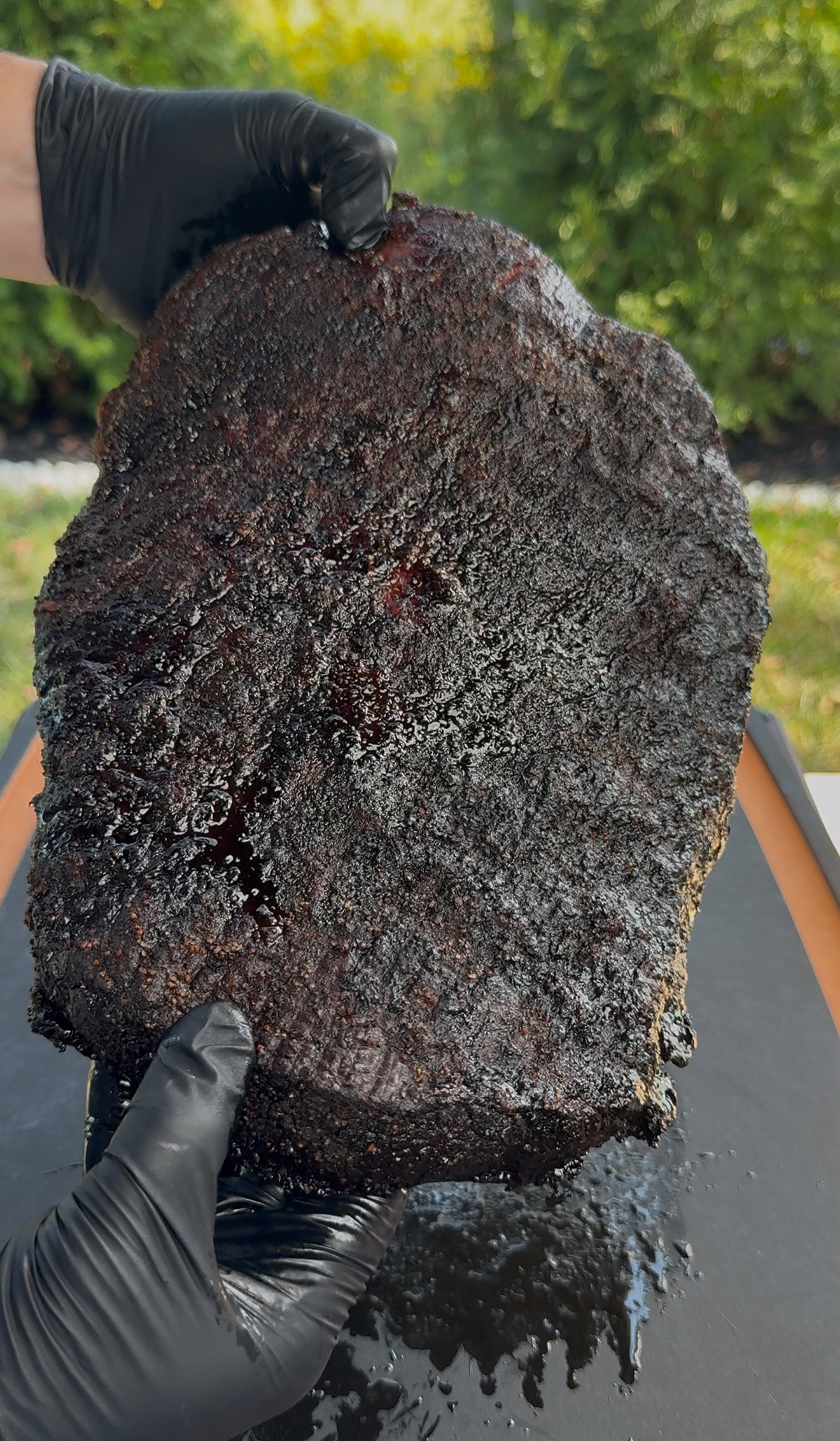
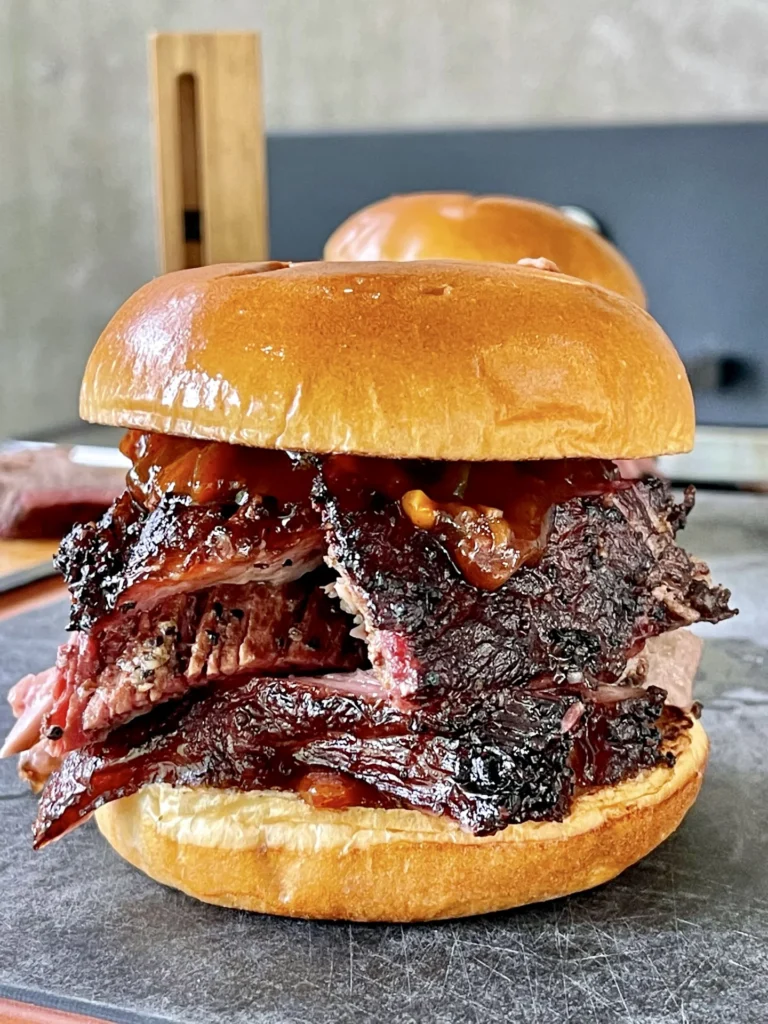
The point (fatty end) usually finishes before the flat (lean end). You can separate them and pull the point when it is done, or leave them together and cook until the flat probes tender. If you like using leftover brisket in sandwiches, check out our smoked brisket sandwich for a solid way to use the point meat the next day.
How Long to Rest Brisket
Resting is the most important and most skipped step in the entire brisket process. Slicing a brisket straight off the smoker dumps all the juices onto the cutting board instead of keeping them in the meat. A properly rested brisket is visibly juicier and more tender than one that was cut too soon.
Why Rest Matters
During the rest, the temperature equalizes throughout the brisket and the juices redistribute back into the muscle fibers. The collagen that broke down during the cook needs time to re-set into a gel-like state that holds moisture inside each slice. Cutting early releases all that liquid before it has a chance to stabilize.
Option 1: Cooler Rest (Classic Method)
Wrap the brisket in a towel and place it in a dry cooler. The brisket will hold temperature for 4 to 6 hours in a good cooler. This is the most common method and works well for backyard cooks.
Option 2: Oven Hold (Best Results)
Rest the wrapped brisket in an oven set to 150 to 170°F for 4 to 8 hours. This is the method most competition teams use because it holds the brisket at a safe serving temperature for a longer window. For the best slices and maximum juice retention, I recommend a 5-hour heated hold at 150 to 160°F.
Option 3: Counter Then Oven
Let the brisket rest on the counter for 30 minutes until carryover heat slows, then transfer to a 150°F oven and hold until slicing time. This hybrid approach works well when you are not sure exactly when you will be serving.
Slicing and Serving Your Brisket
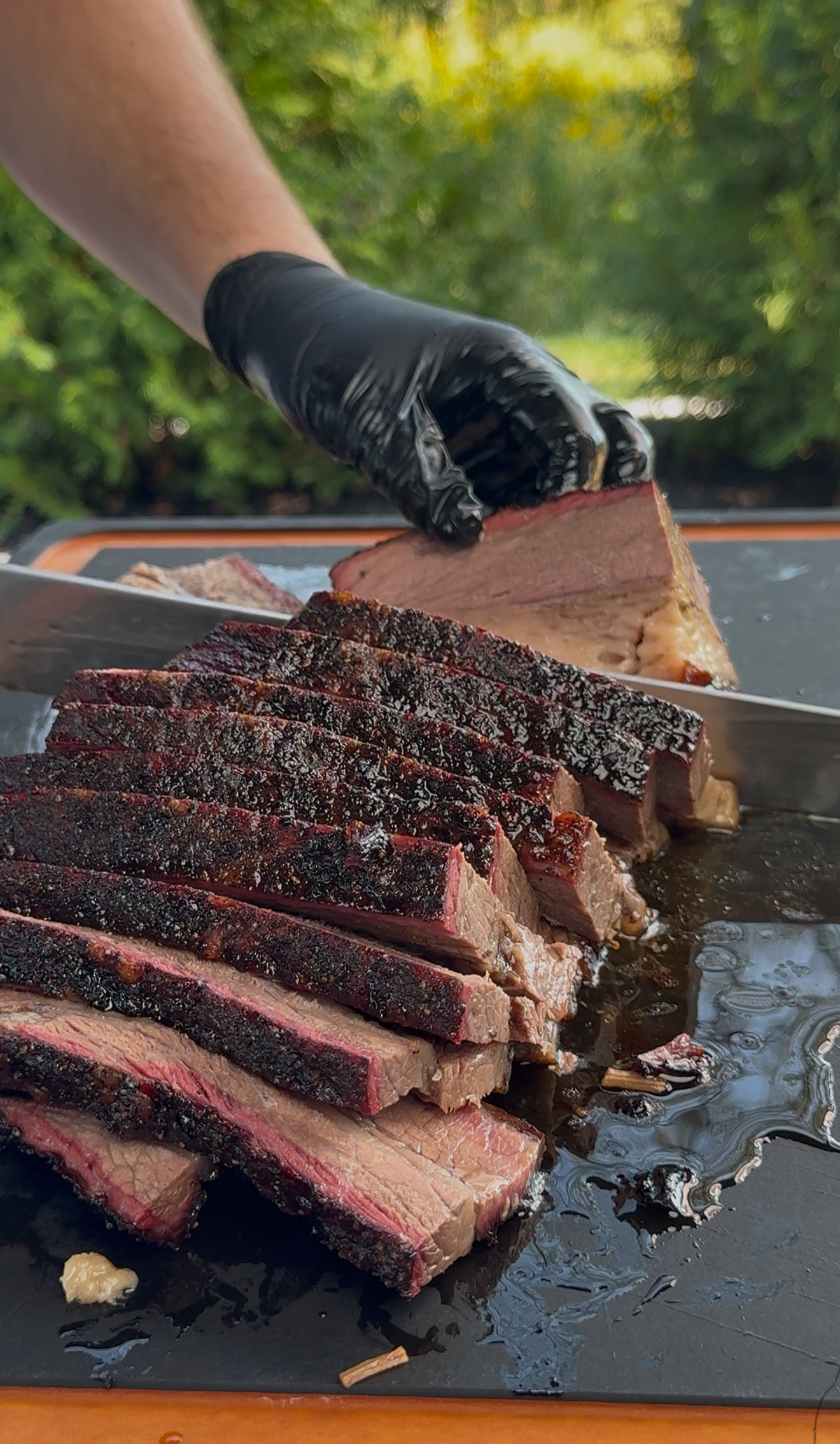
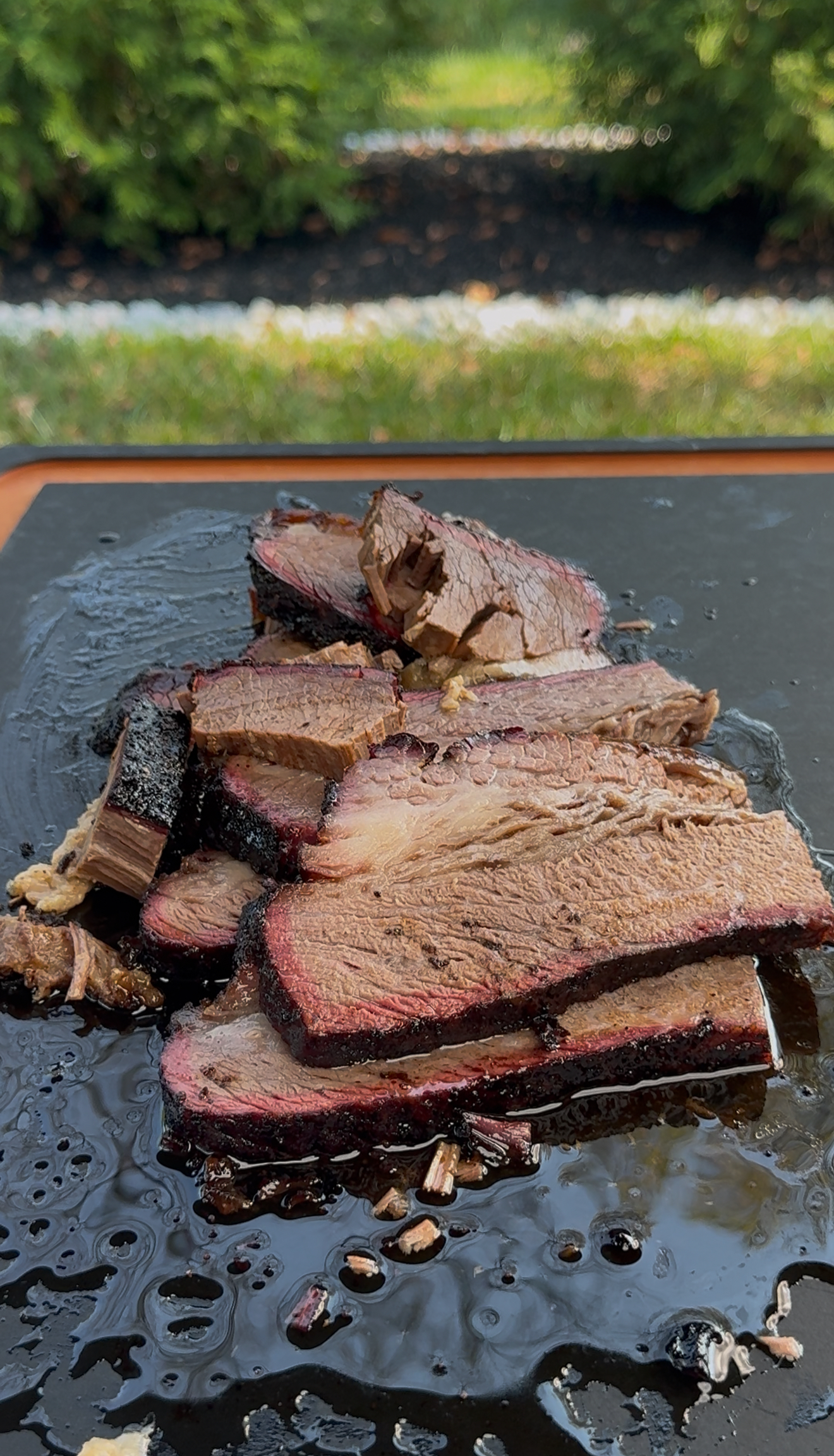
Slice against the grain for maximum tenderness. The grain direction changes between the flat and the point, so separate them first and slice each section separately. For the flat, slice about a quarter inch thick. For the point, slice about a half inch thick because it is more tender and holds together better at that width. Some people chop the point into burnt ends instead of slicing.
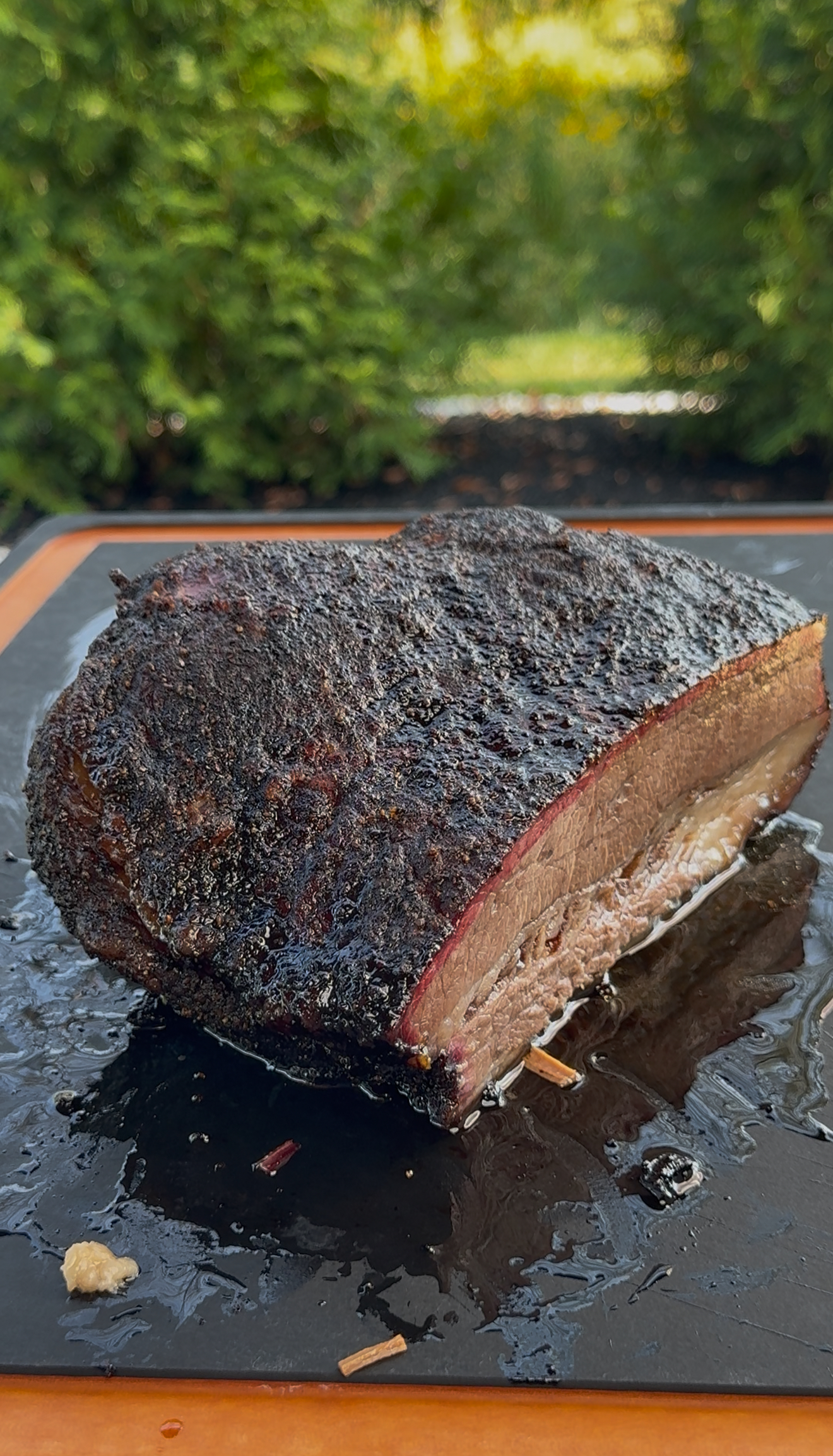
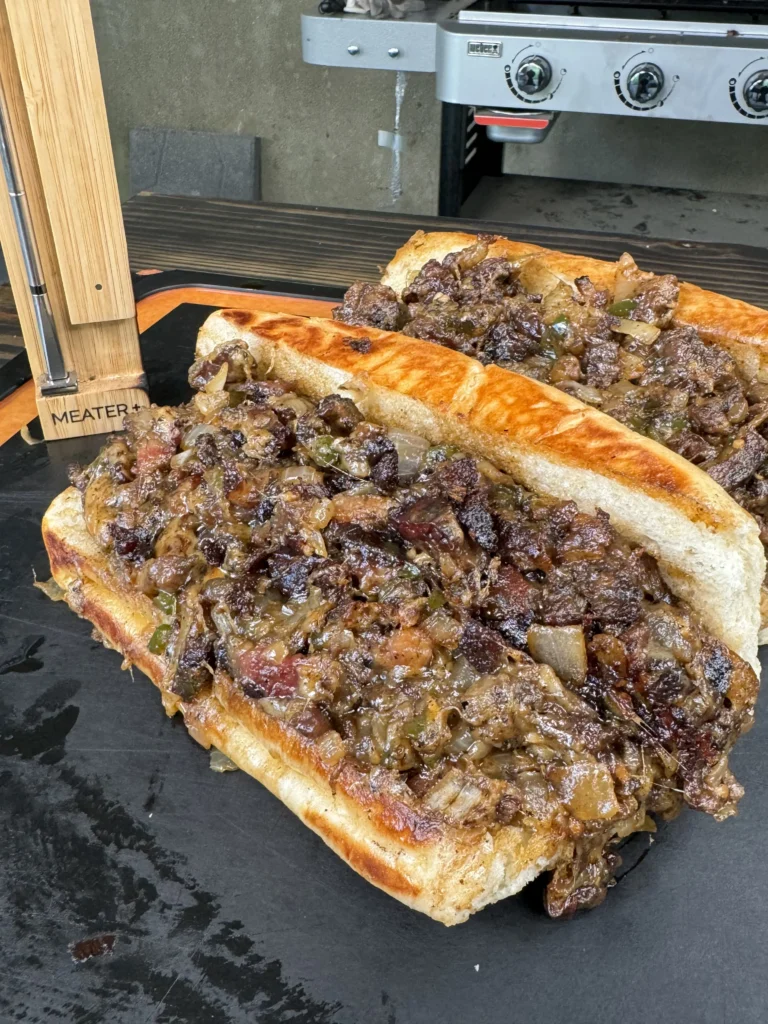
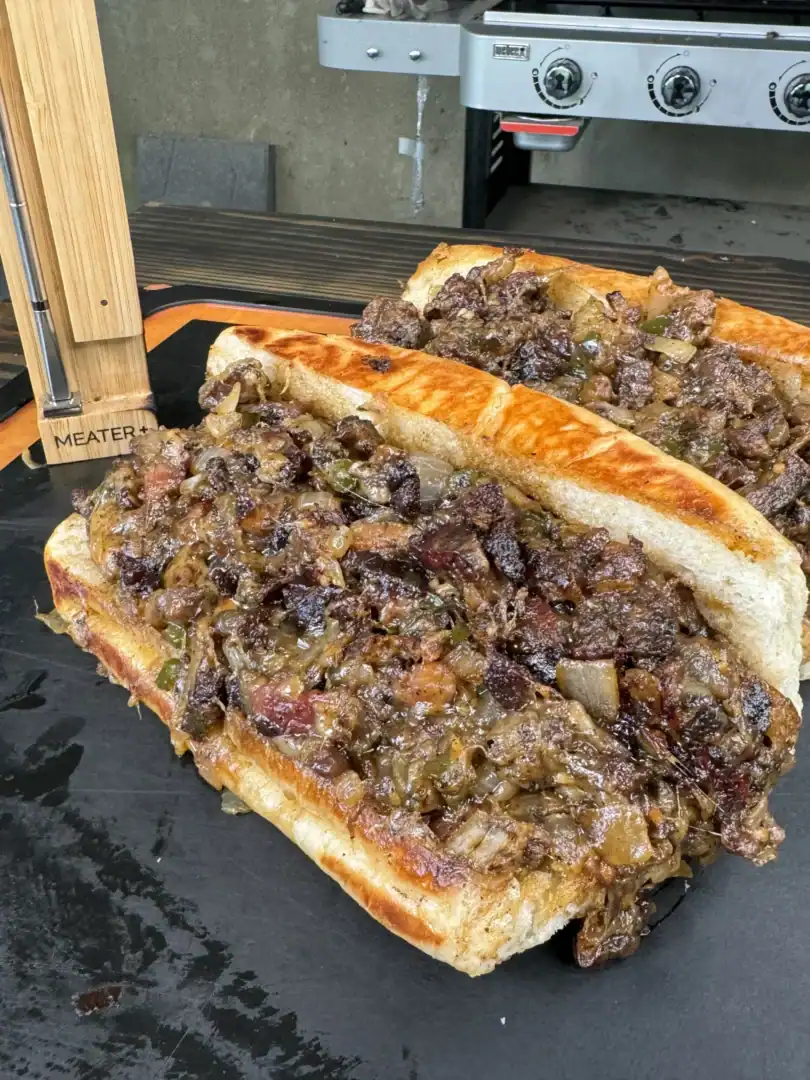
A sharp knife makes a real difference. A dull blade shreds the meat instead of cutting clean slices. Let your guests see the smoke ring and bark you worked for. For a different way to serve the leftover flat, our smoked brisket cheesesteaks are a strong second-day option.
Troubleshooting Common Issues
Dry Brisket
Usually means the brisket was undercooked (pulled before the collagen fully broke down), sliced with the grain instead of against it, or rested for less than an hour. Undercooked is the most common cause. If the flat feels tight when you probe it, keep cooking regardless of what the thermometer reads.
No Smoke Flavor
The meat absorbs most of its smoke in the first few hours. If you are not getting good smoke production early in the cook, check your pellets (old or damp pellets produce thin, weak smoke) and clean the fire pot. Running at 200 to 215°F for the first 3 to 4 hours before bumping to 225°F gives you more smoke absorption time.
Soft or Missing Bark
Wrapping too early is the most common cause. Wait until the bark feels firm and dry before wrapping. Using foil instead of butcher paper also softens bark. Spritzing too frequently can wash the rub off and prevent bark formation.
Tough Brisket
Not cooked long enough. The connective tissue in brisket needs to reach 200°F+ to fully break down. If you pull at 190°F because the time seems right, the brisket will be chewy and tough. Cook by feel, not by clock.
Pellet Smoker Brisket Pro Tips
Pro Tip 1: Use the Overnight Method
I put the brisket on around 8 PM at 215°F so it cruises overnight. I wake up around 7 to 8 AM, check the bark and internal temp. If it is around 170°F, it is wrapping time. This schedule is the most relaxed way to cook a brisket because the hardest phase happens while you sleep.
Pro Tip 2: The Tallow Wrap
Once bark is locked in, wrap in butcher paper and add melted beef tallow before sealing it up. That move helps richness and moisture in a big way. The tallow bastes the brisket from inside the wrap for the entire second half of the cook.
Pro Tip 3: Deep Bark Seasoning
For deep mahogany bark, run 16-mesh coarse black pepper, kosher salt, Lawry’s seasoned salt, and garlic powder. Keep sugar low or zero. Sugar burns over 14 hours and creates a bitter crust instead of clean bark.
Pro Tip 4: Binder Options
Use a light coat of yellow mustard, hot sauce, or avocado oil. You will not taste it. The binder just creates a tacky surface that holds the rub in place during the long cook.
Pro Tip 5: Pull by Feel, Not by Temp
203°F is a guideline. I am pulling when the probe slides in like warm butter. If your flat feels tight at 203°F, keep going. Probe feel beats temperature every single time.
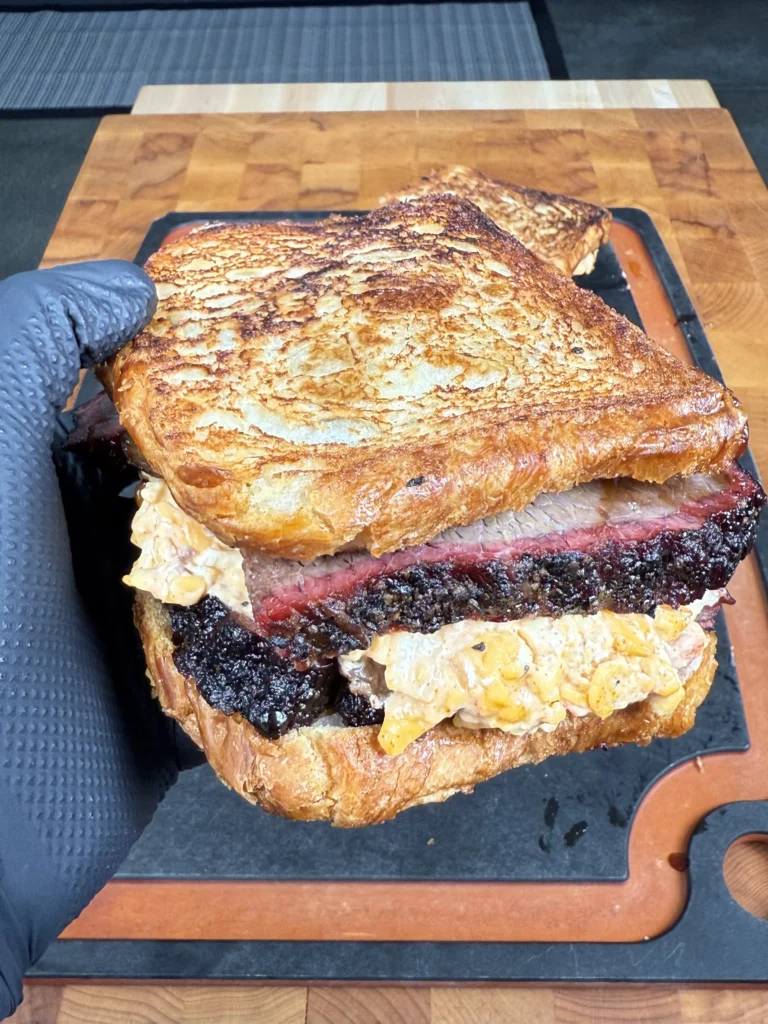
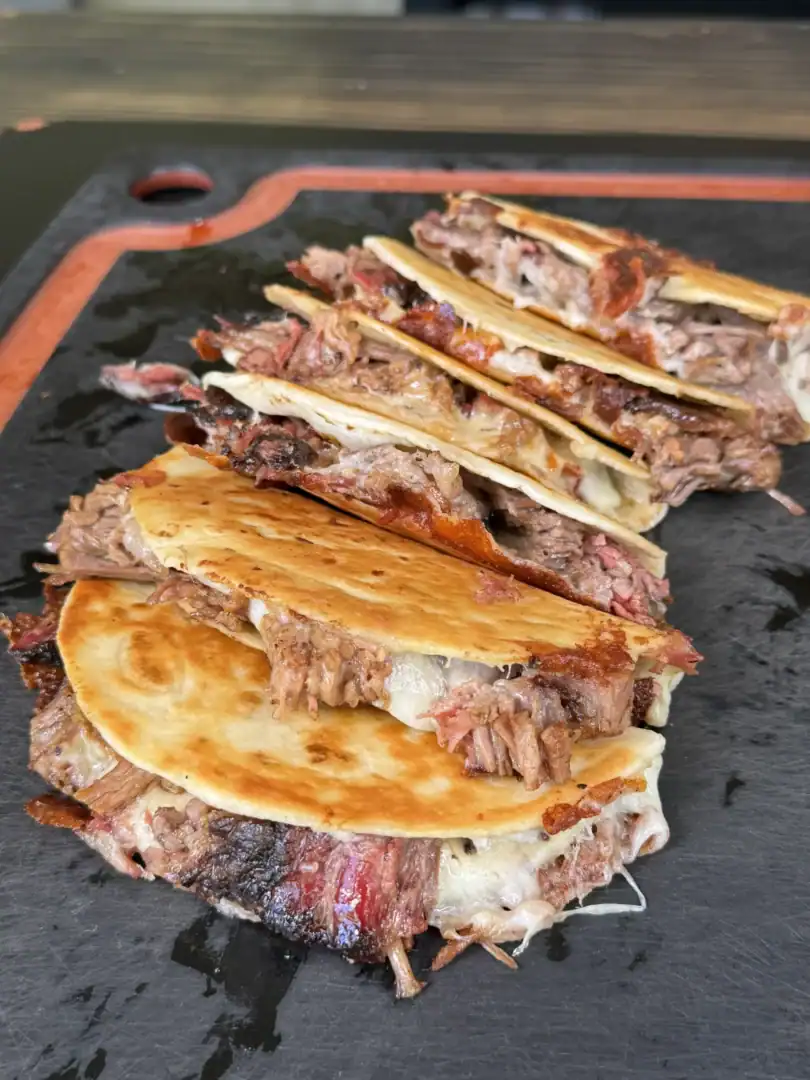
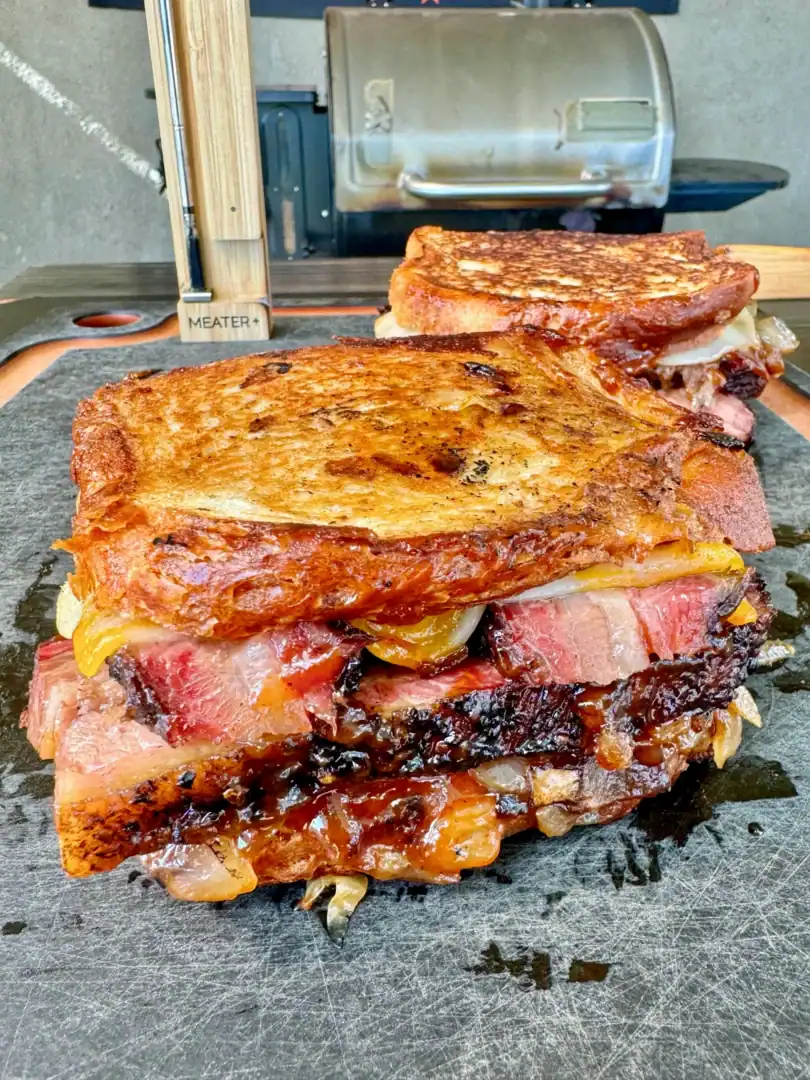
Want to keep the brisket vibes going? These are worth a cook: Chipotle Honey Burnt Ends, Smoked Brisket Sandwich, Smoked Brisket Cheesesteaks, and The Perfect Brisket Melt.
Pellet Smoker Brisket
Overnight Method · Perfect Bark · Butcher Paper Wrap
- 1 whole packer brisket (10-15 lbs, Choice or Prime)
- ¼ cup coarse kosher salt
- ¼ cup 16-mesh coarse black pepper
- 2 tbsp garlic powder
- 1 tbsp Lawry’s seasoned salt (optional)
- Yellow mustard, hot sauce, or avocado oil (binder)
- ½ cup beef broth (for spritzing)
- Beef tallow (for wrapping, optional)
- Butcher paper or heavy-duty foil
I put the brisket on around 8 PM at 215°F so it cruises overnight. I wake up around 7 to 8 AM, check the bark and internal temp. If it is around 170°F, it is wrapping time. Once the bark is locked in, I wrap in butcher paper and add melted beef tallow before sealing it up. That tallow move helps richness and moisture in a way that nothing else matches.

How to Smoke Brisket on a Pellet Smoker
Equipment
- Pellet Smoker (Traeger, Pit Boss, etc.)
- Instant-Read Thermometer
- Butcher Paper or Heavy-Duty Foil
- Cooler or Oven (for resting)
- Sharp Slicing Knife
Ingredients
Brisket & Rub
- 1 whole packer brisket 10-15 lbs, Choice or Prime grade
- 1/4 cup coarse kosher salt
- 1/4 cup 16-mesh coarse black pepper
- 2 tbsp garlic powder
- 1 tbsp Lawry’s seasoned salt optional
- yellow mustard, hot sauce, or avocado oil binder
- 1/2 cup beef broth for spritzing
- beef tallow optional, for wrapping
Instructions
- Trim brisket: remove hard white fat and silver skin, leave soft yellow fat, trim fat cap to 1/4 inch. Square off flat edges. Let sit at room temp 30-45 minutes.
- Apply thin coat of binder (mustard, hot sauce, or avocado oil). Season generously with coarse salt, 16-mesh pepper, garlic powder, and optional Lawry’s.
- Preheat pellet smoker to 215-225°F with oak, hickory, or cherry pellets. Place brisket fat side down. Close lid.
- Smoke 6-8 hours until bark is set and internal temp reaches 165-175°F. Optional: spritz with beef broth every 1-2 hours.
- Wrap in butcher paper (add melted beef tallow before sealing for extra moisture). Bump smoker to 250°F.
- Cook until probe slides into the flat like warm butter, typically 200-210°F internal. Do not pull by temperature alone.
- Rest wrapped in oven at 150-160°F for 4-5 hours (or in a cooler wrapped in towels for 2-4 hours). Slice against the grain.
Video
Notes
Nutrition
Frequently Asked Questions
Pellet Smoker Brisket
Pellet Smoker Brisket FAQ
225°F is the standard for low and slow cooking. Some cooks start at 200 to 215°F overnight for more smoke absorption, then bump to 250°F after wrapping. Both approaches produce tender, juicy brisket.
Plan roughly 12 to 16 hours depending on the size of the brisket, thickness of the flat, how you trimmed it, and your cooker temperature. A 12-pound brisket at 225°F typically runs 14 to 16 hours including the wrapped phase.
Yes. Wrap around 165 to 175°F once the bark is set to push through the stall and retain moisture. Butcher paper is the better choice for most pellet smoker cooks because it preserves bark texture while still speeding up the cook.
Butcher paper preserves bark better because it lets some moisture escape. Foil cooks faster but softens the bark significantly. For pellet smoker cooks where you already have good temperature control, butcher paper is the better choice.
More Questions About Pellet Smoker Brisket
Oak is the top choice for clean, balanced smoke. Hickory adds a stronger punch. Cherry adds subtle sweetness and color. Mesquite gives bold Texas flavor but can turn bitter on very long cooks.
Usually undercooked (pulled before collagen broke down), sliced with the grain instead of against it, or rested too short. The most common cause is pulling the brisket when it hits 200°F but the flat still feels tight when probed. Keep cooking until the probe slides in like butter.
A minimum of 2 hours, but 4 to 5 hours in an oven at 150 to 160°F produces the juiciest results. The juices need time to redistribute and the collagen needs to re-set into a gel-like state that holds moisture in each slice.
Fat side down on most pellet smokers because the heat source is below the grates. The fat cap acts as a heat shield that protects the lean flat from drying out during the long cook.
Looking For More Recipes Like This?
If you enjoyed this recipe, check out our full library of grilling recipes.
Browse All Recipes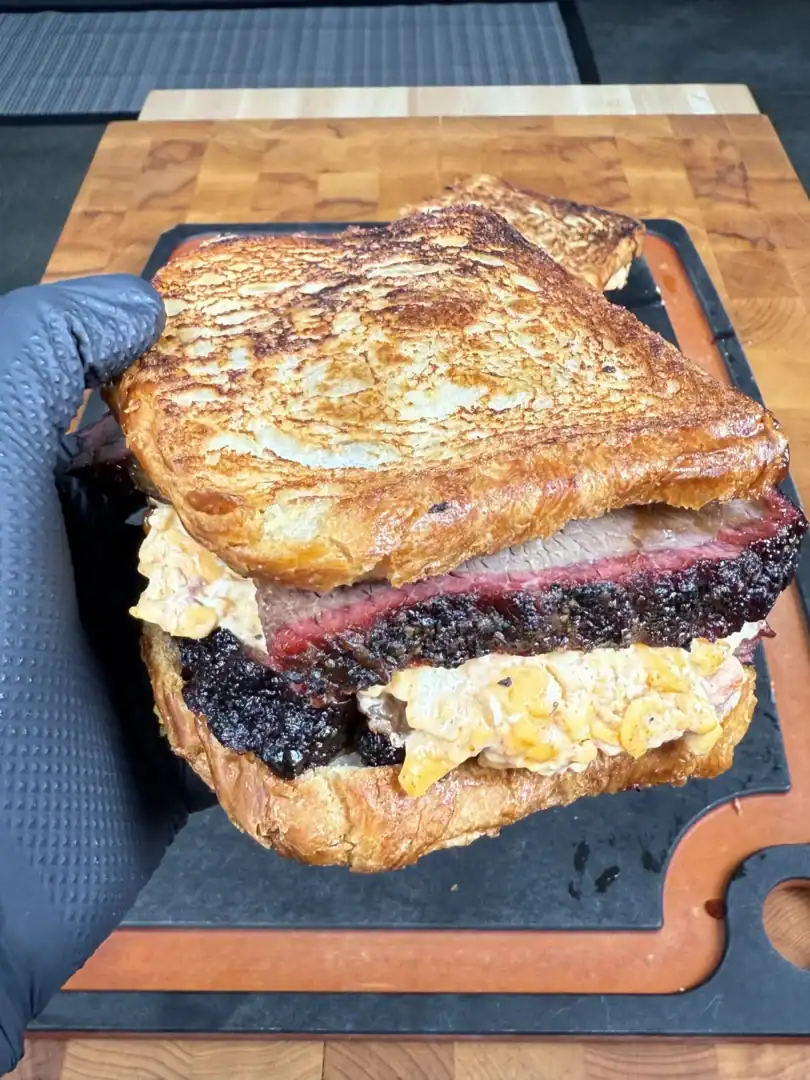
🤤🤤🤤