The Best Chicken Marinade for Grilling
The best chicken marinade for grilling is the one formula that works on every cut you throw at it, and this is the recipe I keep on repeat year-round. It’s a blend of Tony Chachere’s Creole-Style Chicken Marinade, olive oil, honey, fresh lemon juice, garlic, and smoked paprika, dialed in over a few hundred cooks to nail the balance of savory, sweet, and bright. Today I’m showing it off on boneless skinless chicken thigh skewers grilled at 450 to 500°F, but this same marinade works on breasts, wings, drumsticks, tenders, and whole birds with zero tweaks.
What Makes the Best Chicken Marinade
A balanced chicken marinade needs fat (olive oil), acid (lemon juice), salt, aromatics (garlic, smoked paprika), and a touch of sweetener (honey) - the same five elements whether you’re grilling thighs, breasts, wings, or a whole bird. Most recipes online miss at least one of those pillars or overload on acid, which is how you end up with rubbery chicken. This formula hits every pillar in the right ratio, then leans on Tony Chachere’s Creole-Style Chicken Marinade as the flavor base to take the guesswork out of salt and seasoning.
The Five Elements Working Together
The fat locks in moisture while the acid tenderizes the surface of the meat. Salt penetrates deeper than anything else on the list, which is why Tony’s bottle doing double duty here is such a time-saver. Aromatics build the flavor wall your taste buds hit first, and the sweetener doesn’t just add sugar - it caramelizes on the grill and builds that mahogany crust you want on grilled chicken. Pull any one of those five and the whole thing falls flat.
Why Tony’s Chicken Marinade Is the Shortcut
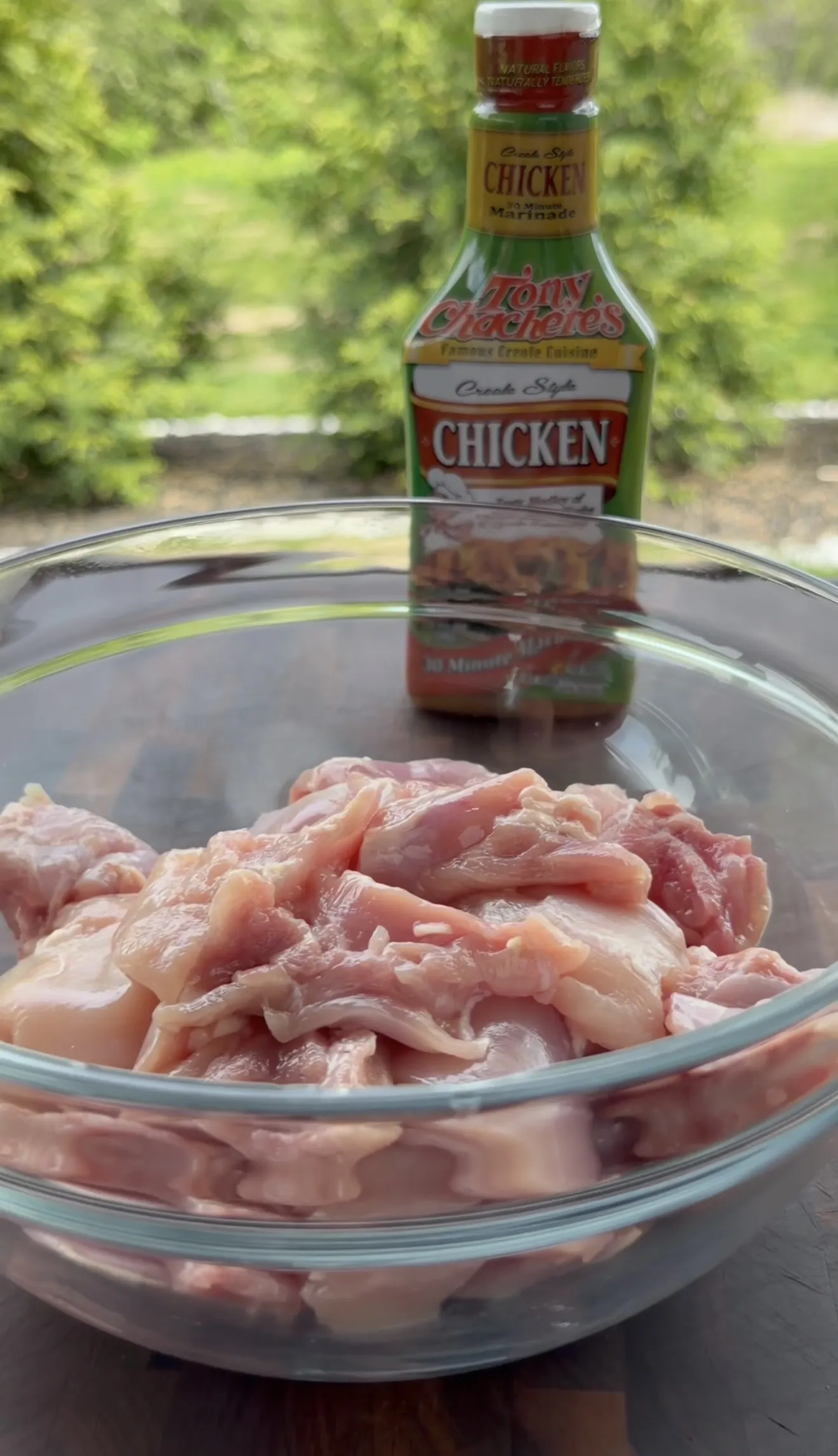
Tony Chachere’s Creole-Style Chicken Marinade already contains water, soybean oil, vinegar, Creole seasoning, sugar, apple juice concentrate, and lemon juice concentrate. In other words, it’s already a complete base. What I’m doing here is stacking fresh ingredients on top of it - real lemon juice, real garlic, raw honey, and smoked paprika - to push the flavor into Grill Nation territory and add the smoky backbone that plain Tony’s doesn’t have. You get the convenience of a bottled marinade with the depth of a scratch recipe.
A Juicy Grilled Chicken Marinade for Every Cut
This is a juicy grilled chicken marinade built to be universal. The honey-lemon-garlic backbone plays well with white meat and dark meat, and the smoky paprika layer tastes like it belongs on the grill whether you’re cooking over charcoal, gas, pellet heat, or a Hasty Bake. The honey garlic chicken marinade style people search for is basically what this is - just with smoked paprika added for BBQ-native depth. If you want a simple chicken marinade for grilling that you never have to swap out, this is the one.
How Long Should You Marinate Chicken for Grilling
The sweet spot is 2 to 6 hours for boneless cuts - long enough for deep flavor without the citrus and salt breaking down the texture. This is the part most recipes get wrong. Mainstream food blogs push 8, 12, or even 24 hour marinade times, but once you cross about 6 hours with a citrus-based marinade on boneless chicken, the acid and salt start denaturing the surface proteins and the texture goes from tender to rubbery or mushy.
The Citrus Cutoff Explained
Real lemon juice is aggressive. It works fast on the surface of the meat and keeps working the whole time the chicken sits in the bowl. Tony’s bottle also contains vinegar and lemon juice concentrate, so the acid load here is already meaningful. Stack 4 hours of marinade time on top of that and you’ve hit the flavor ceiling for boneless thighs and breasts - past 6 hours you’re trading texture for nothing.
Time Bands by Cut
For boneless skinless chicken thighs or breasts, shoot for 2 to 4 hours. Wings and drumsticks can go 4 to 8 hours because the skin and bone slow the acid penetration. A whole chicken can handle overnight in an airtight bag since the bulk of the meat is well insulated by skin and bone. The one rule that applies everywhere: don’t cross 24 hours with any cut.
Overnight Chicken Marinade Guidance
An overnight chicken marinade works if you’re cooking bone-in, skin-on cuts. Skinless boneless pieces will over-soften. If I’m prepping a chicken thigh marinade for grilling the night before, I pull the bag out of the fridge exactly at the 6-hour mark and rinse the thighs to stop the acid clock, then let them finish dry in the fridge until I fire the grill.
Using This Marinade on Any Cut of Chicken
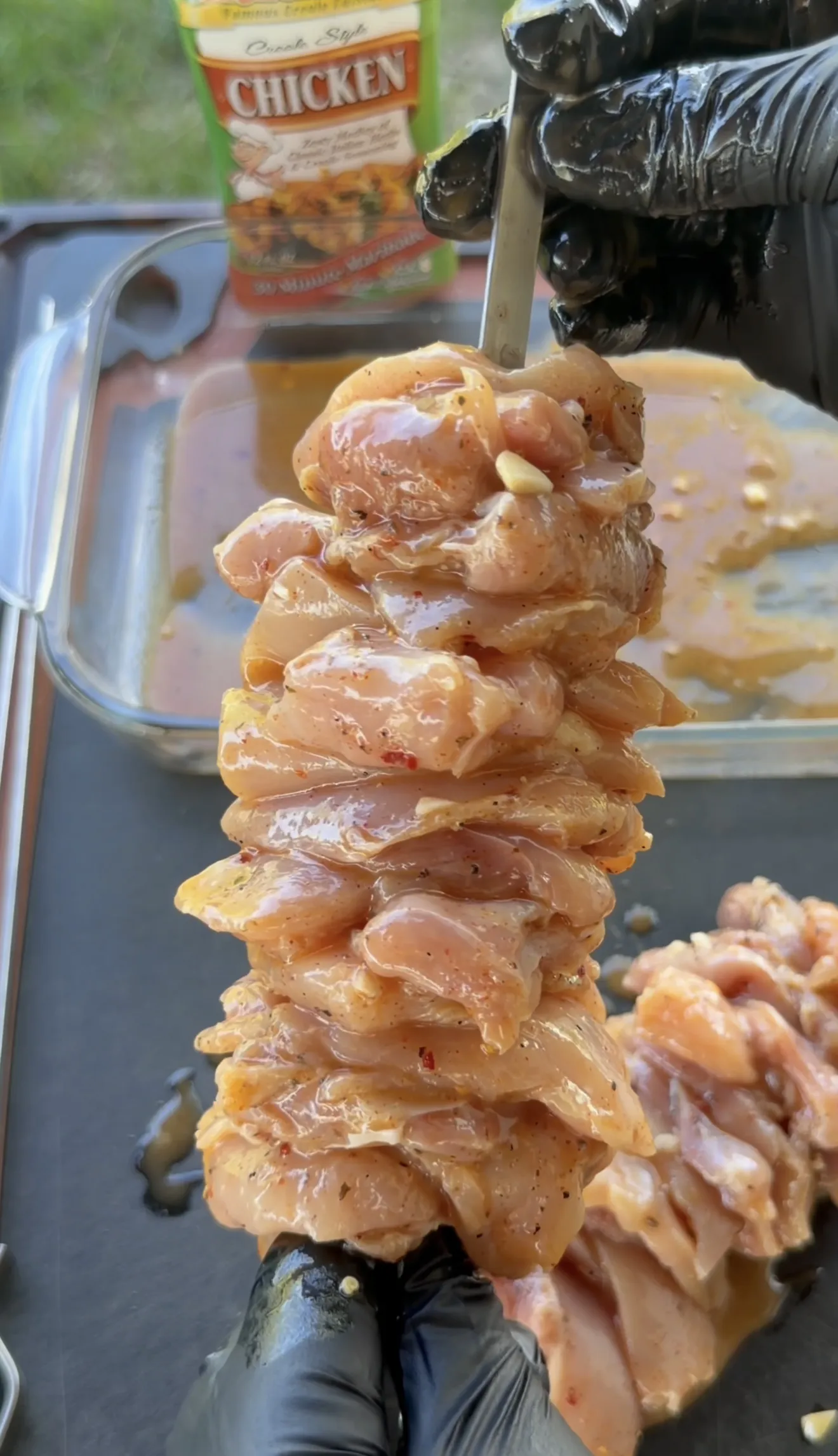
This marinade works on thighs, breasts, wings, drumsticks, tenders, whole birds, and skewers with no formula changes - only timing and finish temp adjustments. That’s the whole point of nailing the universal formula. You’re not memorizing seven marinades. You’re memorizing one and learning how each cut wants to be finished.
Chicken Thigh Marinade for Grilling
Boneless skinless thighs are my default, and they’re what I’m cooking today. Marinate 2 to 6 hours, grill at 450 to 500°F, and pull at 175°F internal. That’s higher than the 165°F breast target, and there’s a specific reason - dark meat renders fat and collagen at the higher temperature for a juicier, more tender bite. Pull a thigh at 165°F and you get a dry, chewy piece. Pull it at 175°F and you get that silky, rendered texture thighs are famous for.
Marinade for Grilled Chicken Breast
For a marinade for grilled chicken breast, keep the marinade time on the shorter end (2 to 3 hours) and pull breasts at 160°F, then rest to 165°F. Breasts have no fat reserve to carry them past the target, so the carryover rest does the final 5 degrees without drying them out. Pound thick breasts to even thickness before marinating so they cook uniformly.
Chicken Wing Marinade
For a chicken wing marinade application, you can go 4 to 8 hours in the marinade and cook them hotter and longer. Wings pull at 175 to 185°F internal because the connective tissue needs time to render. Pat them dry hard before grilling so the skin crisps instead of steams - this is the mistake most people make with marinated wings.
Whole Chicken
A whole chicken can marinate overnight in an airtight bag. Spatchcock it for faster even cooking, grill indirect at 375°F until the thigh hits 175°F, then rest. The marinade will caramelize into a deep amber crust across the whole bird.
How to Grill Chicken Skewers
Grill chicken skewers at 450 to 500°F surface temp, turning every 2 to 3 minutes for even char without drying out the interior. That’s the core rule. Everything else is detail - but the details are what separate charred-and-raw from the bite-and-juice-drips moment you’re after.
Chicken Thigh Kabobs - The Setup
Cut the thighs into uniform 1 to 1½ inch cubes. Uniform size is non-negotiable because mixed chunk sizes means some pieces hit 175°F while others are still at 150°F. Thread tightly but not touching - you want a sliver of space between cubes so the heat can reach the sides of each piece.
The Onion Anchor Trick
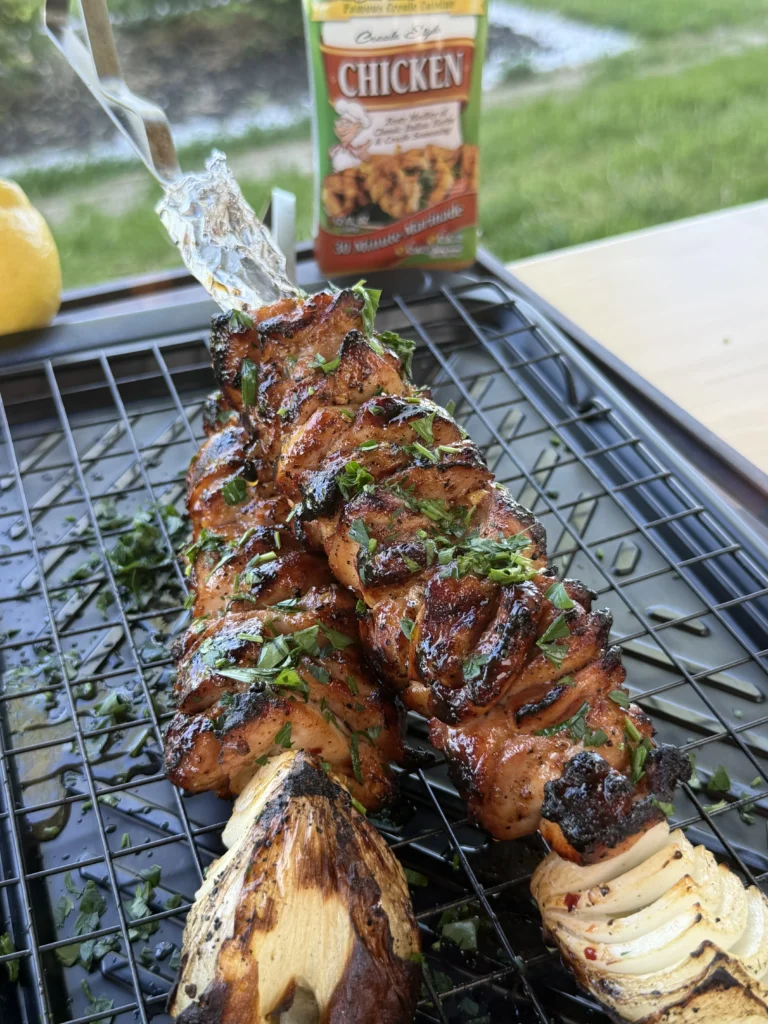
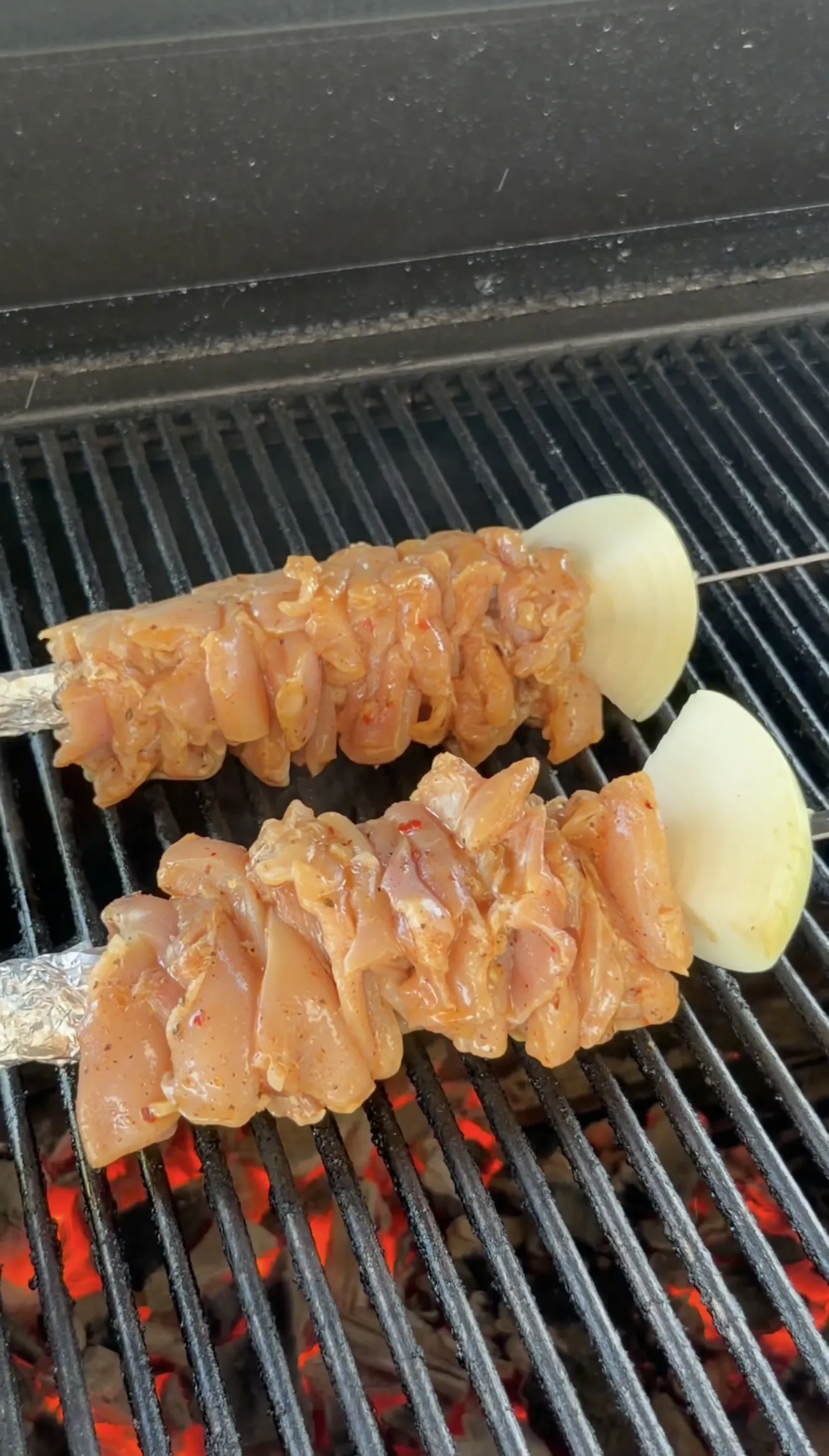
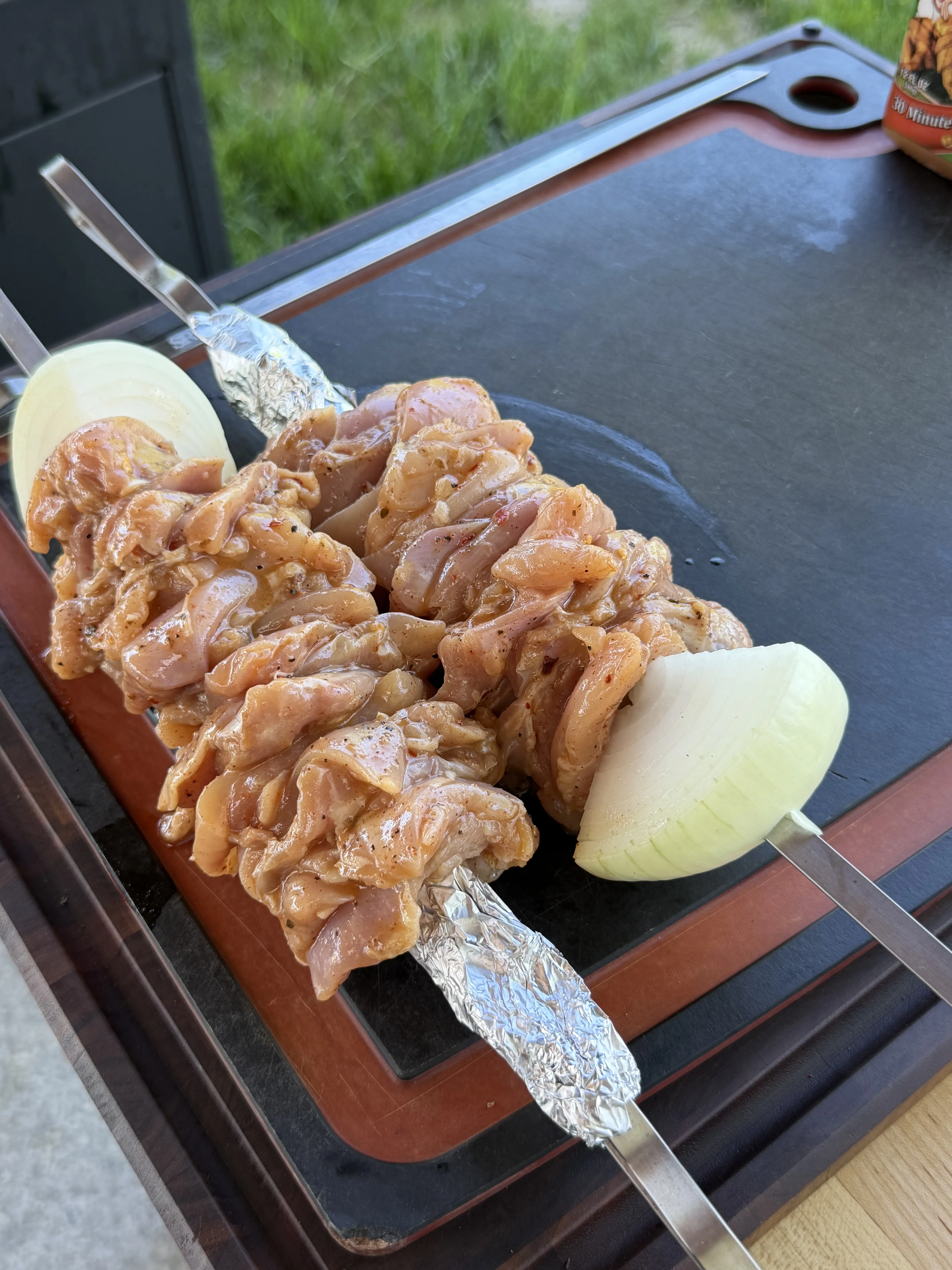
Here’s one that most recipes skip: cap each end of the skewer with a chunk of red or yellow onion. This does two things. It holds the chicken in place so the cubes don’t spin around the skewer when you flip them (which is how you end up with one side charred and three sides pale). It also gives you a built-in handle of cooked onion to toss into tacos or chop into the finished rice bowl. Once you try the onion anchor, you don’t go back.
Wooden Skewers vs Metal
Wooden skewers need at least 30 minutes of cold water soak before they hit the grill, or they’ll char through and dump your chicken. Flat metal skewers are the upgrade move - they don’t burn, and the flat profile prevents chicken cubes from spinning when you turn them. If you’re serious about skewer cooks, grab a set of flat metal skewers once and you’re done.
Chicken Skewers on Charcoal Grill or Gas Grill
Chicken skewers on charcoal grill setups need a two-zone fire. Bank coals to one side at about 450°F, and keep the other side cool for a safety zone. Sear direct over the coals for color, then slide to the cool side to finish to temp if the outside darkens too fast. Hasty Bake owners - which is what I’m running - already have this built in with the adjustable charcoal tray.
Chicken skewers on gas grill setups run the same play. Crank two burners to high, leave one off, and shuttle between zones as needed. Close the lid between turns to hold heat. The kabobs need 10 to 14 minutes total cook time regardless of fuel source.
How Long to Grill Chicken Skewers
Plan on 10 to 14 minutes total, turning every 2 to 3 minutes. A probe thermometer is the only way to know for sure - surface color lies, especially with a honey-based marinade that darkens fast. When the thickest cube hits 175°F, pull the skewers and let them rest for 5 minutes before plating. The rest lets the juices redistribute so they stay in the meat instead of running out onto the cutting board.
Tips for Juicy Grilled Chicken Every Time
The difference between dry grilled chicken and juicy grilled chicken skewers comes down to three decisions - temperature control, internal temp precision, and resisting the urge to over-marinate.
Use a Probe Thermometer
Guessing doneness by color or timer is how chicken gets overcooked. A digital instant-read probe reads in 2 seconds and costs less than one dinner out. Hit 175°F on thighs and 160°F on breasts, and you’ll never serve dry chicken again.
Don’t Pierce Before Marinating
The old trick of poking holes in chicken to “help marinade penetrate” actually drains natural juices while the chicken cooks. Skip it. Score thick cuts with shallow crosshatches if you want more surface area, but don’t puncture the meat. Pounding to even thickness is the move for breasts.
Vacuum Sealer Shortcut
If you’re short on time, seal the chicken and marinade in a vacuum bag and refrigerate. Removing the air physically presses the marinade into the meat, cutting the effective marinade time in half. A 3-hour vacuum-sealed marinade tastes roughly equivalent to a 6-hour open-bowl marinade. This is one of my favorite kitchen shortcuts.
Pat Off Before Grilling
Don’t rinse the marinade off, but do pat the chicken with a paper towel before it hits the grill. Excess surface marinade causes flare-ups from the honey and oil, which puts bitter soot flavor on your food. A quick pat removes the drippy excess while leaving the seasoning layer on the surface.
Smoky Paprika Chicken Marinade - The Flavor Signature
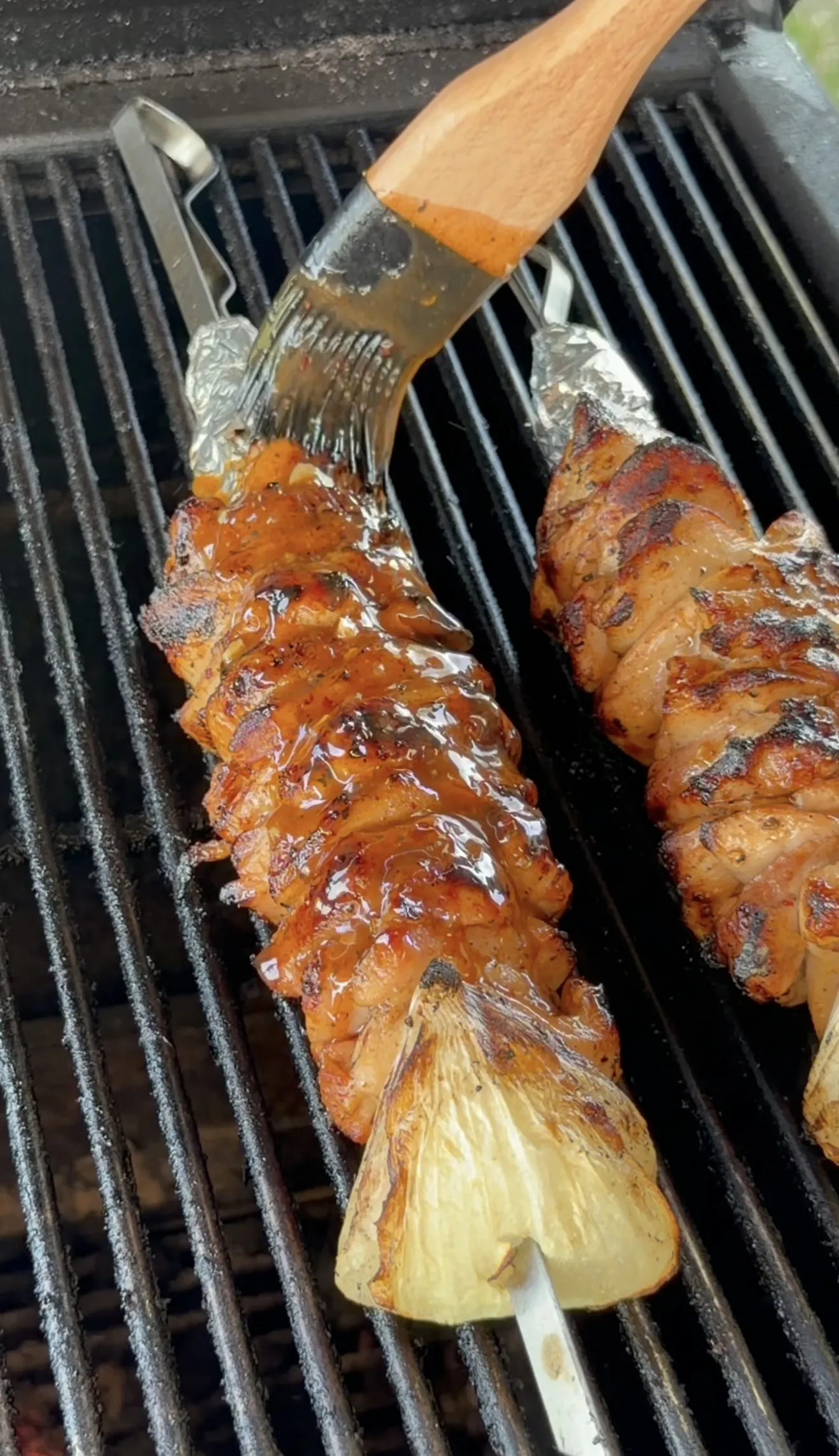
The smoked paprika in this recipe does more than add color. It’s the bridge between the honey-lemon-garlic base (which reads clean and bright) and the charred crust you get off live fire (which reads smoky and deep). Without it, this is just a honey lemon garlic chicken marinade - pleasant but forgettable. With it, the marinade tastes like it was built for the grill from the first bite.
Use genuine Spanish smoked paprika (pimentón), not regular paprika with the word “smoked” on the label. The flavor difference is enormous. A tablespoon per cup of marinade is the right ratio - enough to taste, not so much it overpowers the garlic and lemon.
If you’re craving more chicken skewer action, also check out a few more favorites: Honey Garlic Chicken Skewers, Hot Honey Lemon Pepper Chicken Skewers, Chili Lime Grilled Chicken Thighs, and Honey Chili Crisp Grilled Chicken Thighs.
Want to put this marinade to work on other cuts? Try these next: Pellet Smoked Chicken Wings, Smoked Garlic Lemon Pepper Chicken Wings, Grilled Spatchcock Chicken, and the full Grill Nation Top 10 Chicken Recipes roundup.
INGREDIENTS ROUNDUP
Best Chicken Marinade · What to Buy & Why
- Chicken For today’s skewer demo, I’m using 2½ pounds of boneless skinless chicken thighs cut into 1 to 1½ inch cubes. Thighs are the cut I reach for every time because they stay juicy, take a char beautifully, and forgive the occasional extra minute on the grill. If you’re using this on breasts, wings, drumsticks, or a whole bird, the marinade formula stays identical.
- Tony Chachere’s Creole-Style Chicken Marinade This is the flavor foundation and it’s non-negotiable for the recipe as written. Pick up the 12 oz bottle of Tony Chachere’s Creole-Style Chicken Marinade - it already contains the seasoning, salt, and acid balance that would otherwise take a dozen pantry ingredients to replicate. One cup is all you need.
- Scratch Add-Ins Pick up 3 tablespoons of good olive oil, 2 tablespoons of honey (raw is best for caramelization), one fresh lemon (you’ll need the juice of the whole thing, about 3 tablespoons), and 4 cloves of fresh garlic. Bottled lemon juice works in a pinch but fresh is meaningfully better for this recipe.
- Seasoning Boost Grab a jar of smoked paprika (Spanish pimentón if you can find it), fresh-cracked black pepper, and red pepper flakes for a light heat kick. Fresh chopped parsley at the end is optional but adds a nice bright color pop.
- Equipment-Specific Ingredients If you’re running a charcoal grill, lump charcoal will give you the cleanest flavor for this kind of cook. Wooden skewers need a 30-minute cold water soak before they hit the grill. Flat metal skewers skip the soak entirely and prevent the chicken from spinning when you flip them.
THE BEST CHICKEN MARINADE FOR GRILLING
A universal marinade built on Tony Chachere’s Creole-Style Chicken Marinade with honey, lemon, garlic, and smoked paprika - demonstrated here on juicy boneless chicken thigh skewers grilled to 175°F.
FireCitrusSmoke
10 MINPrep
2-6 HRSMarinate
12 MINGrill
6Serves
READY FOR EVERY CUT OF CHICKEN
Ingredients
For the Marinade
- 1 cup Tony Chachere’s Creole-Style Chicken Marinade
- 3 tablespoons olive oil
- 2 tablespoons honey
- Juice of 1 lemon
- 4 cloves garlic, minced
- 1 tablespoon smoked paprika
- 1 teaspoon black pepper
- ½ teaspoon red pepper flakes
- 1 tablespoon chopped parsley (optional)
For the Chicken Thigh Skewers
- 2½ pounds boneless skinless chicken thighs, cut into 1 to 1½-inch cubes
- Wooden or flat metal skewers
- 1 large onion (cut into chunks for anchoring the skewers)
Grill Master Tip
Anchor each end of the skewer with a chunk of onion. The chicken cubes stop spinning when you flip the skewers, you get an even char on all four sides, and the cooked onion at the ends is gold in tacos or rice bowls. Once you try this, you never skip it.
Step-by-Step Instructions
Step 1: Mix the Marinade
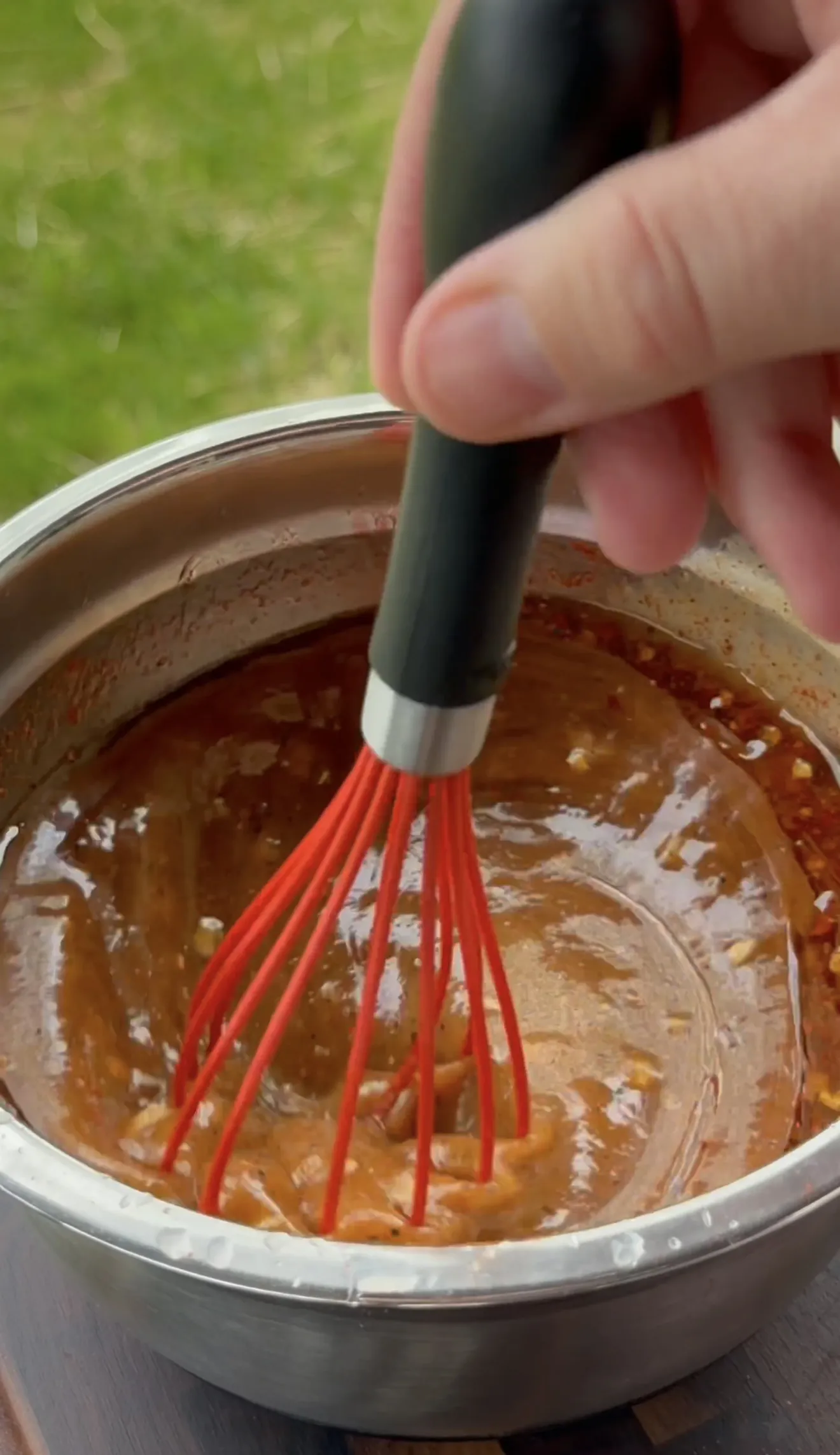
Add 1 cup of Tony Chachere’s Creole-Style Chicken Marinade to a medium mixing bowl. Pour in 3 tablespoons olive oil and 2 tablespoons honey, then squeeze in the juice of one fresh lemon. Add 4 cloves minced garlic, 1 tablespoon smoked paprika, 1 teaspoon black pepper, and ½ teaspoon red pepper flakes. Whisk until the honey fully dissolves and the marinade looks uniform in color.
At this point, reserve about 2 tablespoons of clean marinade in a separate container for brushing at the end of the grill. Never brush with marinade that has touched raw chicken - that’s a food safety rule with no exceptions.
Step 2: Prep the Chicken
Trim any excess fat or silver skin from 2½ pounds of boneless skinless chicken thighs. Cut the thighs into uniform 1 to 1½ inch cubes - this is the most important prep step because uneven chunks mean uneven cooking. Larger cubes hit 150°F while smaller cubes are already at 180°F and drying out.
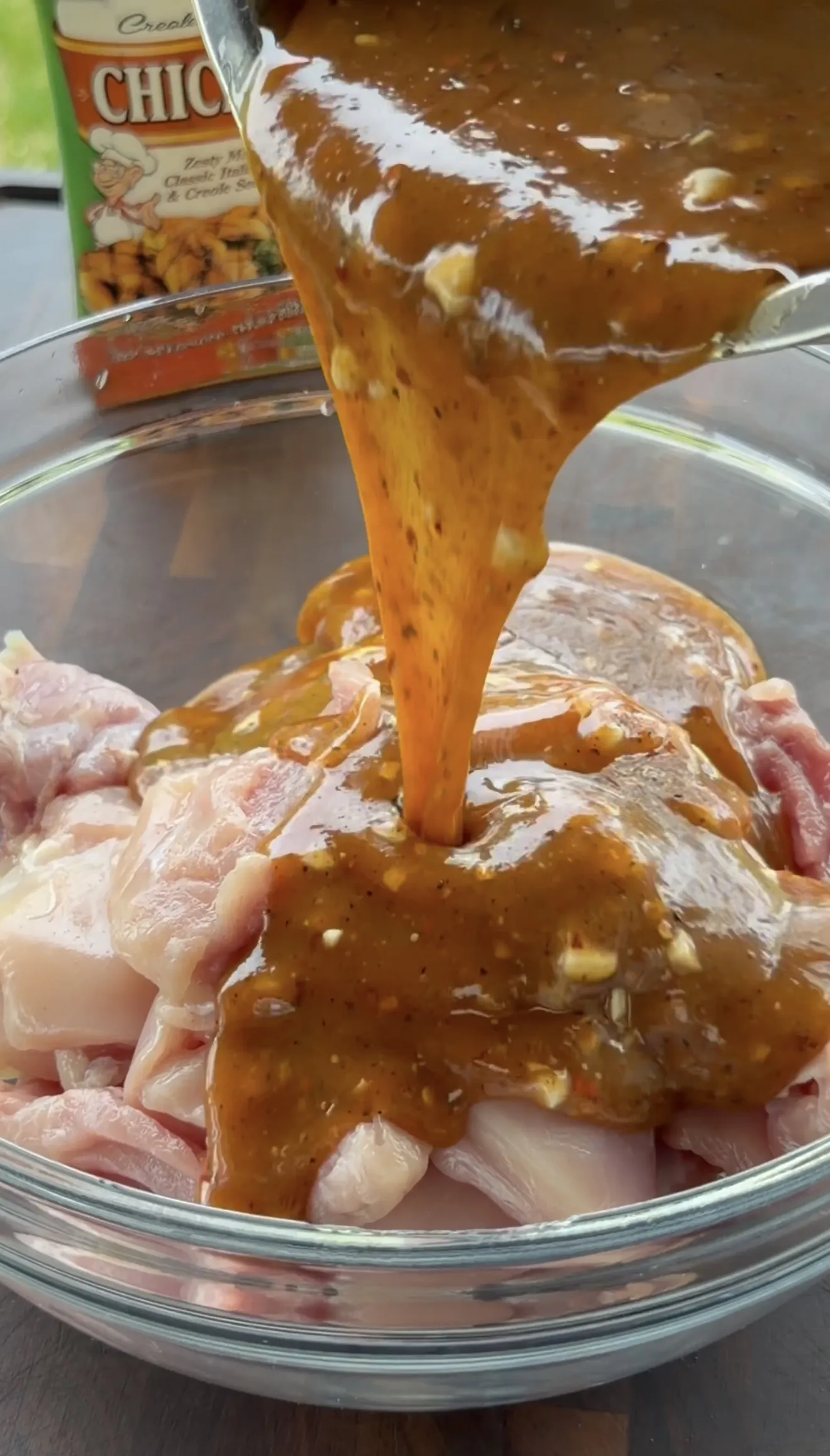
Transfer the cubes to a large glass bowl or gallon zip-top bag. Pour the marinade (minus your reserved portion) over the chicken and toss until every piece is coated. Seal the bag or cover the bowl with plastic wrap pressed directly against the surface of the marinade to eliminate air pockets.
Step 3: Marinate in the Refrigerator
Refrigerate for 2 to 6 hours. For a faster version, seal the chicken and marinade in a vacuum bag, remove the air, and refrigerate - vacuum-sealing cuts the effective marinade time in half because the air removal physically presses the liquid into the meat.
Never marinate at room temperature. Even 30 minutes on the counter puts you into bacterial growth territory. If you need to speed this up, the vacuum sealer is the answer - not the countertop.
Step 4: Soak Skewers and Preheat Grill
If you’re using wooden skewers, drop them in cold water for at least 30 minutes. Metal skewers skip this step entirely. About 20 minutes before you plan to cook, fire the grill to 450 to 500°F surface temp and close the lid to let the grates heat evenly.
For charcoal setups, bank the coals to one side to create a two-zone fire. For gas, crank two burners to high and leave one burner off. Clean the preheated grates with a grill brush, then wipe with a folded paper towel dipped in high-smoke-point oil.
Step 5: Thread the Skewers
Pull the chicken from the fridge and let it sit on the counter while you thread - about 10 minutes of tempering helps the interior come up to grill temp faster. Pat each cube dry with a paper towel as you thread to remove excess marinade that would otherwise cause flare-ups.
Cap one end of the skewer with a chunk of onion, then thread 4 to 6 chicken cubes with a slight gap between each, and finish with another onion chunk on the opposite end. The onion caps keep the chicken from spinning when you flip the skewers and give you that even four-sided char.
Step 6: Grill the Skewers
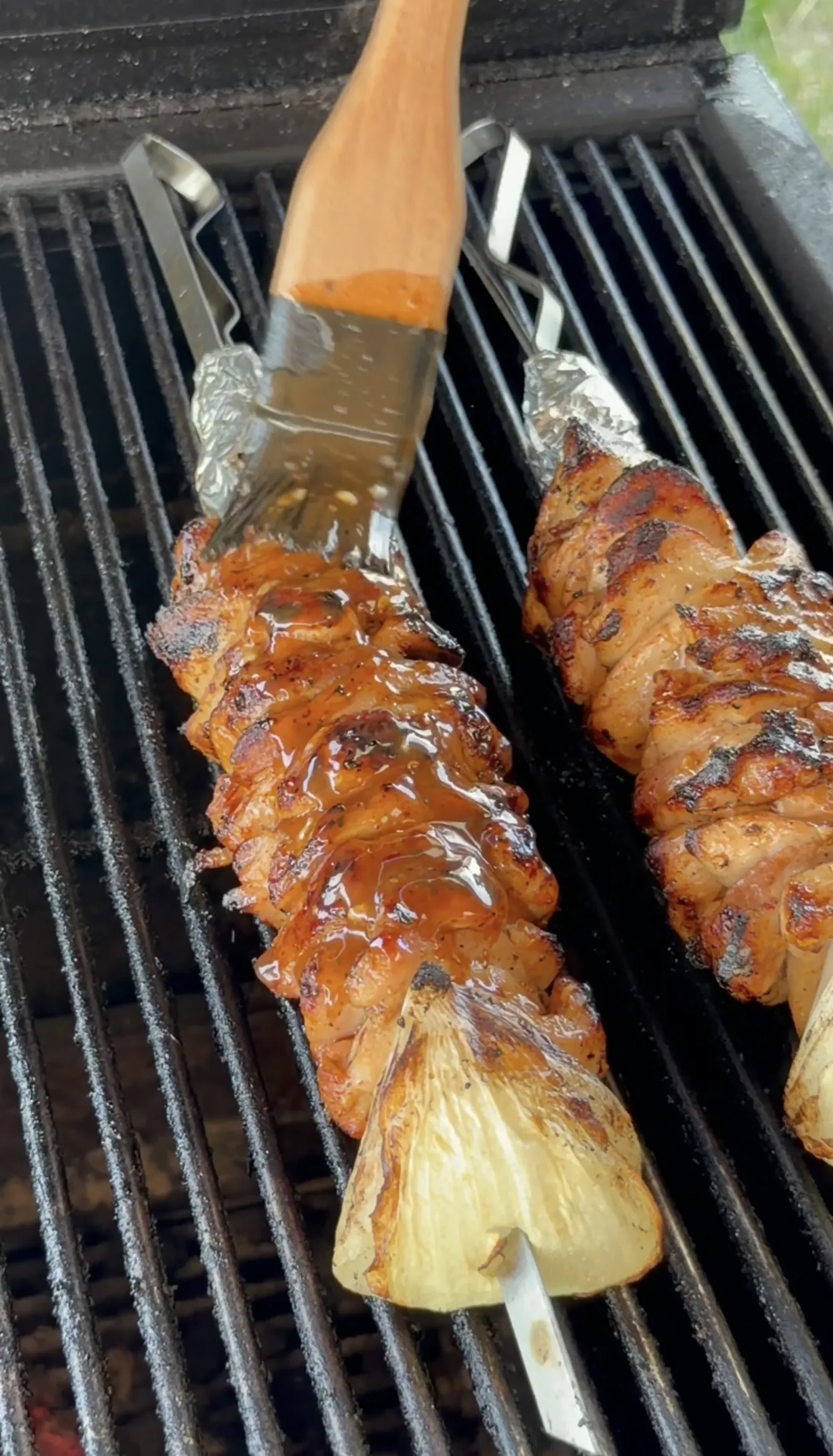
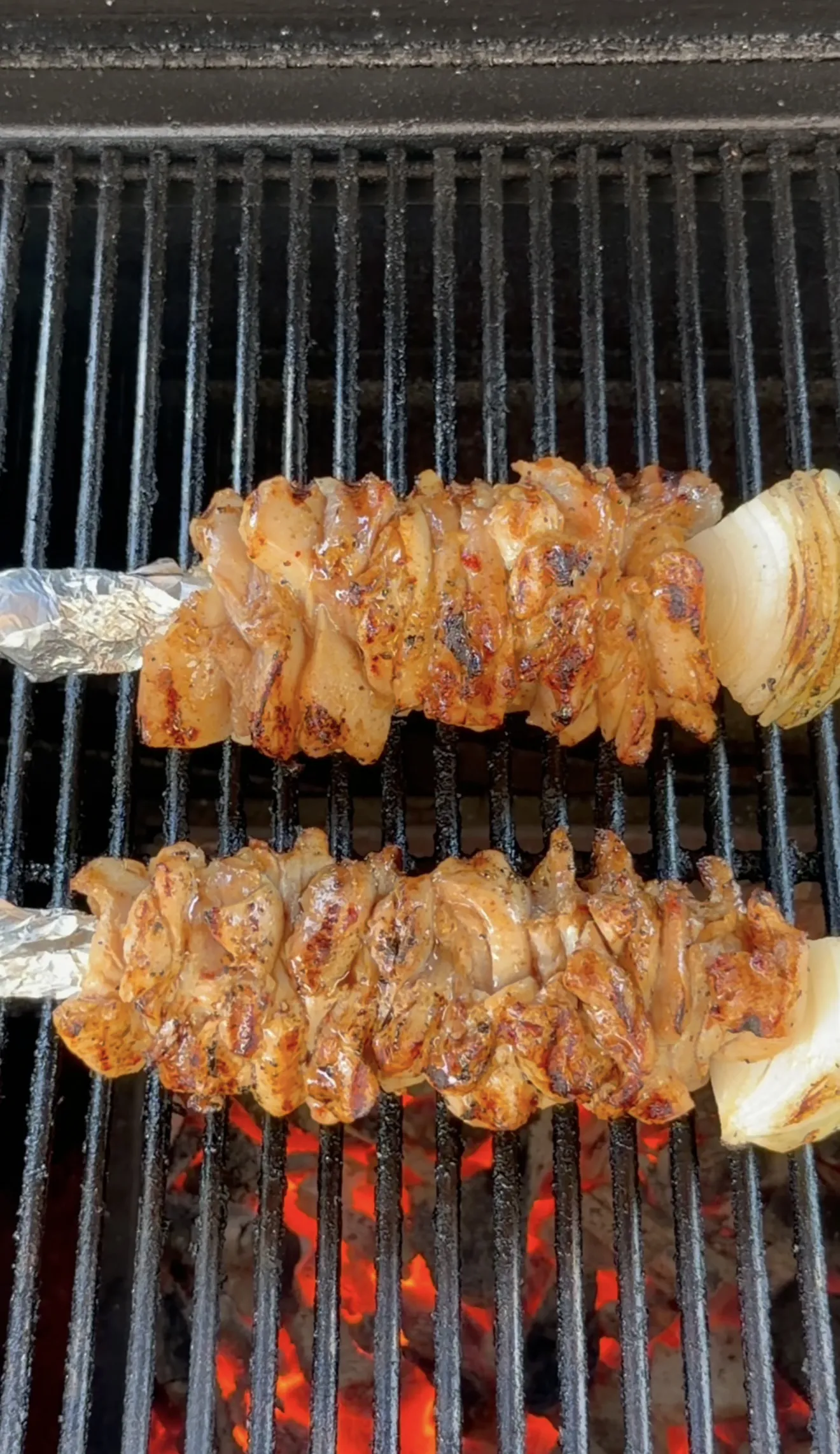
Lay the skewers directly over the heat zone at 450 to 500°F. Close the lid and cook for 2 to 3 minutes, then flip. Continue turning every 2 to 3 minutes until the chicken is golden and lightly charred on all four sides - total cook time will run 10 to 14 minutes depending on cube size.
During the final 2 minutes, brush the skewers with the reserved clean marinade you set aside earlier. This adds a glossy finishing layer without compromising food safety. Watch for flare-ups from the honey and slide skewers to the cool zone if the flames get aggressive.
Step 7: Check Temp, Rest, and Serve
Probe the thickest chicken cube with an instant-read thermometer. Pull the skewers when the internal temp hits 175°F - this is the sweet spot for thighs because dark meat renders fat and collagen at that temperature for a juicier, more tender bite. If you’re cooking with breasts instead, pull at 160°F and rest to 165°F.
Transfer the skewers to a cooling rack or platter and let them rest for 5 minutes before serving. Garnish with chopped fresh parsley if desired, and plate over jasmine rice, with grilled vegetables, or alongside corn on the cob.
The Best Chicken Marinade for Grilling (+ Grilled Chicken Thigh Skewers)
Equipment
- Charcoal or Gas Grill
- Flat Metal Skewers or Wooden Skewers
- Instant-Read Thermometer
- Mixing Bowl
- Whisk
Ingredients
For the Marinade
- 1 cup Tony Chachere’s Creole-Style Chicken Marinade
- 3 tablespoons olive oil
- 2 tablespoons honey raw preferred
- 1 lemon, juiced about 3 tablespoons
- 4 cloves garlic, minced
- 1 tablespoon smoked paprika Spanish pimentón preferred
- 1 teaspoon black pepper fresh cracked
- 1/2 teaspoon red pepper flakes
- 1 tablespoon chopped parsley optional, for garnish
For the Chicken Thigh Skewers
- 2.5 pounds boneless skinless chicken thighs cut into 1 to 1½-inch cubes
- 1 large onion cut into chunks for anchoring skewers
- wooden or flat metal skewers soak wooden skewers 30 minutes in cold water
Instructions
- Whisk the Tony Chachere’s Chicken Marinade, olive oil, honey, lemon juice, minced garlic, smoked paprika, black pepper, and red pepper flakes in a bowl until combined. Reserve 2 tablespoons of clean marinade separately for finishing.
- Cut the chicken thighs into uniform 1 to 1½ inch cubes. Add to a large bowl or zip-top bag, pour the marinade over the chicken, and toss to coat.
- Refrigerate for 2 to 6 hours. For faster marinade penetration, seal in a vacuum bag to cut effective marinade time in half.
- Soak wooden skewers in cold water for at least 30 minutes. Preheat the grill to 450 to 500°F.
- Thread marinated chicken onto skewers, capping each end with a chunk of onion to prevent spinning. Leave a small gap between cubes. Pat each cube dry as you thread.
- Grill skewers for 10 to 14 minutes total, turning every 2 to 3 minutes. Brush with the reserved clean marinade during the final 2 minutes.
- Pull the skewers when the internal temperature of the thickest cube hits 175°F. Rest 5 minutes before serving.
Video
Notes
Nutrition
Grill Nation – Best Chicken Marinade FAQ
Frequently Asked Questions
Best Chicken Marinade & Grilled Chicken Thigh Skewers
10 Answers
Marinade Questions
01
How long should you marinate chicken for grilling?
2 to 6 hours is the grilling sweet spot for citrus-based marinades. Longer risks texture breakdown on boneless cuts because the acid and salt keep denaturing the surface proteins. Bone-in pieces with skin can tolerate 4 to 8 hours, and whole birds can go overnight.
02
Can you marinate chicken too long?
Yes - acidic marinades past 24 hours break down proteins and turn the chicken mushy or rubbery. The acid in lemon juice, vinegar, and wine doesn’t stop working after the first few hours. Past the 24-hour line, texture is compromised regardless of cut.
03
Can you marinate chicken overnight?
Yes, if the marinade isn’t heavily acidic and the chicken is bone-in or skin-on. Overnight works best for bone-in thighs, drumsticks, and whole birds because the skin and bone slow acid penetration. Boneless skinless cuts will over-soften past 6 hours in a citrus marinade.
04
What are the five elements of a good chicken marinade?
Fat (oil), acid (lemon or vinegar), salt, aromatics (garlic and herbs), and a sweetener (honey or sugar). Pull any one of those five and the marinade falls flat. This recipe hits all five through the combination of Tony’s bottle and the scratch add-ins.
Safety & Storage
05
Do you rinse marinade off chicken before grilling?
No - just pat off excess with a paper towel to prevent flare-ups while retaining the seasoning layer. Rinsing washes away the flavor you waited hours to build. The quick pat-down handles flare-up prevention without sacrificing taste.
06
Can you reuse chicken marinade?
Only if boiled for at least 1 minute to kill bacteria - or reserve a portion before it contacts raw chicken. The cleanest play is to set aside 2 tablespoons for brushing at the end before the rest ever touches raw meat. That’s what I do every cook.
07
Can you freeze chicken in marinade?
Yes - freeze raw chicken in marinade for up to 3 months in a vacuum bag or zip-top. It continues marinating as it thaws in the fridge, which makes this a great meal-prep move. Pull from the freezer the night before and it’s grill-ready by dinner.
Skewer Questions
08
What temperature do you grill chicken skewers at?
Grill chicken skewers at 450 to 500°F surface temp, turning every 2 to 3 minutes for even char without drying out the interior. Lower heat leaves you with rubbery, pale chicken, and higher heat burns the honey glaze before the inside hits temp. The 450 to 500°F range is the sweet spot for both color and juiciness.
09
What internal temperature should chicken skewers be?
Pull thigh skewers at 175°F internal - higher than the 165°F breast target, because dark meat renders fat and collagen at the higher temperature for a juicier bite. For breast meat skewers, pull at 160°F and rest to 165°F. An instant-read thermometer is the only reliable way to nail this.
10
How do you keep chicken from spinning on skewers?
Anchor the chicken with a chunk of onion on each end of the skewer, use flat metal skewers instead of round wooden ones, or double-skewer with two parallel sticks. The onion-cap trick is my go-to because it also gives you a grilled onion bonus for tacos or rice bowls. Flat metal skewers solve the problem permanently.