Grilled Garlic Parmesan Chicken Thighs

Grilled garlic parmesan chicken thighs deliver everything most garlic parmesan recipes miss: real char, crispy rendered skin, and smoky depth you cannot get from an oven. This version sears bone-in, skin-on thighs skin-side down over direct heat to crisp the fat, then finishes them on the indirect side of a 375 to 400°F two-zone grill until the internal temperature hits 175 to 185°F. The whole cook runs about 25 to 35 minutes and feeds four people comfortably. After the chicken comes off, a quick garlic butter brush and a heavy parmesan topping lock in the flavor while the meat rests for five minutes. Charcoal, gas, or pellet grills with a direct-flame zone all handle this method without any equipment changes.

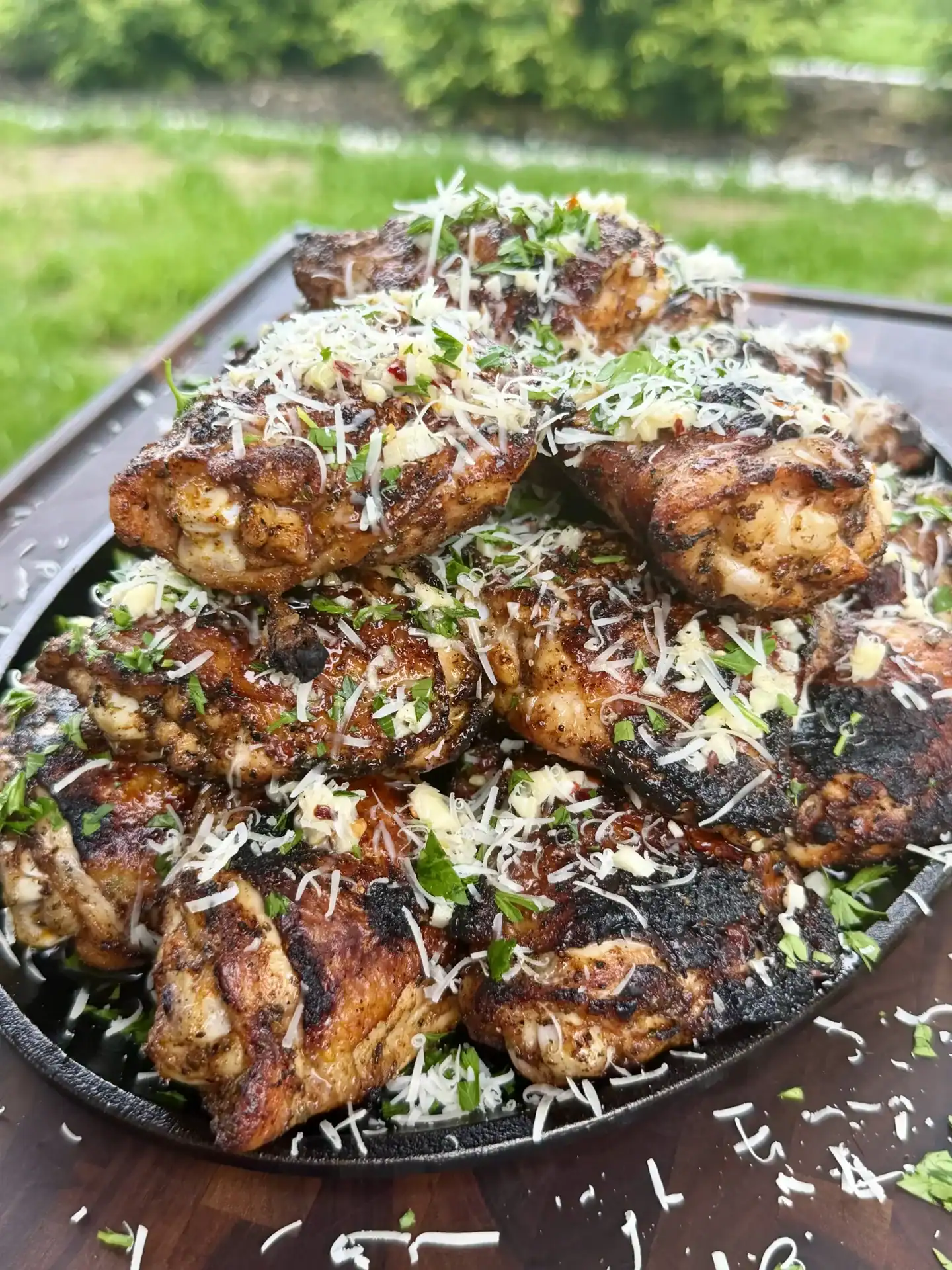
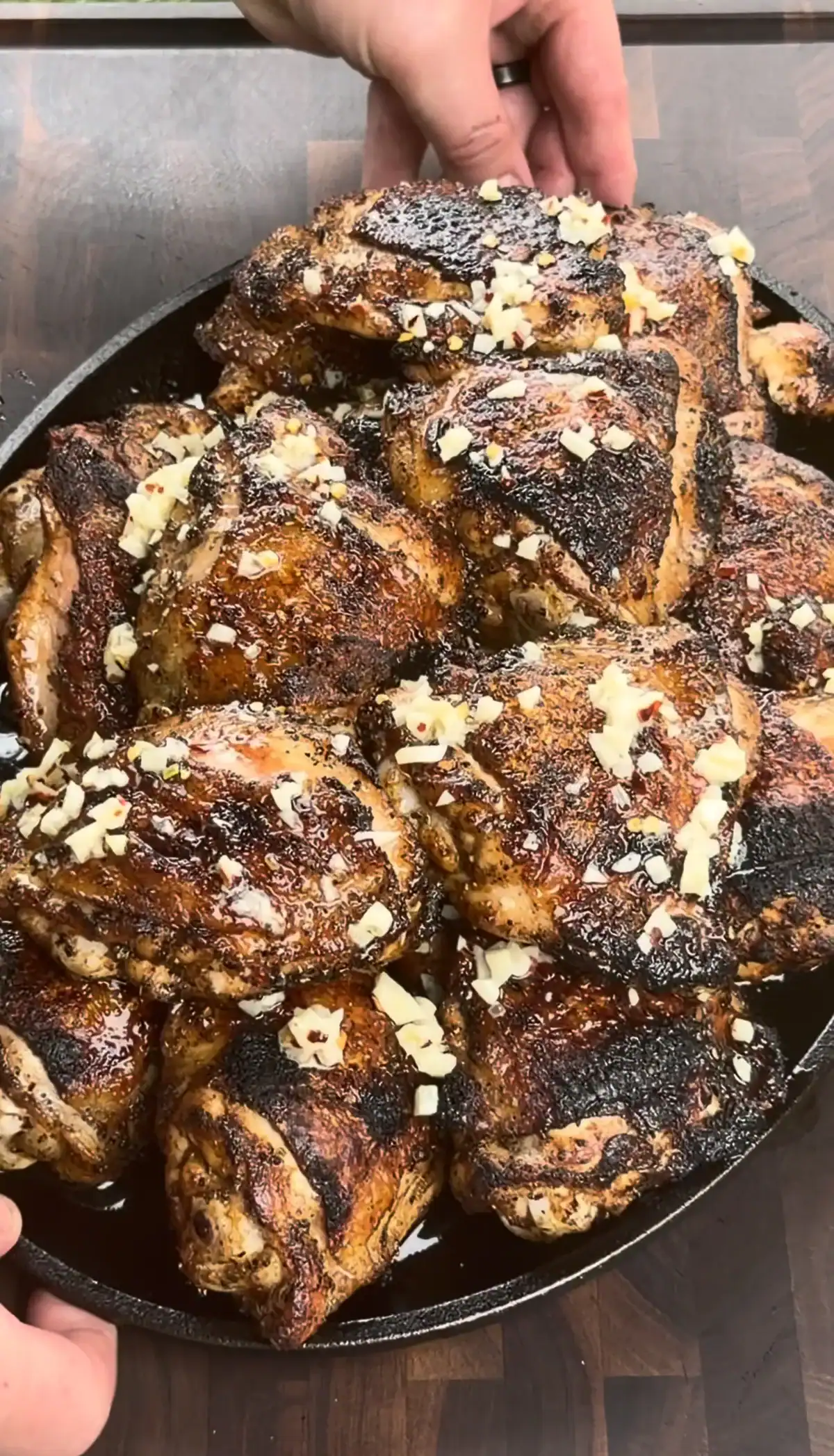
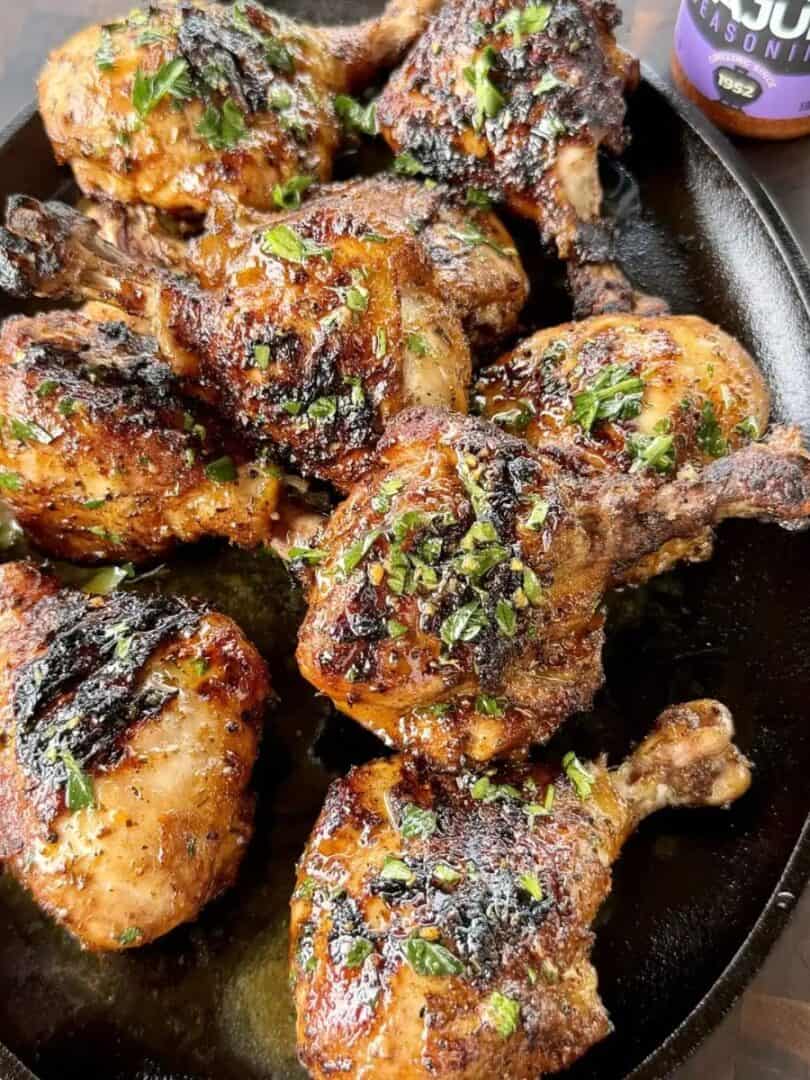
Golden-brown grilled garlic parmesan chicken thighs in cast iron skillet topped with melted cheese and fresh herbs
Jump to Recipe

Table of Contents

Why Grilled Garlic Parmesan Chicken Thighs Beat the Oven Version

Most garlic parmesan chicken thigh recipes you find online finish in the oven, on a sheet pan, or in an air fryer. Those versions work, but they all share the same flaw: no smoke, no char, and skin that softens instead of crisps. Grilled garlic parmesan chicken thighs solve every one of those problems. The combination of direct-flame searing and indirect finishing is what separates a good chicken thigh from a great one.

Two factors do the heavy lifting here: rendered fat and char on the skin. When skin sits over direct heat, the fat melts out and the surface dehydrates, which is exactly what makes it shatter when you bite in. Meanwhile, the meat finishes cooking gently over indirect heat, so it stays juicy instead of drying out. As a result, the split-temperature approach is the reason a backyard grill outperforms an indoor cook for this specific recipe.

What Makes Grilled Skin Better Than Baked

Baked skin steams in its own moisture. Grilled skin sits in open air with fat dripping away, so it crisps and develops Maillard browning that an oven can never match. Furthermore, the flame contact creates light char on the high points of the skin, which adds a smoky bitterness that balances the richness of the garlic butter and parmesan finish.

You also get faster fat rendering on the grill. Direct heat hits 600°F or hotter at flame contact, while a 375°F oven maxes out the surface temperature at the air temperature itself. Therefore, grilled skin renders in 5 to 8 minutes, while baked skin can take 25 minutes and still come out flabby in spots.

Chicken seasoning blend with paprika, garlic powder, salt, and pepper in a glass bowl

Why Bone-In Beats Boneless for This Recipe

Bone-in chicken thighs hold moisture better and forgive small temperature mistakes. The bone insulates the deepest meat from overcooking, so you can push the internal temperature into the 180s without drying out the bird. Boneless thighs work too, but they cook in roughly half the time and lose the buffer that makes this method nearly foolproof. For garlic parmesan grilled chicken specifically, bone-in is the right call because you want the longer cook time to fully render the skin.

Should You Grill Chicken Thighs Skin-Side Down or Skin-Side Up First?

Grill chicken thighs skin-side down first to render the fat and crisp the skin, then flip skin-side up over indirect heat to finish cooking to 175 to 185°F. This is the single most important technique decision in the whole recipe, and it is the reason this method beats every chicken thigh recipe that says to flip “halfway through.”

Starting skin-side down does three things at once. First, the fat under the skin renders directly into the surface, which is what creates that crackling texture. Second, the skin builds char and color before the meat is anywhere near done. Third, the protein contracts and tightens against the heat, which seals the moisture inside before the bird sees indirect heat. If you flip too early, the skin steams from the inside and you lose all of that.

How Long to Sear Skin-Side Down

Plan on 5 to 8 minutes skin-side down. The exact time depends on how much your grill flares and how hot your direct zone runs. Look for a deep golden-brown skin with light blackened high points. If the flames jump, slide the thighs over a few inches and keep cooking. Color is good. Burnt is bad.

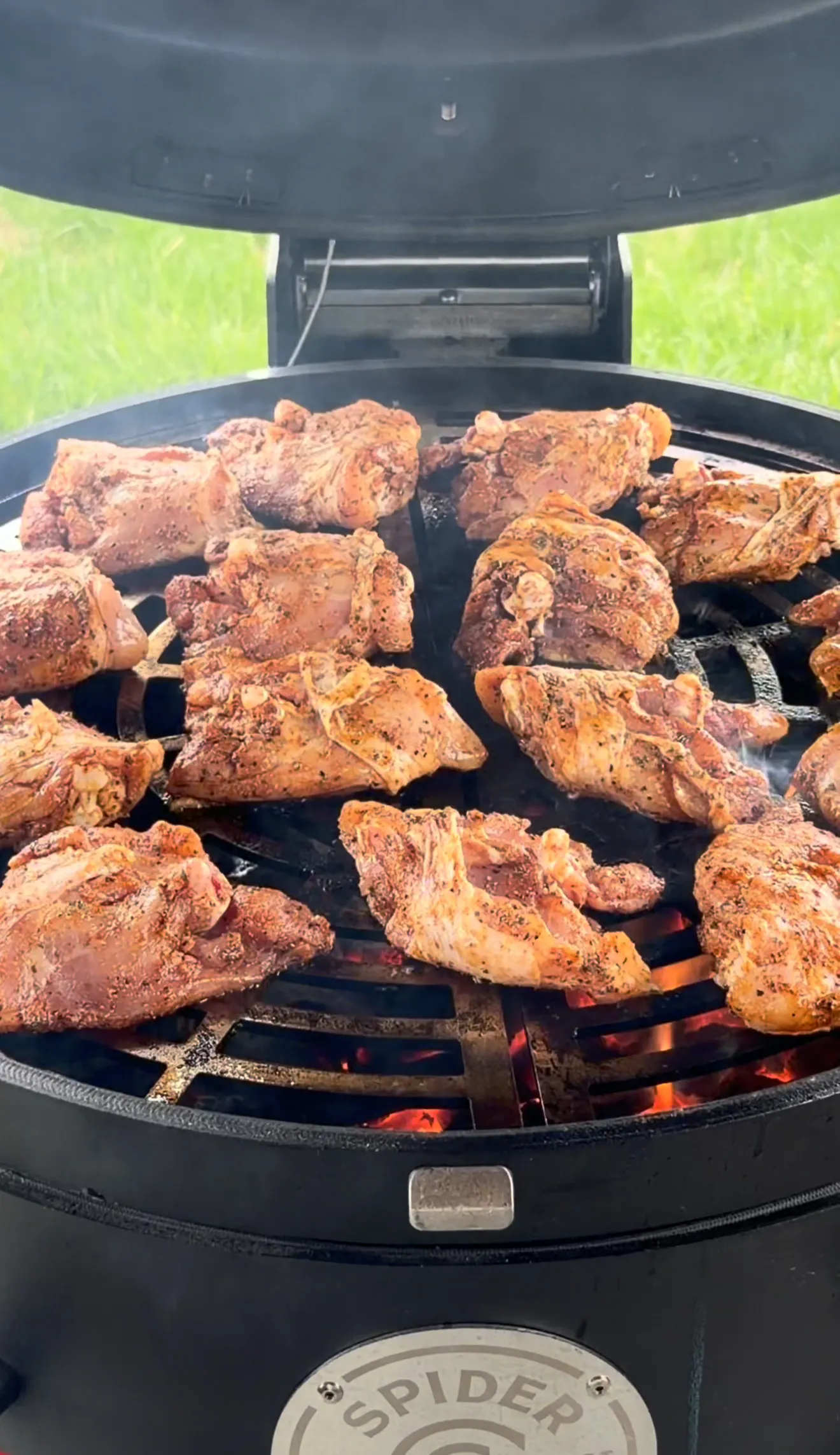
Bone-in skin-on chicken thighs searing skin-side down over direct grill flames

Why You Only Flip Once

Flipping back and forth wrecks the skin. Each flip drops the surface temperature, lets the rendered fat run, and gives the skin time to soften. One flip, then finish on the indirect side. That is the whole approach. Likewise, this is the same single-flip principle behind a great compound-butter steak, where minimal interference produces maximum surface character. If you have run the same single-flip move on a bone-in cut before, you already know the rhythm.

What Internal Temperature Should Grilled Chicken Thighs Reach?

165°F is the USDA-safe minimum, but bone-in chicken thighs eat best when pulled at 175 to 185°F because the connective tissue and fat have not fully rendered at the lower temperature. Pulling thighs at 165°F leaves money on the table. That extra 10 to 20°F is where the texture breaks from “fine” into “great.”

The reason has to do with how dark meat is built. Chicken thighs contain more collagen and intramuscular fat than breasts, and both need to break down for the meat to eat tender. Collagen starts converting to gelatin around 160°F, but the conversion accelerates above 170°F. As a result, a thigh pulled at 165°F can feel slightly chewy and stringy, while a thigh pulled at 180°F shreds cleanly off the bone. The internal temp for grilled chicken thighs is one of the few places where the USDA minimum and the optimal eating temperature genuinely diverge.

Crispy grilled garlic parmesan chicken thighs resting in a cast iron skillet

Probe Placement Matters

Stick the probe into the thickest part of the thigh, parallel to the bone, without touching the bone itself. The bone reads cooler than the surrounding meat and will give you a false low number. Pull the bird out of the probe and into a different spot if your reading jumps around. Reliable instant-read probes settle within two seconds. If yours does not, the placement is wrong.

What 175 to 185°F Actually Looks Like

At 175°F the juices run clear and the meat pulls cleanly from the bone with light resistance. By 185°F the connective tissue has fully gelatinized and the meat slides off. Both are good. Anywhere in that range delivers a tender bite. Below 170°F the meat eats firmer and the fat has not fully rendered. That is the gap most home cooks fall into when they trust the 165°F number on the package.

How Long Does It Take to Grill Bone-In Chicken Thighs?

Bone-in chicken thighs take roughly 25 to 35 minutes on a 375 to 400°F two-zone grill. The breakdown is 5 to 8 minutes searing skin-side down over direct heat, then 20 to 30 minutes finishing skin-side up over indirect heat. Total time depends on thigh size and grill behavior, not a stopwatch.

Smaller thighs (around 5 ounces each) finish closer to 25 minutes. Larger thighs (8 ounces or more) push toward 35 minutes. Likewise, charcoal grills tend to run hotter and finish faster, while pellet grills dialed in at 375°F finish on the longer end. A reliable instant-read probe tells you when they are done. The clock just gives you a window to start checking.

Bone-in chicken thighs grilling on a Weber kettle with two-zone setup

Boneless Thighs Cook Faster

If you are working with boneless skin-on thighs, cut the total time roughly in half. Plan on 4 to 5 minutes skin-side down, then 8 to 12 minutes skin-side up to hit the same 175 to 185°F finish. The technique is identical. Only the timing changes.

Resting Time Counts

After the thighs come off, brush them with garlic butter, top with parmesan, and let them rest 5 minutes before serving. The rest matters because the juices need to redistribute, and the parmesan needs a minute to soften and grip the skin. Skipping the rest is how you end up with juices on the cutting board instead of in the chicken.

Setting Up a Two-Zone Grill for Chicken Thighs

A two-zone grill has one direct-heat side and one indirect-heat side, with the overall chamber temperature running 375 to 400°F. This setup is the foundation of every chicken thigh recipe worth cooking on a grill. Charcoal grills, gas grills, and pellet grills with a direct-flame zone all build a two-zone setup the same way functionally, even if the mechanics look different.

On a charcoal grill, pile lit coals on one half of the grate and leave the other half empty. On a gas grill, light the burners on one side and leave the others off. Pellet grills with a sliding sear plate or a dedicated direct-flame zone can run two-zone if you set the grate accordingly. In every case, the goal is the same: a hot side for searing the skin and a cooler side for finishing the meat without burning.

Target Grate Temperatures

Aim for around 500 to 550°F at the grate over the direct side and 350 to 375°F over the indirect side. The chamber temperature averages out to 375 to 400°F, which is the number you will see on most grill thermometers. If your direct side runs hotter than 600°F, the skin scorches before the fat fully renders. Conversely, if it runs under 450°F, the skin will not develop the char that makes this recipe.

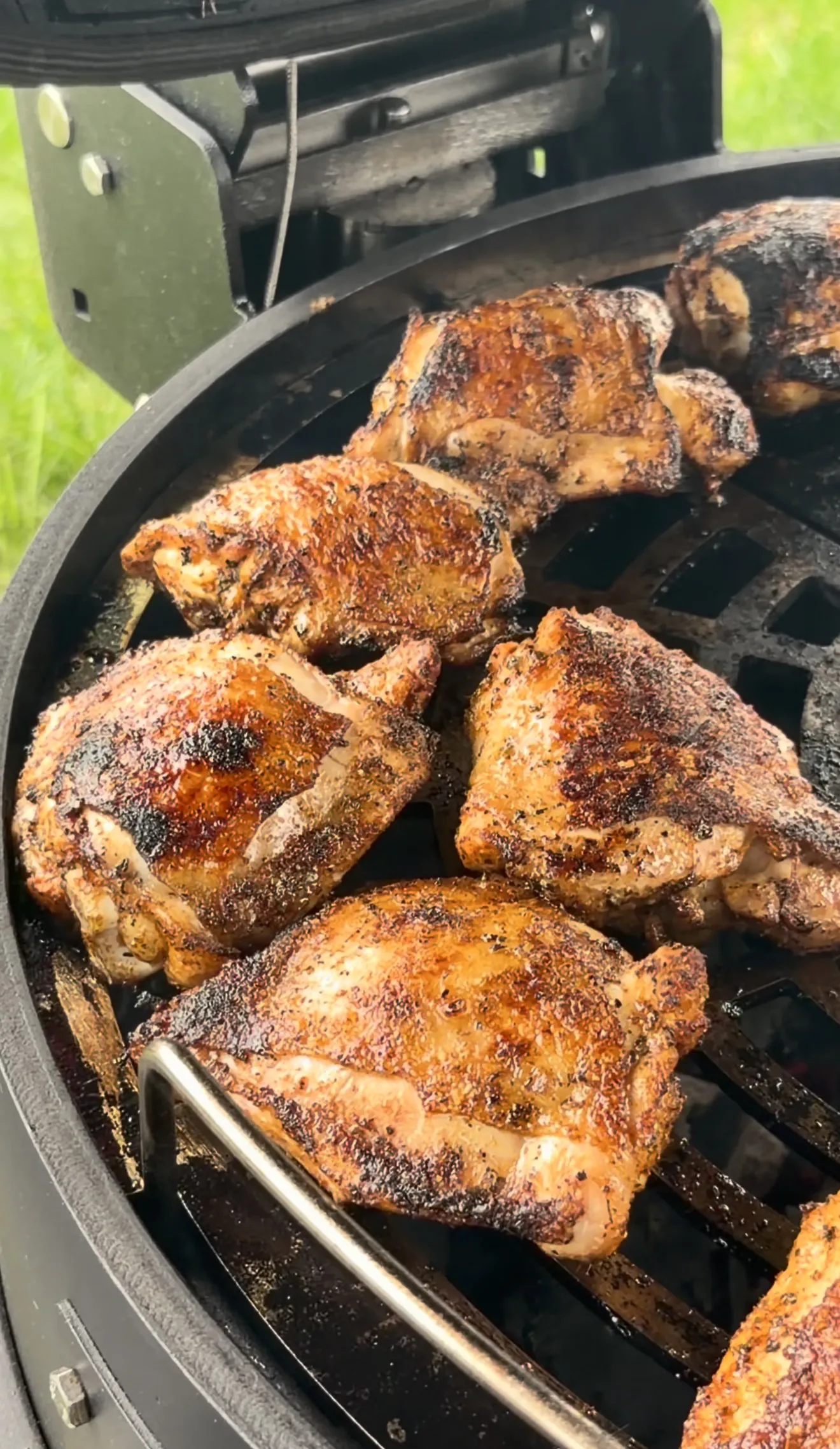
Garlic parmesan grilled chicken thighs finishing on the indirect side of a two-zone grill

Charcoal vs Gas vs Pellet for This Recipe

Charcoal delivers the strongest flavor and the easiest two-zone setup. Gas is the most consistent and the fastest to dial in. Pellet grills with a direct-flame zone, like the Pit Boss Lockhart or a Hasty Bake on its grilling configuration, give you smoke flavor plus direct char. All three work for charcoal grilled chicken thighs garlic parmesan or pellet grill garlic parmesan chicken thighs alike. Pick the one in your backyard and run it.

How to Manage Flare-Ups

Chicken skin drips fat, and dripping fat ignites. When flames jump, slide the thighs over a few inches and keep them moving. Do not close the lid on a live flare-up. The flame needs air to burn off, and a closed lid traps it against the meat. A spray bottle of water near the grill helps for emergencies, but the better move is positioning. Likewise, the same flare-up management applies to chicken halves with rendered skin when you are working with bone-in cuts on direct heat.

The Air-Chill Step That Crisps the Skin

Season the thighs and place them uncovered in the refrigerator for 1 hour before grilling. This single step changes the texture of the skin more than any other technique in the recipe. Drier skin renders faster, browns harder, and crisps more evenly. Wet skin steams. That is the whole game.

The fridge does two things during that hour. It pulls surface moisture out of the skin through evaporation, and it lets the salt in the seasoning penetrate the meat through dry-brining. Both effects compound. After 60 minutes you have a tackier surface that grips seasoning better and a slightly seasoned interior that holds moisture during the cook. Furthermore, an hour is plenty. Longer does not hurt, but the diminishing returns kick in fast.

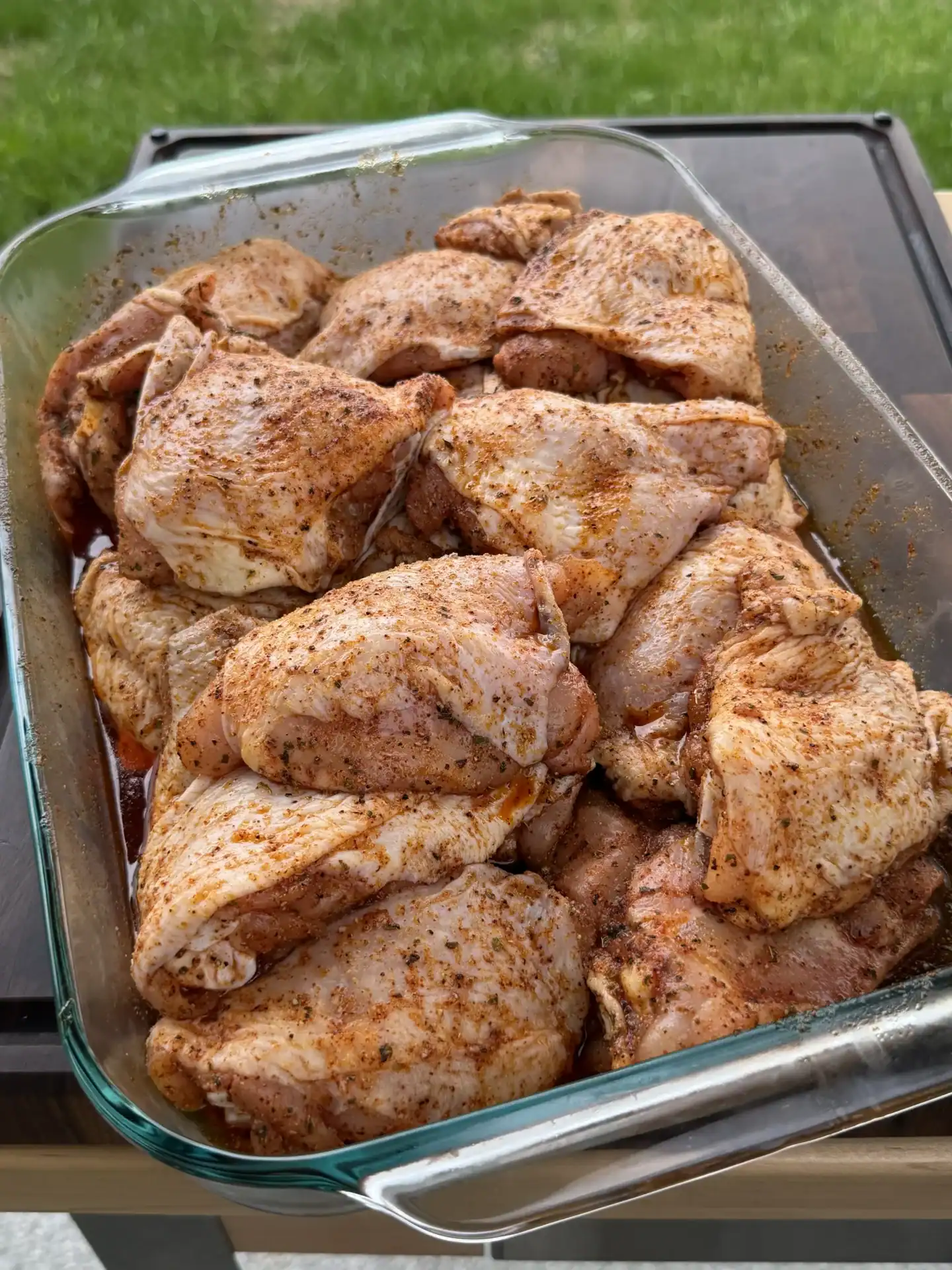
Seasoned bone-in chicken thighs air-chilling uncovered in a glass baking dish

What “Uncovered” Actually Means

Place the seasoned thighs on a wire rack over a sheet pan, or directly on a glass baking dish, with no plastic wrap or foil on top. Air needs to hit the skin. If you cover them, the moisture stays trapped and the whole step is wasted. A wire rack is best because it lets air circulate underneath too, but a flat dish works fine if that is what you have.

Can You Skip the Air-Chill?

You can, but the skin will crisp less aggressively and the cook will need a few extra minutes on the direct side. If you are truly short on time, pat the thighs as dry as possible with paper towels and skip directly to the grill. The recipe still works. It just will not deliver the same crispy grilled chicken thighs result that the air-chill produces. For a deeper look at how the same technique compounds across grilled chicken recipes, the same air-chill principle works on smoked chipotle BBQ chicken where rendered skin is just as critical to the finished bite.

Grill Nation Original

Grilled Garlic Parmesan Chicken Thighs

Bone-in thighs seared skin-side down over direct heat, finished to 175 to 185°F over indirect, and topped with garlic butter and a heavy parmesan rain.

Smoke Bold Herb

15 Min

Prep

1 Hour

Air Chill

35 Min

Grill

4

Serves

CALORIES PER SERVING — 545

Ingredients

Chicken

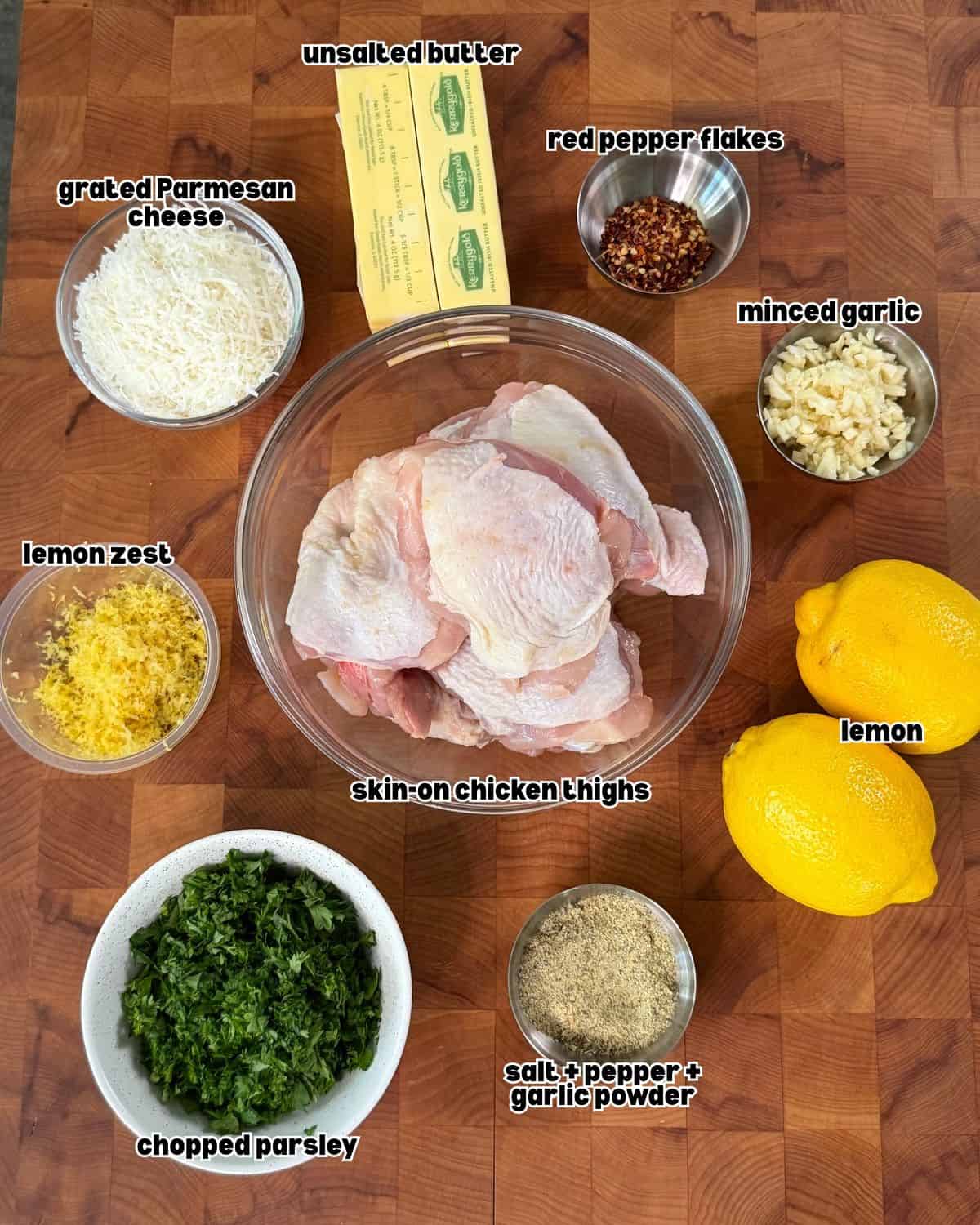
  • 8 bone-in, skin-on chicken thighs
  • 1 tbsp avocado oil
  • 1 tsp kosher salt
  • 1 tsp black pepper
  • 1 tsp garlic powder
  • 1 tsp onion powder
  • 1 tsp smoked paprika

Garlic Parmesan Finish

  • 6 tbsp unsalted butter
  • 5 cloves garlic, minced
  • ¾ cup freshly grated parmesan
  • 1 tbsp chopped fresh parsley
  • 1 tsp red pepper flakes (optional)
  • 1 tsp lemon juice

Grill Master Tip

Pulling thighs at 165°F leaves money on the table. I run mine to 175 to 185°F every time. That extra range is where the connective tissue fully gives up and the fat finishes rendering. The bone protects you from going too far, so trust the probe and let them ride.

Step-by-Step Instructions

Step 1: Season the Chicken Thighs

Pat each thigh completely dry with paper towels. Surface moisture is the enemy of crispy skin, so take your time with this part.

Combine the kosher salt, black pepper, garlic powder, onion powder, and smoked paprika in a small bowl. Rub each thigh lightly with avocado oil first, then season evenly on all sides. The oil helps the seasoning grip and starts the dry-brine process before the air-chill begins.

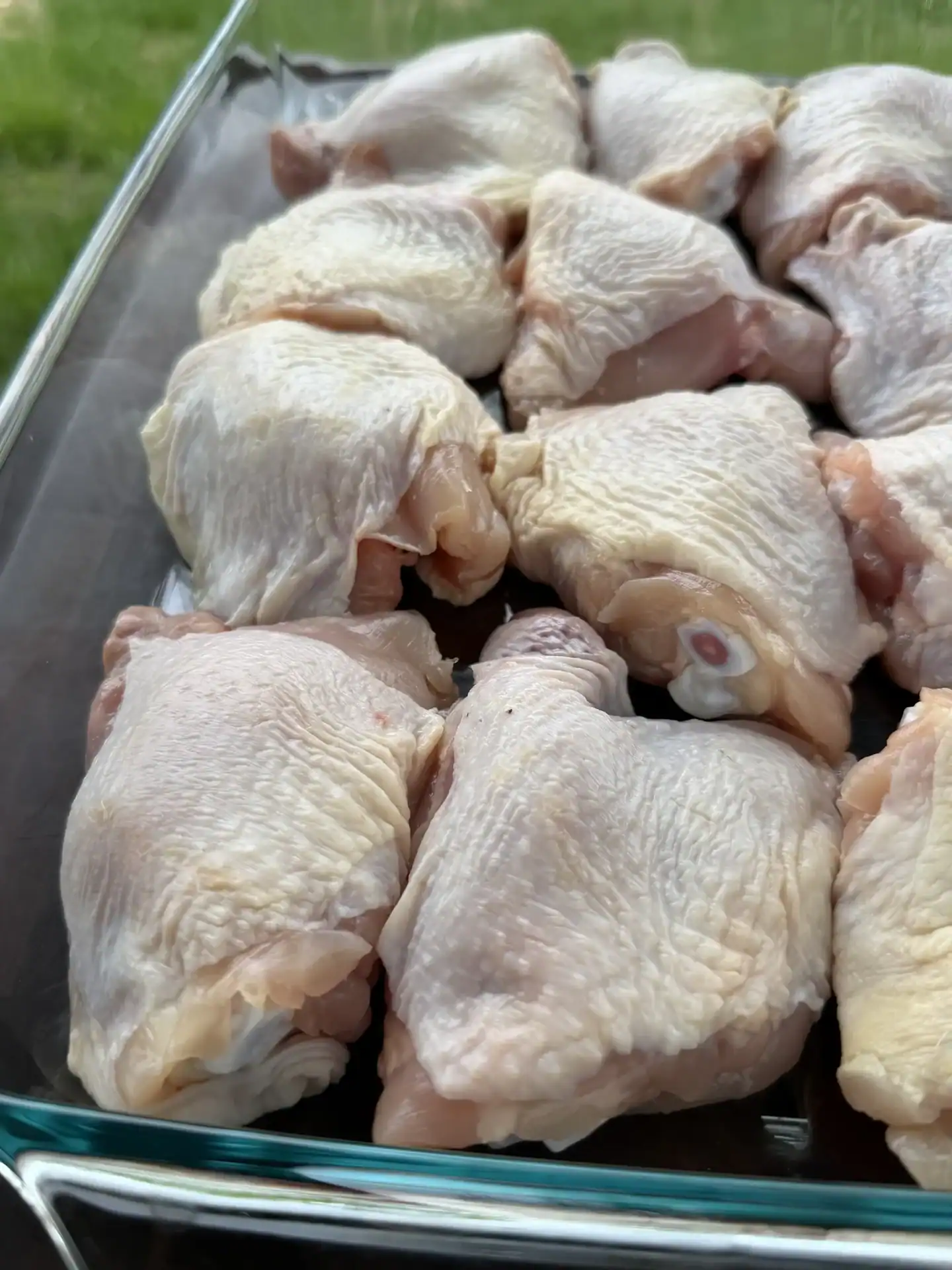
Raw bone-in chicken thighs in a glass baking dish ready for seasoning

Step 2: Air-Chill in the Refrigerator

Place the seasoned thighs uncovered in the refrigerator for 1 hour to dry the skin. A wire rack over a sheet pan works best because it lets air circulate underneath, but a glass baking dish is fine if that is what you have.

Do not cover the chicken. The whole point of this step is to dry the skin out so it crisps faster on the grill. After 60 minutes the surface will look slightly tacky and the seasoning will be fully bonded. That is exactly what you want.

Seasoned chicken thighs air-chilling uncovered for crispy skin

Step 3: Set Up the Grill for Two-Zone Cooking

Build a two-zone setup with one direct-heat side and one indirect-heat side. On charcoal, pile lit coals on half the grate. On gas, light the burners on one side only. On pellet grills with direct-flame access, set the grate to expose half over the flames.

Target 375 to 400°F overall chamber temperature. The direct side should run hot, around 500 to 550°F at the grate. The indirect side should hold around 350 to 375°F. This gives you control when rendering the skin and finishing the cook.

Step 4: Sear Skin-Side Down Over Direct Heat

Place the thighs skin-side down directly over the hot side. You will hear an immediate sizzle as the fat starts rendering. Cook for 5 to 8 minutes total, moving the thighs as needed to stay ahead of flare-ups.

Look for deep golden-brown skin with light blackened high points. If flames jump, slide the thighs over a few inches and keep them moving. Do not flip yet. The skin needs full contact with the heat to render properly.

Bone-in chicken thighs searing skin-side down with charred skin developing

Step 5: Flip Skin-Side Up and Finish Over Indirect Heat

Flip each thigh skin-side up and move it to the indirect side of the grill. Close the lid and let the chicken finish cooking for 20 to 30 minutes, depending on size. Do not flip again.

Pull the thighs when the internal temperature reaches 175 to 185°F at the thickest part, away from the bone. This is where most home cooks stop too early. Push past 165°F. The texture difference is immediate and dramatic.

Garlic parmesan chicken thighs finishing skin-side up on indirect heat

Step 6: Make the Garlic Butter

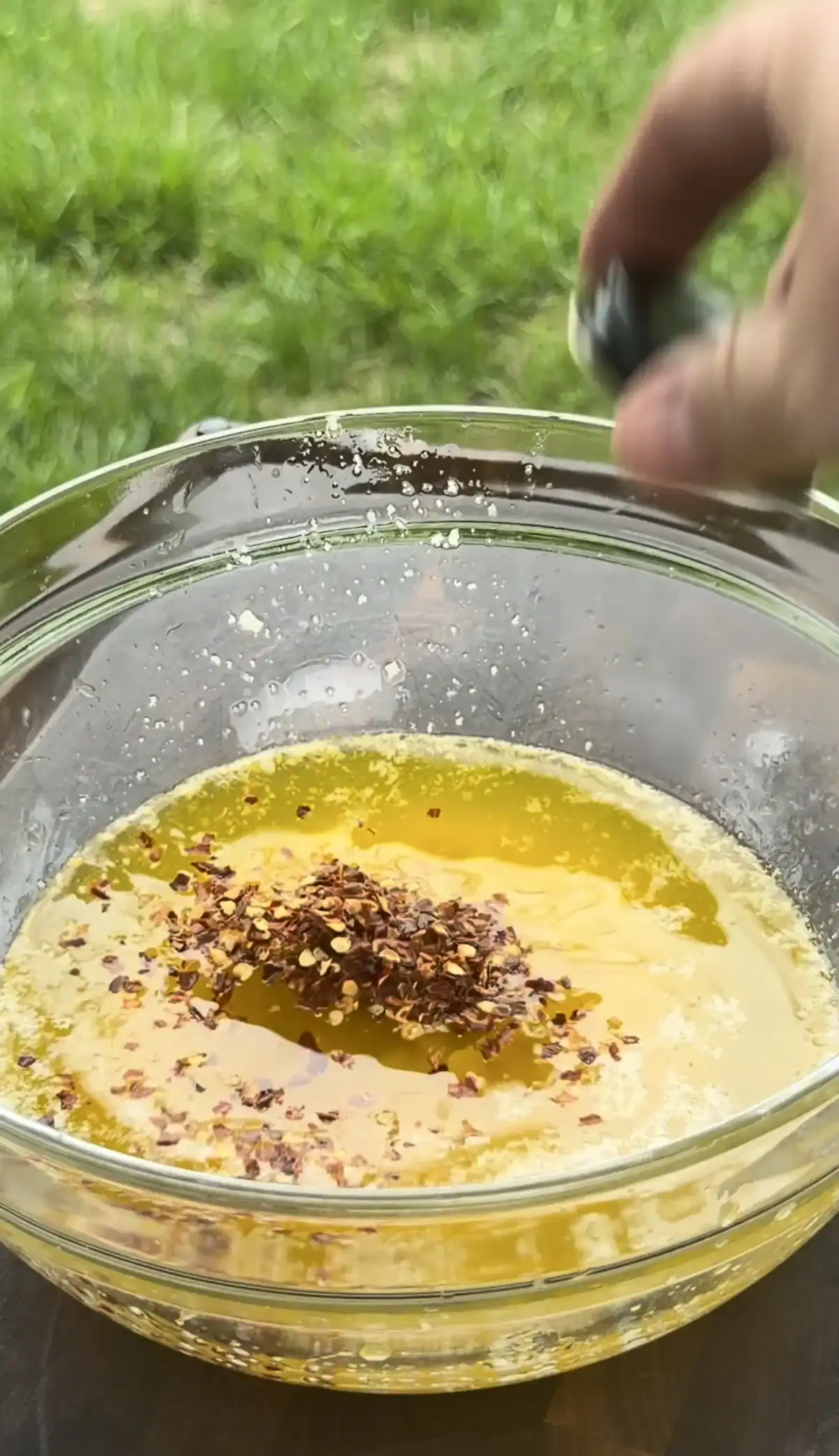
While the chicken finishes, melt the butter in a small saucepan over medium-low heat. Add the minced garlic and cook for about 30 seconds, just until fragrant. Do not let the garlic brown. Burnt garlic turns bitter fast.

Stir in the chopped parsley, red pepper flakes if using, and lemon juice. Pull the pan off the heat. The butter should look golden and smell aggressively garlicky. That is the right finish.

Garlic butter mixture being strained into a serving bowl

Step 7: Brush, Top, and Rest

Pull the thighs off the grill and onto a cutting board or platter. Brush each one generously with the warm garlic butter while the skin is still hot. Then top heavily with the freshly grated parmesan. The residual heat from the chicken will soften the cheese into the skin without melting it into a puddle.

Let the thighs rest for 5 minutes before serving. The rest matters because it lets the juices redistribute through the meat and gives the parmesan a moment to grip the skin. Serve directly from the platter while the skin is still crisp.

Crispy grilled garlic parmesan chicken thighs finished with melted parmesan in a cast iron skillet

Golden brown garlic parmesan chicken thighs in cast iron skillet topped with melted cheese and fresh herbs

Grilled Garlic Parmesan Chicken Thighs

Grilled garlic parmesan chicken thighs with crispy rendered skin, smoky char, and a heavy parmesan finish. Bone-in thighs seared skin-side down then finished over indirect heat to 175 to 185°F.
Servings 4 people
Prep Time 15 minutes
Cook Time 35 minutes
Air Chill Time 1 hour
Total Time 50 minutes

Equipment

  • Two-Zone Grill (charcoal, gas, or pellet with direct flame)
  • Instant-Read Probe Thermometer
  • Wire Rack and Sheet Pan
  • Small Saucepan
  • Basting Brush

Ingredients
  

Chicken

  • 8 bone-in, skin-on chicken thighs
  • 1 tablespoon avocado oil
  • 1 teaspoon kosher salt
  • 1 teaspoon black pepper
  • 1 teaspoon garlic powder
  • 1 teaspoon onion powder
  • 1 teaspoon smoked paprika

Garlic Parmesan Finish

  • 6 tablespoons unsalted butter
  • 5 cloves garlic minced
  • 3/4 cup freshly grated parmesan cheese grated from a block, not pre-shredded
  • 1 tablespoon fresh parsley chopped
  • 1 teaspoon red pepper flakes optional
  • 1 teaspoon lemon juice

Instructions
 

  • Pat the chicken thighs dry with paper towels. Rub lightly with avocado oil and season evenly on all sides with kosher salt, black pepper, garlic powder, onion powder, and smoked paprika.
  • Place the seasoned thighs uncovered in the refrigerator for 1 hour to air-chill the skin.
  • Set up the grill for two-zone cooking with one direct-heat side and one indirect-heat side. Target 375 to 400°F overall chamber temperature.
  • Place the thighs skin-side down over direct heat. Cook 5 to 8 minutes, moving as needed to avoid flare-ups, until the skin is deep golden brown with light char.
  • Flip the thighs skin-side up and move to the indirect side. Close the lid and finish cooking 20 to 30 minutes until the internal temperature reaches 175 to 185°F.
  • While the chicken finishes, melt the butter in a small saucepan over medium-low heat. Add the minced garlic and cook 30 seconds until fragrant. Stir in parsley, red pepper flakes if using, and lemon juice. Remove from heat.
  • Brush the hot grilled thighs generously with the garlic butter, then top heavily with the freshly grated parmesan. Rest 5 minutes before serving.

Notes

Grill Master Tip: Pulling thighs at 165°F leaves money on the table. I run mine to 175 to 185°F every time. That extra range is where the connective tissue fully gives up and the fat finishes rendering. The bone protects you from going too far, so trust the probe and let them ride.

Frequently Asked Questions

Grilled Garlic Parmesan Chicken Thighs

8 Questions
Click a question to reveal the answer

Common Questions About Grilled Garlic Parmesan Chicken Thighs

Grill chicken thighs skin-side down first to render the fat and crisp the skin, then flip skin-side up over indirect heat to finish cooking to 175 to 185°F. Starting skin-side down lets the fat melt directly into the surface and builds char before the meat is anywhere near done. Flipping back and forth softens the skin, so commit to one flip and finish on the indirect side.

165°F is the USDA-safe minimum, but bone-in chicken thighs eat best at 175 to 185°F because the connective tissue and fat fully render in that range. Below 170°F the meat can feel slightly chewy, while a thigh pulled at 180°F shreds cleanly off the bone. The bone protects you from overcooking, so trust the probe and let them ride.

Bone-in chicken thighs take roughly 25 to 35 minutes total on a 375 to 400°F two-zone grill, broken into 5 to 8 minutes searing skin-side down and 20 to 30 minutes finishing skin-side up. Smaller thighs finish closer to 25 minutes, while larger thighs push toward 35. Charcoal grills tend to run faster than pellet grills at the same chamber temperature.

Run a two-zone setup at 375 to 400°F overall chamber temperature, with the direct side hitting 500 to 550°F at the grate and the indirect side holding around 350 to 375°F. The hot side renders the skin and builds char, while the cooler side finishes the meat without burning. Anywhere outside that window either scorches the skin or fails to crisp it.

More Questions About Equipment, Ingredients, and Technique

Yes, any pellet grill with a direct-flame zone or sear plate handles this recipe the same way as charcoal or gas. The Pit Boss Lockhart, Hasty Bake on its grilling configuration, or any pellet grill with exposed flames over the firepot all build a workable two-zone setup. Pellet grills without direct-flame access will struggle to render the skin properly.

Bone-in skin-on chicken thighs deliver the best char and rendered fat, but boneless skin-on works if you cut the cook time roughly in half. Plan on 4 to 5 minutes skin-side down and 8 to 12 minutes skin-side up for boneless. Skinless thighs are not recommended because the skin is where the entire flavor base of this recipe lives.

Add the parmesan at the very end, immediately after brushing the hot grilled thighs with garlic butter and just before the 5-minute rest. The residual heat from the chicken softens the cheese into the skin without melting it into a puddle. Adding parmesan during the cook causes it to scorch and turn bitter against the high direct heat.

Air-chilling for 1 hour uncovered in the refrigerator dries the surface of the skin, which lets it render and crisp faster on the grill. Drier skin browns harder and develops better char, while wet skin steams instead of crisping. The salt in the seasoning also dry-brines the meat slightly during that hour, which helps with moisture retention during the cook.

Grill Nation

Looking For More Recipes Like This?

If you enjoyed this recipe, check out our full library of grilling recipes.

See All Recipes
Explore by Category

Leave a Reply

Your email address will not be published. Required fields are marked *

Recipe Rating