Competition Rib Recipe
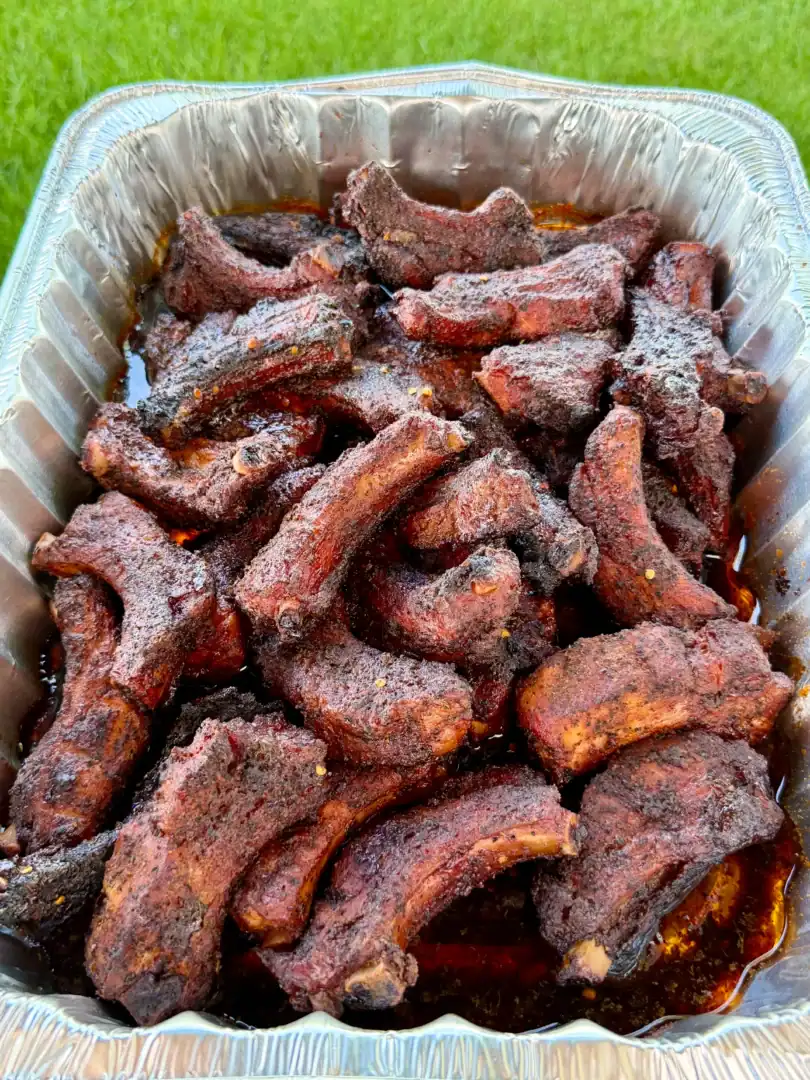
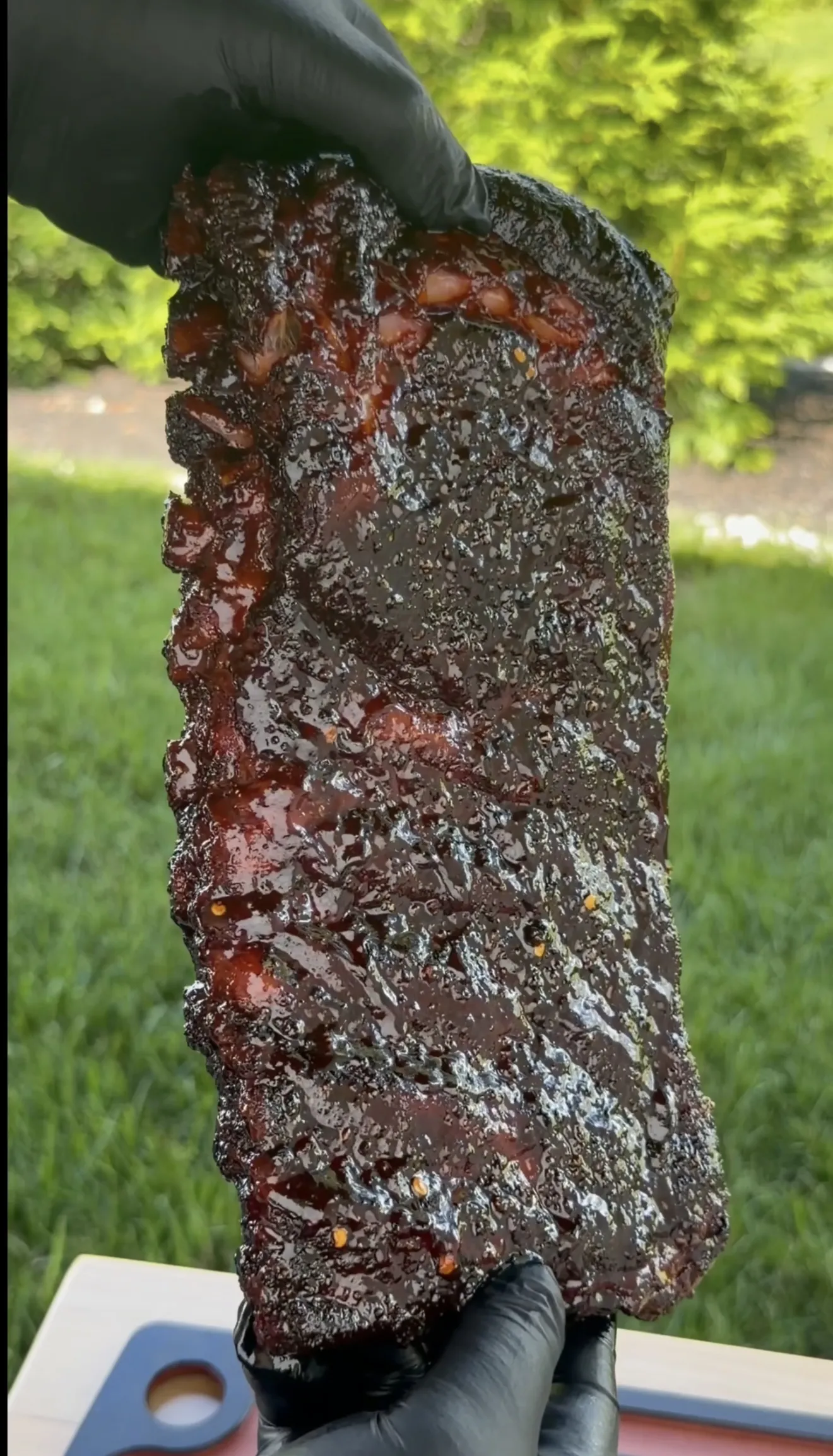
These competition ribs are St. Louis cut spare ribs smoked low on charcoal over oak and cherry, wrapped with a sweet brown sugar and honey mixture, then glazed to a tacky shine. The whole method is built around the competition standard: a clean bite-through texture, a deep mahogany bark, and balanced sweet-heat flavor, not soft fall-off-the-bone ribs. James runs them at 265 to 275°F, spritzes with apple juice to set color, and wraps on appearance rather than the clock. Total cook runs about 4.5 to 5.5 hours from trim to slice. This is the contest-grade rib process broken down for the backyard.
What Are Competition Ribs?
Competition ribs are smoked ribs cooked to a clean bite-through texture rather than fall-off-the-bone. That distinction is the whole game. A backyard rack is a success when the meat slides off the bone, but on a competition turn-in box that same rack scores low because judges read it as overcooked. The target is a rib that bites cleanly, leaves a defined bite mark, and shows a little bone pullback. Everything in this method, the trim, the bark, the wrap window, and the glaze, is built to hit that texture along with the appearance and moisture that win.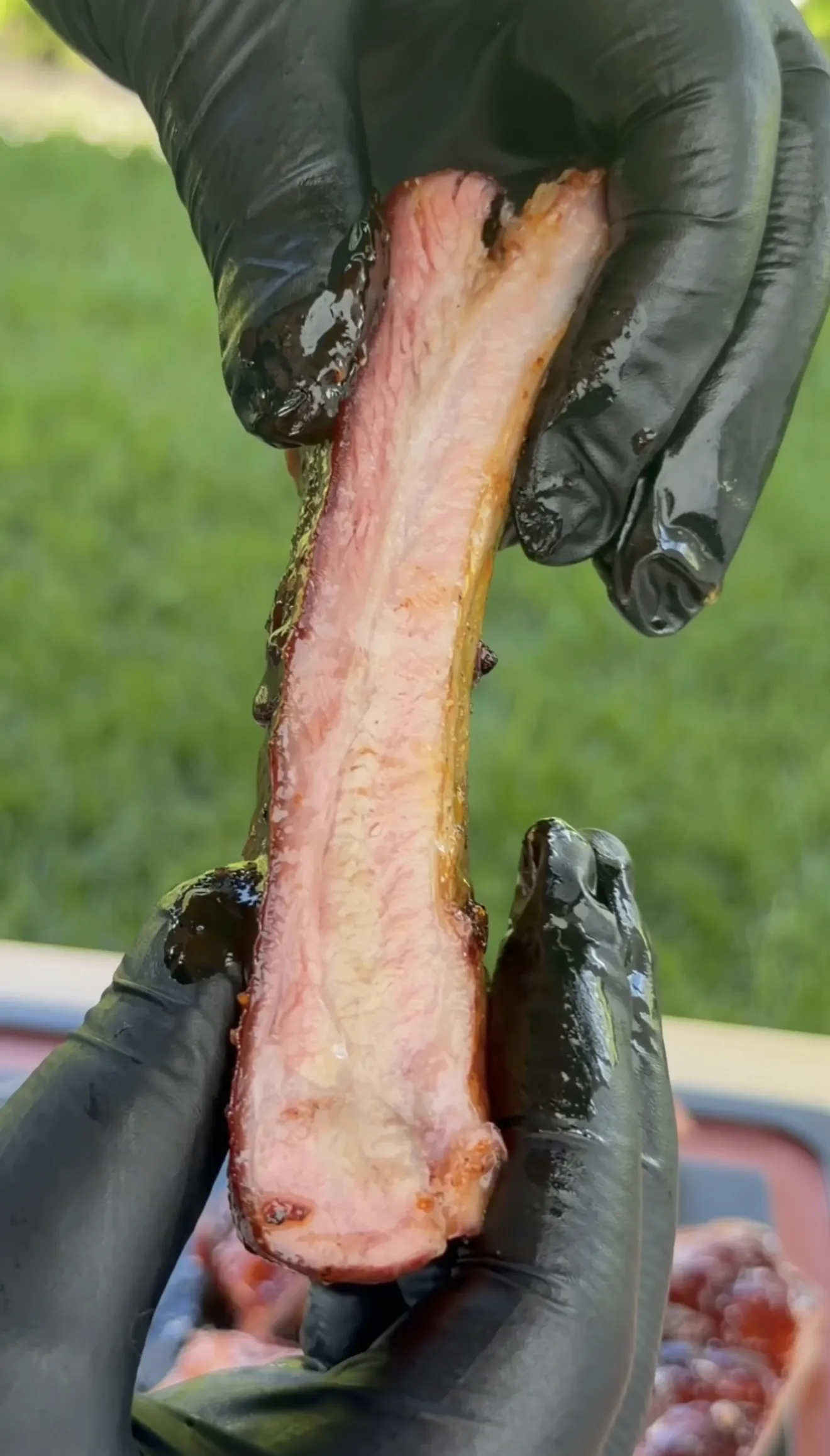
Quick note before we get into it: this post is not sponsored. The rub, wood, sauce, and equipment named below are simply what James uses on competition-style cooks. No brand paid for placement.
Spare Ribs vs Baby Backs for Competition
St. Louis cut spare ribs offer more consistent meat distribution, presentation, and flavor than baby backs, which is why most competition cooks run them. Spare ribs carry more intramuscular fat, so they stay moist through a longer cook and deliver richer flavor. Squared into the St. Louis cut, they also produce uniform, photogenic bones that plate cleanly in a turn-in box. Baby backs are leaner and cook faster, but they give you less margin and a less impressive presentation.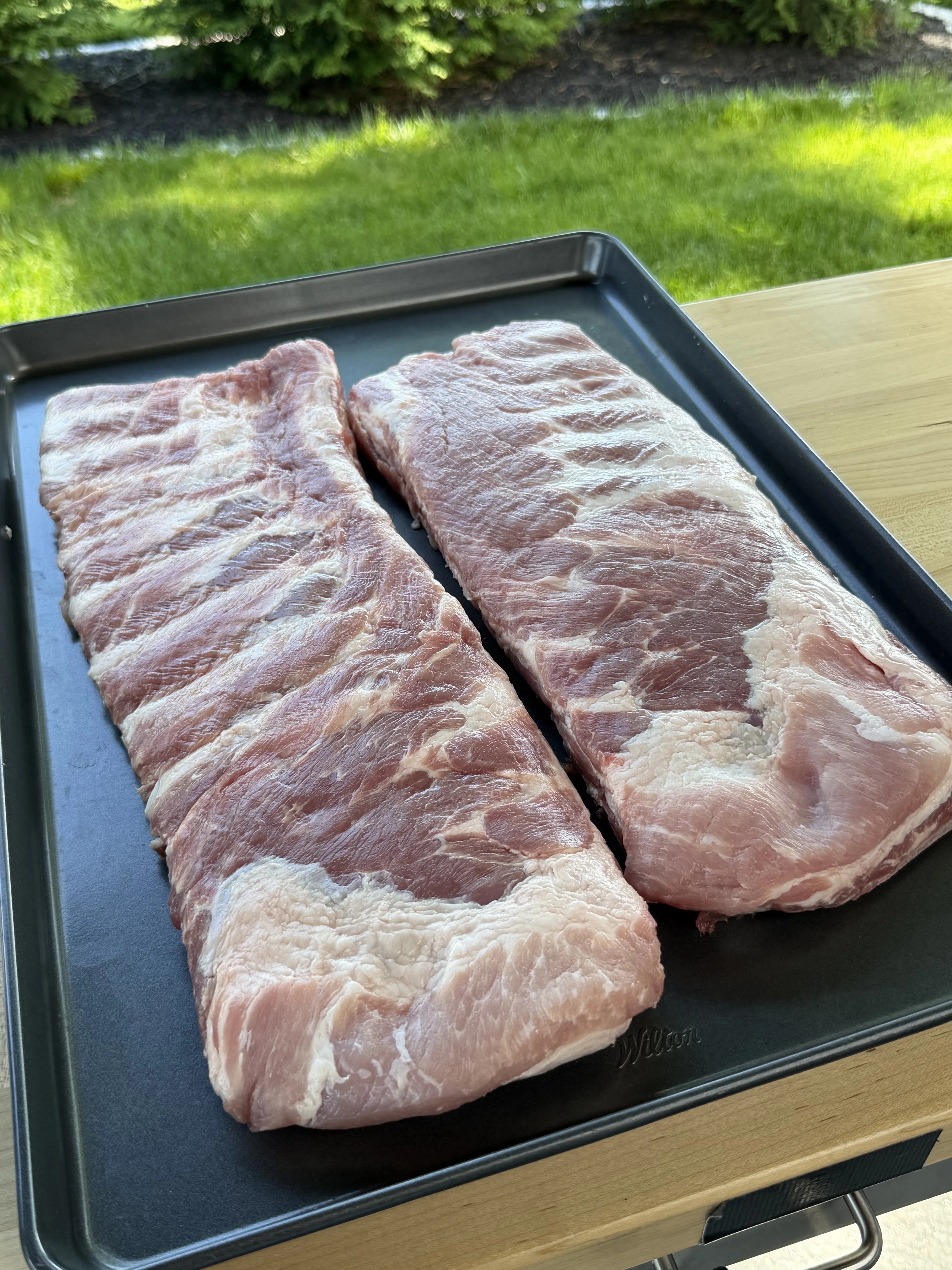
How to Trim St. Louis Ribs Like a Competitor
Start by removing the membrane from the back of the rack, then square the ribs for even cooking and trim any excess fat and loose edges. The membrane blocks smoke and turns rubbery, so it has to go. Squaring the rack means cutting it into a clean rectangle, which helps it cook evenly and gives you straight, uniform bones to choose from later. After trimming, apply a light coat of yellow mustard as a binder, then season generously with the competition rub. Let the ribs sweat for 20 to 30 minutes so the rub tacks up before they hit the smoke.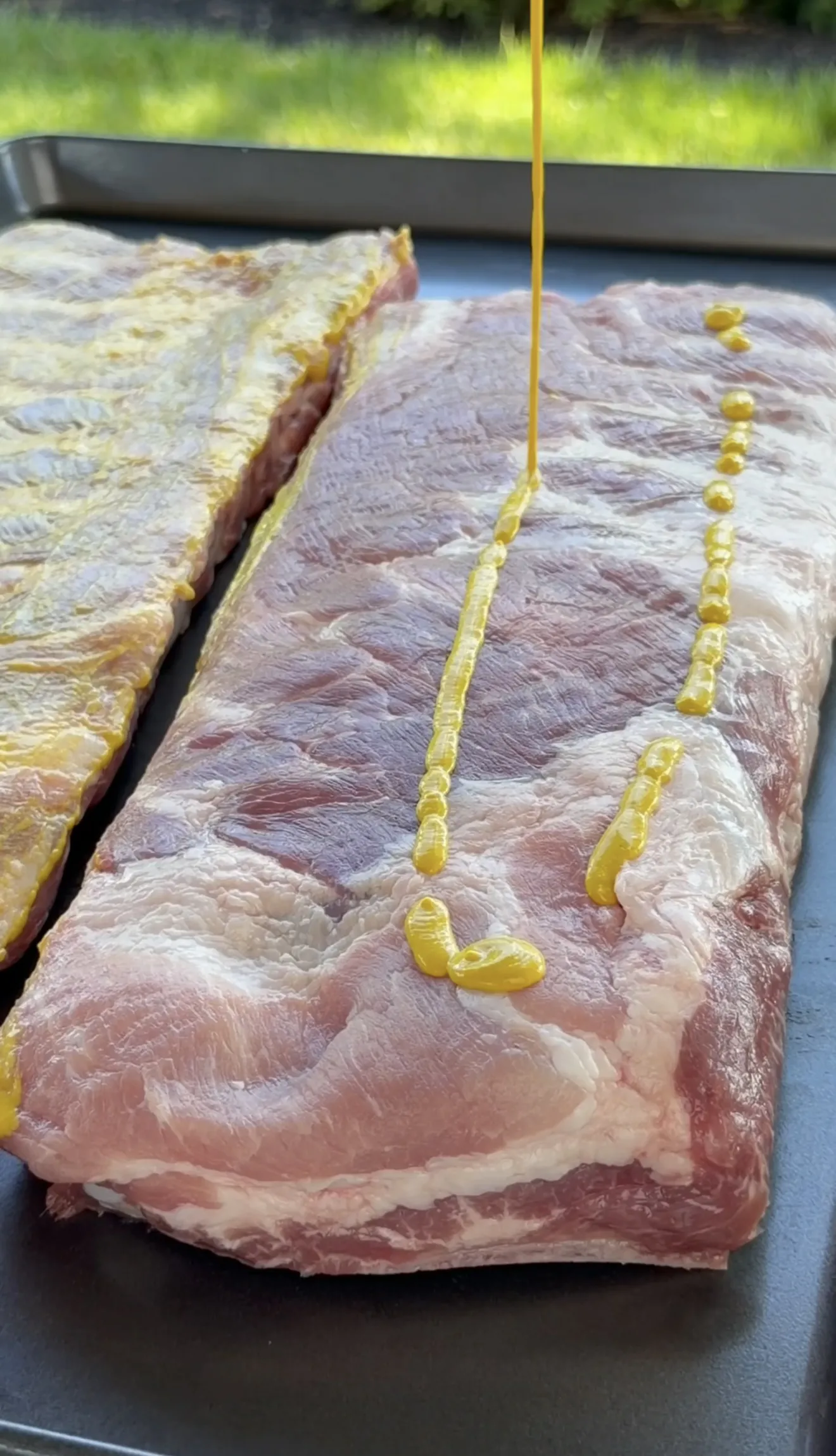
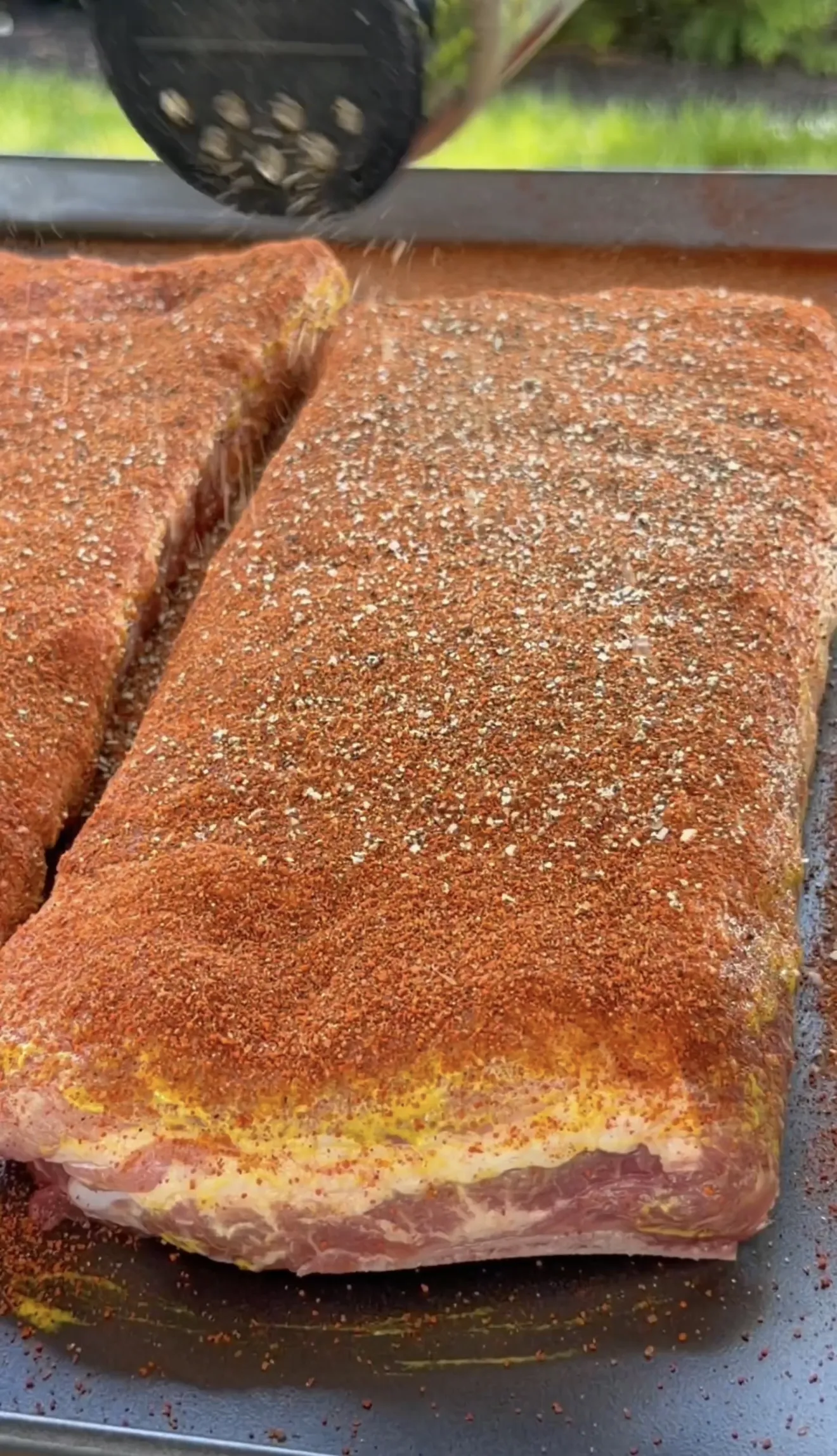
The mustard adds no flavor you’ll taste in the end; it’s there to help the rub stick and build bark. If you want to see how a binder works on a different rib build, our smoked pork ribs with Carolina mustard sauce use the same idea with a tangier finish.
What Temperature Do You Smoke Competition Ribs?
Smoke competition ribs at 265-275°F over a clean fire for steady bark development and moisture control. That band is the sweet spot most teams settle into. It’s hot enough to render fat and set a deep bark in a reasonable window, but gentle enough that the meat stays moist and you keep control over the cook. Set your charcoal smoker or grill for indirect cooking and let it stabilize at temperature before the ribs go on.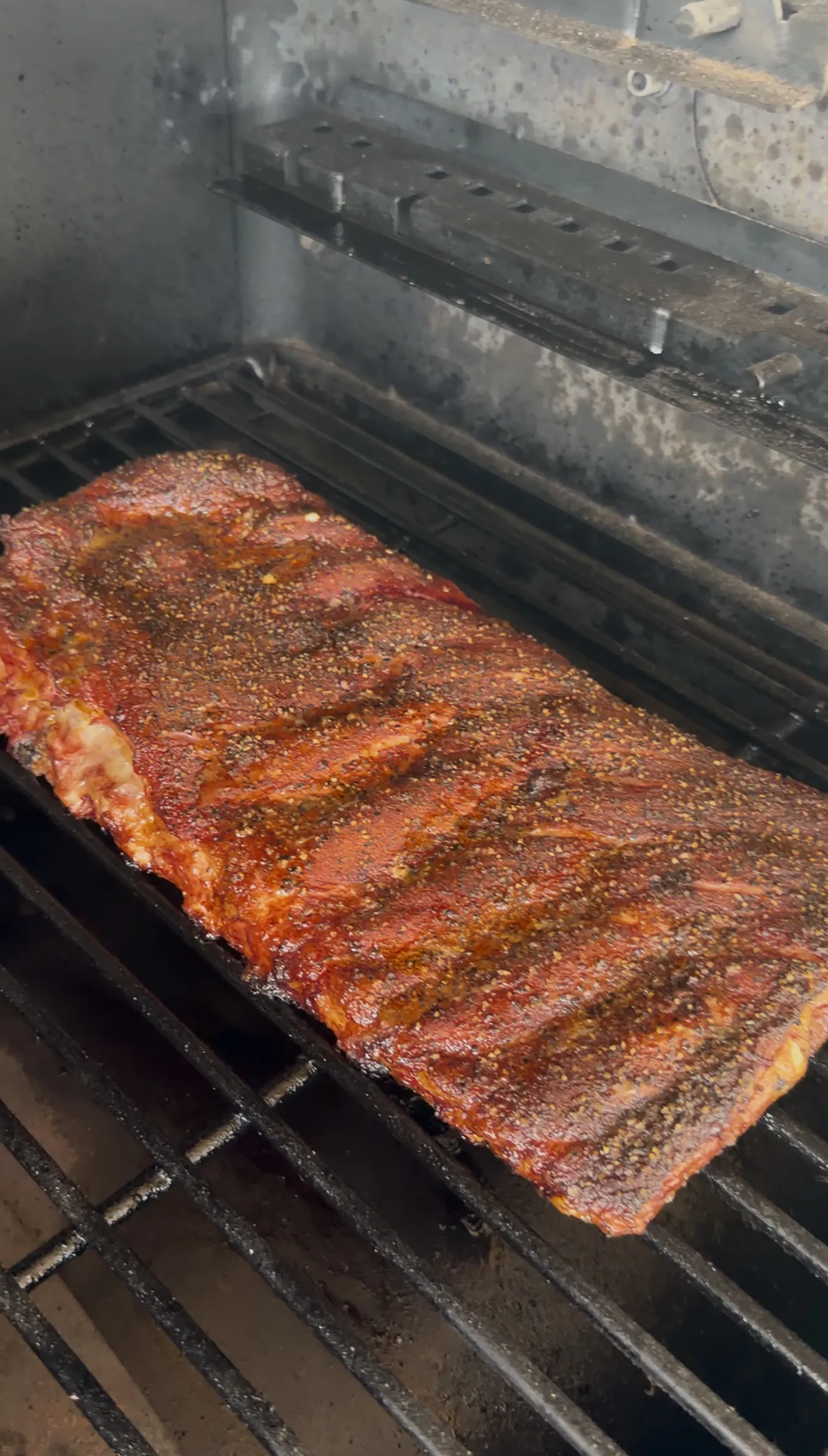
Clean Blue Smoke, Not Thick White
You want thin, clean blue smoke, not the thick white smoke that comes off a struggling fire. Thick white smoke deposits a harsh, acrid, ashy flavor that judges and your own palate will catch immediately. Clean blue smoke means the fire is breathing well and burning efficiently. Manage your airflow and fuel so the smoke runs thin and almost invisible before you commit the ribs.
What Wood Is Best for Competition Ribs?
A mix of oak and cherry. Cherry drives the deep mahogany color judges notice first, while oak gives a clean, steady backbone of smoke. Oak burns even and neutral, which keeps the fire honest over a long cook. Cherry is the color play, building that rich red-brown surface that reads as competition-grade before anyone takes a bite. Together they balance flavor and appearance, which is exactly what this style demands.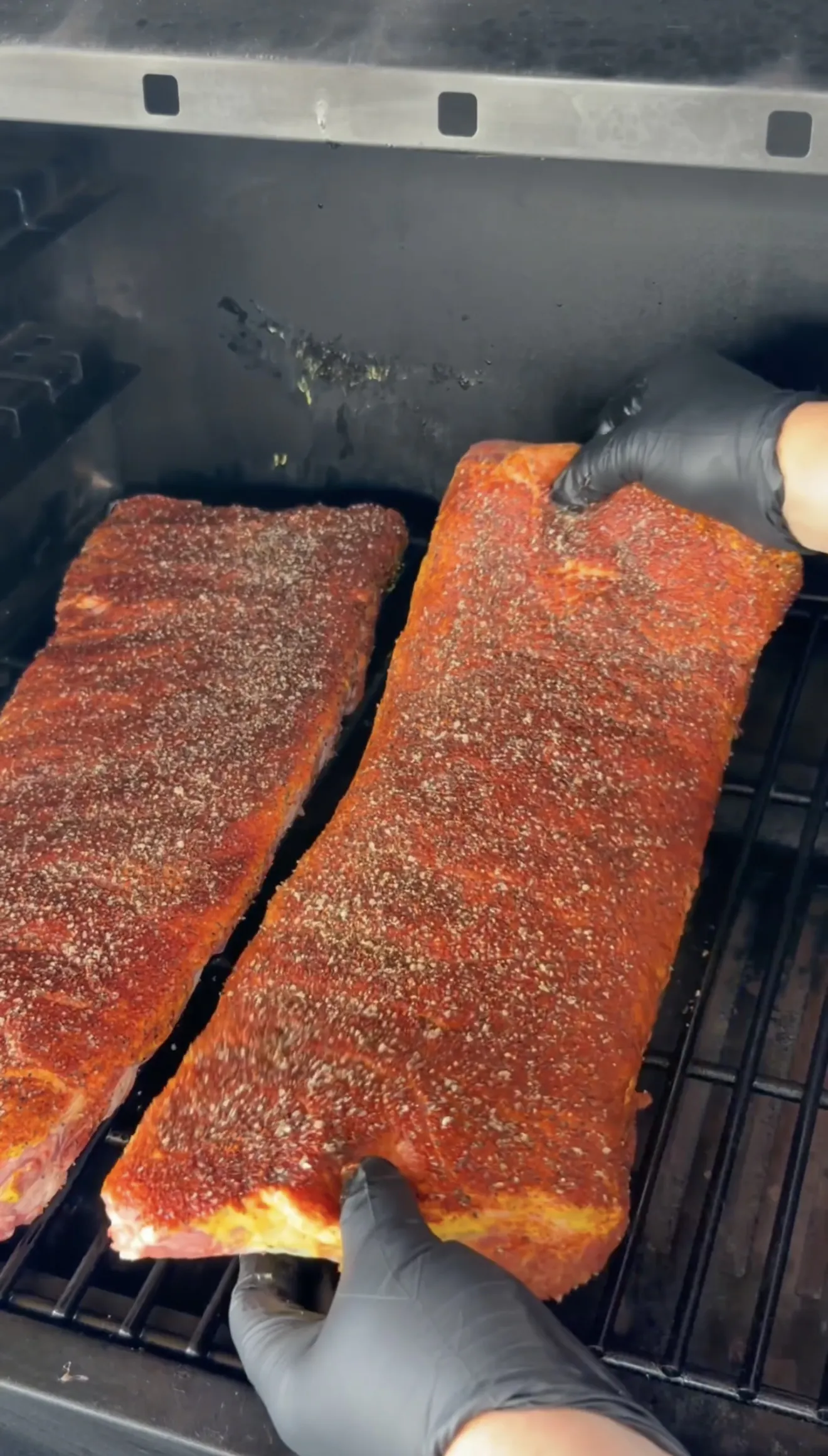
Building Color and Bark
Place the ribs bone-side down and smoke for about 2.5 to 3 hours, spritzing with apple juice every 45 minutes. The spritz keeps the surface from drying out and helps the rub set into bark instead of scorching. You’re cooking toward visual cues here, not a clock. The ribs are ready to wrap when a deep red mahogany color develops, the bark is set, and the rub no longer wipes off when you touch it.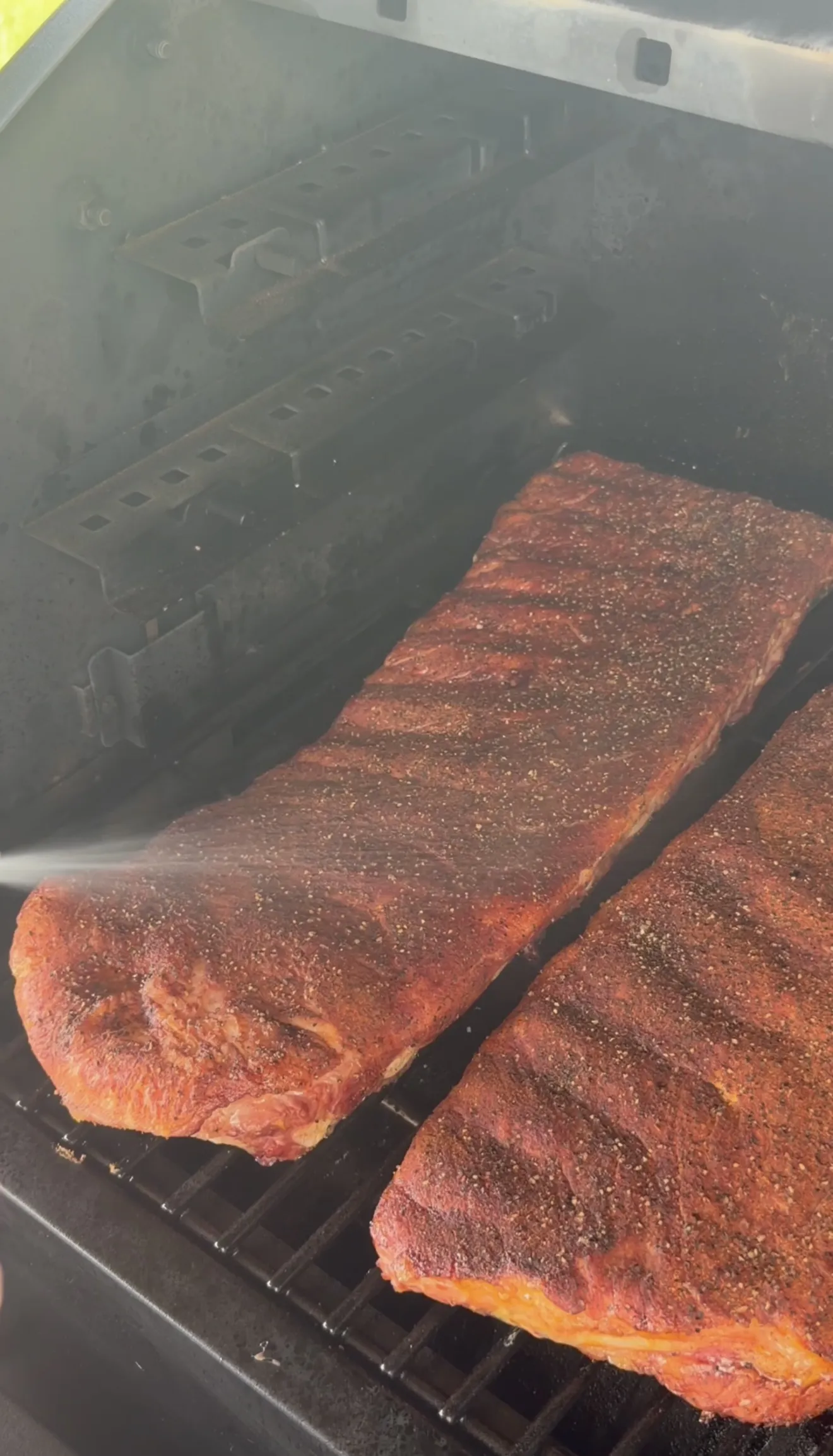
Apple juice is the standard spritz because its sugars support color and its acidity brightens the bark. Spritz in a light mist, not a soak, since too much liquid washes rub off and cools the surface. For a sweeter, fruit-forward rib in the same family, our honey chipotle smoked ribs lean harder into that sweet-heat profile.
Do You Wrap Competition Ribs?
Yes, wrap them meat-side down in foil with a sweet liquid mixture to set tenderness and lock in color. After the bark is built, the wrap pushes the ribs through the tough connective stage and dials in the final texture without drying them out. Wrapping meat-side down presses the surface into the wrap mixture, which deepens color and bastes the meat as it finishes.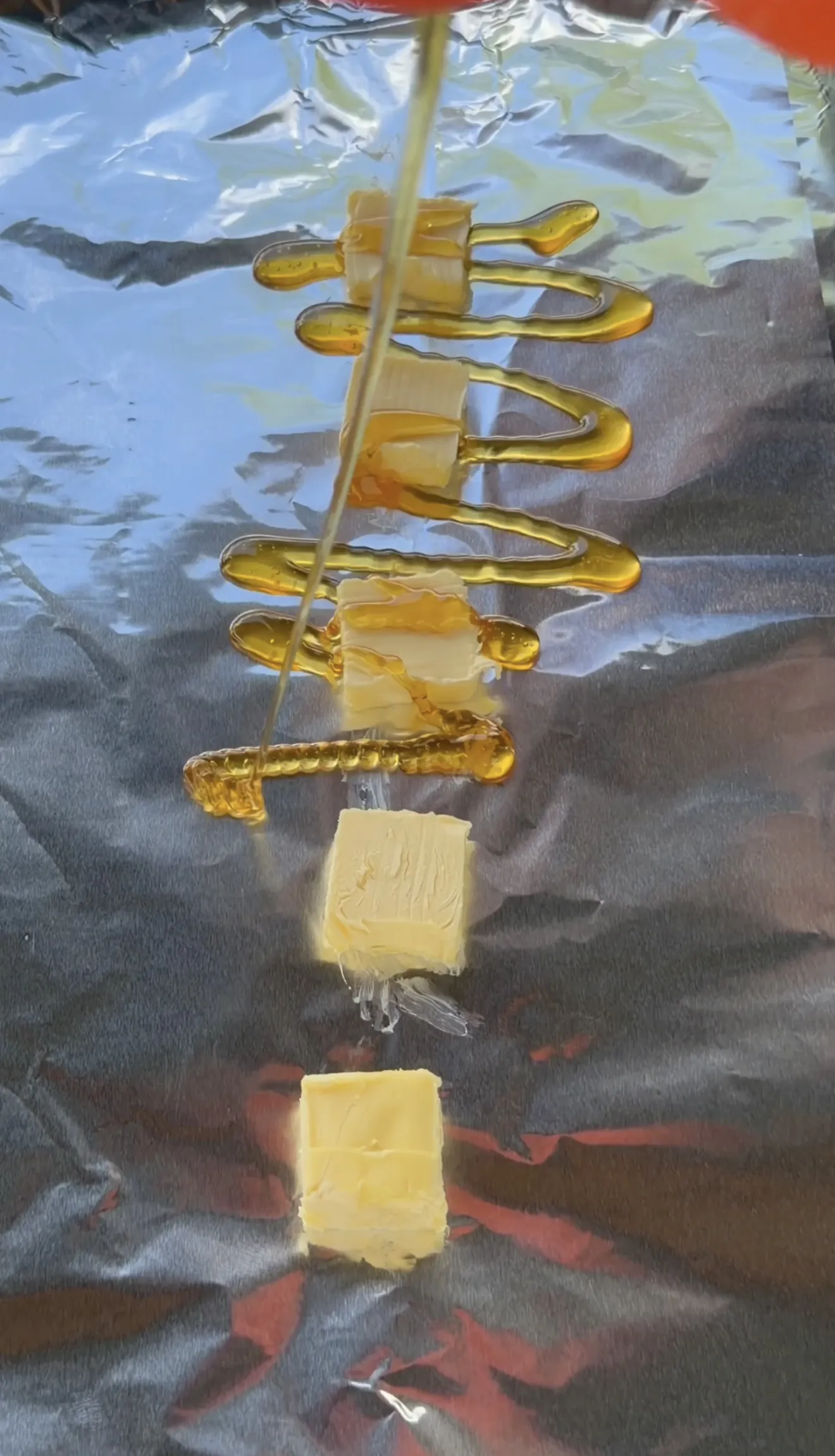
What Goes in the Wrap
Lay out a sheet of foil and add brown sugar, butter, honey, agave nectar, and apple juice, then set the ribs meat-side down and wrap them tightly. Each component does a job: brown sugar and honey build a candied surface, butter adds richness and helps conduct heat, agave keeps the mixture loose, and apple juice adds steam and acidity. Return the wrapped ribs to the smoker for 1.5 to 2 hours.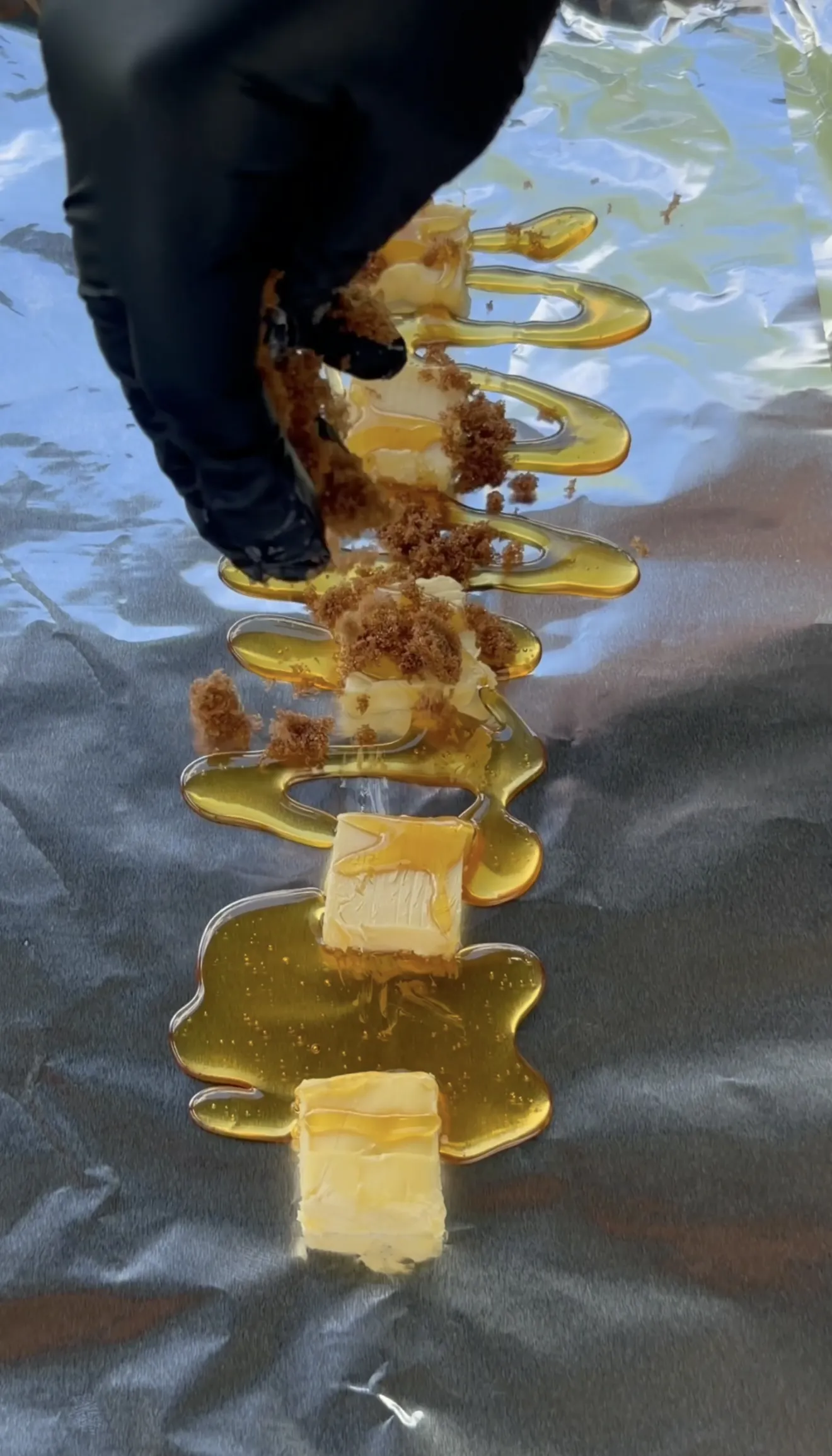
Checking for Competition Tenderness
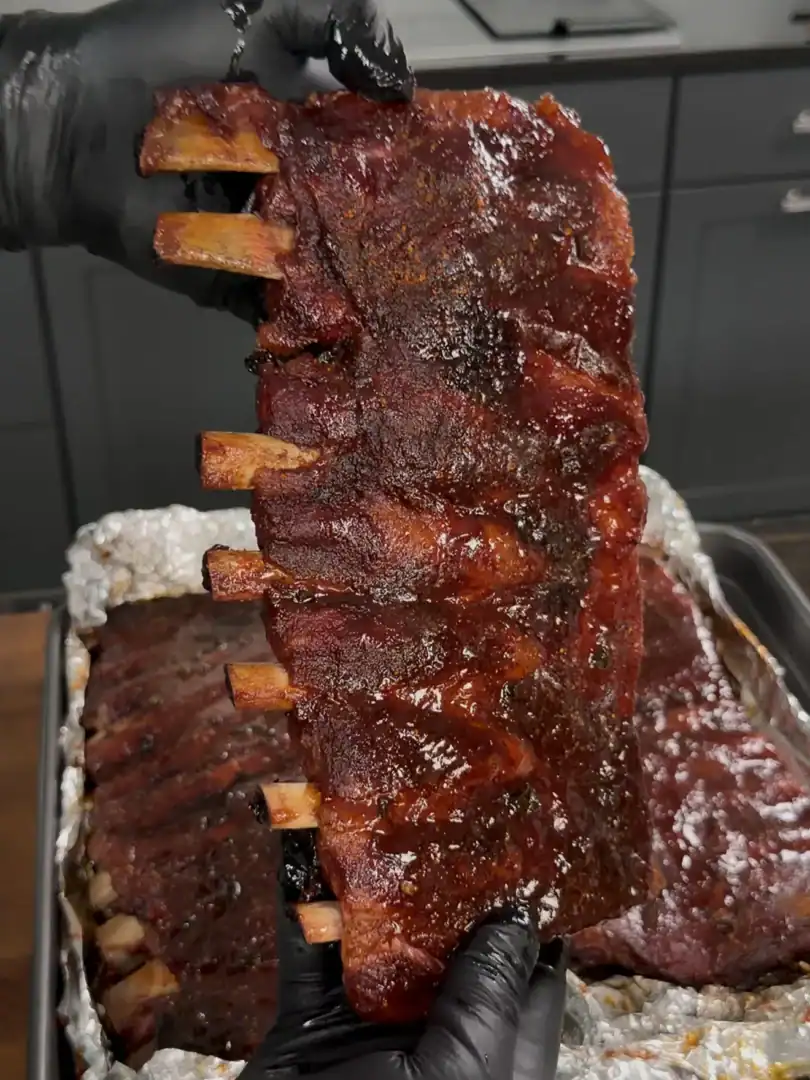
Open the foil carefully and check the ribs by feel: they should flex easily, show bone pullback, and probe with little resistance. This is the bend and bite test. When you lift the rack it should bend and the surface should crack slightly, and a probe or toothpick should slide between the bones with just a little give. You are not looking for fall-off-the-bone. Pull them from the wrap the moment they hit that window, since they keep cooking from carryover heat.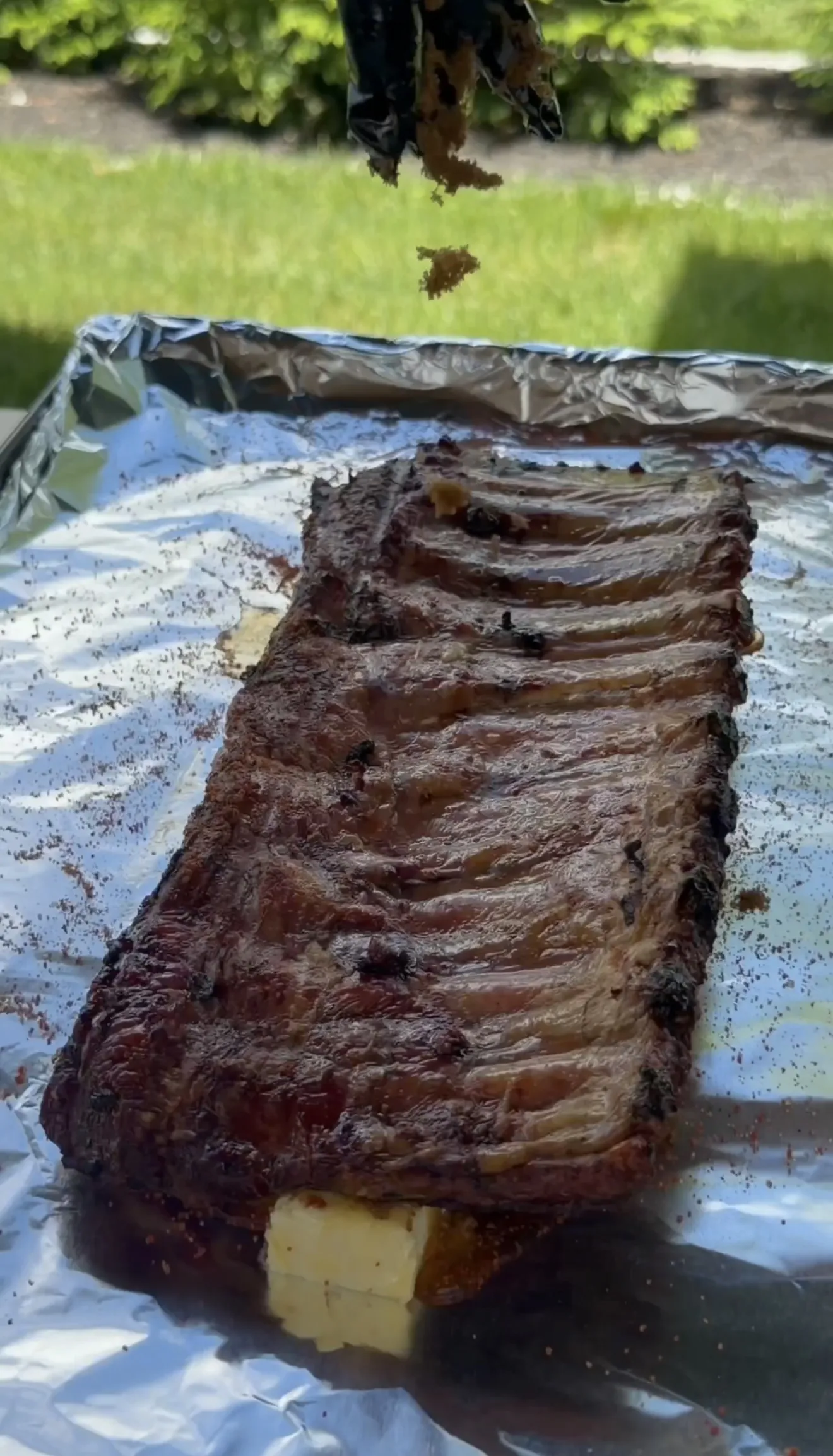
Should Competition Ribs Fall Off the Bone?
No. Competition ribs should bite cleanly with slight bone pullback and a visible bite mark, and fall-off-the-bone is considered overcooked. In KCBS-style judging, a rib that collapses off the bone tells the judge the meat was pushed too far. The ideal is a rib where the meat stays on the bone until you bite, then releases cleanly and leaves a defined mark. That clean bite is the texture this entire method is built to produce.
Glazing and Setting Competition Ribs
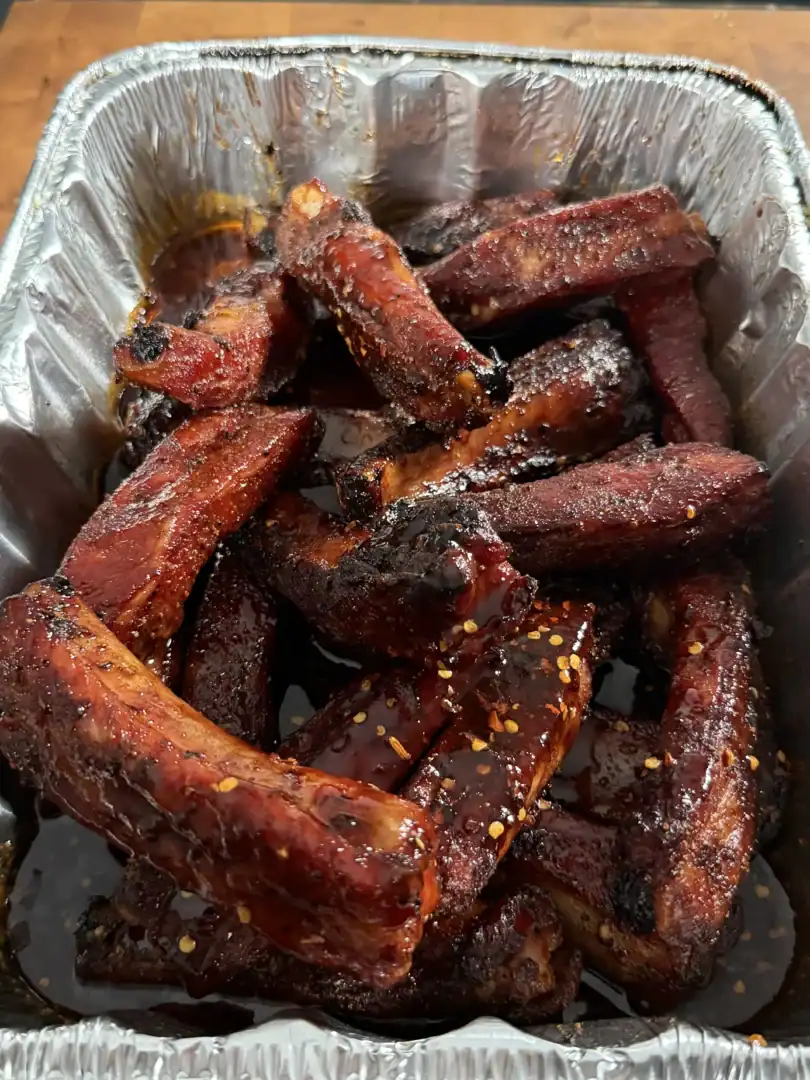
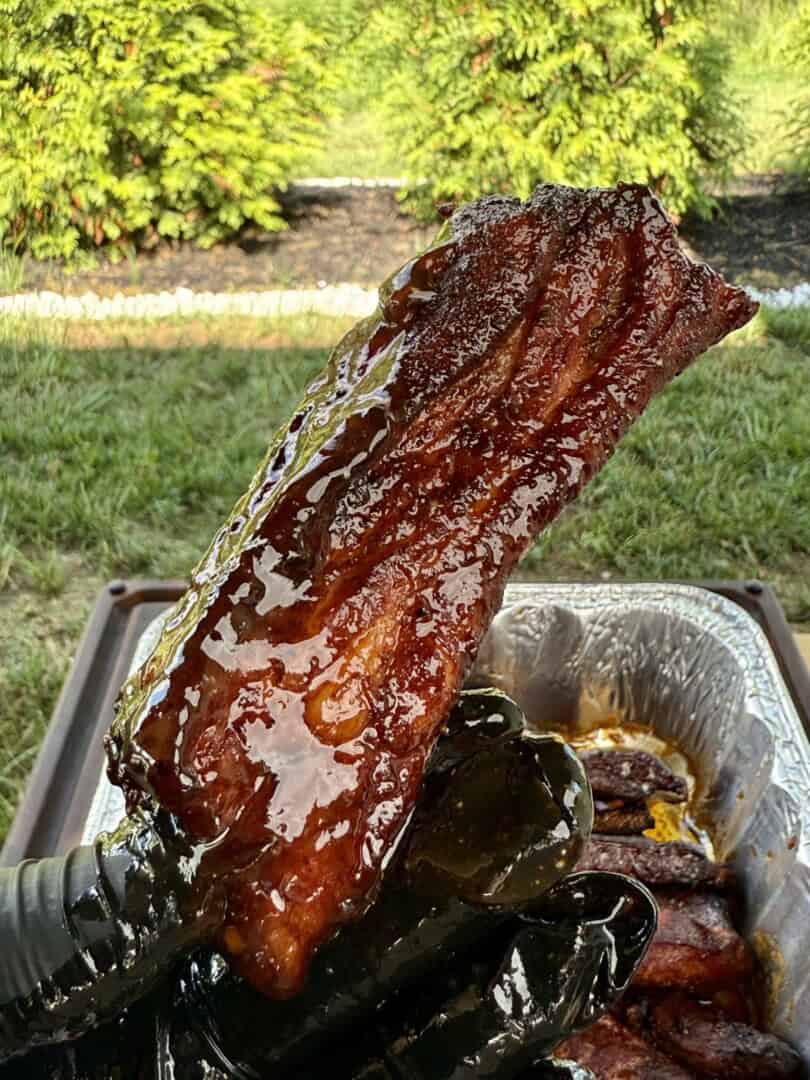
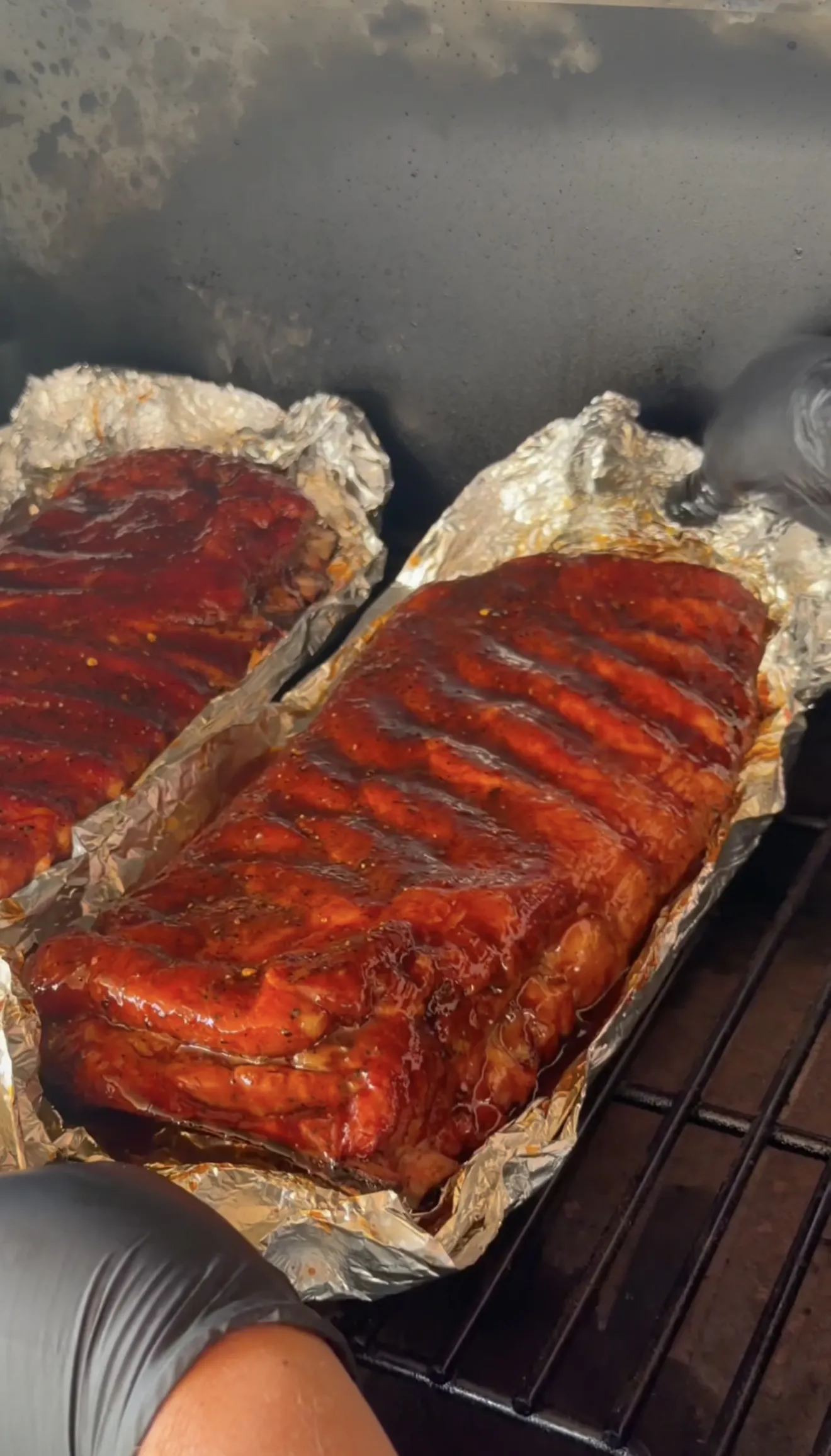
Brush a thin layer of glaze over the ribs and return them to the smoker uncovered for 20 to 30 minutes until it turns tacky and shiny. The glaze is a simple BBQ-sauce base tightened with honey, apple jelly, and apple cider vinegar. The honey and jelly add gloss and stick, while the vinegar cuts the sweetness so the finish tastes balanced rather than candy-sweet. Keep it thin. A heavy coat hides your bark and reads as sloppy.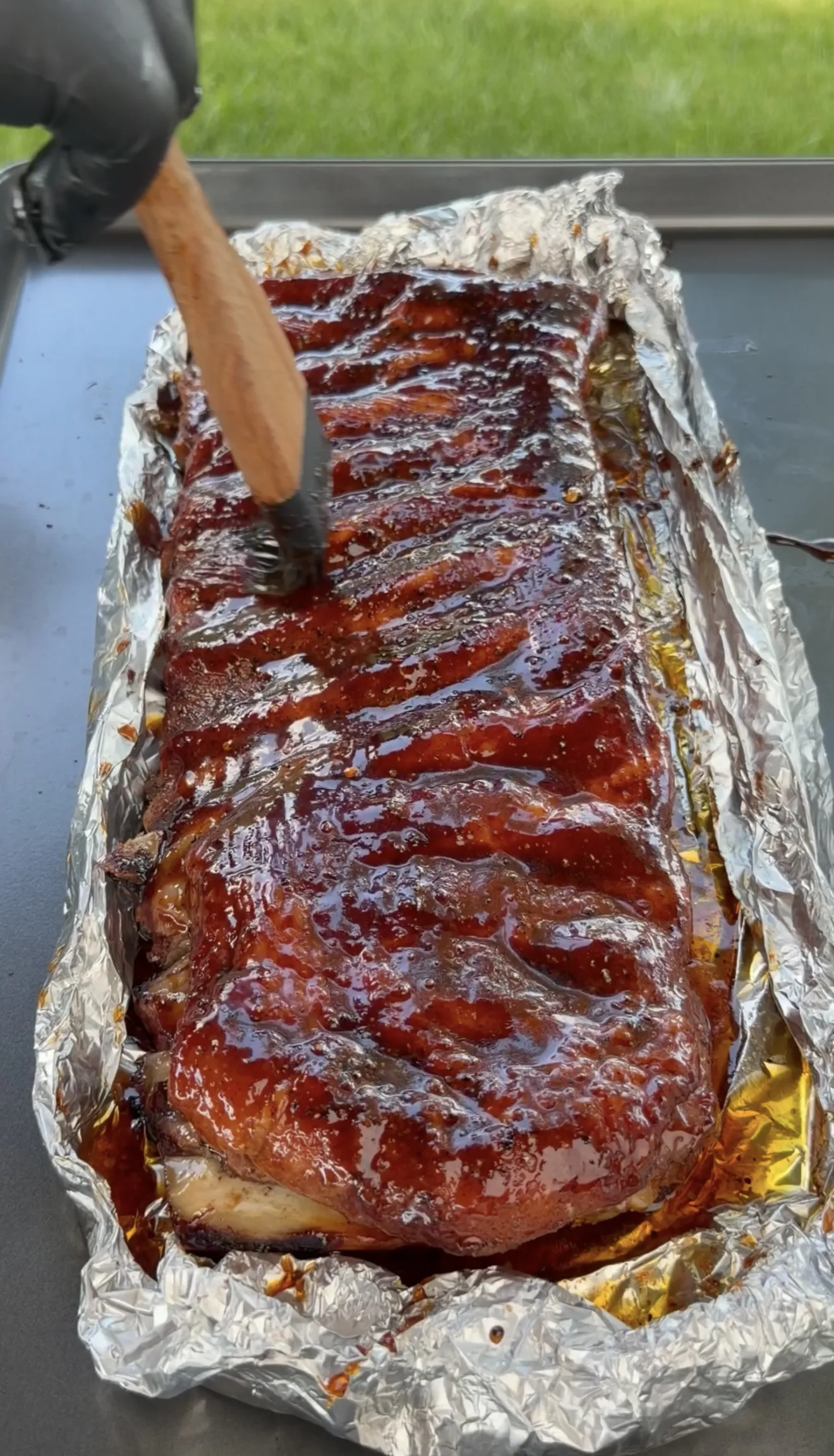
Resting and Slicing for Presentation
Rest the ribs for 15 minutes, then slice carefully between each bone. The rest lets the juices redistribute so they don’t run out the moment you cut. When you slice, choose the most uniform bones from the center of the rack for your best presentation. The middle of the rack runs the straightest, most even bones, which is where competition slices come from.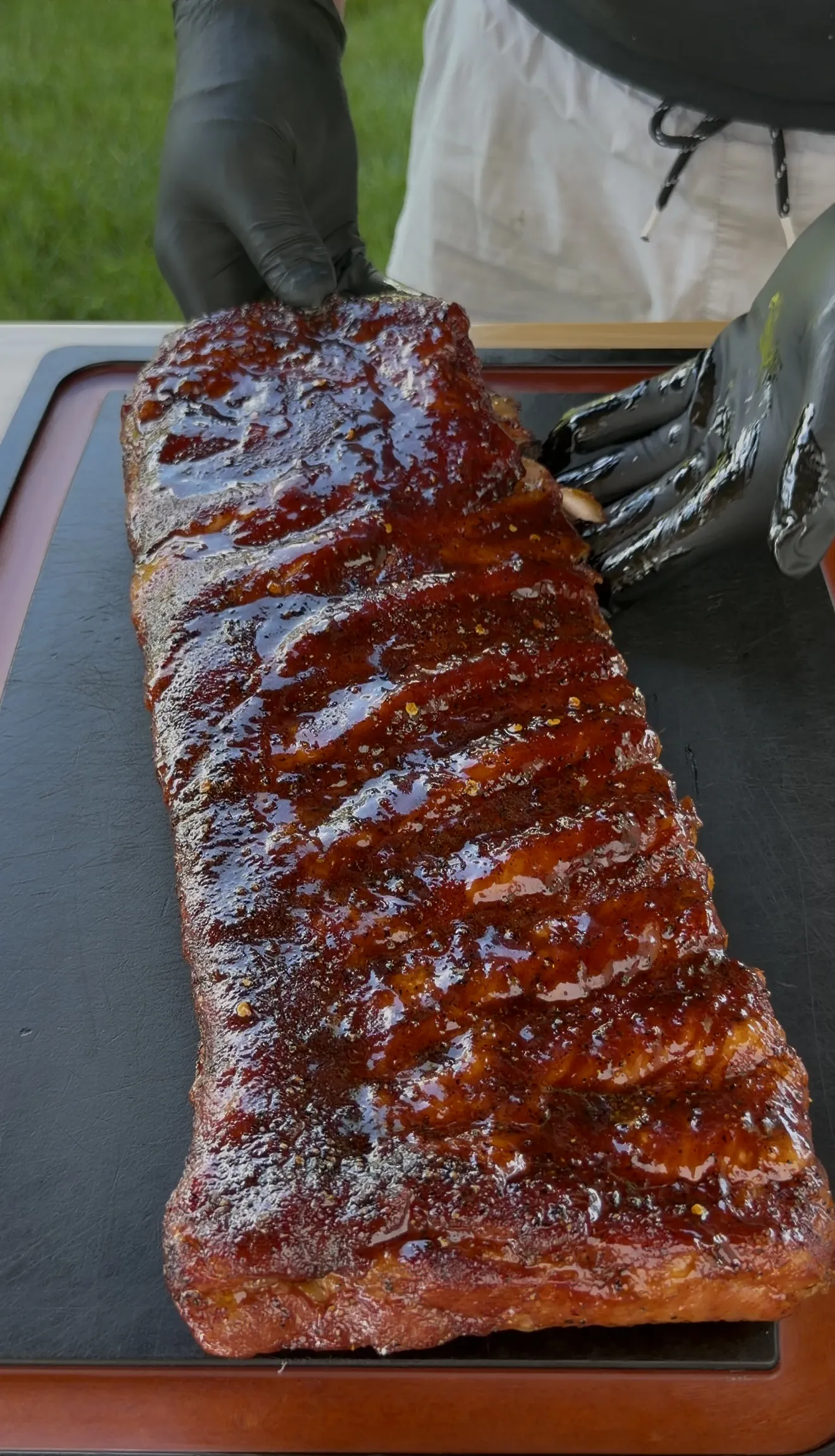
Competition Timeline
Here’s how the full cook breaks down from smoke to slice. Plan on roughly 4.5 to 5.5 hours total, since every rack moves at its own pace and you wrap on color, not the clock.
| Stage | Time |
|---|---|
| Smoke | 2.5 to 3 hours |
| Wrap | 1.5 to 2 hours |
| Glaze | 20 to 30 minutes |
| Rest | 15 minutes |
| Total | 4.5 to 5.5 hours |
My Pro Tips for Competition Ribs
Appearance Wins Before Flavor
When I’m cooking competition-style ribs, I’m paying attention to color from the start. If they don’t look incredible, judges are already forming an opinion before the first bite.
Cherry Wood Is Your Secret Weapon
I almost always run cherry with oak. Cherry gives ribs that deep mahogany color that makes people stop scrolling and judges take notice.
Don’t Overcook Them
One of the biggest mistakes backyard cooks make is chasing fall-off-the-bone ribs. Competition ribs should bite cleanly and leave a perfect bite mark.
Wrap Based on Color, Not Time
Every rack cooks differently. I’m wrapping when the bark is set and the color is where I want it, not because the clock says so.
Glaze Thin
A light, shiny glaze looks professional. Thick sauce hides your bark and can make ribs look sloppy.
The Middle Bones Are Money
The center bones are usually the most uniform. That’s where the best competition slices come from. For another sweet-heat rack worth practicing on, try my sweet heat peach party ribs.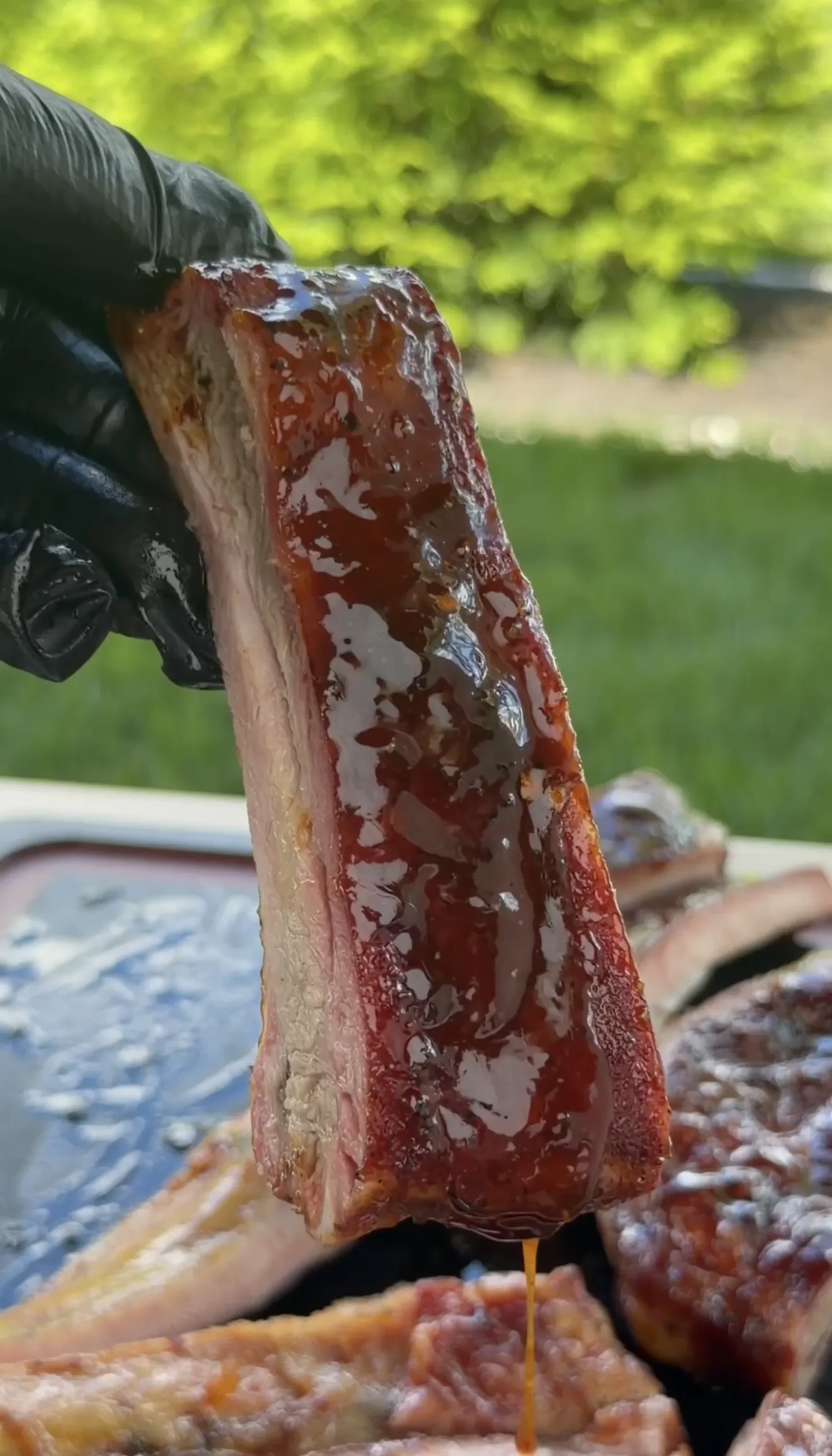
Why Trust This Competition Ribs Recipe
As the creator behind Grill Nation, I’ve cooked hundreds of racks of ribs across charcoal cookers, kettle grills, pellet smokers, and traditional barbecue pits. This competition-style method focuses on the same fundamentals successful pitmasters use: consistent temperatures, clean smoke, proper bark development, moisture management, and precise tenderness. The result is a rack that delivers the appearance, texture, and flavor profile expected in competitive barbecue while staying approachable for backyard cooks.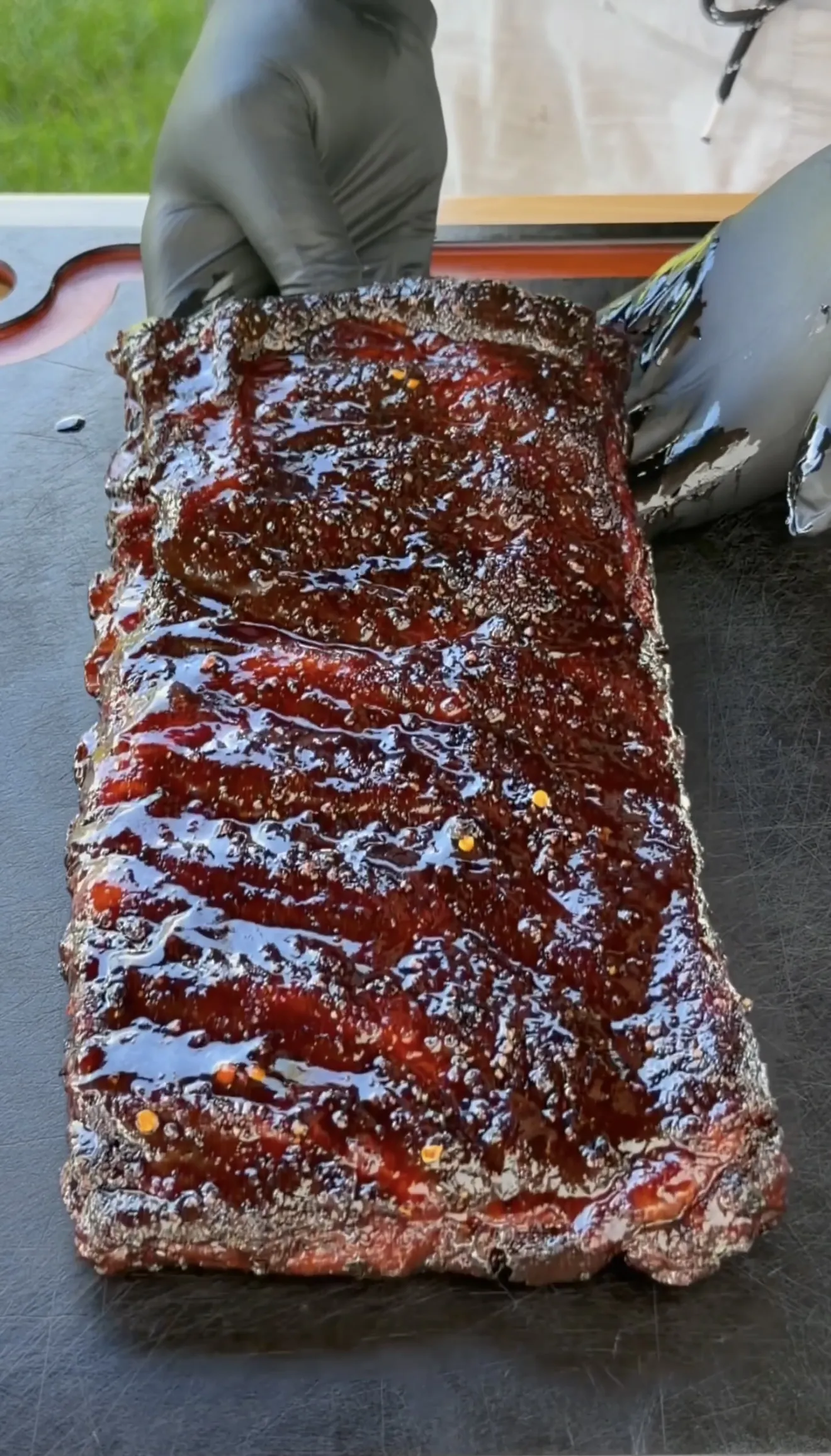
If you want to keep smoking ribs, these are worth a cook: Smoked Pork Ribs with Carolina Mustard Sauce, Honey Chipotle Smoked Ribs, Sweet Heat Peach Party Ribs, and Spicy Hoisin Glazed Smoked Ribs.
Competition Ribs Ingredients Roundup
- St. Louis Cut Spare Ribs: Buy 2 racks of St. Louis cut spare ribs, or trim full spares down yourself. Look for racks with even thickness and good meat coverage over the bones. The St. Louis cut is already squared, which saves you a step and gives uniform bones for presentation.
- Mustard Binder and Competition Rub: You’ll need plain yellow mustard for the binder, plus a sweet-heat rub of brown sugar, paprika, kosher salt, coarse black pepper, garlic powder, onion powder, smoked paprika, chili powder, and cayenne. The brown sugar and paprika build color, and the cayenne and chili bring the back-end heat that balances the sweet wrap and glaze.
- Wood: Oak and Cherry: Grab oak and cherry wood chunks for a charcoal smoker. Oak is your steady, neutral backbone and cherry is the color secret weapon. If you can only find one, cherry is the one to prioritize for competition-style appearance.
- Wrap and Glaze Components: For the wrap, pick up brown sugar, unsalted butter, honey, agave nectar, and apple juice. For the glaze, you’ll want a BBQ sauce you like, plus honey, apple jelly, and apple cider vinegar. Use a sauce with a balanced profile, since the honey and jelly add sweetness and the vinegar keeps it from going cloying.
Competition Style Smoked Spare Ribs
St. Louis Cut · Oak & Cherry · Bite-Through
Charcoal Smoked Competition Style Sweet Heat
Prep30 min
Cook5 hr
Total5.5 hr
Serves8
~710 Calories Per Serving
Ingredients4 GROUPS
Ribs & Binder
- 2 racks St. Louis cut spare ribs
- Yellow mustard (binder)
Competition Rub
- ½ cup brown sugar
- ¼ cup paprika
- 2 tbsp kosher salt
- 2 tbsp coarse black pepper
- 1 tbsp garlic powder
- 1 tbsp onion powder
- 1 tbsp smoked paprika
- 1 tsp chili powder
- 1 tsp cayenne pepper
Wrap Mixture
- ½ cup brown sugar
- 4 tbsp unsalted butter
- ¼ cup honey
- ¼ cup agave nectar
- ¼ cup apple juice
Glaze
- 1 cup BBQ sauce
- 2 tbsp honey
- 1 tbsp apple jelly
- 1 tbsp apple cider vinegar
Grill Master Tip
Appearance wins before flavor, so cook for color from the start and run cherry with oak for that deep mahogany. Wrap based on color, not the clock, when the bark is set and the rub no longer wipes off. Don’t chase fall-off-the-bone; competition ribs should bite cleanly with a little bone pullback. Glaze thin so it stays glossy without hiding the bark, and pull your slices from the uniform center bones. Not sponsored, the rub, wood, sauce, and gear are simply what James uses.
Grill NationCompetition Style Smoked Spare Ribs
Step-by-Step Instructions
Step 1: Trim Like a Competitor
Remove the membrane from the back of the ribs. Square the rack for even cooking and trim any excess fat and loose edges. Apply a light coat of yellow mustard, then season generously with the competition rub. Let the ribs sweat for 20 to 30 minutes.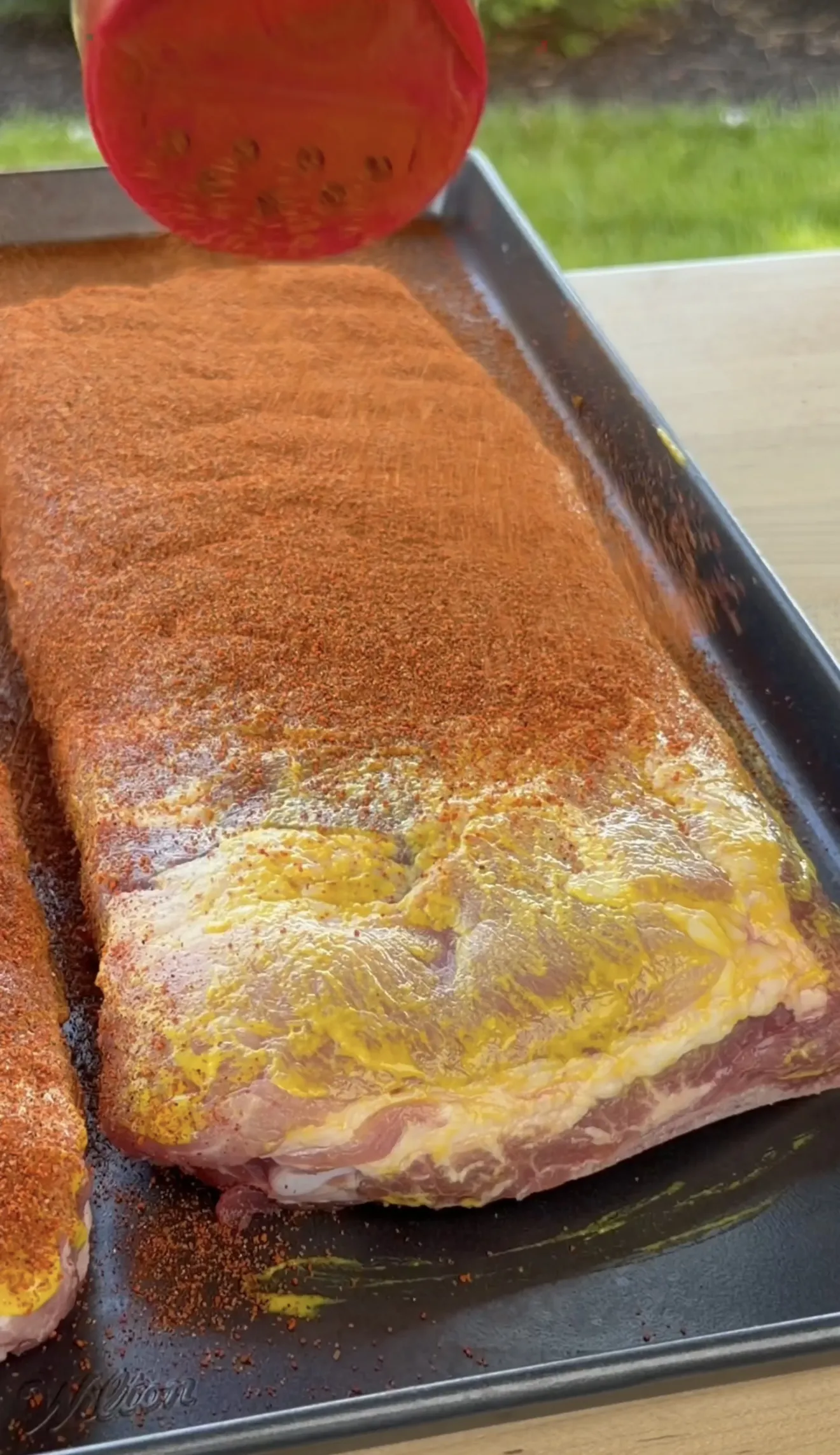
Step 2: Build Your Fire
Set the charcoal grill for indirect cooking and target 265 to 275°F. Add a combination of oak and cherry wood chunks. You want clean blue smoke, not thick white smoke.
Step 3: Build Color and Bark
Place the ribs bone-side down and smoke for about 2.5 to 3 hours, spritzing every 45 minutes with apple juice. Cook until a deep red mahogany color develops, the bark is set, and the rub no longer wipes off.
Step 4: Wrap for Tenderness
Lay out foil and add brown sugar, butter, honey, agave, and apple juice. Place the ribs meat-side down and wrap tightly. Return to the smoker for 1.5 to 2 hours.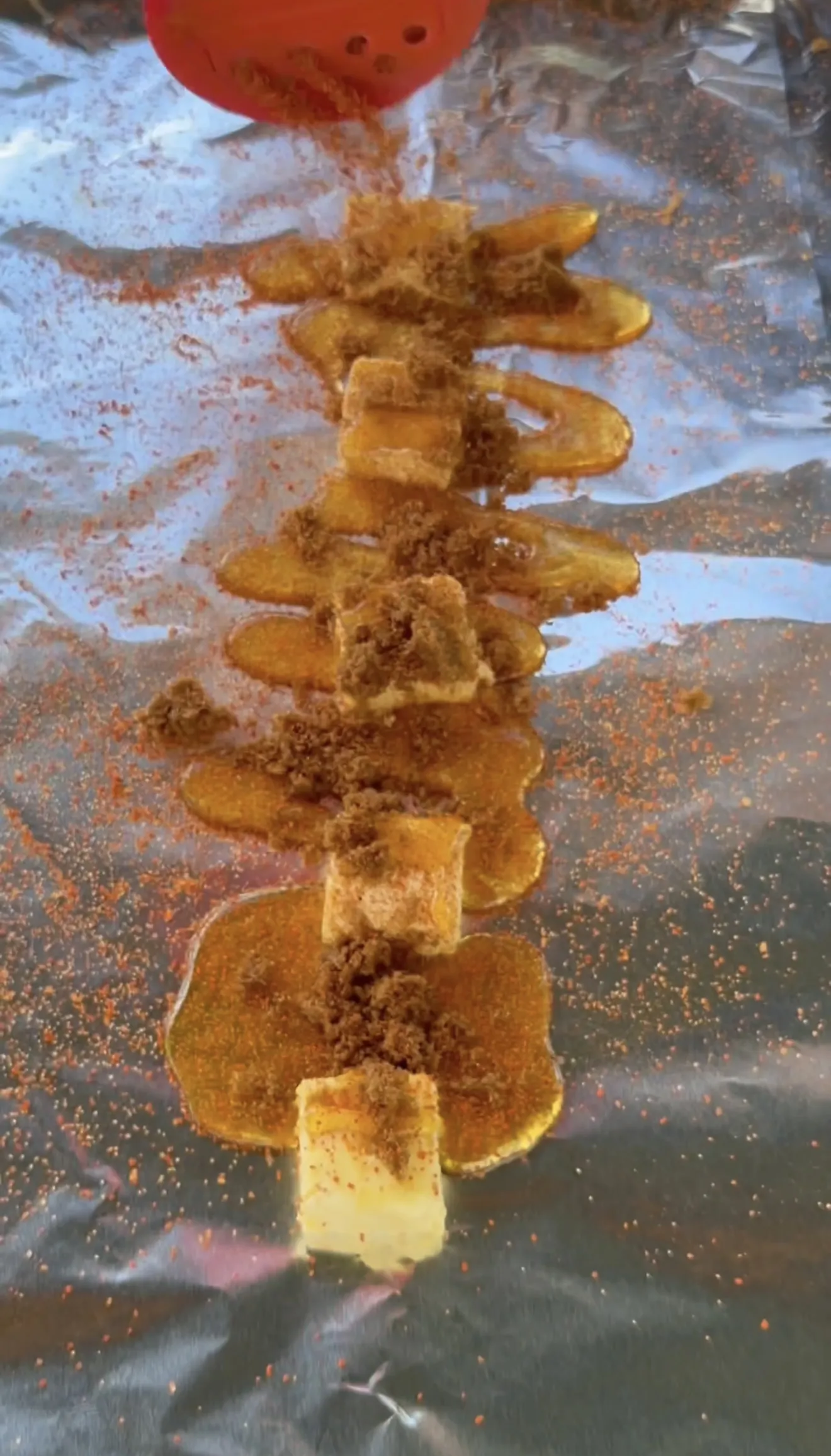
Step 5: Check for Competition Tenderness
Open the foil carefully. The ribs should flex easily, show bone pullback, and probe with little resistance. You are not looking for fall-off-the-bone.
Step 6: Glaze and Set
Mix the BBQ sauce, honey, apple jelly, and apple cider vinegar. Brush a thin layer over the ribs and return them to the smoker uncovered for 20 to 30 minutes, until the glaze becomes tacky and shiny.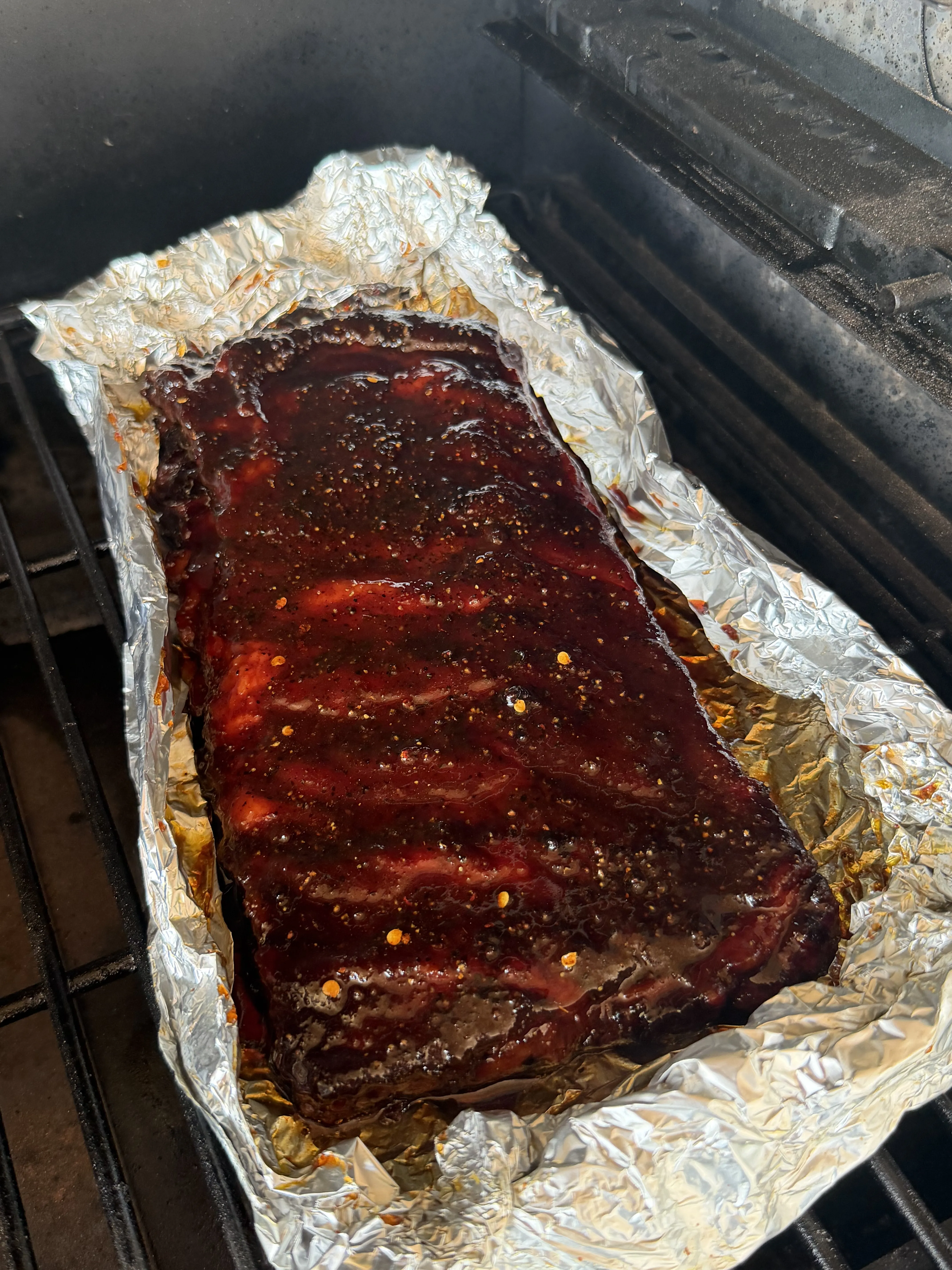
Step 7: Rest
Rest for 15 minutes, then slice carefully between each bone. Choose the most uniform bones from the center of the rack for presentation.
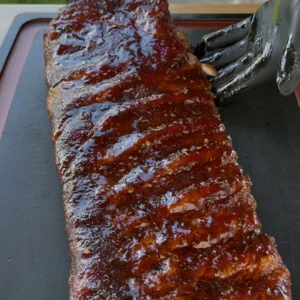
Competition Style Smoked Spare Ribs
Equipment
- Charcoal Smoker or Grill
- Oak and Cherry Wood Chunks
- Aluminum Foil
- Instant-Read Thermometer
- Rib Rack (optional)
Ingredients
Ribs & Binder
- 2 racks St. Louis cut spare ribs
- yellow mustard binder
Competition Rub
- 1/2 cup brown sugar
- 1/4 cup paprika
- 2 tbsp kosher salt
- 2 tbsp coarse black pepper
- 1 tbsp garlic powder
- 1 tbsp onion powder
- 1 tbsp smoked paprika
- 1 tsp chili powder
- 1 tsp cayenne pepper
Wrap Mixture
- 1/2 cup brown sugar
- 4 tbsp unsalted butter
- 1/4 cup honey
- 1/4 cup agave nectar
- 1/4 cup apple juice
Glaze
- 1 cup BBQ sauce
- 2 tbsp honey
- 1 tbsp apple jelly
- 1 tbsp apple cider vinegar
Instructions
- Remove the membrane from the back of the ribs. Square the rack and trim excess fat and loose edges. Apply a light coat of yellow mustard, then season generously with the competition rub. Let the ribs sweat for 20-30 minutes.
- Set the charcoal grill for indirect cooking and target 265-275°F. Add oak and cherry wood chunks. You want clean blue smoke, not thick white smoke.
- Place the ribs bone-side down and smoke about 2.5-3 hours, spritzing every 45 minutes with apple juice. Cook until a deep mahogany color develops, the bark is set, and the rub no longer wipes off.
- Lay out foil and add brown sugar, butter, honey, agave, and apple juice. Place the ribs meat-side down, wrap tightly, and return to the smoker for 1.5-2 hours.
- Open the foil carefully. The ribs should flex easily, show bone pullback, and probe with little resistance. You are not looking for fall-off-the-bone.
- Mix the BBQ sauce, honey, apple jelly, and apple cider vinegar. Brush a thin layer over the ribs and return them uncovered for 20-30 minutes, until the glaze becomes tacky and shiny.
- Rest for 15 minutes, then slice carefully between each bone. Choose the most uniform bones from the center of the rack for presentation.
Video
Notes
Nutrition
Frequently Asked Questions
Competition Style Smoked Spare Ribs
10 Q&A
Click a question to reveal the answer
Competition Ribs FAQ
Q1
What are competition ribs?
Competition ribs are smoked ribs cooked to a clean bite-through texture rather than fall-off-the-bone. The goal is a defined bite mark with slight bone pullback, along with strong color and moisture.Q2
What temperature do competition teams cook ribs?
Most teams cook between 265°F and 300°F, with many finding success around 275°F. This recipe runs 265 to 275°F for steady bark development and moisture control.Q3
Are spare ribs better than baby backs for competition?
Yes. St. Louis cut spare ribs generally provide more consistent meat distribution, better presentation, and richer flavor. The extra fat also keeps them moist through a longer cook.Q4
What wood is best for competition ribs?
A mix of oak and cherry. Cherry drives the deep mahogany color judges notice first, while oak gives a clean, balanced smoke backbone.Q5
Should competition ribs fall off the bone?
No. Judges generally score fall-off-the-bone ribs lower because they are considered overcooked. The target is a clean bite with slight bone pullback and a visible bite mark.
More Questions About Competition Ribs
Q6
How long does it take to smoke competition ribs?
About 4.5 to 5.5 hours total: roughly 2.5 to 3 hours of smoke, 1.5 to 2 hours wrapped, 20 to 30 minutes to glaze, and a 15-minute rest. Wrap on color, not the clock.Q7
Do you wrap competition ribs?
Yes. Wrap them meat-side down in foil with a sweet liquid mixture of brown sugar, butter, honey, agave, and apple juice to set tenderness and lock in color, for about 1.5 to 2 hours.Q8
What is in a competition rib rub?
A sweet-heat blend of brown sugar, paprika, kosher salt, coarse black pepper, garlic powder, onion powder, smoked paprika, chili powder, and cayenne. The sugar and paprika build color, and the cayenne brings the back-end heat.Q9
What is the bend and bite test for ribs?
When you lift the rack it should flex and the surface should crack slightly, and a probe should slide between the bones with just a little give. The finished bite is clean with bone pullback, not mushy.Q10
What glaze do competition cooks use on ribs?
A thin BBQ-sauce glaze tightened with honey, apple jelly, and apple cider vinegar, set uncovered for 20 to 30 minutes. The honey and jelly add gloss while the vinegar keeps it from going too sweet.
Grill NationFAQ