Smoked Brisket Recipe
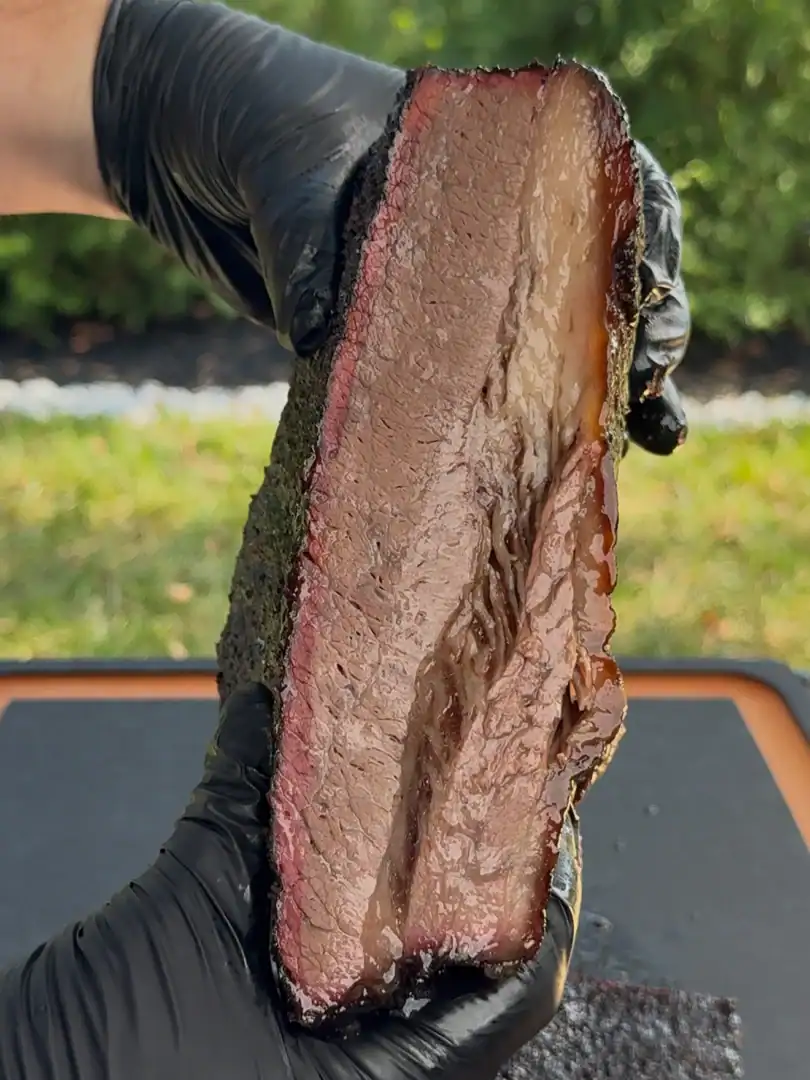
There’s nothing quite like smoking a whole brisket overnight, letting hickory smoke build a deep bark while the fat slowly renders and the meat becomes tender. This Smoked Brisket Recipe uses a Texas-style approach with a simple salt-and-pepper seasoning, a charcoal smoker, and homemade beef tallow rendered from the brisket trimmings.
I start by shaping the brisket so it cooks more evenly, then smoke it fat side down to protect the meat from the heat coming up through my charcoal smoker. Once the bark is set, I wrap it with rendered beef tallow and finish cooking until the flat is probe tender, be sure to probe a few different areas. A long, controlled rest gives the brisket time to settle before slicing across the grain for tender, juicy slices. If you’re using a pellet smoker, try my Pellet Smoked Brisket recipe.
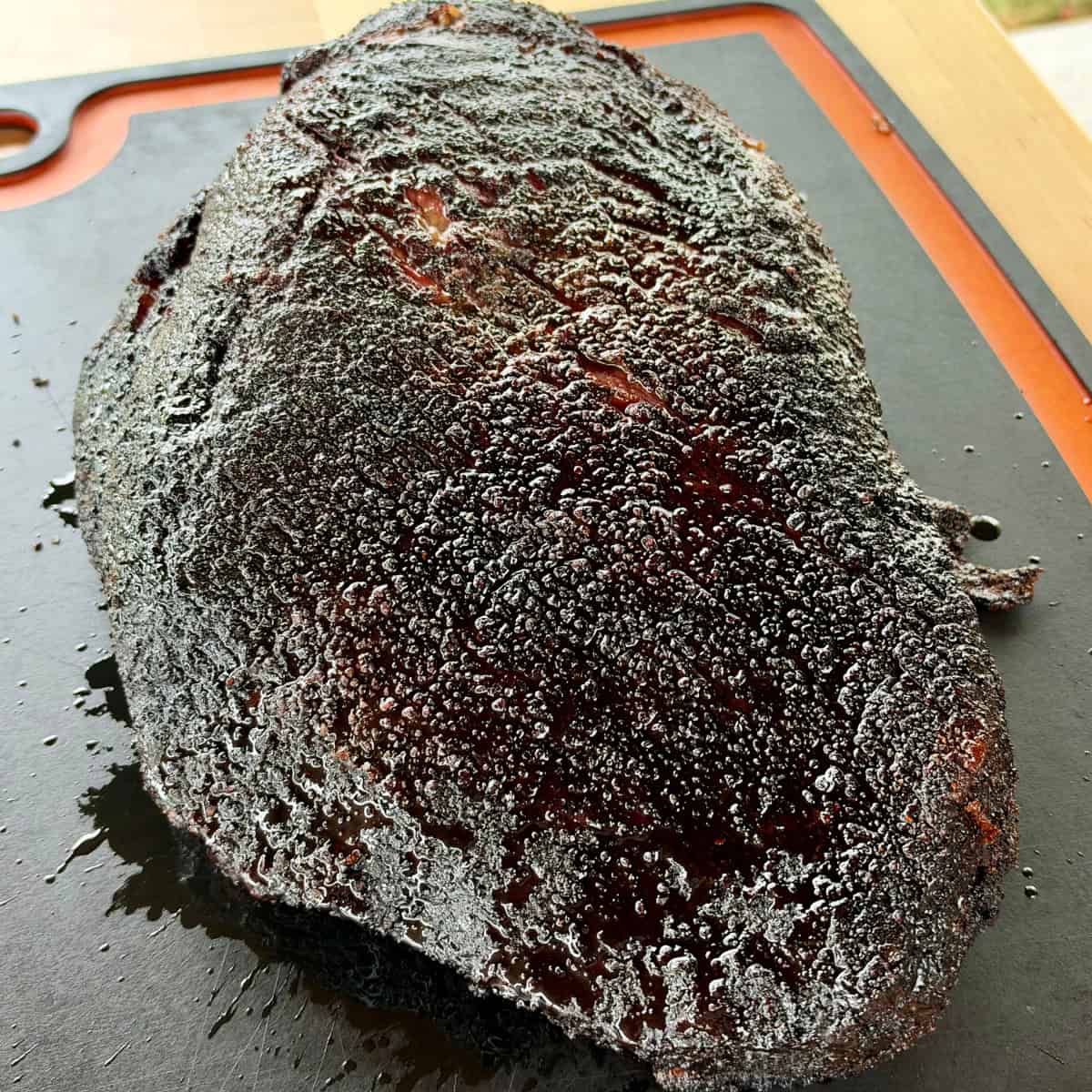
Quick Look: Smoked Brisket Recipe
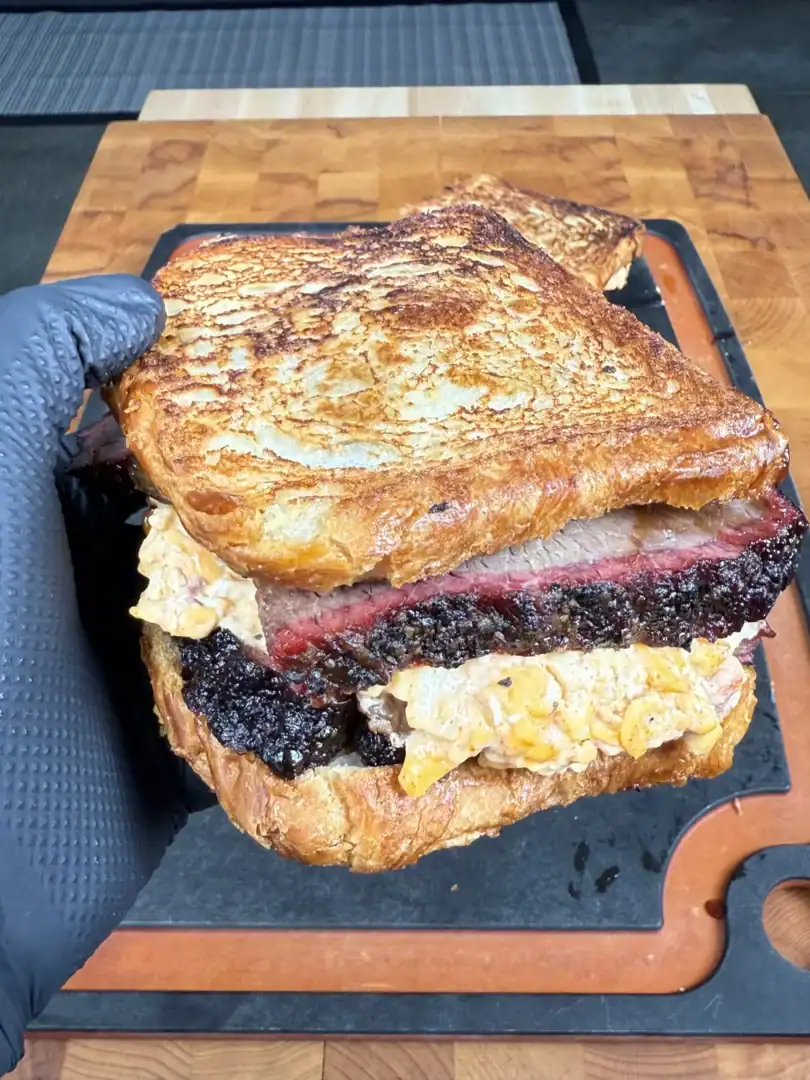
- What it is: A Texas-style smoked beef brisket seasoned with salt and black pepper, slowly smoked over charcoal with hickory wood, and finished with homemade beef tallow for a rich, smoky bark and tender bite. I love making Smoked Brisket Sandwiches out of this brisket cook.
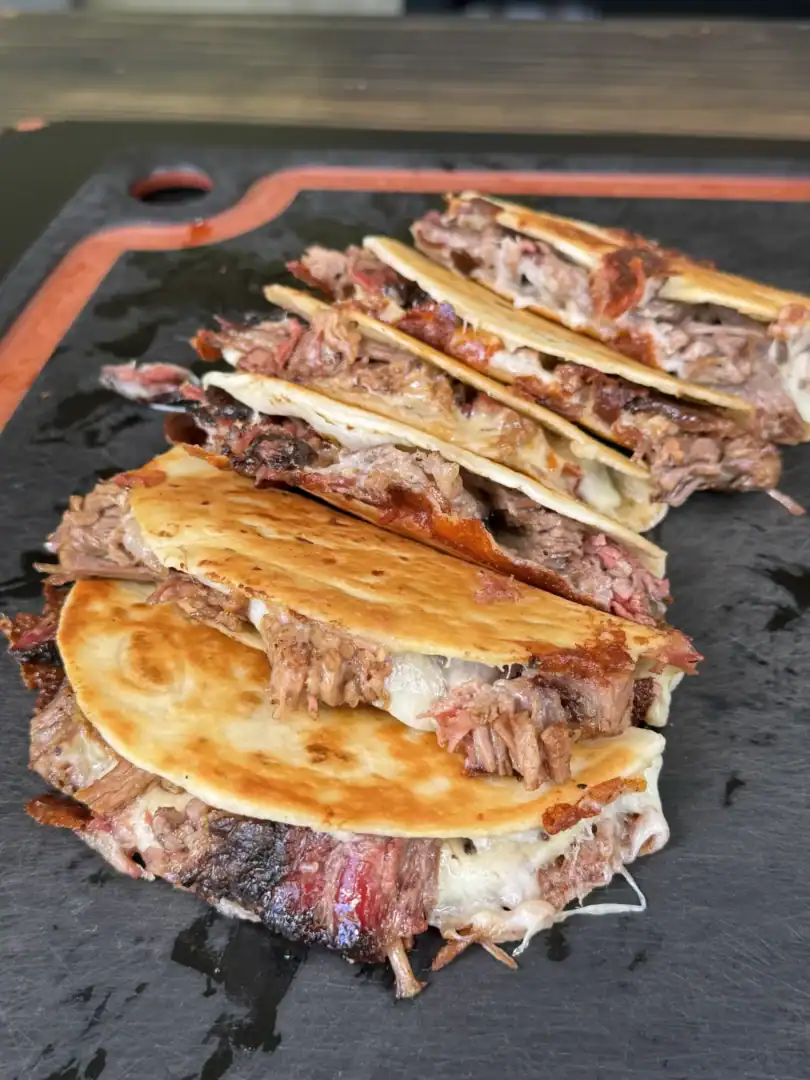
- Why Make THIS Version? I trim and shape the brisket for more consistent cooking, position the fat cap toward the charcoal heat source, and smoke at 225°F until a deep bark develops. Wrapping with rendered beef tallow, finishing at 250°F until probe tender, and allowing a long rest provides the best results for the brisket. I smoke the brisket the same way in my Smoked Brisket Elote Tacos recipe.
- Key Ingredients: Whole packer beef brisket, yellow mustard, kosher salt, coarse black pepper, and hickory wood chunks. Beef tallow is rendered from the brisket trimmings.
- Total Time: Plan for 16-23 hours, including 1 hour of refrigerated seasoning, and a 3-4 hour rest or controlled hold. Actual cooking time depends on brisket size and type of smoker used.
- Pairs Well With: Easy Mac and Cheese, BBQ Baked Beans, Mexican Street Corn Pasta Salad, Loaded Baked Potatoes.
SUMMARIZE AND SAVE THIS POST ON
Why This Recipe Works
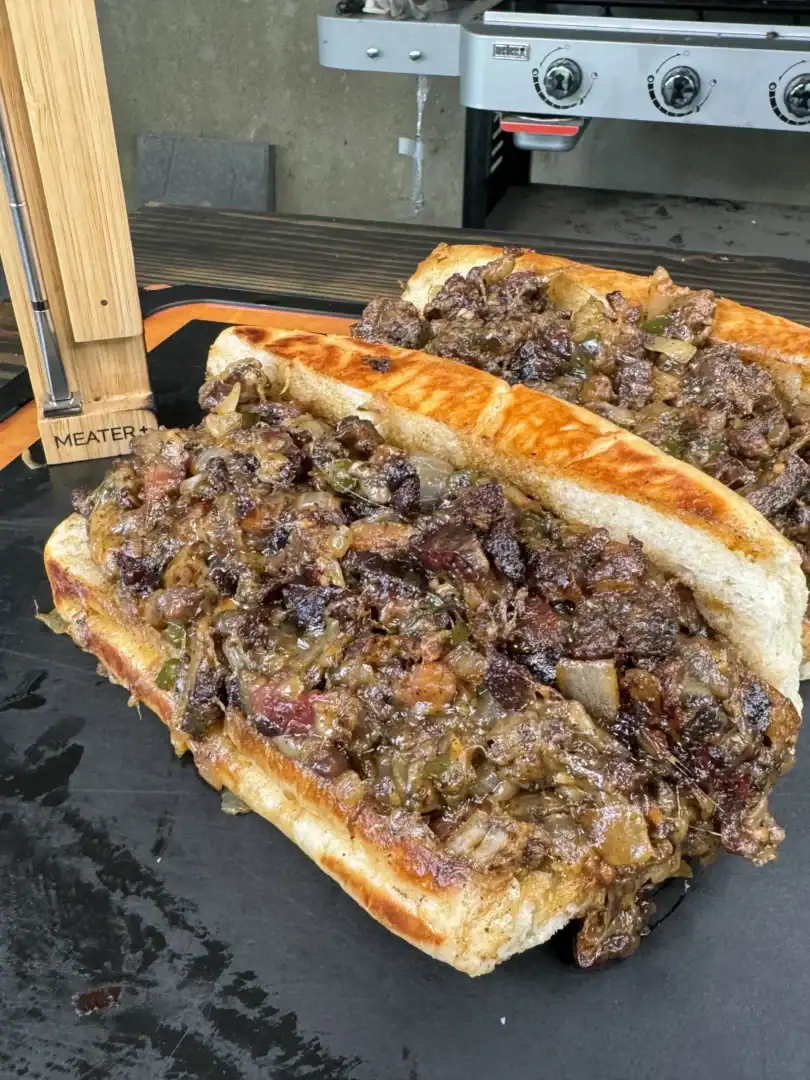
Smoking a great brisket starts long before it hits the smoker. From trimming the fat to managing the heat and knowing when the bark is ready, every stage affects the final result. This is the method I use to develop a flavorful crust while keeping the flat tender and the point rich and juicy. When I have leftovers, I turn them into my BBQ Brisket Melts with caramelized onions, melted cheese, BBQ sauce, and toasted sourdough bread.
- Trimming for a More Even Cook: I remove hard fat, thin edges, and loose sections before rounding the brisket into a cleaner shape. This creates a more uniform surface for smoke and heat to circulate around while reducing thin spots that could dry out during a long cook.
- Protecting the Flat From Direct Heat: My charcoal smoker produces heat from below, so I cook the brisket fat side down with approximately 1/4-inch of fat remaining. I also position the thicker point closer to the strongest heat, helping protect the leaner flat as the brisket cooks.
- Building Bark Before Wrapping: I start smoking at 225°F with hickory wood chunks and let the exterior develop a deep, dark crust before wrapping. Rather than relying on a specific internal temperature, I check that the seasoning has formed a firm bark that won’t easily rub away.
- Using the Brisket’s Own Beef Tallow: While the brisket smokes, I render the trimmed fat in a foil pan. Adding this homemade tallow during wrapping brings extra beef flavor and richness to the meat without introducing additional seasonings or sauces.
- Finishing by Feel, Not Just Temperature: After wrapping, I increase the smoker to 250°F and continue cooking until the thickest part of the flat feels probe tender, typically around 202-205°F. A proper rest or temperature-controlled hold gives the meat time to cool gradually and retain more of its juices before slicing against the grain.
Key Ingredients for Smoked Brisket
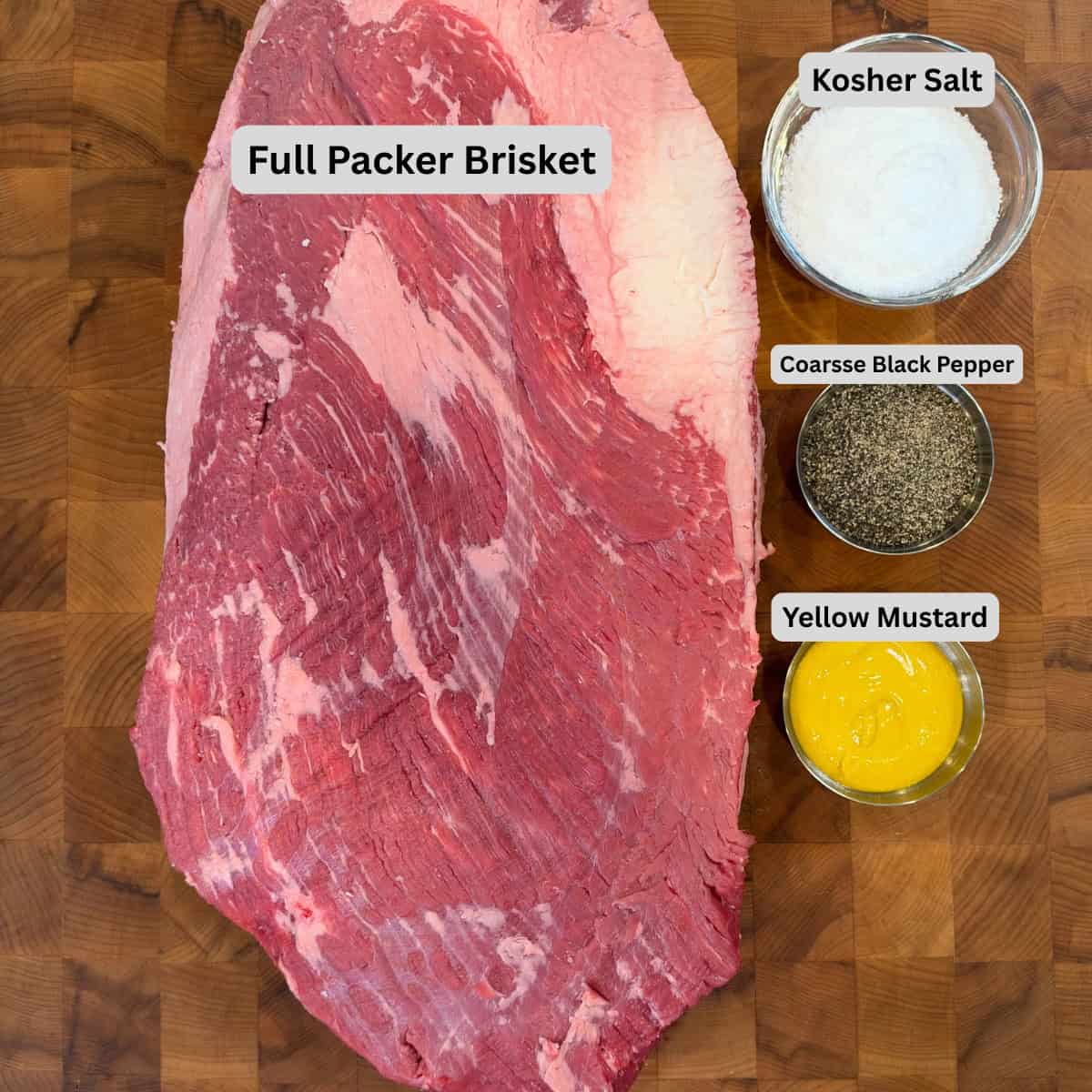
Texas-style brisket doesn’t need a complicated ingredient list. The quality of the beef, the balance of the seasoning, and proper preparation make the biggest difference. Here’s what I use to build a flavorful crust while letting the natural richness of the brisket stand out.
- Whole Packer Beef Brisket: Choose a whole packer with both the point and flat attached. Look for good marbling throughout the meat and a flat with consistent thickness. USDA Prime is an excellent option, although a well-marbled Choice brisket can also product great results. For the leftover brisket, my Honey Chipotle Brisket Sliders are great to make.
- Kosher Salt: Draws moisture to the surface of the brisket, where it dissolves and gradually moves into the meat during the refrigerated seasoning period. This helps season the beef beyond the exterior and improves moisture retention as the muscle proteins respond to the salt. Its coarse texture also makes it easier to distribute evenly across the brisket.
- Coarse Black Pepper: Essential for developing the signature Texas-style brisket bark. The larger pepper granules create a textured surface that helps form a robust crust as smoke compounds, rendered fat, and moisture interact during the long cook. Coarse pepper also delivers a bold, earthy flavor that balances the richness of the beef without overpowering it.
- Yellow Mustard: An excellent binder that creates a thin, tacky coating, helping the salt and coarse black pepper stick evenly to the brisket. This keeps the seasoning in place as the exterior dries and develops its signature bark during smoking. The mustard’s tangy flavor becomes virtually undetectable after hours of low-and-slow cooking, allowing the beef, pepper, and hickory smoke to remain the focus. I use the same binder technique in my Chuck Roast Burnt Ends to help the seasoning stick before smoking.
Substitutions or Additions
- Post Oak or Pecan Wood: Hickory delivers a bold smoke flavor, but post oak is a traditional Texas barbecue choice with a more balanced, wood-fired profile. Pecan provides a slightly milder alternative that complements the beef without overpowering the seasoning.
- Different Brisket Grades: USDA Prime offers more abundant marbling, which can improve tenderness and richness during a long smoke. A well-marbled USDA Choice brisket is also an excellent option. Pat close attention to the thickness of the flat, since thinner sections are more likely to dry out before the point finishes.
- Adjust the Salt and Pepper Ratio: Equal parts kosher salt and coarse black pepper create a classic Texas-style seasoning. For a more pronounce pepper crust, increase the black pepper slightly. Use measured weights when changing salt brands, since different kosher salts vary significantly in density.
- Skip the Mustard Binder: You can apply the salt and pepper directly to the brisket if you prefer. Light surface moisture is usually enough to help the moisture adhere, especially when the meat has time to rest in the refrigerator before smoking.
- Unwaxed Butcher Paper Instead of Parchment: Food-grade, uncoated pink butcher paper is a reliable option for wrapping smoked brisket. Its breathable structure allows some moisture to escape while limiting surface drying, helping preserve more of the bark’s texture. Check that any wrapping material is rated for your cooking conditions.
How to Make Smoked Brisket (Step by Step)
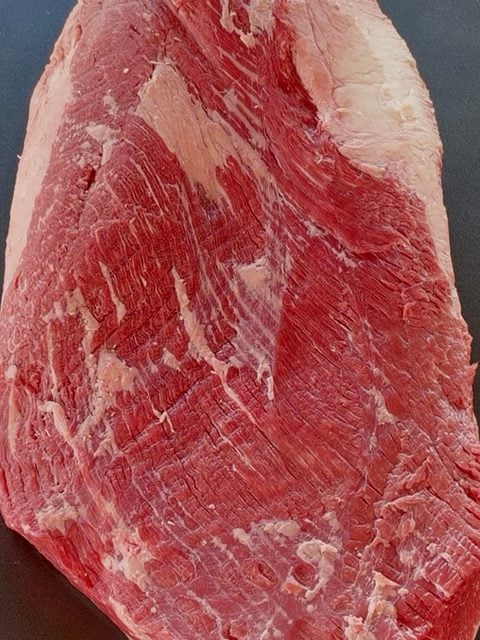
- Trim and shape the brisket: Start with a cold whole packer brisket and a sharp trimming knife. Remove the large, hard deposits of deckle fat near the junction of the point and flat, along with any exposed silver skin and loose pieces of meat. Trim away the thin, tapered end of the flat and round off sharp corners that could dry out during the extended smoke. Shave the fat cap down to about 1/4-inch, leaving an even layer to help shield the meat from the heat below. Smooth any bulky areas around the point to create a more streamlined shape, allowing heat and smoke to circulate around the brisket more consistently. I trim the brisket for my Brisket Loaded Twice Baked Potatoes the same way for smoking. Save the usable fat trimmings to render into the homemade beef tallow.
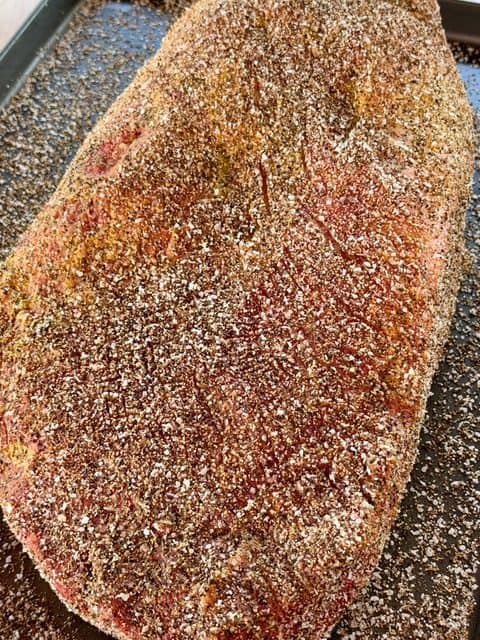
- Apply the binder and season: Spread a thin, even layer of yellow mustard over the entire brisket, covering the top, bottom, and sides. Generously season with kosher salt and coarse black pepper, pressing the mixture lightly into the surface to help it adhere. Place the seasoned brisket on a wire rack over a sheet pan and refrigerate uncovered for 1 hour. During this time, the salt begins drawing moisture to the surface and dissolving into it, allowing the seasoning to start penetrating the outer layer of beef. The refrigerated rest also helps the exterior become slightly tacky, keeping the pepper in place before the brisket goes on the smoker.
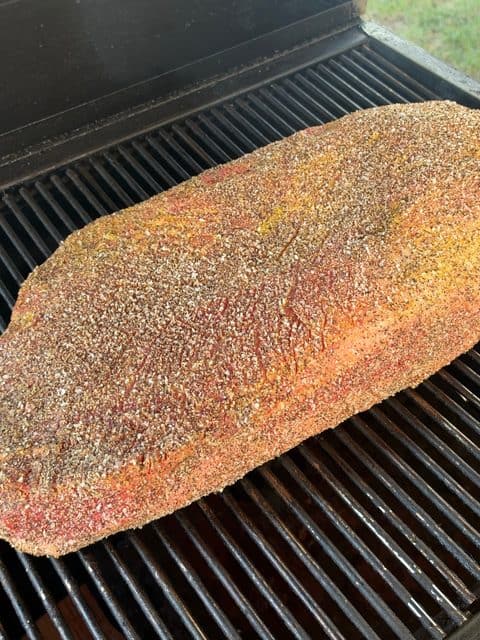

- Prepare the smoker and render the beef tallow: Preheat your charcoal smoker to 225°F and add hickory wood chunks for a steady flow of clean smoke. Place the brisket fat side down on the cooking grates, positioning the thicker point towards the strongest heat source to protect the leaner flat. Add the reserved brisket fat trimmings to a disposable aluminum pan and place it inside the smoker to slowly render into homemade beef tallow. Let the brisket smoke undisturbed for the first several hours, maintaining a consistent temperature as the bark begins to develop. Continue smoking for 8-10 hours before checking the bark and internal temperature, allowing additional time if needed before wrapping.
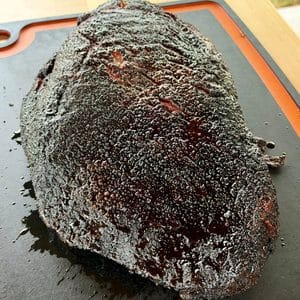
- Check the bark and wrap the brisket: After 8-10 hours of smoking, inspect the brisket for a deep mahogany-to-dark-brown crust with a firm, dry surface. the bark should be set enough that the seasoning doesn’t easily rub away when lightly touched. This typically happens around 175-185°F, but let the bark determine when it’s ready rather than relying on temperature alone. Lay out two overlapping sheets of food-grade, unwaxed butcher paper and drizzle some of the rendered beef tallow where the brisket will sit. Place the brisket fat side down, spoon a few tablespoons of warm tallow over the exposed surface, and wrap tightly to minimize air pockets. Return it to the smoker with the thicker point facing the heat source, then increase the cooking temperature to 250°F.
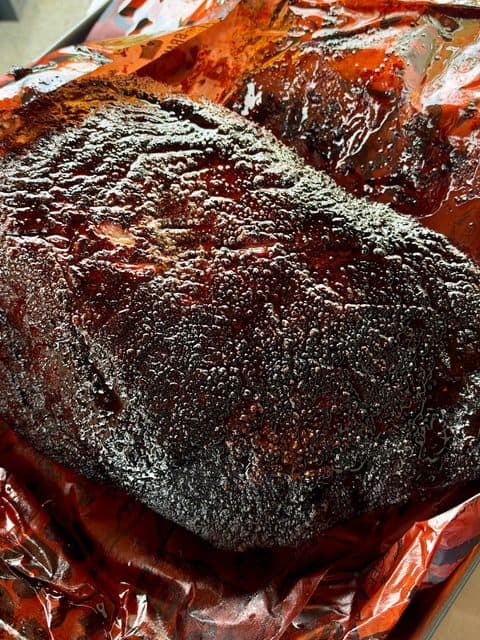
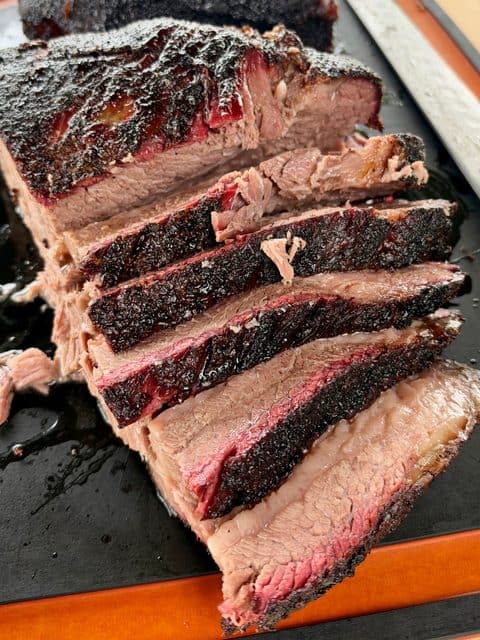
- Finish smoking until probe tender: Continue smoking the wrapped brisket at 250°F, keeping the thicker point positioned toward the heat source. As the internal temperature approaches 200°F, begin checking tenderness with an instant-read thermometer or temperature probe. Insert the probe into several areas of the thickest part of the flat, avoiding large pockets of fat. The brisket is ready when the probe slides in and out with very little resistance, similar to pushing through softened butter. This typically happens around 202-205°F, but tenderness is the deciding factor, not the exact temperature. Once the flat is consistently probe tender, remove the brisket from the smoker while keeping it wrapped for the resting stage. Checking for tenderness is also an important part of making my Raspberry Jalapeño Burnt Ends, where the beef pork belly needs to become tender before finishing with the glaze.
- Rest, slice, and serve the brisket: Once the brisket is probe tender, keep it wrapped and allow the internal temperature to gradually decrease before transferring it to a temperature-controlled holding environment at 140-150°F for 3-4 hours. This extended hold allows the meat to relax, the temperature to equalize, and the rendered fat and gelatin to settle, reducing moisture loss when slicing. Keep the brisket above 140°F during the hold. When ready to serve, unwrap it over a tray to collect the drippings. Identify the direction of the muscle fibers and slice the leaner flat against the grain into 1/4-inch, pencil-thick slices. When you reach the thicker point, rotate the brisket 90° to account for the change in grain direction and cut slightly thicker slices, around 3/8-inch. Spoon the warm, collected drippings over the sliced brisket and serve immediately.
James’ Grill Master Pro Tips for the Best Smoked Brisket
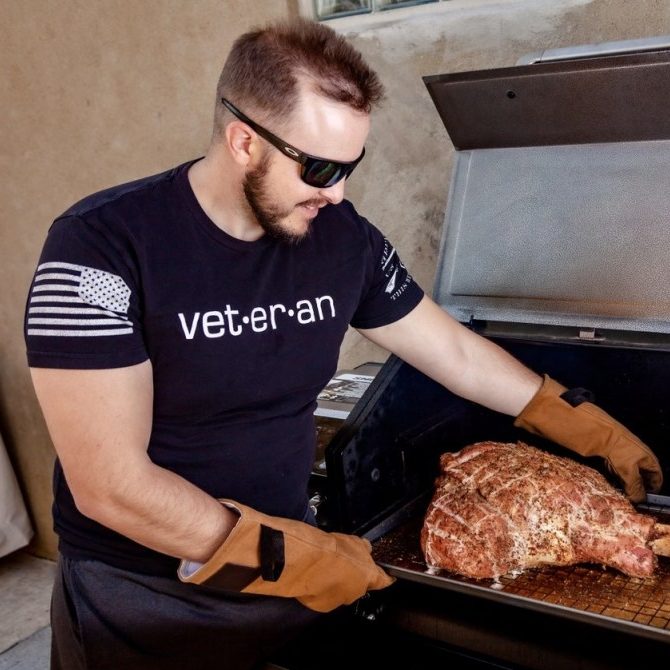
Start with a Thick, Well-Marbled Flat: When selecting a whole packer brisket, I pay close attention to the flat rather than judging the cut by its overall weight. A thin, tapered flat can dry out before the thicker point finishes cooking. Look for good marbling and enough thickness across the leaner end to withstand an extended smoke.
Identify Where the Point and Flat Meet: Before seasoning, take a moment to locate where the thicker point overlaps the leaner flat. These two muscles have different grain directions, which determines how the finished brisket should be sliced. I like to identify that transition while the meat is still raw because the dark bark makes it harder to recognize after smoking. Knowing where the muscles intersect helps your determine the brisket so you can continue slicing against the grain.
Control the Fire, Not Just the Thermometer: During an overnight smoke, consistent heat matter more than maintaining exactly 225°F every minute. I aim for clean-burning hickory smoke and avoid making constant adjustments for small temperature changes. This is why I typically let it go 8-10 hours before checking on the bark and temperature, unless I have a crazy temperature spike, I’ll investigate a bit more if that happens.
Don’t Confuse Dark Bark With Finished Bark: A brisket can develop a dark exterior before the seasoning has fully set. Lightly touch an exposed area with a gloved finger. If the rub smears or comes away easily, give it more time. Wrapping too early traps moisture against the surface and can soften the crust you’ve worked to develop.
Use Beef Tallow With Restraint: Rendering the fat trimmings is an excellent way to add richness without changing the brisket’s seasoning profile. Strain out the cooked solids and use a few tablespoons of the liquid fat during wrapping. Too much tallow can leave the surface greasy and soften the bark rather than improve it.
Build Extra Time Into Your Cook: Brisket doesn’t follow an exact schedule. The stall, thickness of the flat, and fluctuations in smoker temperature can all extend the cooking process. I prefer starting early and allowing additional time for a controlled hold rather than increasing the heat aggressively to meet a serving deadline.
Slice Only What You’re Serving: Keep the remaining brisket intact until you’re ready for another portion. Once sliced, more surface area is exposed, allowing the meat to cool and lose moisture faster. Use a long, sharp slicing knife with smooth strokes, and adjust the thickness depending on whether you’re cutting the leaner flat of fattier point.
Smoked Brisket Temperature Guide
Smoking brisket is about more than reaching a specific internal temperature. As the meat cooks, connective tissue gradually breaks down, moisture evaporates, and the exterior develops its signature bark. I use a meat thermometer to track the progress, but the appearance of the bark and tenderness of the flat ultimately determines when to move to the next stage.
- Below 150°F: The brisket is heating through, fat begins rendering, and the exterior gradually dries as smoke flavor develops. Be sure to maintain the smoker at 225°F and allow the bark to form.
- 150-170°F: The brisket may enter the stall as evaporating moisture slow the rise in internal temperature. Keep the heat steady and avoid wrapping before the bark is ready.
- 175-185°F: The bark is often deeply developed at this stage, although timing varies by brisket and smoker. Check that the seasoning is firmly set. Wrap with beef tallow and increase the smoker to 250°F.
- 195-200°F: The brisket is approaching its finishing stage as connective tissue continues softening. Begin checking the thickest part of the flat for probe tenderness.
- 202-205°F: Many briskets become fully tender within this range, although some finish earlier or later. Remove when the probe slides into multiple areas of the flat with very little resistance.
- 140-150°F holding environment: A controlled hot hold allows the brisket to rest without continuing to cook at smoking temperatures. Hold for 3-4 hours, monitoring the meat and make sure the holding environment stays at 140-150°F.
Important: These temperatures are guidelines rather than fixed finishing points. Brisket size, marbling, thickness, and smoker conditions all influence the cook. I rely on a firmly developed bark to determine when to wrap and check the flat for probe tenderness before removing the brisket from the smoker.
Smoked Brisket FAQs
A whole packer brisket can take 12-18 hours to smoke, depending on its weight, thickness, and smoker conditions. For this recipe, I start at 225°F and increase to 250°F after wrapping, so the brisket doesn’t cook at 225°F the entire time. Always allow extra time for resting rather than relying on a fixed cooking schedule.
It depends on where the strongest heat comes from. I smoke mine fat side down because my charcoal smoker produces heat from below. The fat cap provides some protection against radiant heat, while positioning the thicker point toward hotter areas helps protect the leaner flat. On smokers with different heat patterns, the best orientation may change.
Post oak is traditionally associated with Central Texas barbecue, but hickory is another excellent choice for beef brisket. I use hickory wood chunks throughout my cook because I enjoy the stronger, savory, smoke flavor. Pecan and other oak varieties also work well when burned cleanly.
I generally look for a deeply developed bark around 175-185°F before wrapping. The exact internal temperature is less important than the condition of the exterior. If the seasoning is still damp or rubs away easily, continue smoking until the bark becomes firmly established.
More Smoked BBQ Recipes
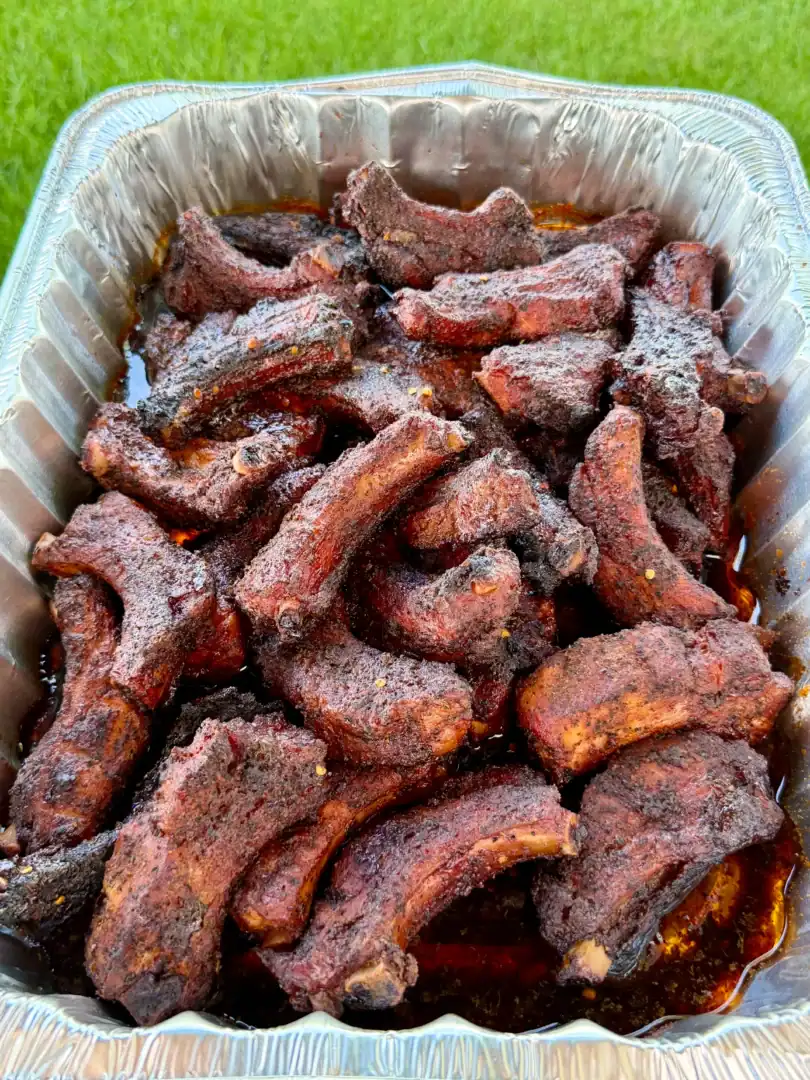
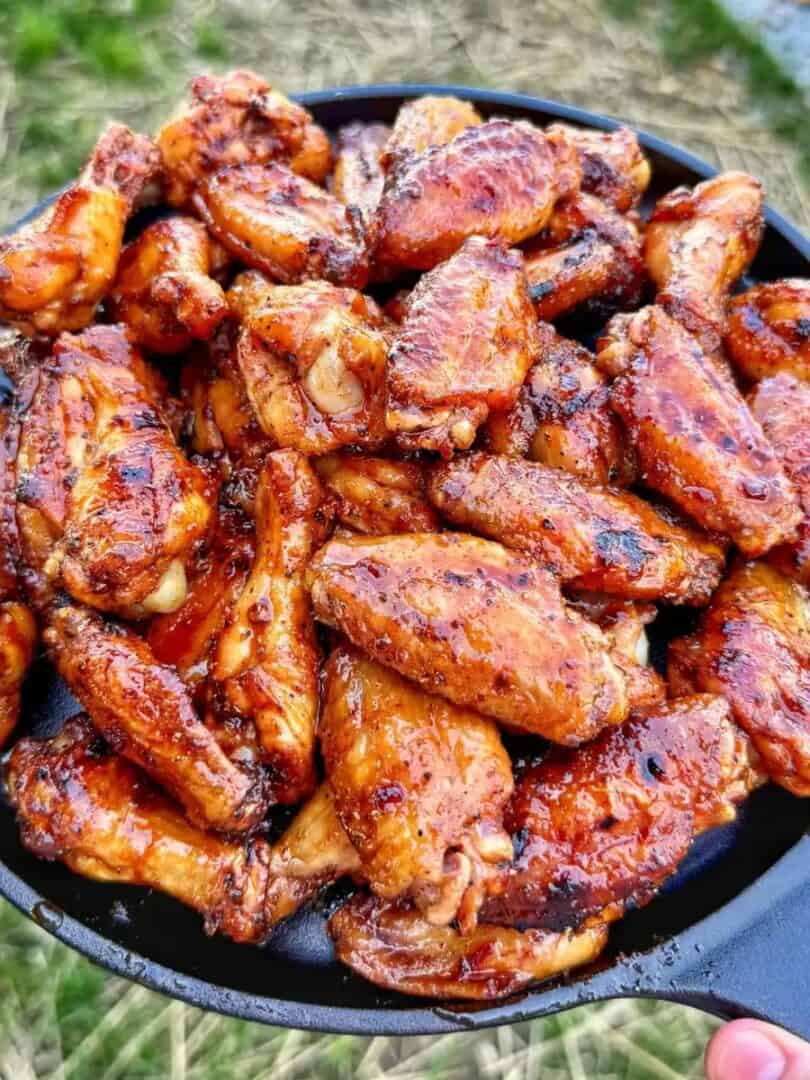
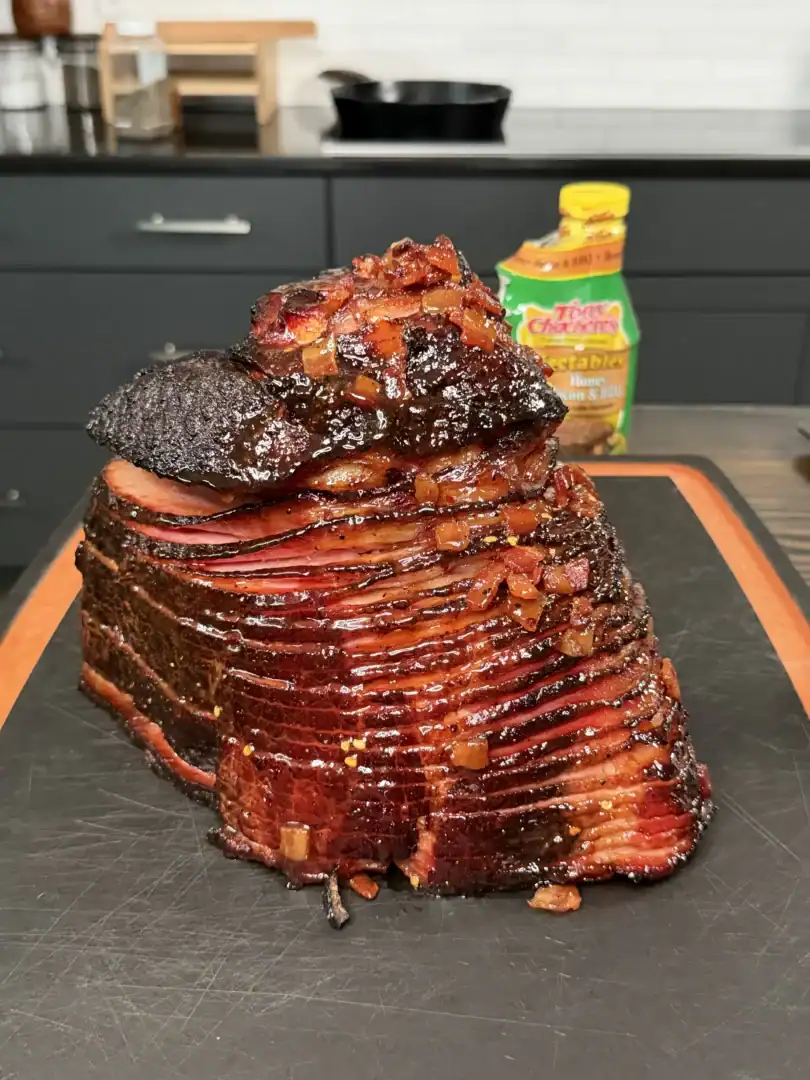
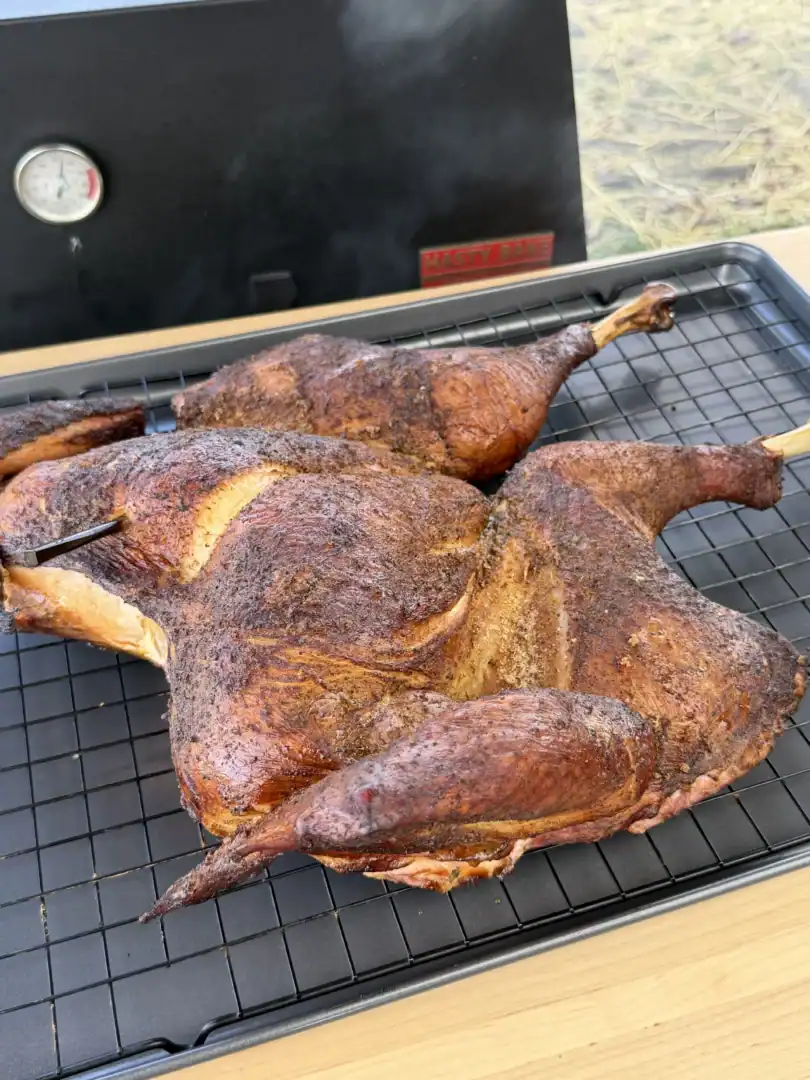
If you tried this Smoked Brisket recipe, please leave a star rating and let me know how it went in the comments below. I love hearing from you! Remember, a bad day grilling is better than a GREAT day at work!
Smoked Brisket Recipe
Equipment
- Charcoal smoker
- Hickory wood chunks
- Instant-Read Thermometer
- Butcher Paper
Ingredients
- 14 lb whole packer brisket
- 1/4 cup Yellow mustard
- 1/4 cup Kosher salt
- 1/3 cup Coarse Black Pepper
- 3 tbsp Beef tallow
Instructions
- Trim and Shape the Brisket: Start with a cold whole packer brisket. Remove the hard deckle fat near the point and flat, exposed silver skin, loose pieces of meat, and excessively thin edges that could dry out during smoking. Round the corners and trim the fat cap to 1/4-inch, creating a smooth, uniform shape. Save the useable fat trimmings for rendering into beef tallow.
- Apply the Binder and Season: Spread a thin layer of yellow mustard over the entire brisket. Combine 1/4 cup kosher salt and 1/3 cup coarse black pepper, then season all sides evenly, pressing lightly to help the mixture adhere. Place the brisket on a wire rack over a baking sheet and refrigerate uncovered for 1 hour, allowing the salt to begin dissolving into the surface.
- Prepare the Smoker and Render the Tallow: Preheat your charcoal smoker to 225°F and add hickory wood chunks. Place the brisket fat side down, positioning the thicker point toward the strongest heat source. Add the reserved fat trimmings to an aluminum pan and place it inside the smoker to slowly render. Maintain a consistent temperature and clean smoke, checking the rendered fat periodically. Continue smoking for 8-10 hours before your main bark inspection, monitoring the smoker and brisket temperatures throughout.
- Check the Bark and Wrap: Once the brisket develops a deep, dark bark that feels dry and firmly set, typically around 175-185°F, prepare two overlapping sheets of food-grade, unwaxed butcher paper. Drizzle a little strained beef tallow onto the paper, place the brisket fat side down, and spoon a few tablespoons of tallow over the top. Wrap tightly, return the brisket to the smoker with the point facing the main heat source, and increase the temperature to 250°F.
- Finish Until Probe Tender: Continue smoking the wrapped brisket at 250°F. As the internal temperature approaches 200°F, begin checking the thickest part of the flat with a temperature probe, avoiding large pockets of fat. The brisket is finished when the probe slides through several areas with very little resistance, similar to softened butter. This typically happens around 202-205°F, but tenderness determines when it's ready.
- Rest, Slice, and Serve: Remove the brisket from the smoker and allow the wrapped meat to cool slightly under temperature monitoring. Transfer it to a temperature-controlled oven or warmer at 140-150°F for a 3-4 hour hold, keeping the brisket at or above 140°F. Unwrap over a tray to collect the drippings. Identify where the point and flat overlap, then slice the flat against the grain into 1/4-inch, pencil-thick slices. Rotate or separate the point to follow its different grain direction and cut slightly thicker, around 3/8-inch. Spoon the warm drippings over the sliced brisket and serve.
Notes
- Brisket Doneness: Internal temperature is a guideline, not the final indicator. Start checking the flat around 200°F and remove the brisket when the probe slides through several areas with very little resistance, typically around 202-205°F.
- Resting and Holding: For a 3-4 hour hold, use a temperature-controlled over or warmer and monitor the brisket to keep it at or above 140°F. Allow the brisket to cool slightly before holding to limit carryover cooking. A turned-off oven cannot reliably maintain a safe temperature for an extended hold.
- Wrapping: Food-grade, unwaxed butcher paper is recommended for maintaining bark texture. If using parchment paper, verify that it is rated for the cooking temperature and suitable for wrapping meat.